










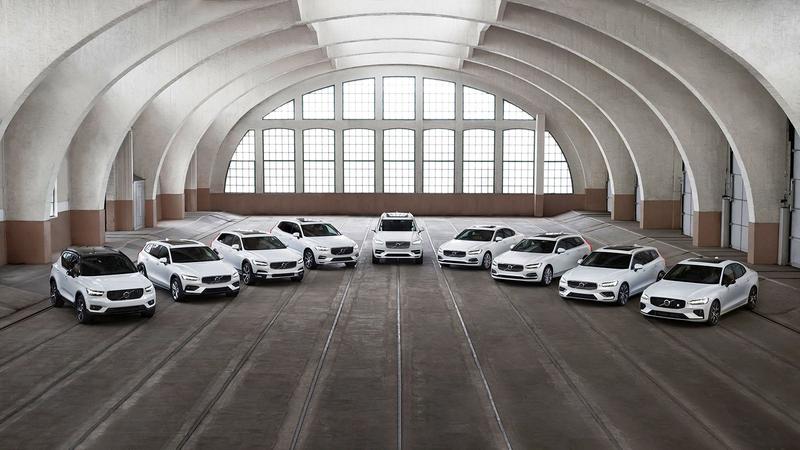
Volvo SUV and car model range explained

Tim Rodie
•
Manufacturer Guides

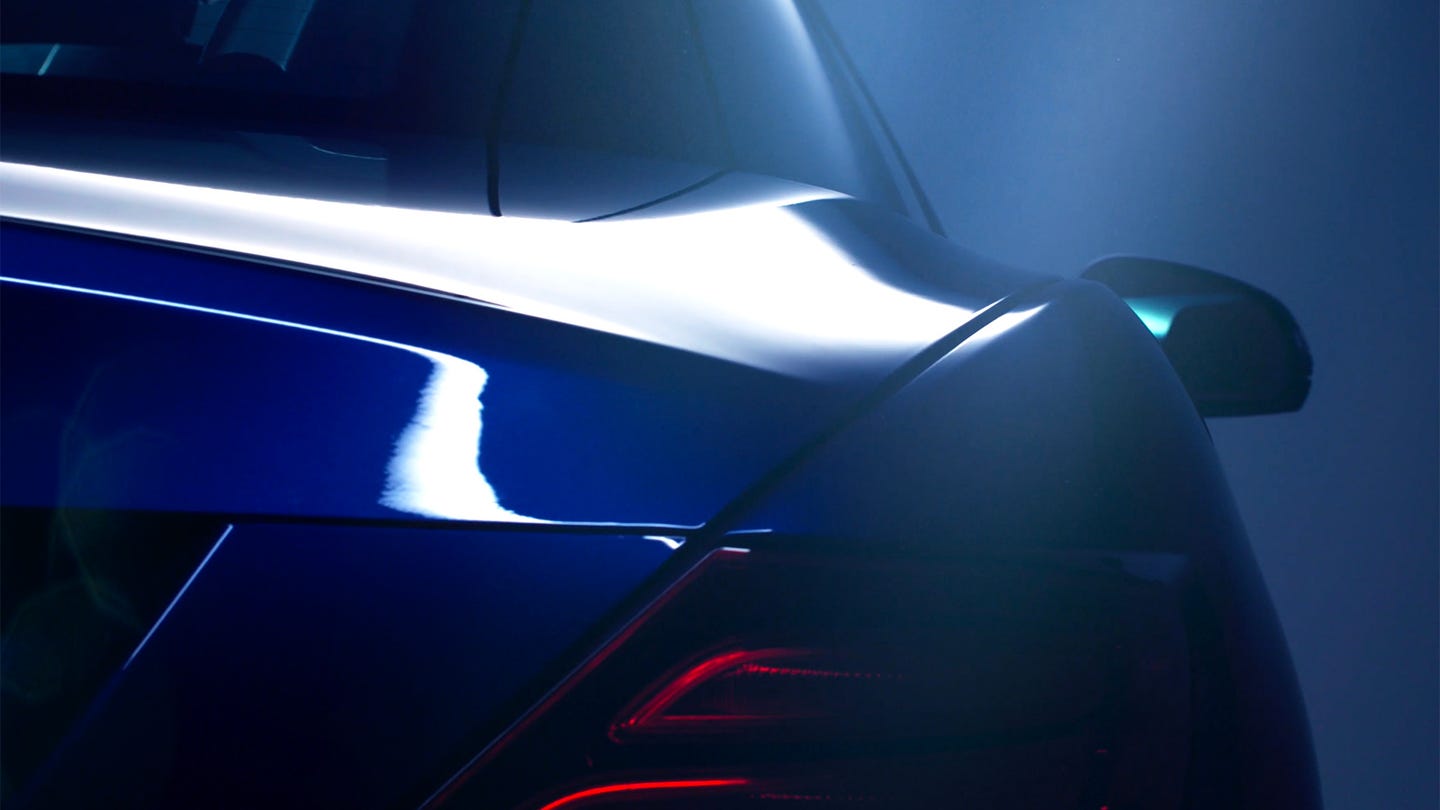
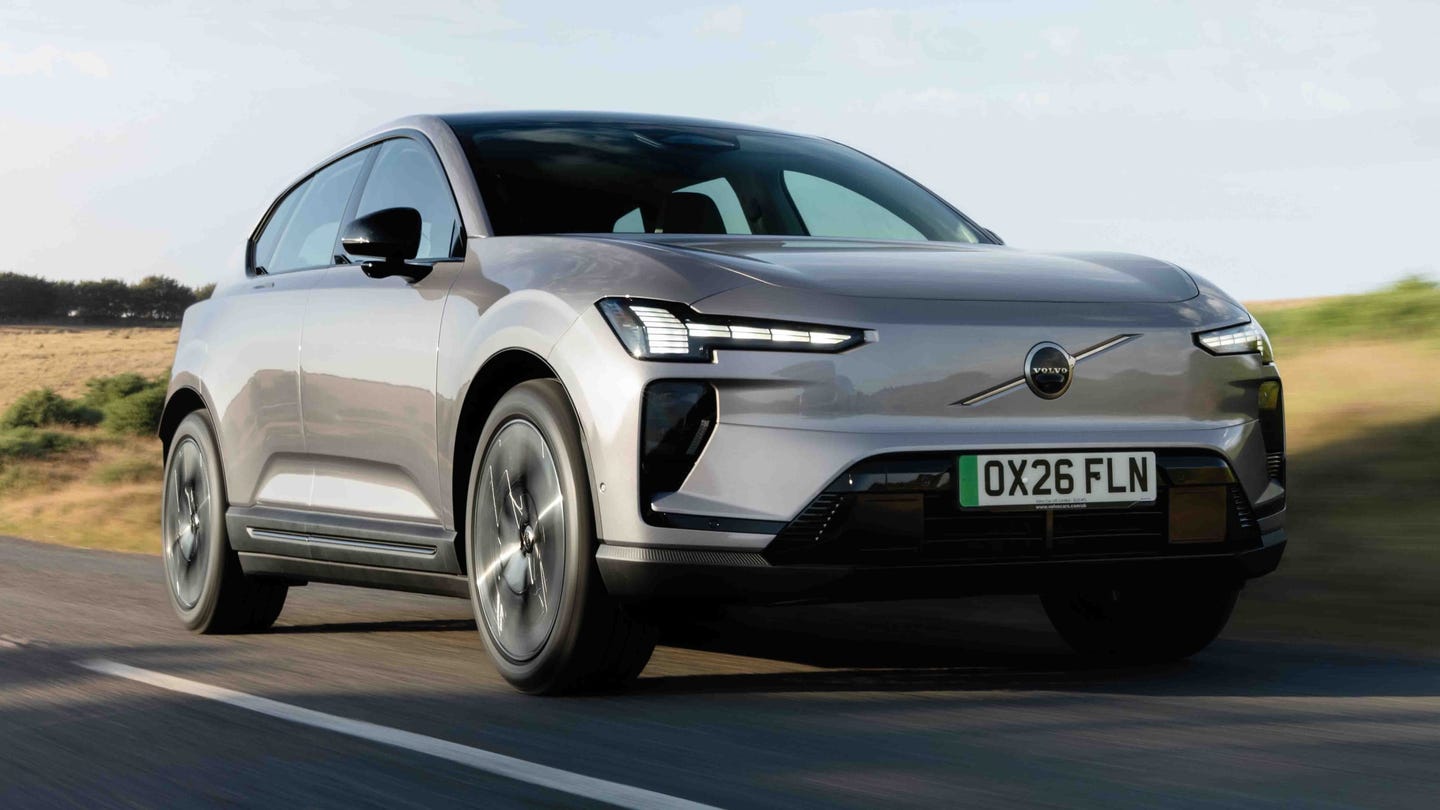
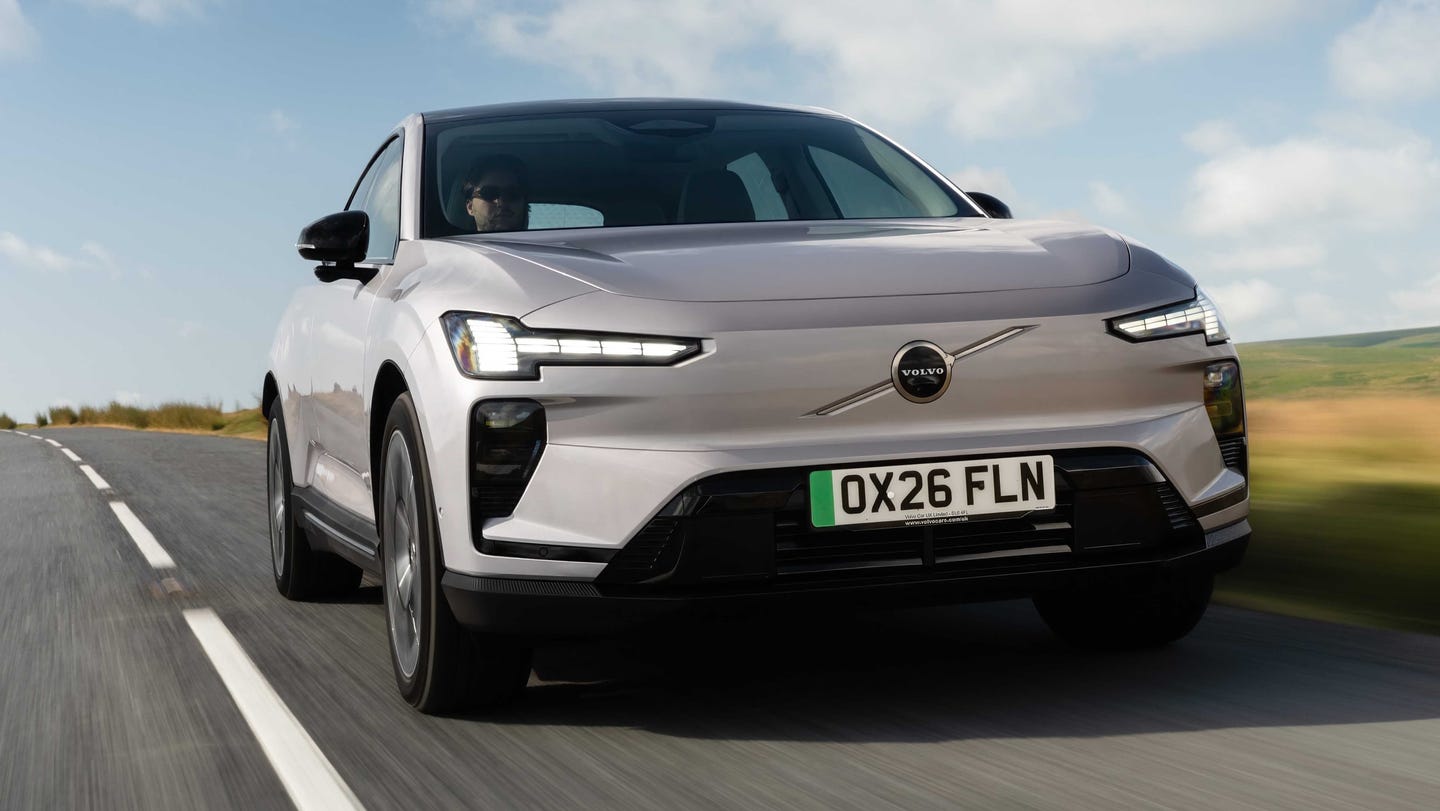
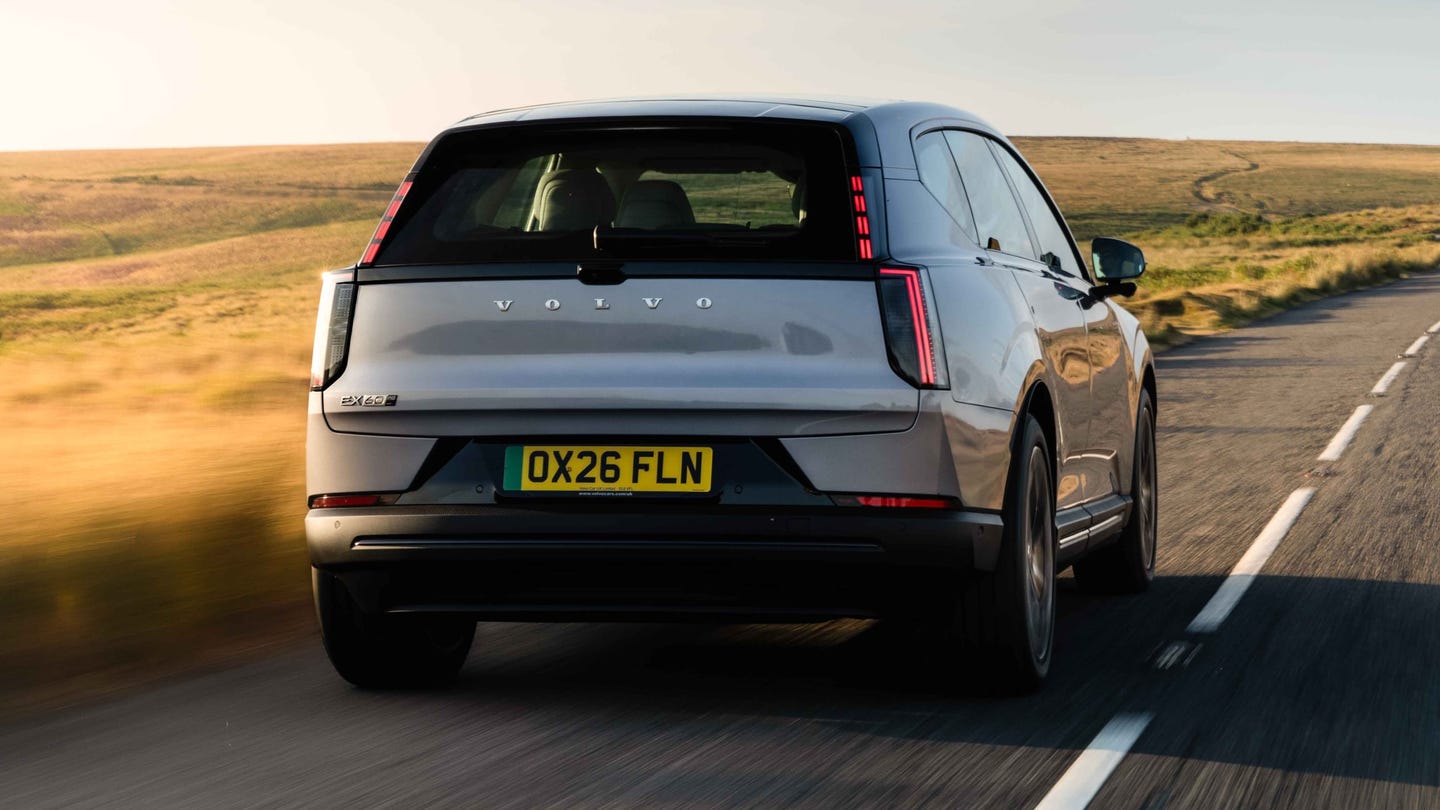
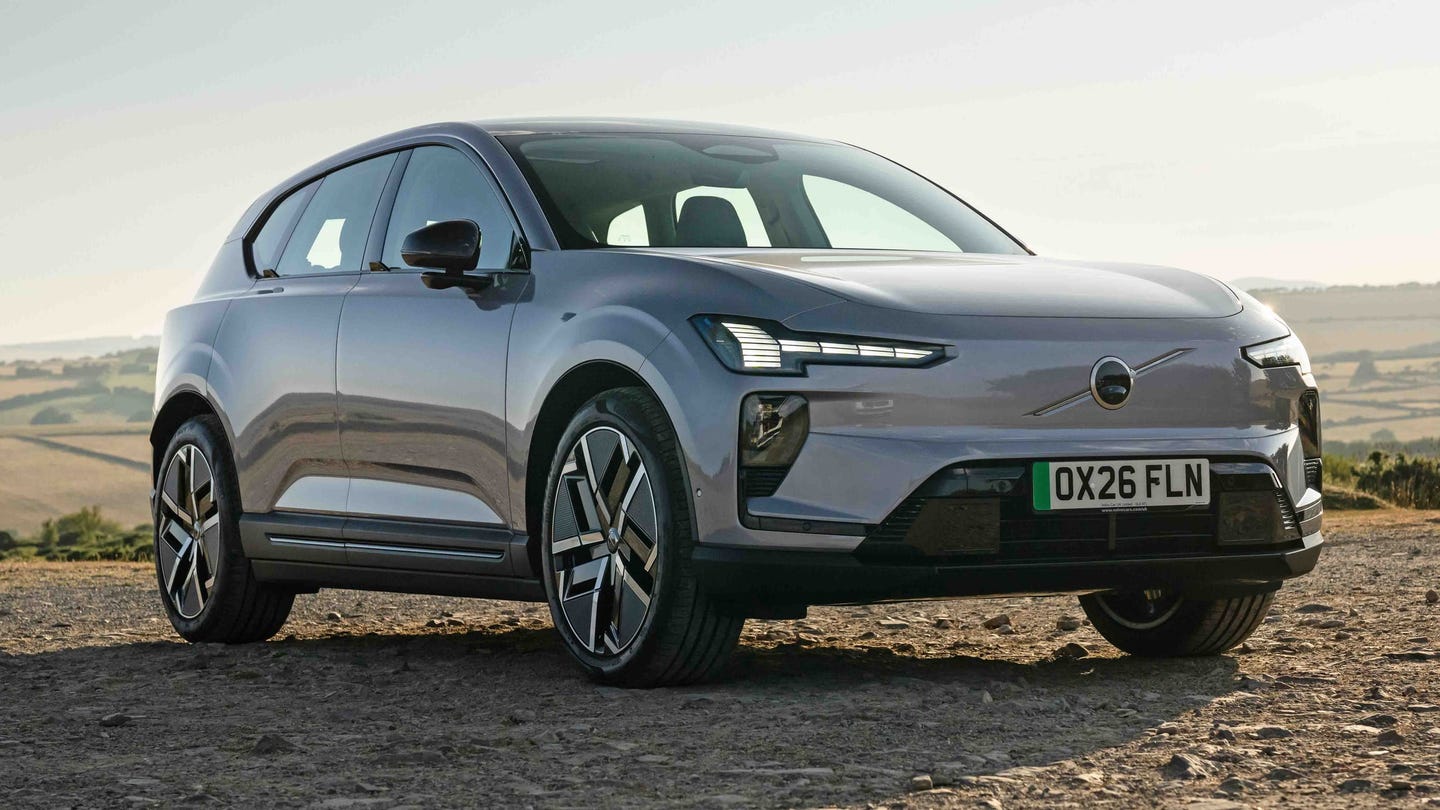
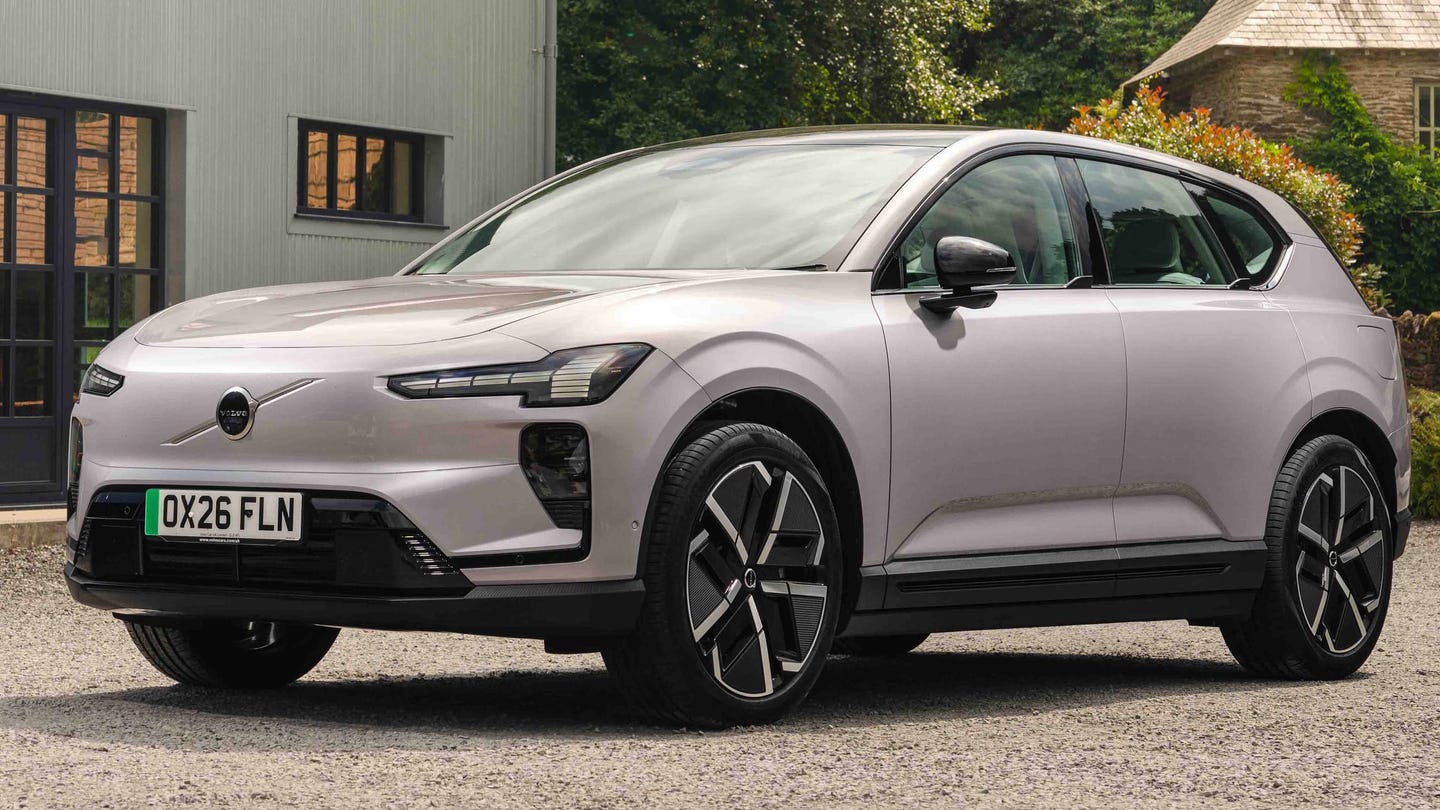
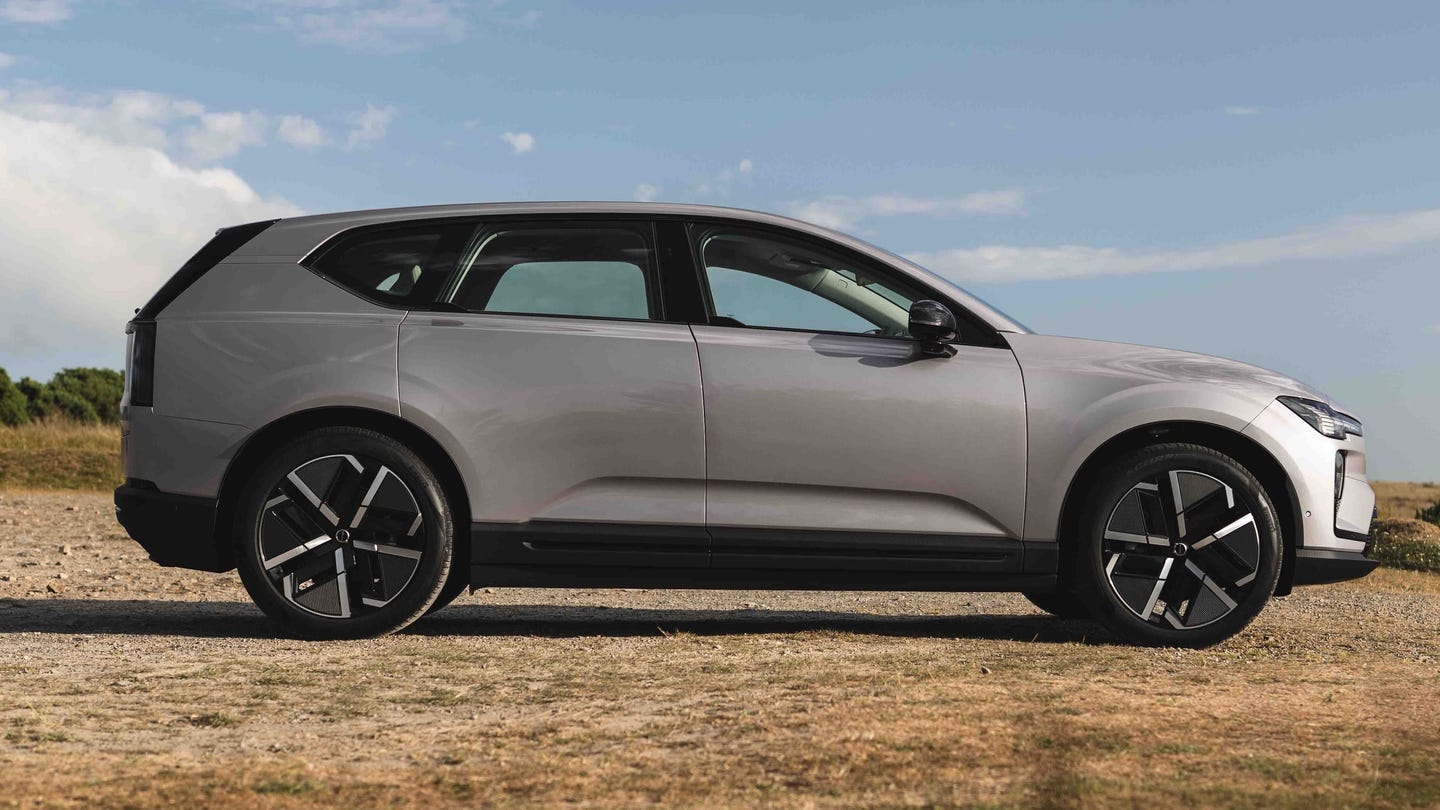
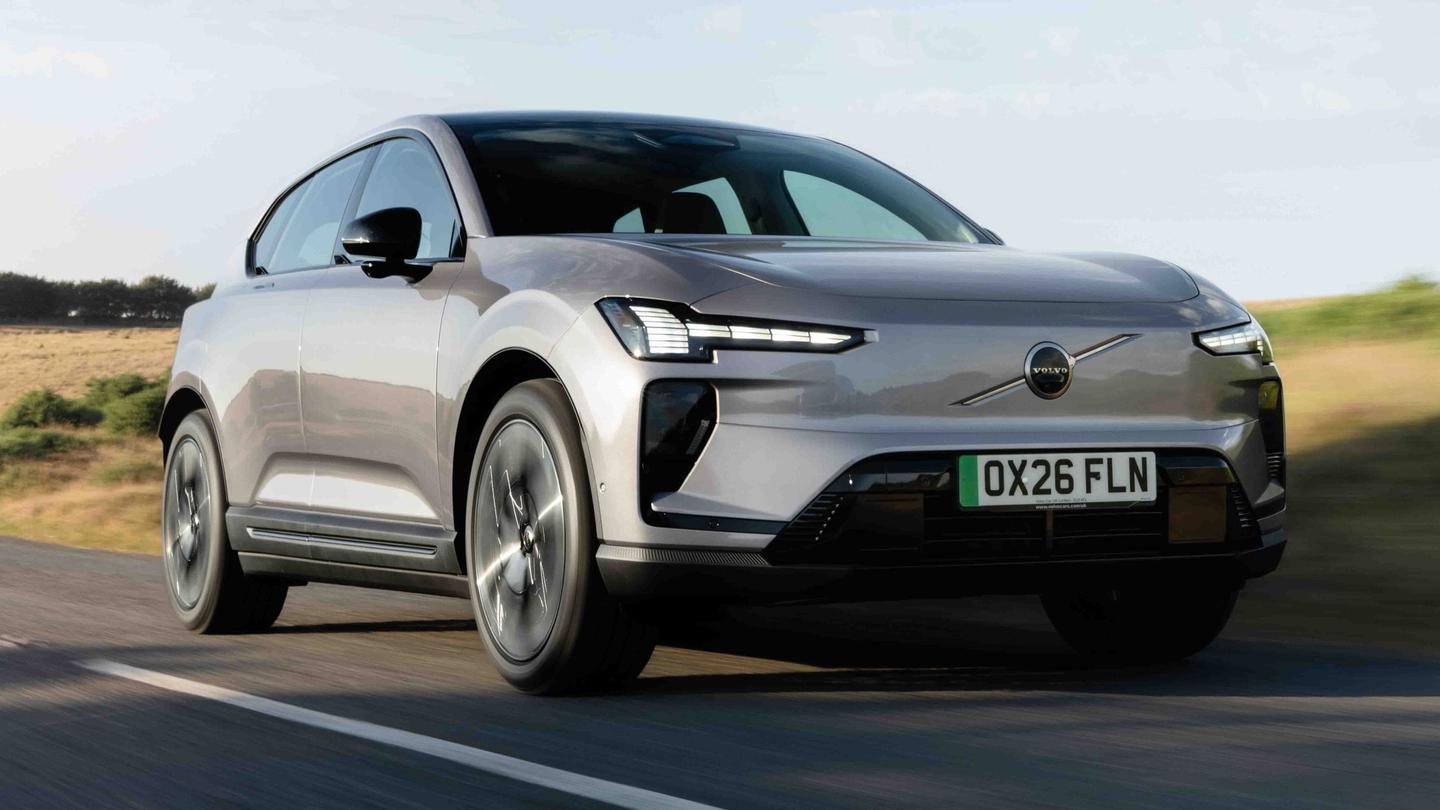
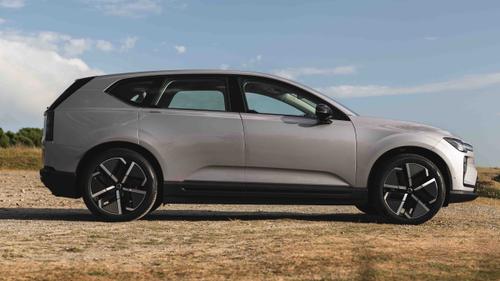
The EX60 is a big car for Volvo, and not because it’s 4.8 metres long. As you might’ve guessed from the name, the EX60 is the electric equivalent to the XC60 – Volvo’s best-selling car.
And Volvo certainly hasn’t done things by halves in the EX60’s development, creating one of the best all-rounders in the class. But, perhaps more impressively, it’s priced to match the plug-in-hybrid XC60.
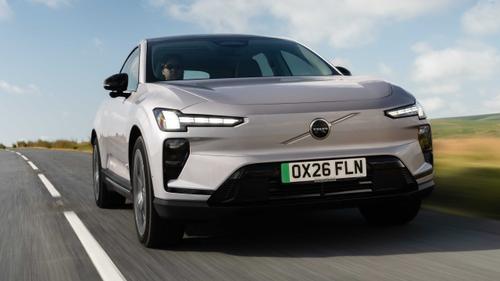
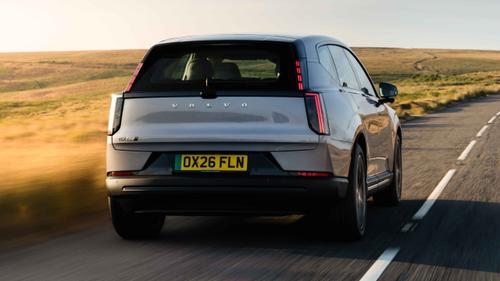
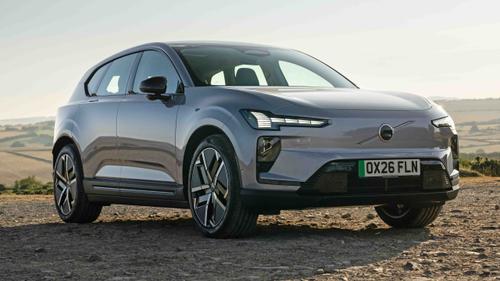
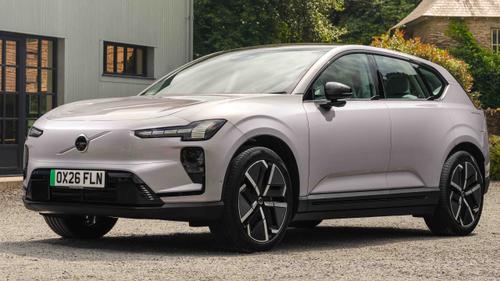
Driving an electric car long distances usually requires some mental gymnastics. If you’ve done it even once, you’ll probably have several route-planning apps and numerous chargepoint apps cluttering up your phone. As good as an EV’s driving experience is, the ownership experience is often still a bit awkward and clunky.
Perhaps those days are coming to an end. The Volvo EX60 is a car that takes all the faff and inconvenience out of EV driving, and not just because of the class-leading 503-mile maximum range estimate. Which is almost on a par with how far you’d get in an XC60.
"Noise from other traffic is almost entirely filtered out. Add in the excellent sound system and the EX60 is a serene way to cover big distances"
As well as going the distance, the EX60’s 800V architecture scoops up over 200 miles of range in just 10 minutes at a powerful enough charger. The Volvo app gives you access to circa 90% of charging networks, including previously Tesla-only Superchargers.
The battery pack is built in Sweden (as is the whole car) and then sealed for life, so it’s reassuring that Volvo provides a 10-year warranty on it – which applies as long as you get the EX60 serviced every three years. The XC60, meanwhile, needs a visit to a Volvo dealer annually.
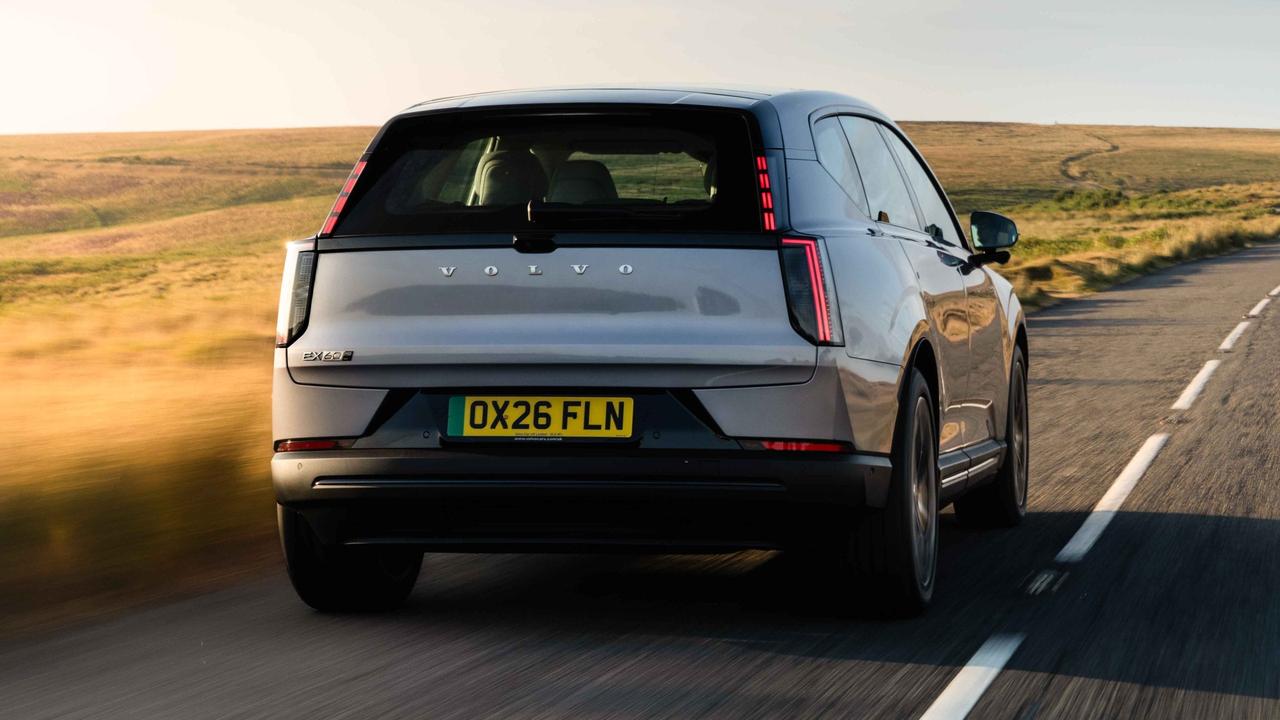
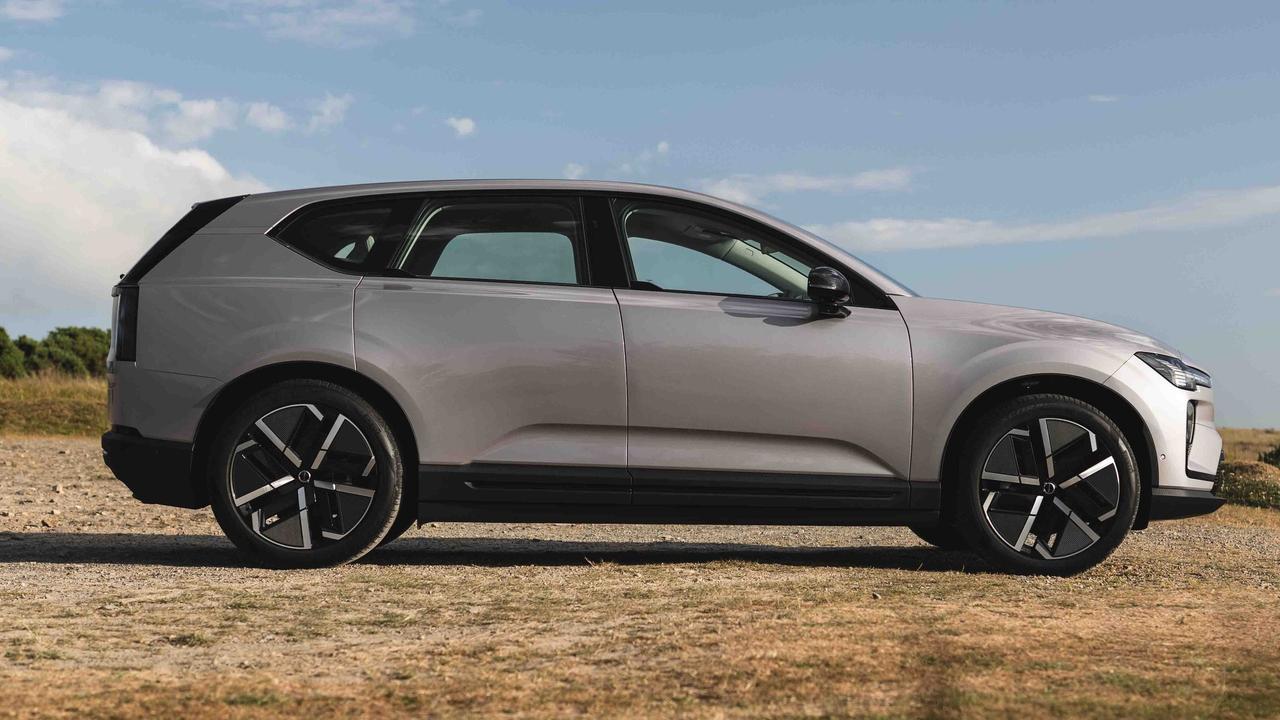
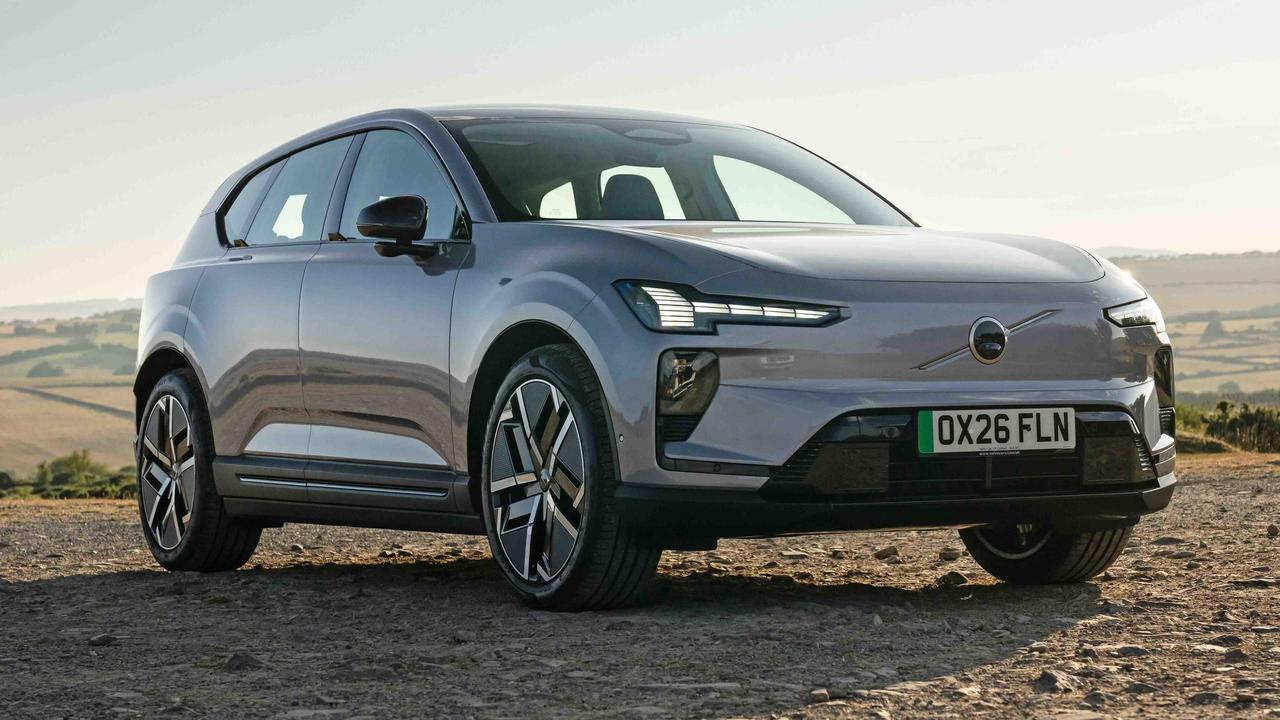
Part of the EX60’s impressive range comes from its slippery design. The blank front end is great for efficiency (less good for the flies you hit), the wheels are optimised for aerodynamics, and there aren’t any protruding roof rails. The door handles are little winglets. Even so, the EX60 manages to look premium and solid – both of which are highlighted by the thick but frameless windows.
The overriding impression is that every part of the EX60 feels deliberate and well thought out. Nothing feels like it’s been rushed or compromised.
You couldn’t call the EX60 cheap, but you could easily say it’s good value. It’s on a par with the Mercedes GLC Electric and generally a bit cheaper than an Audi Q6, although a couple of grand more than a BMW iX3 spec-for-spec. But, if you’re just looking at the Volvo lineup, the EX60 starts at within £100 of the plug-in-hybrid XC60.
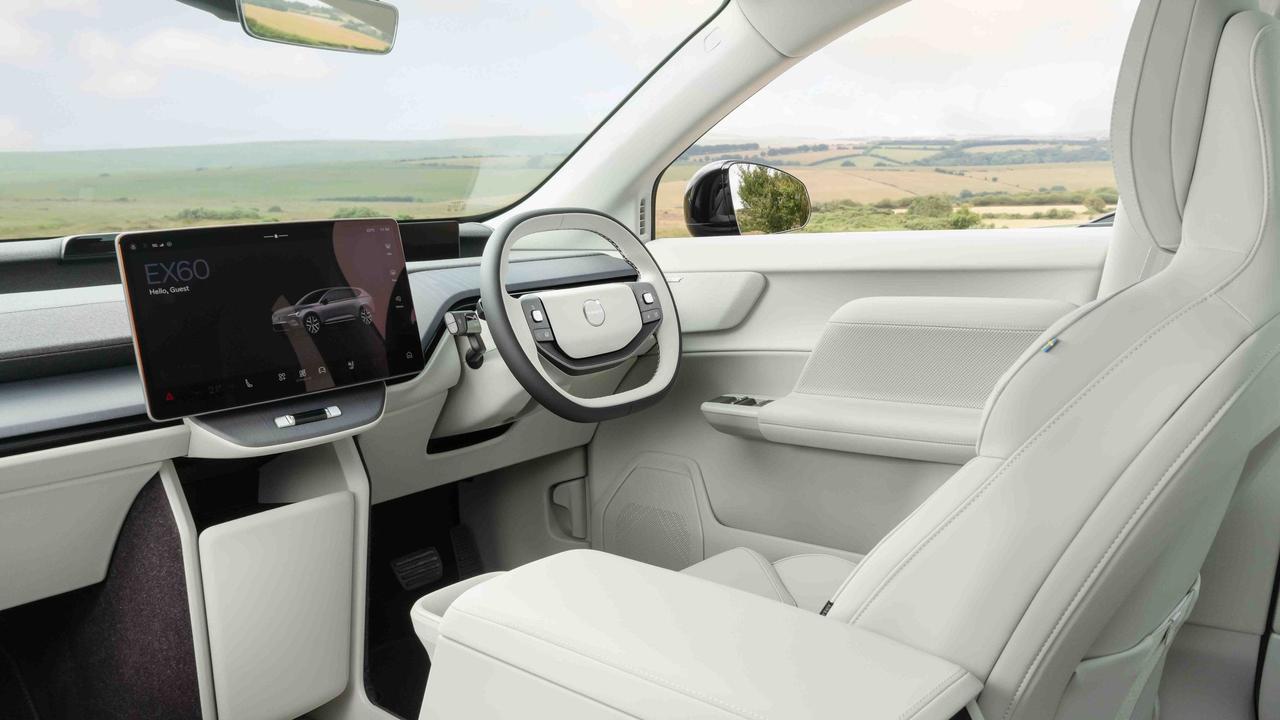
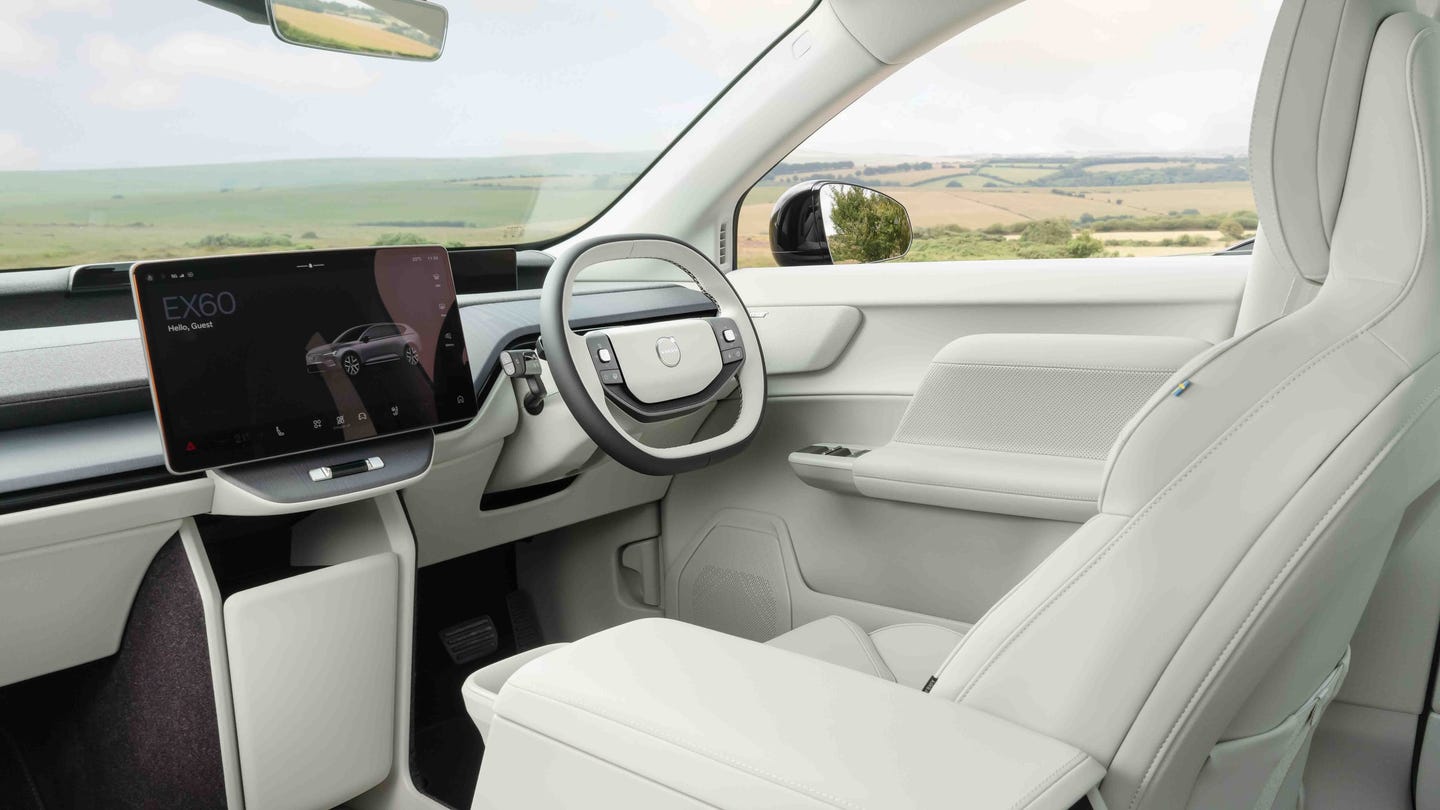
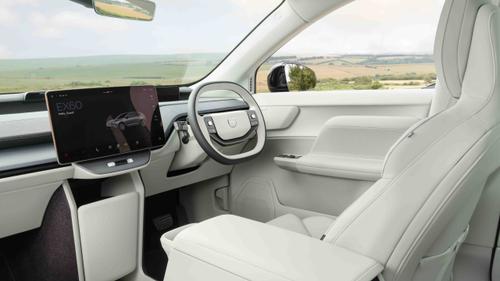
Immediately, the EX60 feels more spacious and more futuristic inside than an XC60. The airiness is helped by a standard-fit panoramic glass roof and clear glass on the windows, plus a much more open cabin layout.
Not needing a transmission tunnel means the space between the front seats is enormous. Above that, the dashboard is focused around the infotainment system, while the small driver’s display doesn’t get in the way of the plush materials.
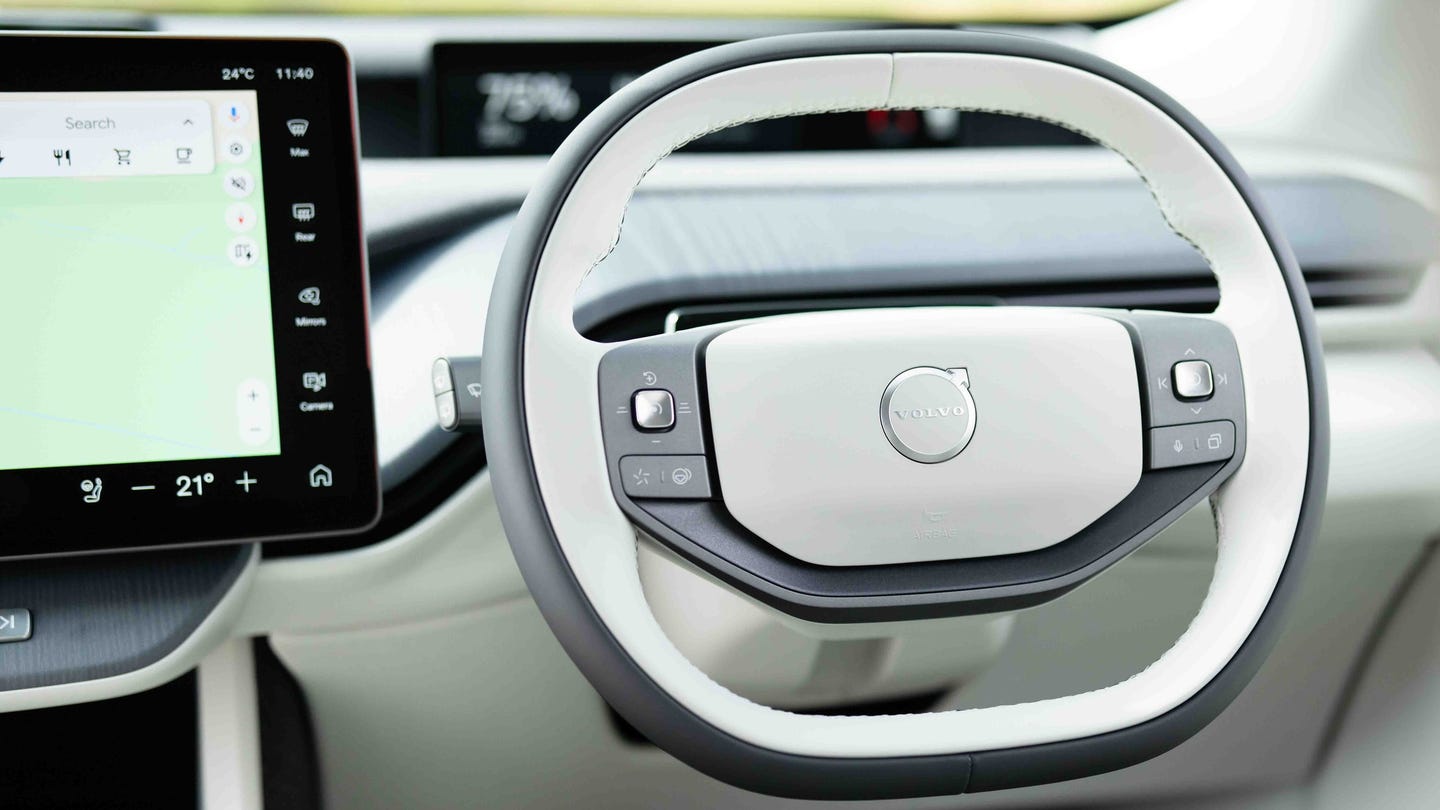
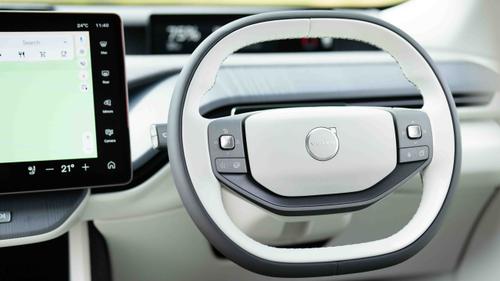
Even as standard, you get real wood trim finishers and fabric trim across the dash. The seat upholstery is an eco-friendly leather alternative made from recycled polyester. If you go for the ‘Dawn’ interior theme, you also get a fantastic two-tone steering wheel that wouldn’t look out of place in a Rolls-Royce. Or, you can opt for a wool blend with purple-toned wood trim, which we’d be very tempted by.
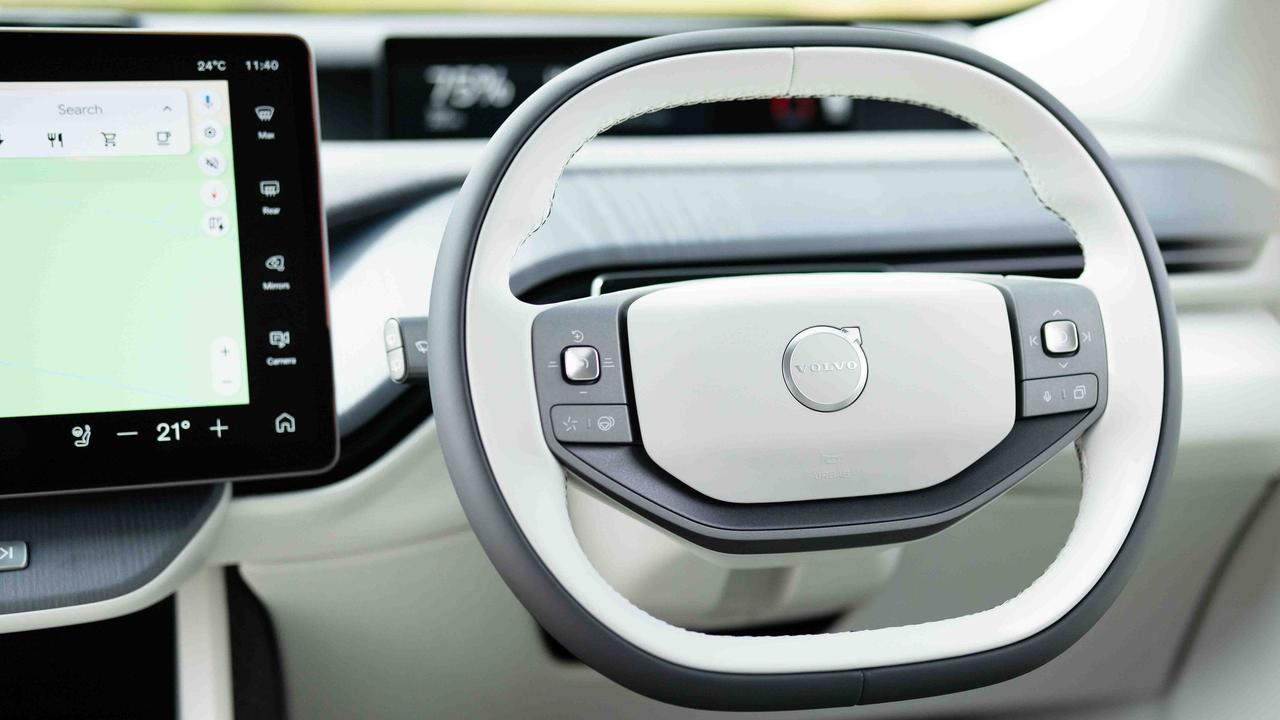
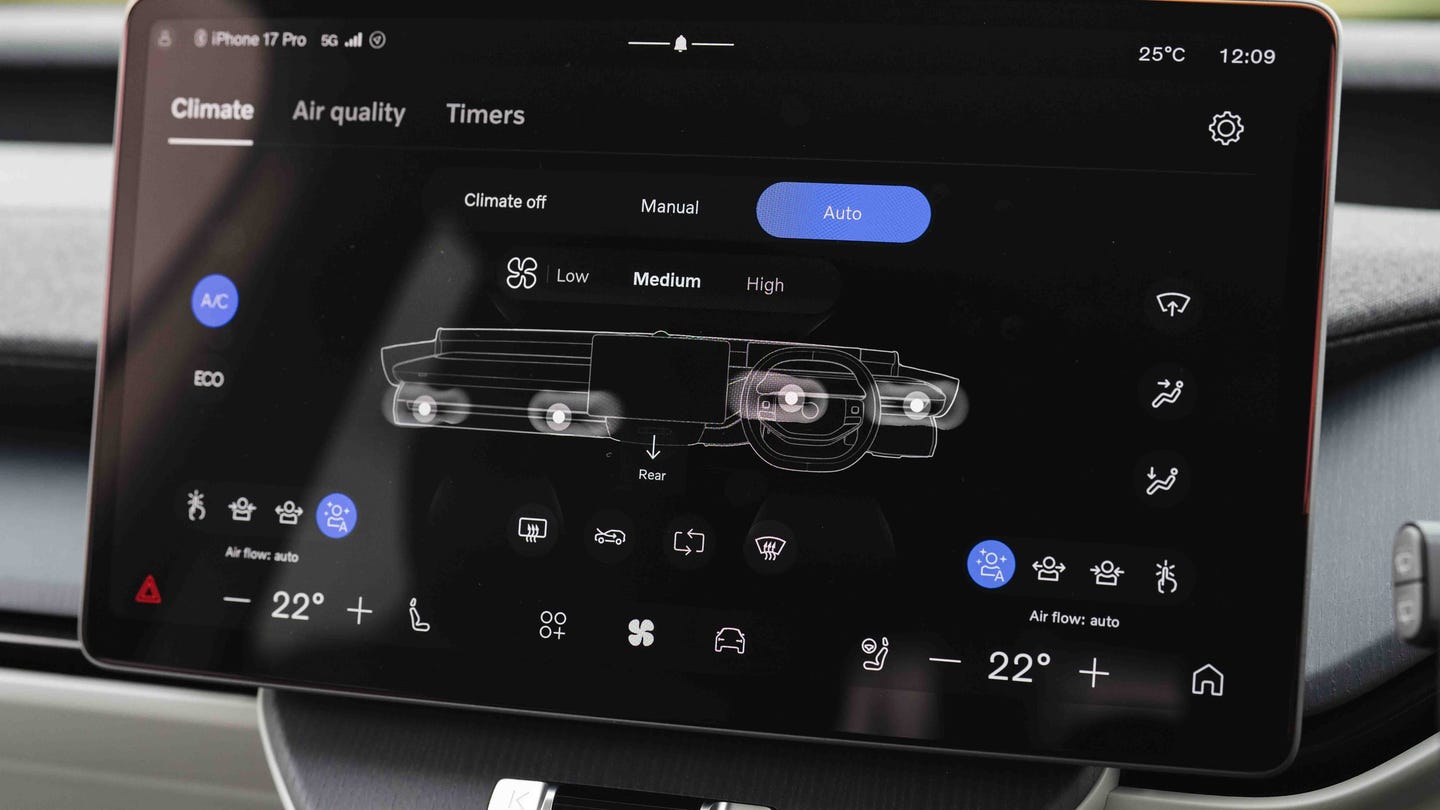
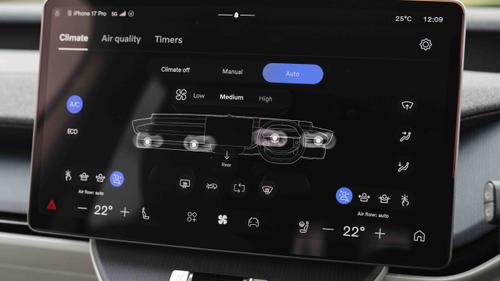
There are some pleasingly tactile and solid-feeling buttons grouped around the steering wheel, but most functions are controlled through the 15-inch touchscreen. The screen is generally quick enough, the graphics are sharp and the white-on-black colour scheme makes it easy to read at a glance.
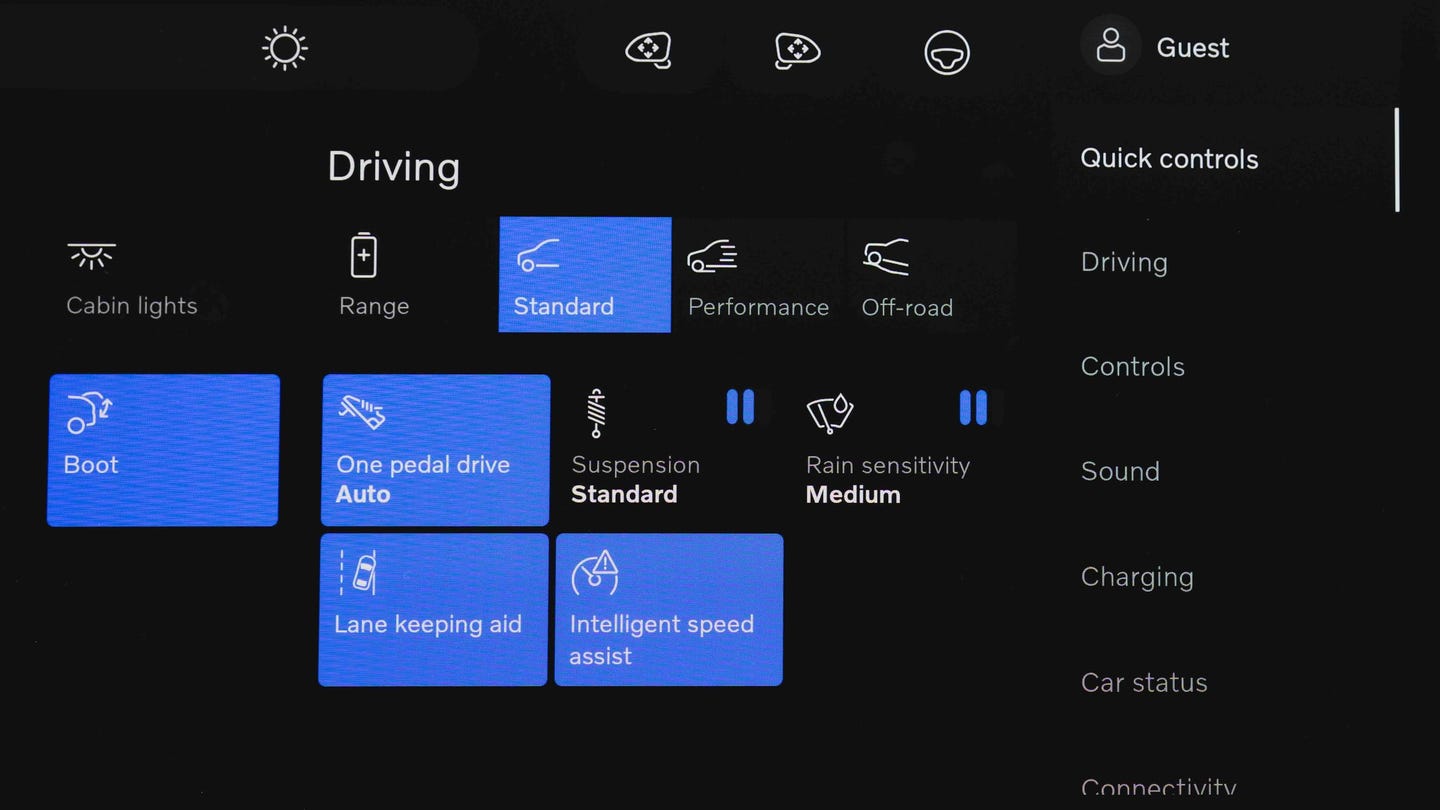
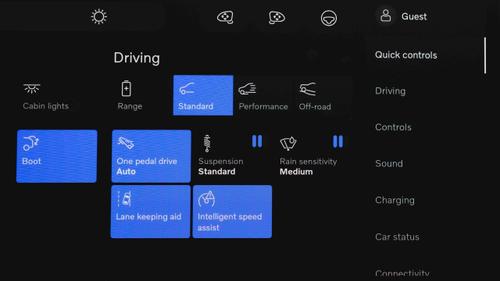
The home menu includes most features you’ll regularly interact with, and this top-level screen is really easy to work with. Press the car button on the row at the bottom for a quick-access menu that gives you important features such as drive modes, wing mirror adjustment and headlight settings. You can also turn off the lane-keep assist and speed limit warning from here, although you can’t configure the menu to add your own quick access functions, as you can in VWs and many Chinese cars.
The rest of the menus are in a list down the right-hand side, with most being easy to navigate. The exception is the ‘Driving’ menu (arguably the one you want to be easy to use), which is exhaustively long and you’ll need to scroll down a lot – and keep looking away from the road – for all its different options.
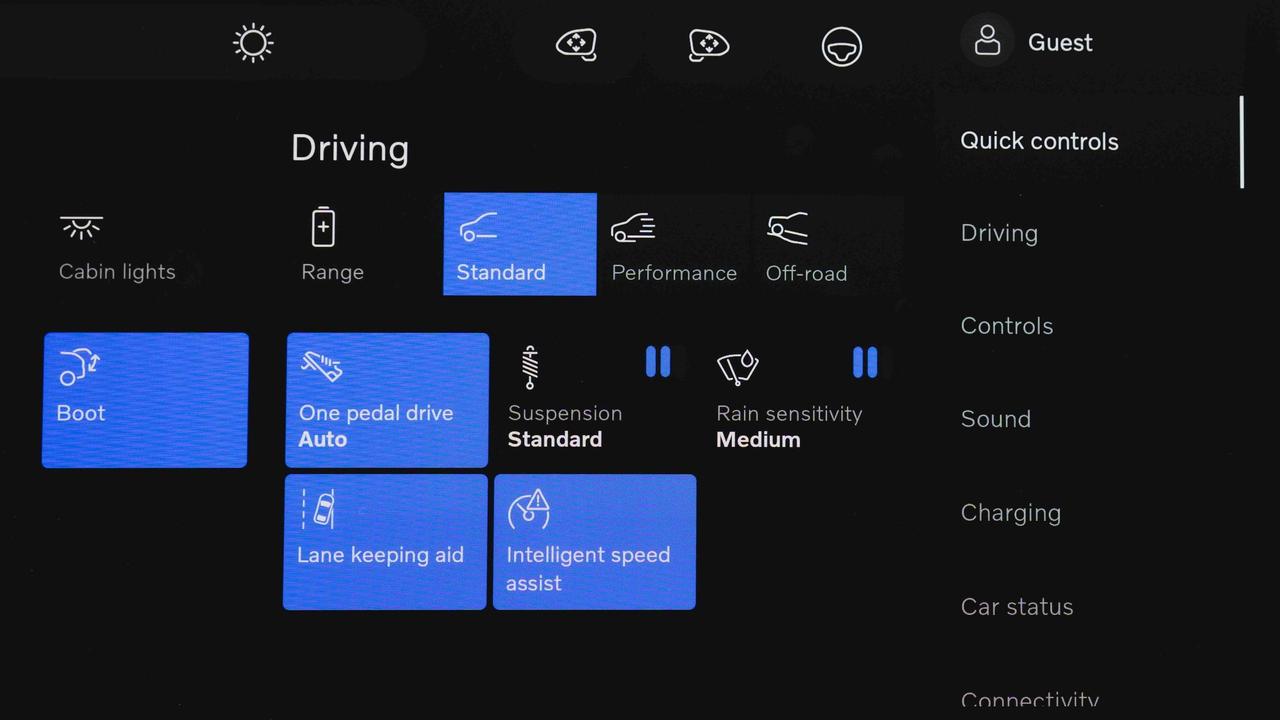
A slight curve to the screen means it faces both driver and passenger, but we found that using functions on the far side of the screen – such as browsing the radio station list – felt very far away and difficult to use from the driver’s seat.
Or you could use the Google Gemini voice assistant, which is part of a wide-ranging integration that also includes Google Maps. Long journeys can include planning where to charge, creating a seamless and joined-up navigation experience. You can also have the map displayed on the small driver’s screen, which is placed very well to remove the need for a head-up display.
You’ll love the EX60 if you love your music, because a Bose sound system comes as standard and the top-spec Ultra trim adds a 28-speaker Bowers & Wilkins stereo with native Dolby Atmos sound.
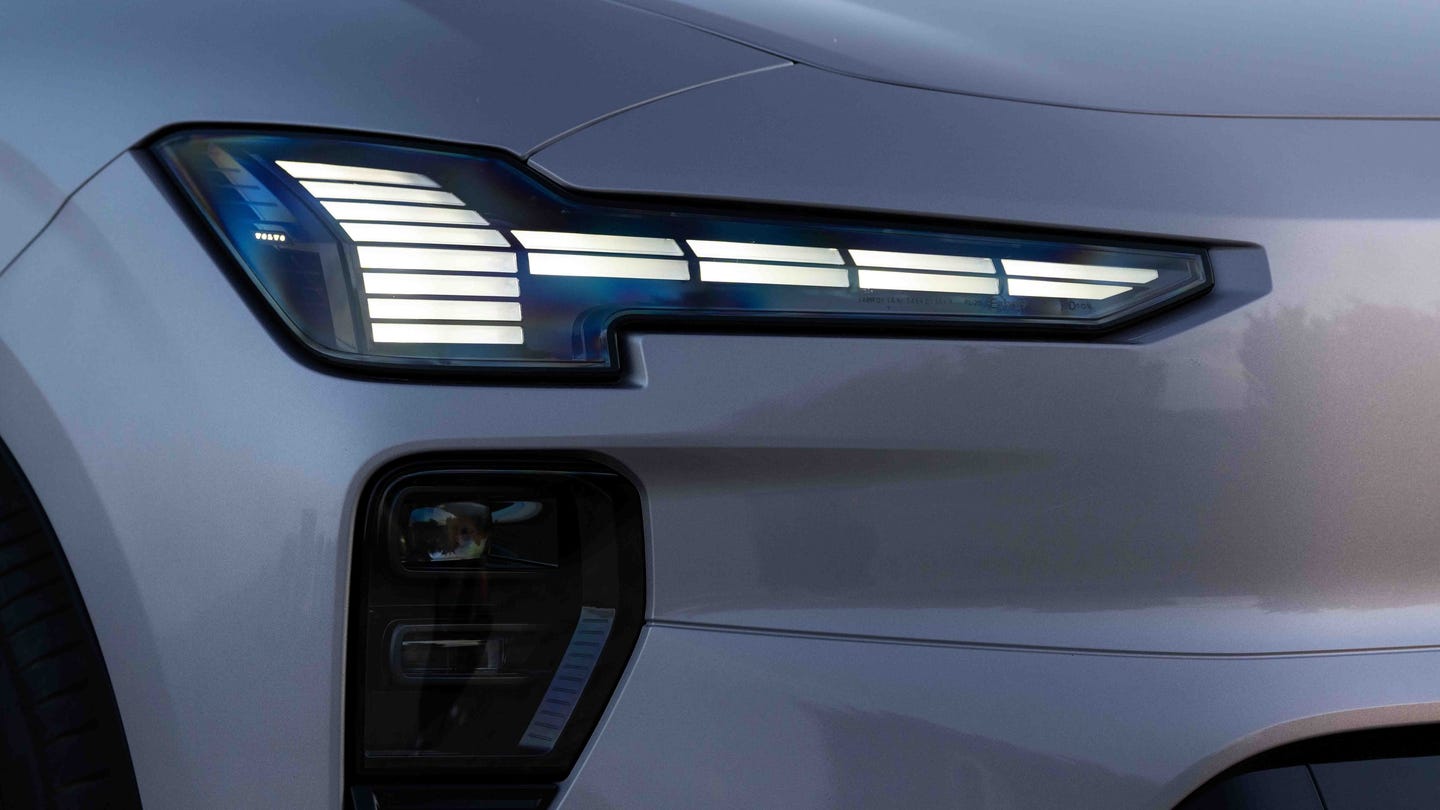
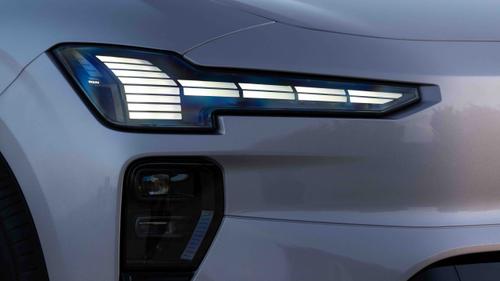
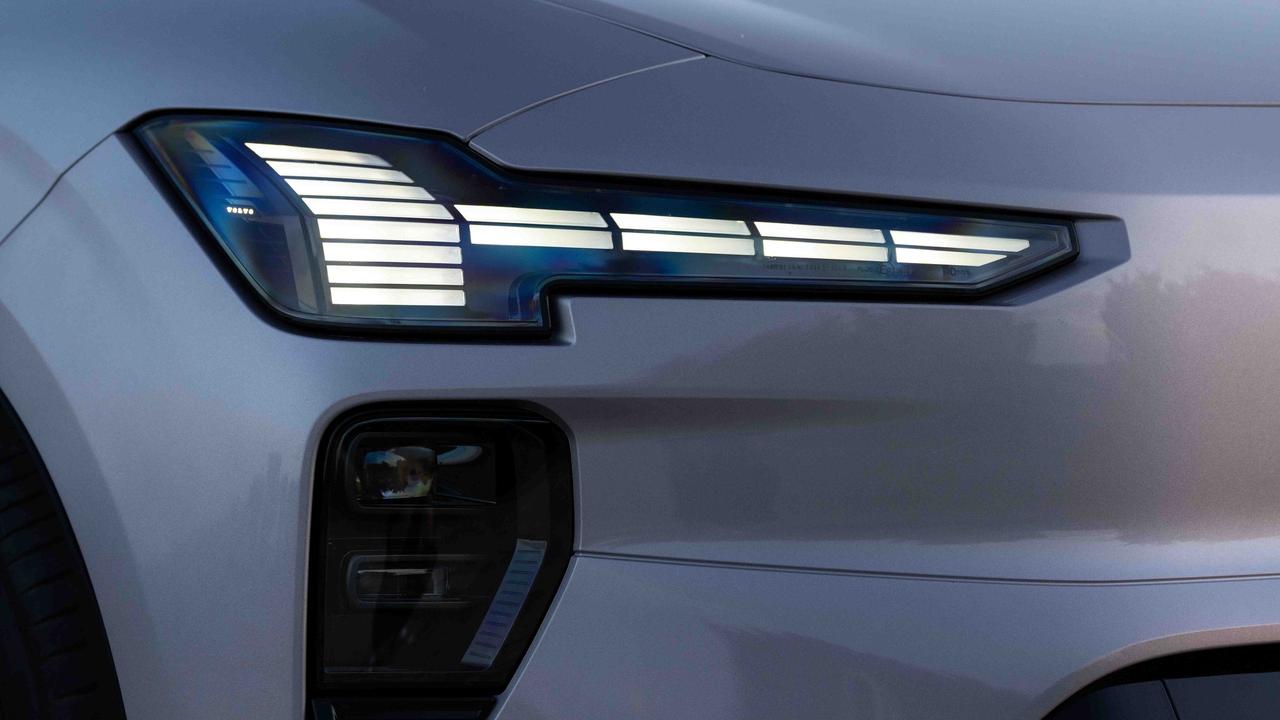
Ultra is the second of two trim levels, a £5,500 jump from the standard ‘Plus’ model. With a 360º parking camera, Matrix LED headlights, a heated steering wheel, heated front and rear seats, a powered bootlid and wireless phone charging, we wouldn’t feel the need to upgrade to Ultra. Pay the extra and you’ll get an electrochromic roof and tinted rear windows.
You’ll have to find new places to put your car clutter, because there’s no glovebox or no centre armrest cubby in the EX60. Instead, there’s a slide-out tray including cupholders, and a big bin beneath the touchscreen that opens out. There’s also a phone tray (although this feels quite easy to leave your phone in when you get out the car) and a carpeted open area that’s big enough for a rucksack.
Front-seat occupants get tonnes of adjustment – you’re not going to be touching the firewall with the seat all the way back. Electric seats with height adjustment and thigh cushion adjustment come as standard; cooled seats cost extra. An extra we’d have to recommend if the UK’s now getting months of 30-degree heat.
The EX60 introduces Volvo’s new adaptive seatbelts, which look like normal seatbelts but measure your height, weight and more by tightening the belt slightly. The strength and tension of the seatbelt then adjusts for your body. It’s part of Volvo’s quest to be safe for everyone – it also uses male and female crash-test dummies, whereas most brands only use male ones.
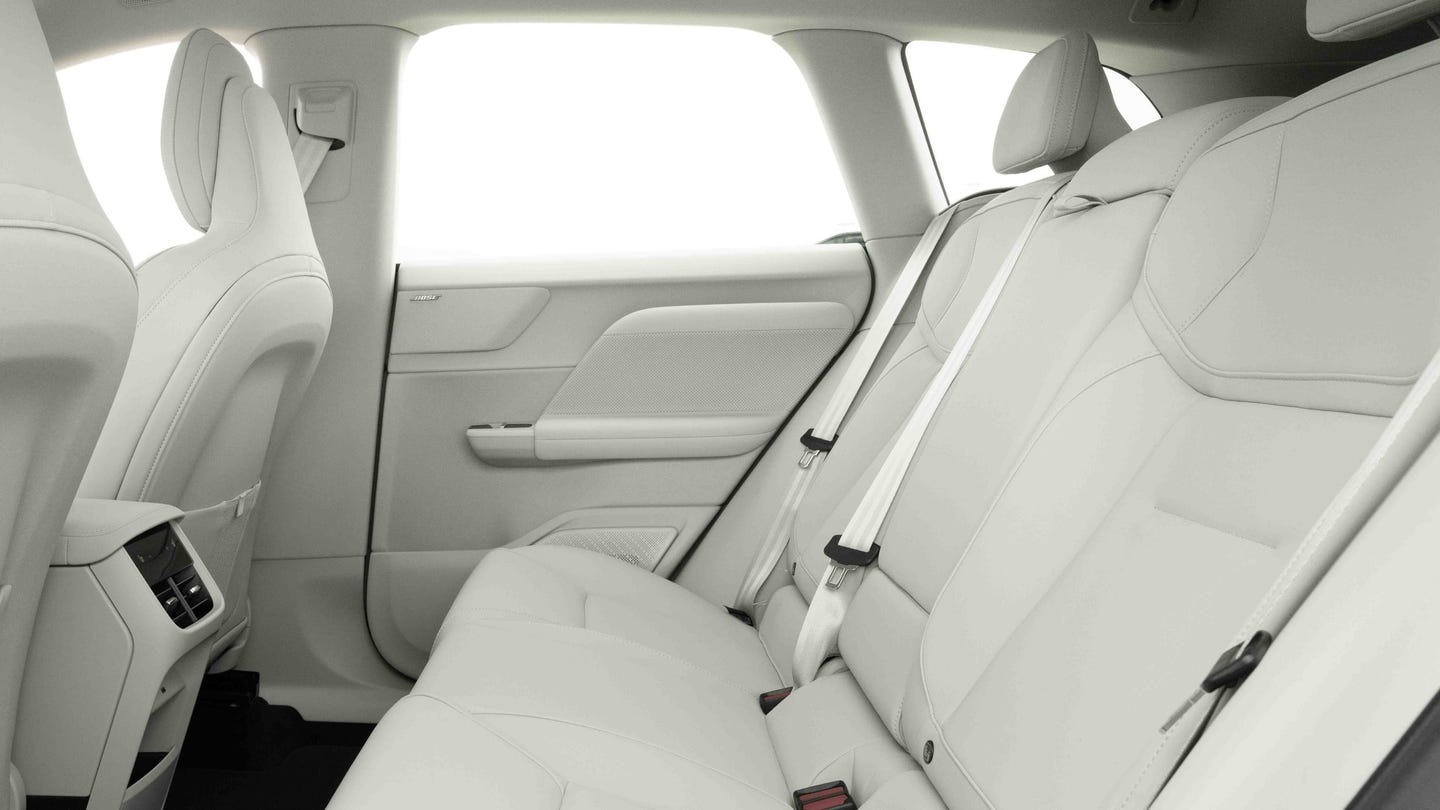
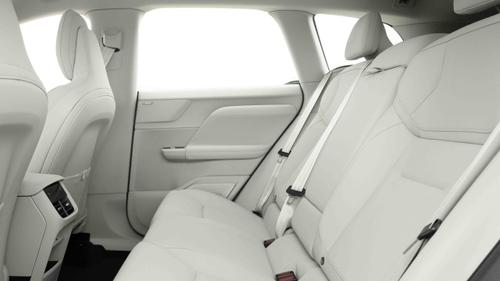
Even with the front seats as far back as they’ll go, there’s still room for an adult in the back seat. With the front seats in a more charitable position, rear-seat occupants have masses of space to enjoy. The rear seats also electrically recline through a surprising degree, so you can lounge back or sit bolt upright if you really want to.
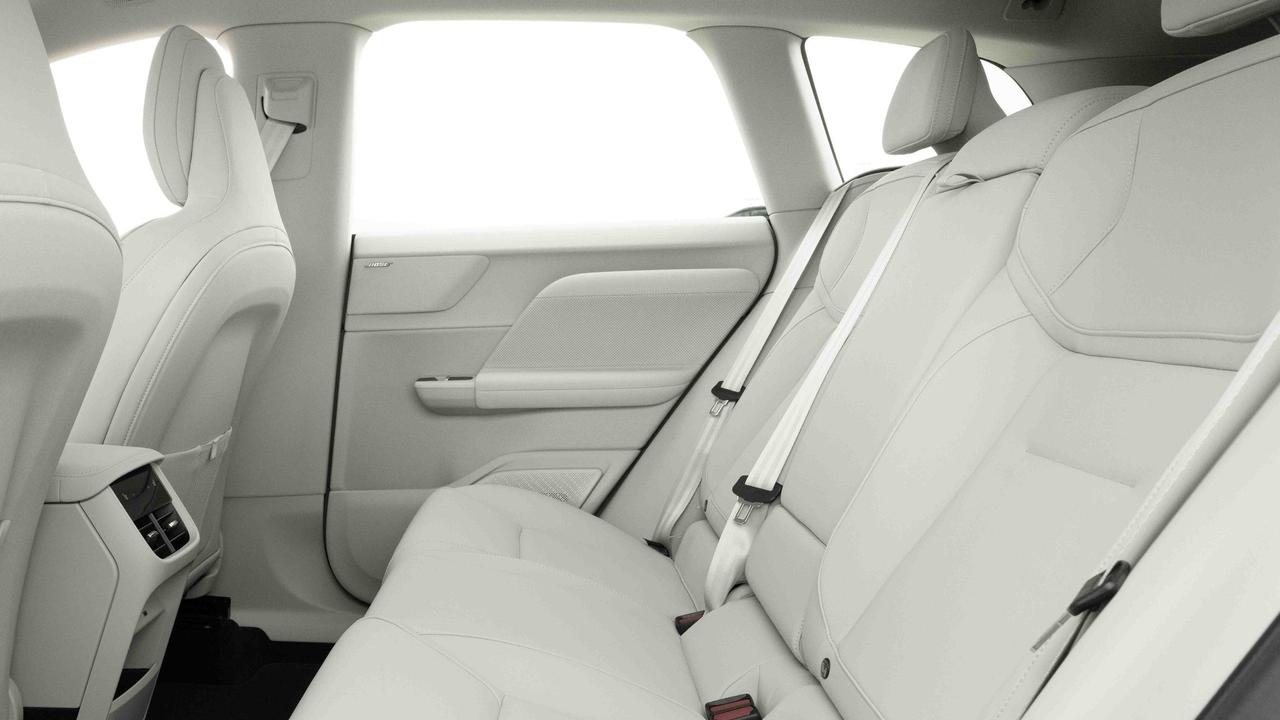
You get the same luxurious materials in the back – even the seat pockets are soft – and there are USBs, air vents, lights and cupholders. One minor annoyance is that the Isofix points are hidden behind a flap, which could be a pain if you’re installing a child seat. Oh, and there’s no blind for the sunroof unless you pay £140 extra – which seems like a must-have if your child naps in the car. Additionally, Volvo offers the option of integrated booster seat cushions for older kids.
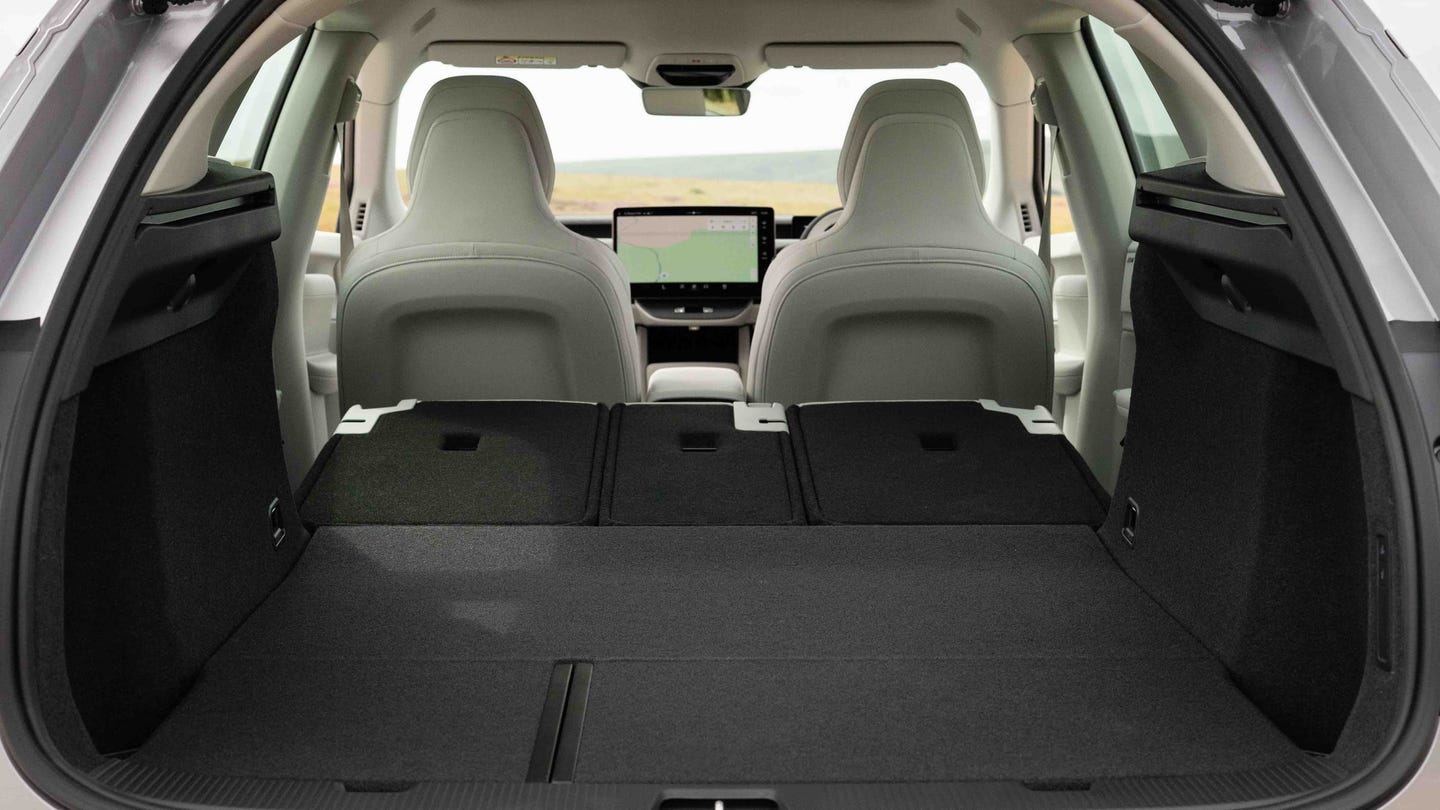
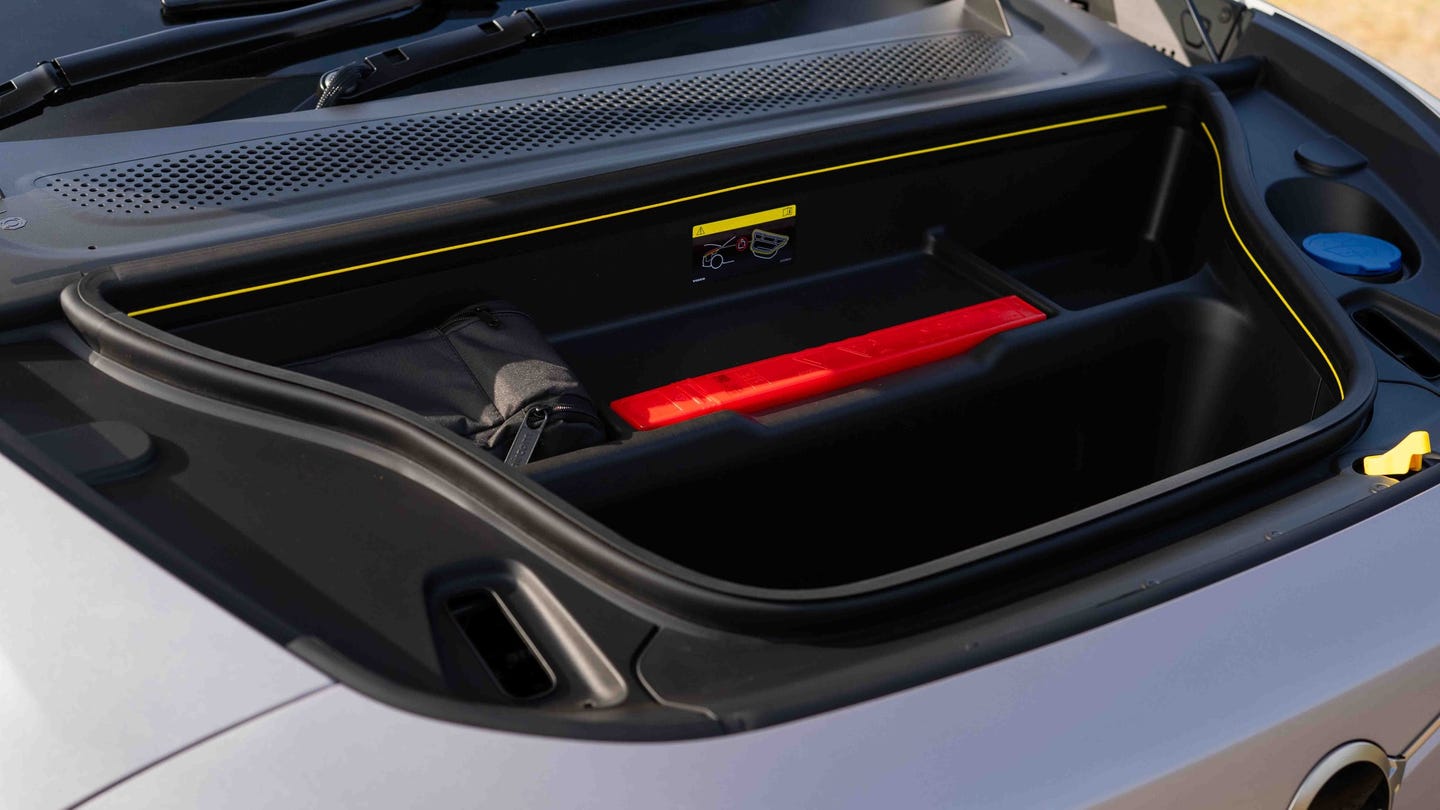
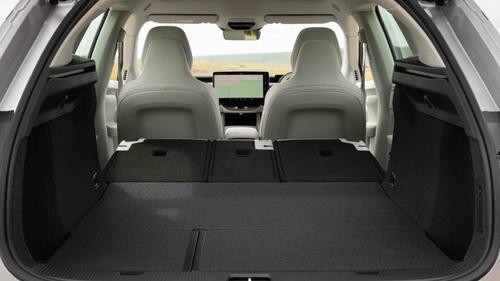
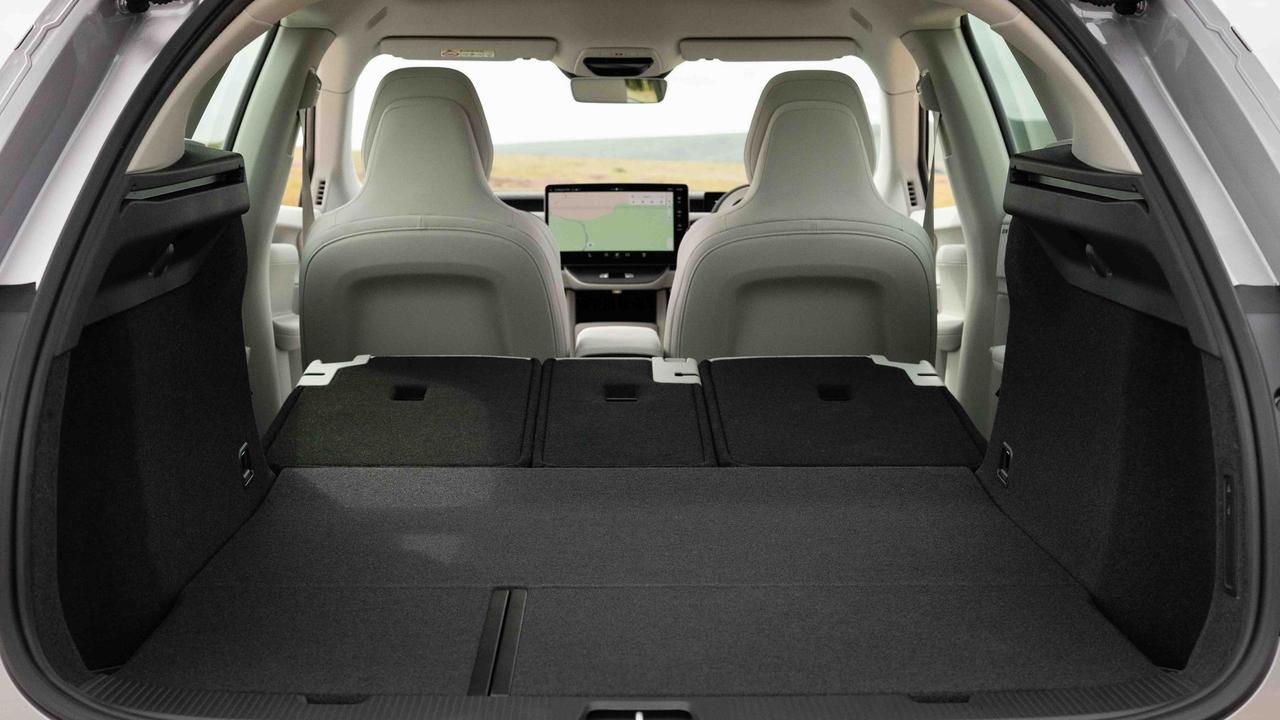
Further back, the boot measures 523 litres to the load cover, in a space that’s wide and deep. There’s a graphic on the boot moulding that shows you what you can fit in. Beneath the main boot area is a large underfloor area with plenty of room for a charging cable and a breakdown kit. And a removable bin that doubles up as a crabbing bucket – apparently a popular pastime for families in Sweden.
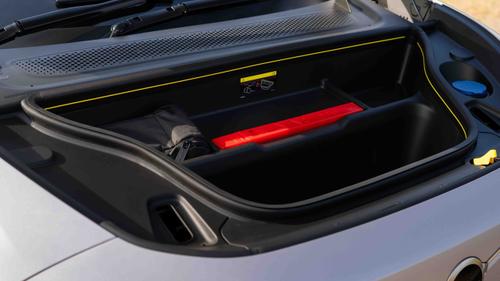
You can fold the seats down from the boot if you wish, and the extended loadbay is almost flat. This frees up a maximum of 1,647 litres of space if you load to the roof, and the load cover can be stashed under the boot floor when you’re not using it. Under the bonnet, there’s a 58-litre frunk.
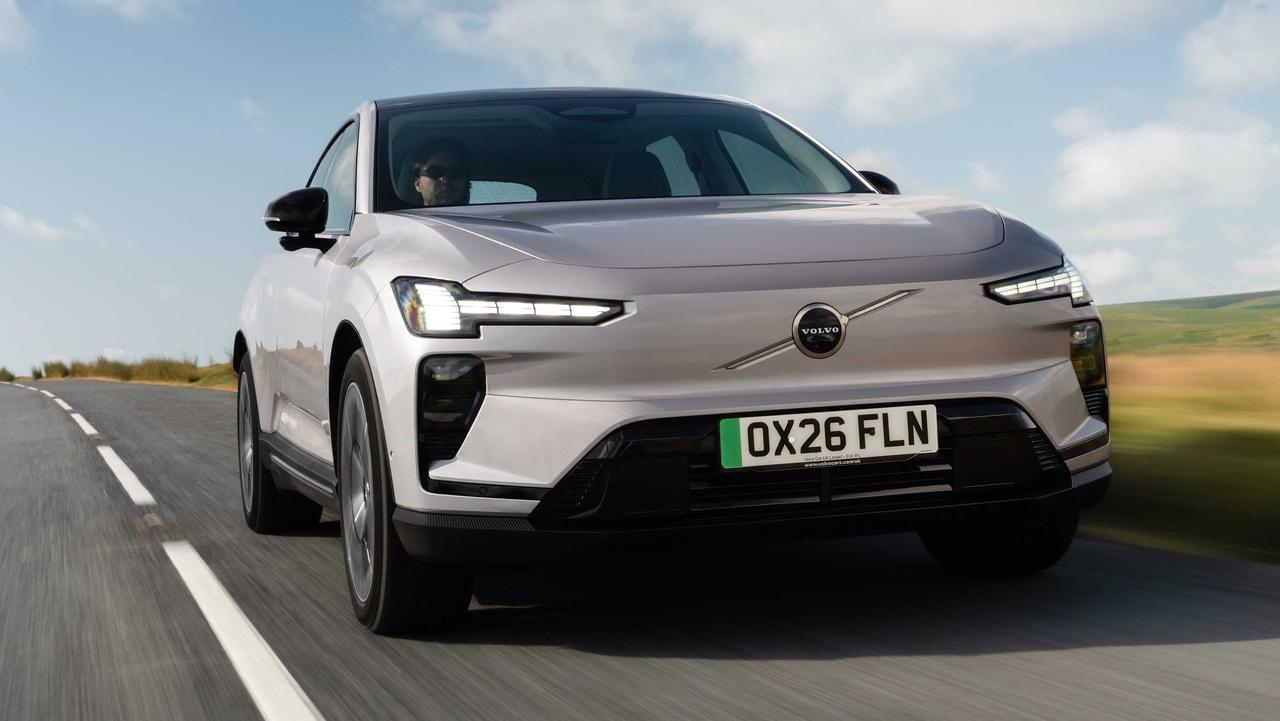
You’ll need the more expensive ‘P12’ battery for the headline 503-mile range estimate, and it’s worth working out if you actually need to go that far between charges. You almost certainly wouldn’t do 500 miles without stopping.
The entry-level ‘P6’ EX60 – if you can call it that – offers up to 379 miles from an 83kWh battery, and rear-wheel drive. Our test car was the mid-range ‘P10’ version with all-wheel drive and a 95kWh battery, which is good for a claimed 410 miles to a charge.
It seems an odd decision that the range estimate drops in increments of 10 miles – it’d be slightly more reassuring if it dropped in 1-mile increments as you’d expect. Perhaps Volvo reckons drivers will never get range anxiety.
Both the P6 and P10 versions can charge from 10-80% in just 16 minutes at a 400kW charger, and the 117kWh P12 isn’t far behind at 19 minutes.
If you want to take advantage of cheap windows of overnight power on a home wallbox electric tariff, you might need to schedule the car to charge to a proportion of its full capacity and top it up over consecutive nights.
For a family-focused SUV, the EX60 is fantastically overpowered. The P6 gets 374hp and a sub-six-second 0-62mph time, while the P10 wades in with 510hp – the same as a BMW M4 – and sprints from 0-62mph in 4.6 seconds. And it feels it. Not to be outdone, the P12 packs a substantial 680hp – the same as a McLaren Artura – and a frankly silly acceleration time of 3.9 seconds. All top out at a limited 112mph.
With all this power, it’s not surprising that the EX60 is a competent towcar: all-wheel-drive versions have a maximum braked towing capacity of 2,400kg.
If you were to do 500 miles in one go, the EX60 would be a top-tier car for the job. The seats are comfortable, visibility is good and the driver assistance systems are generally helpful, unintrusive and don’t pick up on false positives too often.
Four-wheel-drive variants get an active chassis with soft, normal and firm settings. The firm setting is useful to tighten up the body control if you want to drive fast around corners, but otherwise we’d keep it in its soft setup. Like this, the EX60 floats over most bumps and takes the harshness away from jolting pothole impacts.
There’s a bit of ever-present tyre noise on the 21-inch wheels, but the noise from other traffic is almost entirely filtered out. Add in the excellent sound system and the EX60 is a serene way to cover big distances.
You get a slight hint of Peugeot’s i-Cockpit design from the driving position, because the EX60’s steering wheel is smaller than you’d expect. It also needs to be set quite low so that it doesn’t obscure the driver’s display when you turn the wheel. The steering itself is quick but numb, and the EX60 can feel a bit tippy in sudden direction changes as the mass catches up with your inputs.
After an initial millimetre of mushiness, the brake pedal is strong and firm – which is immensely reassuring when you meet another vehicle on a tight country lane. In other situations, you might not need to use the brake pedal very often if you leave the electric brake regen in its ‘auto’ setting. This is amazingly well calibrated and uses navigation data to know when to slow you down and by how much. It makes the EX60 really satisfying to drive, and you quickly start to trust it.