






10 of the best cheap hot hatchbacks

Ben Custard
•
Choosing A Car

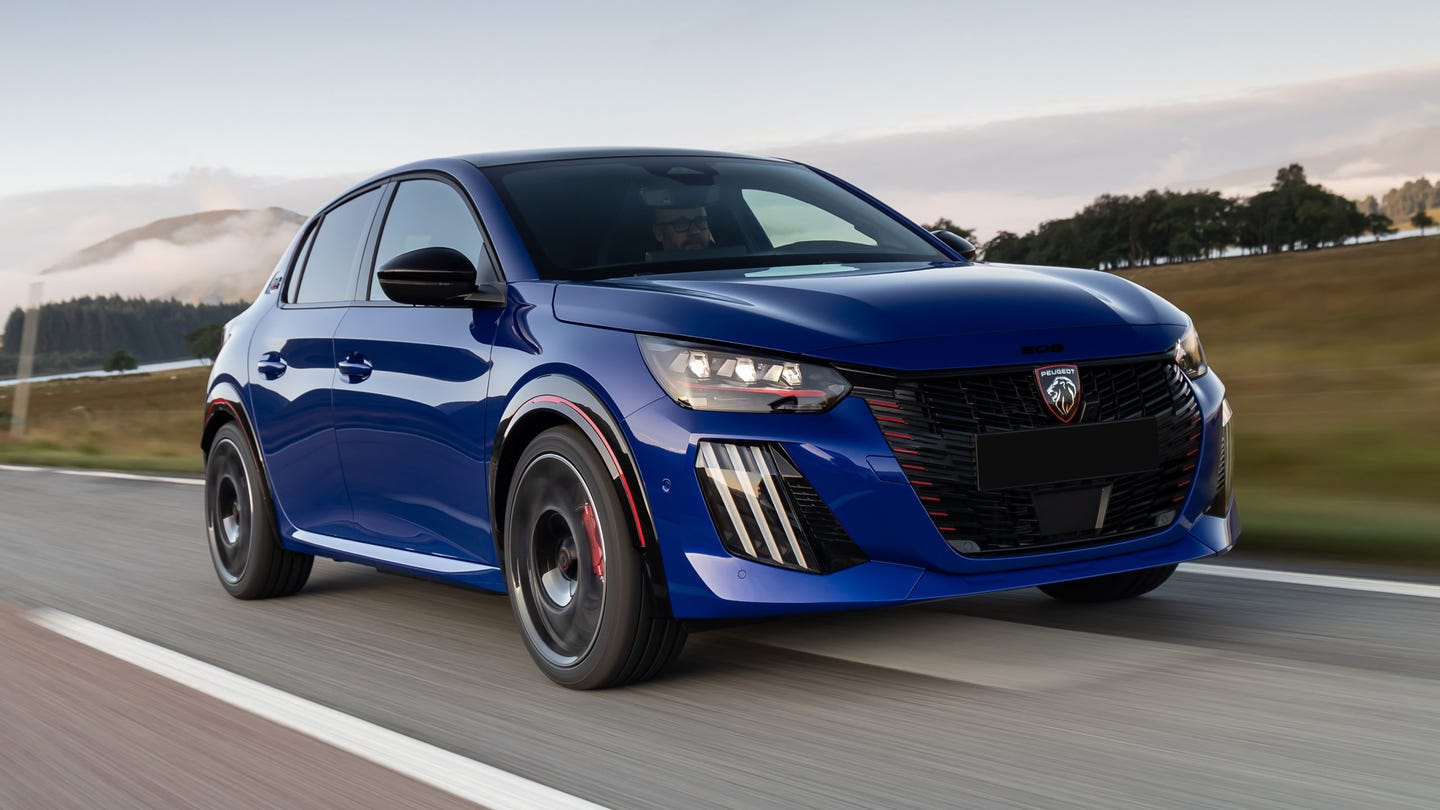
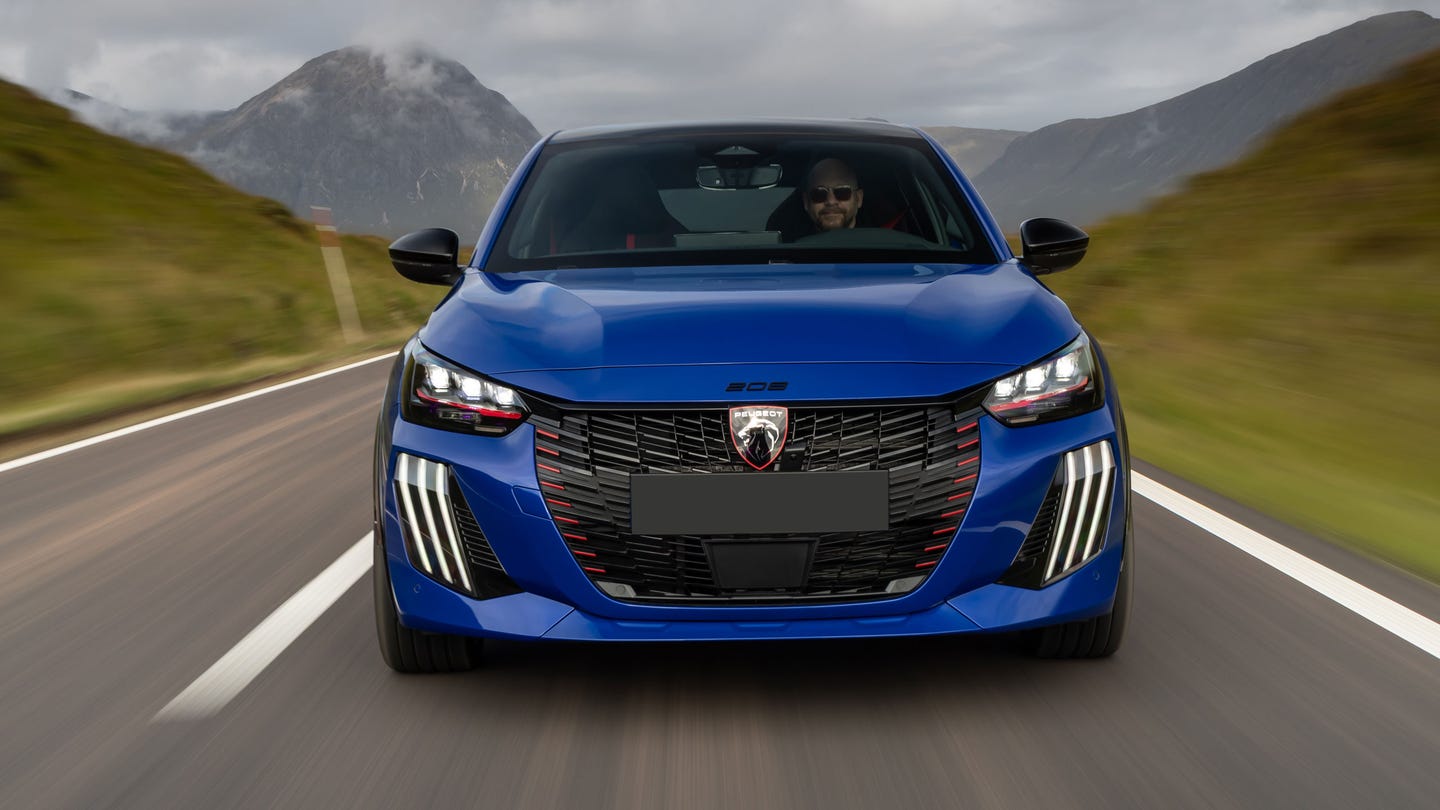
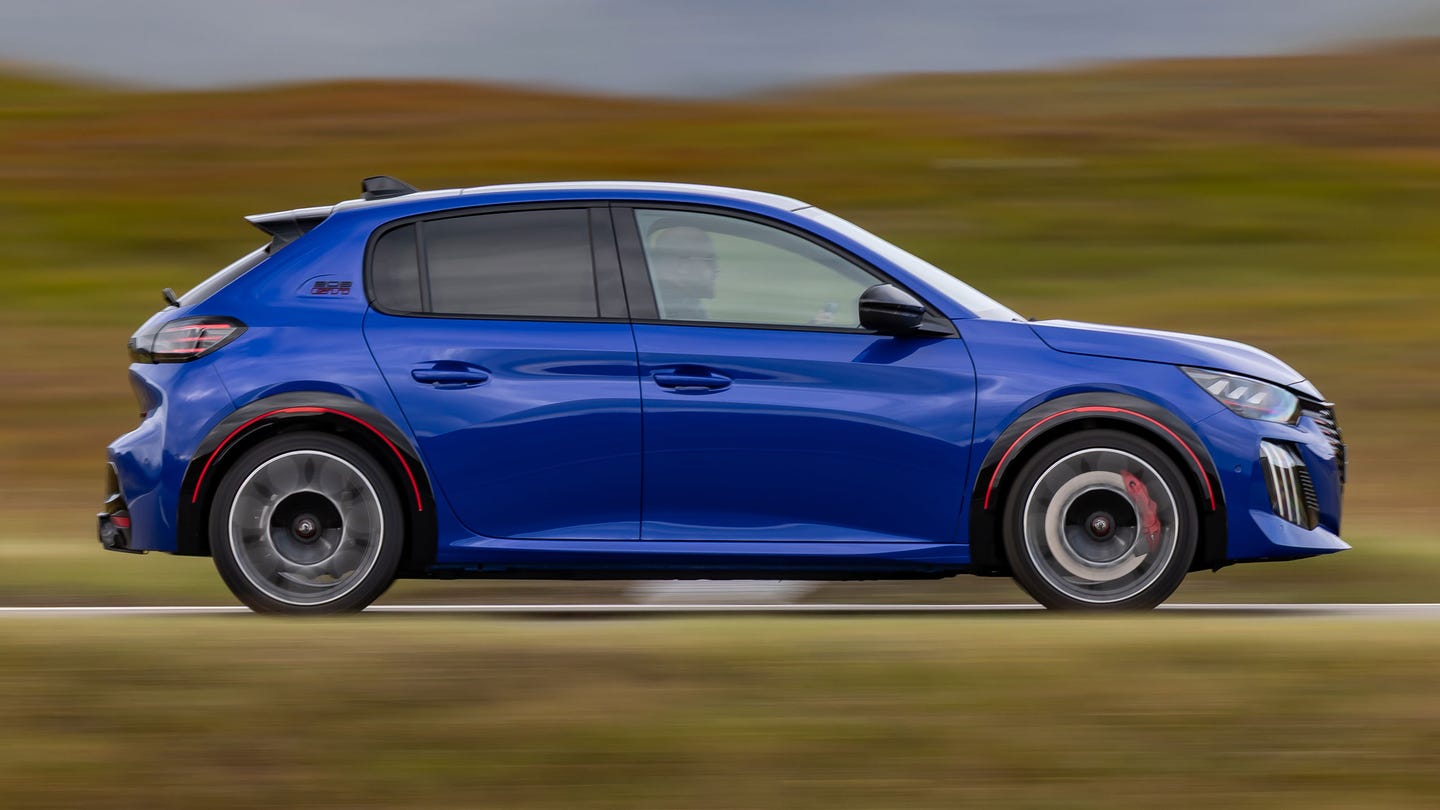
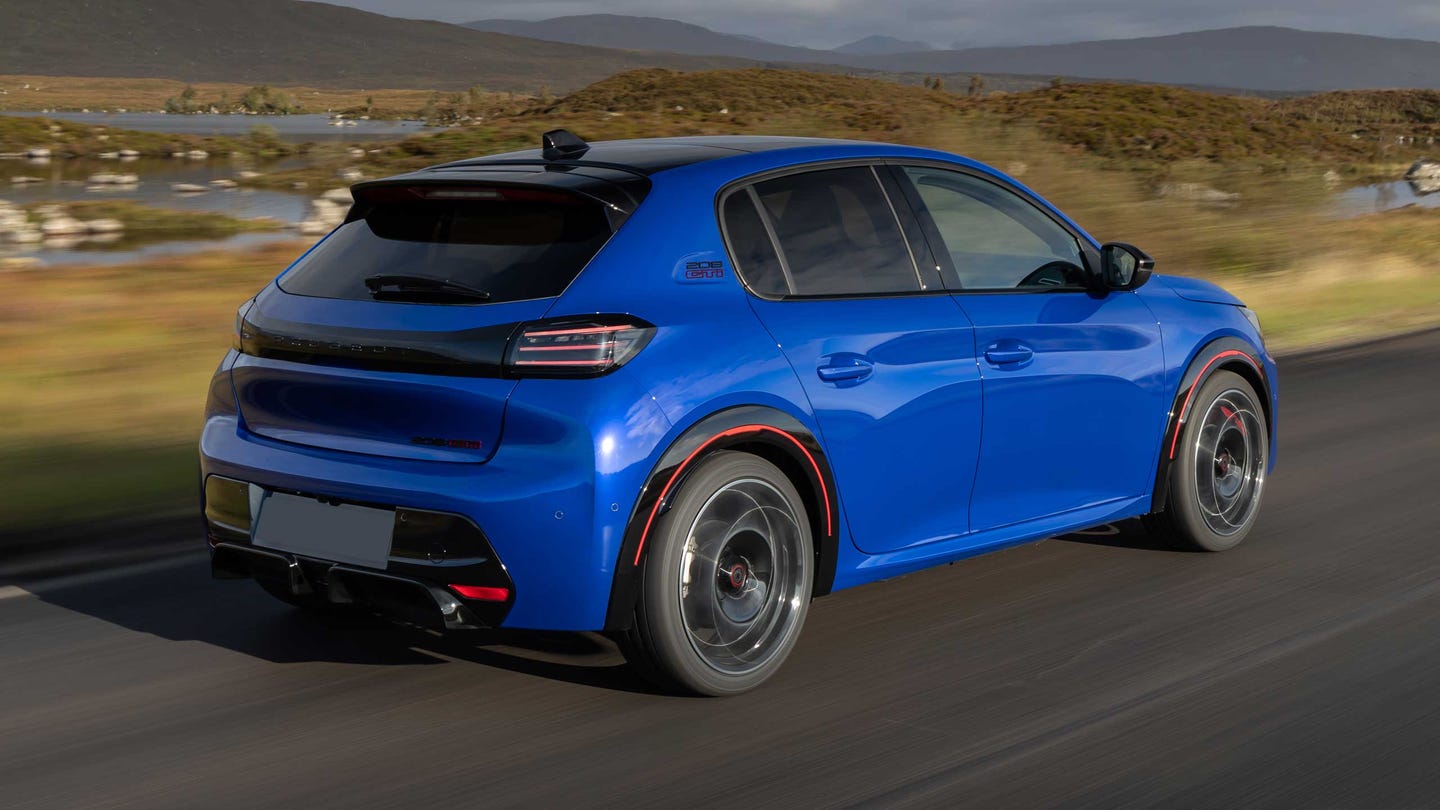
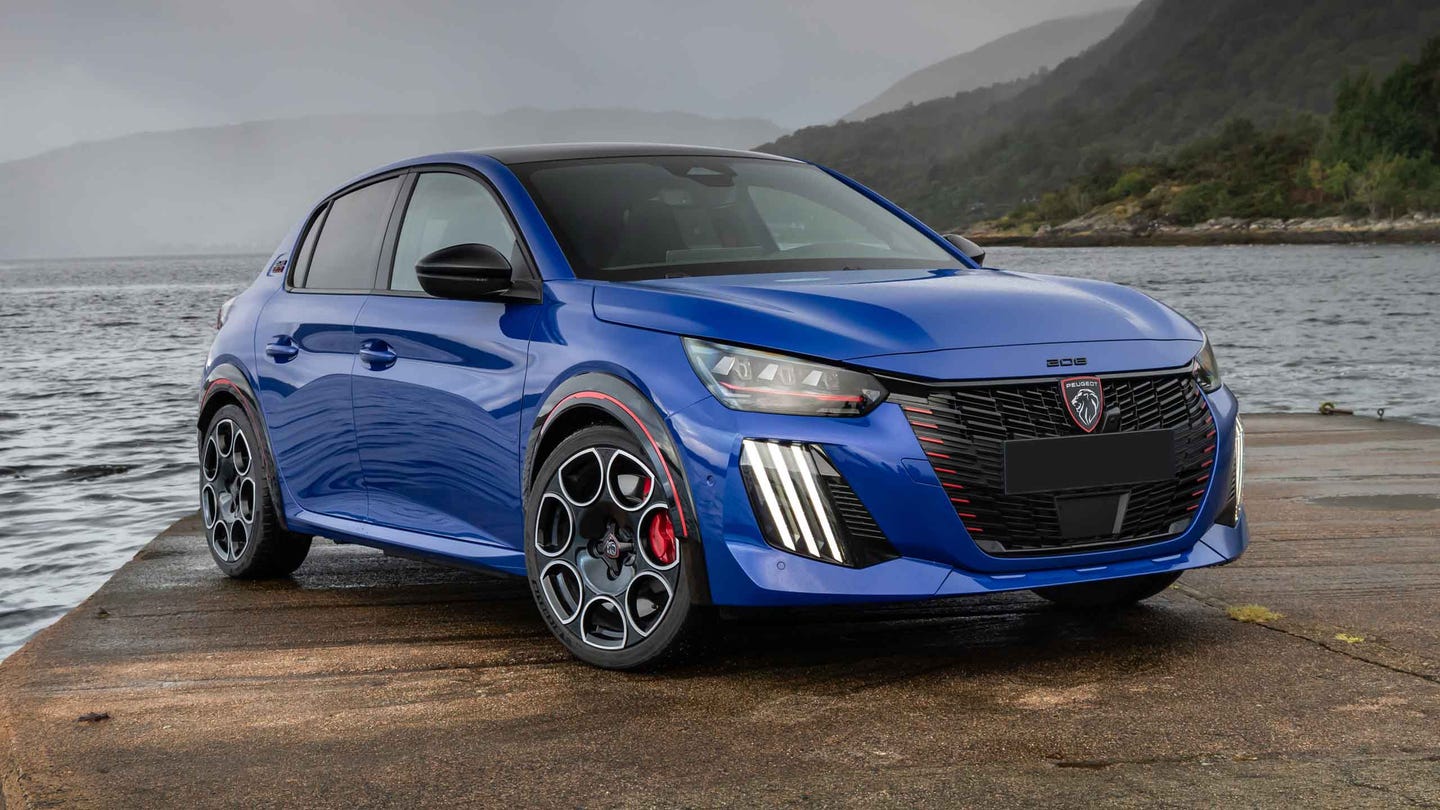
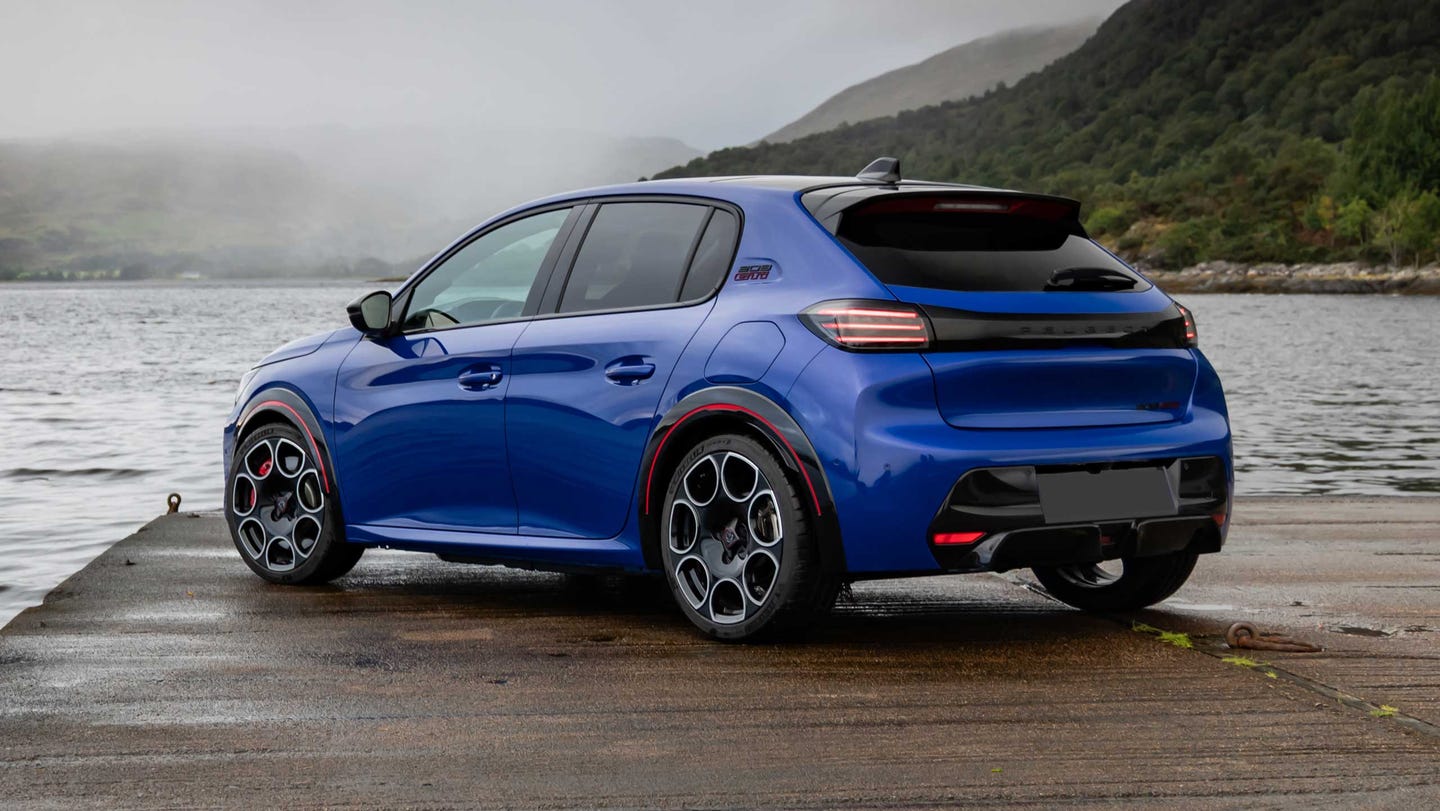
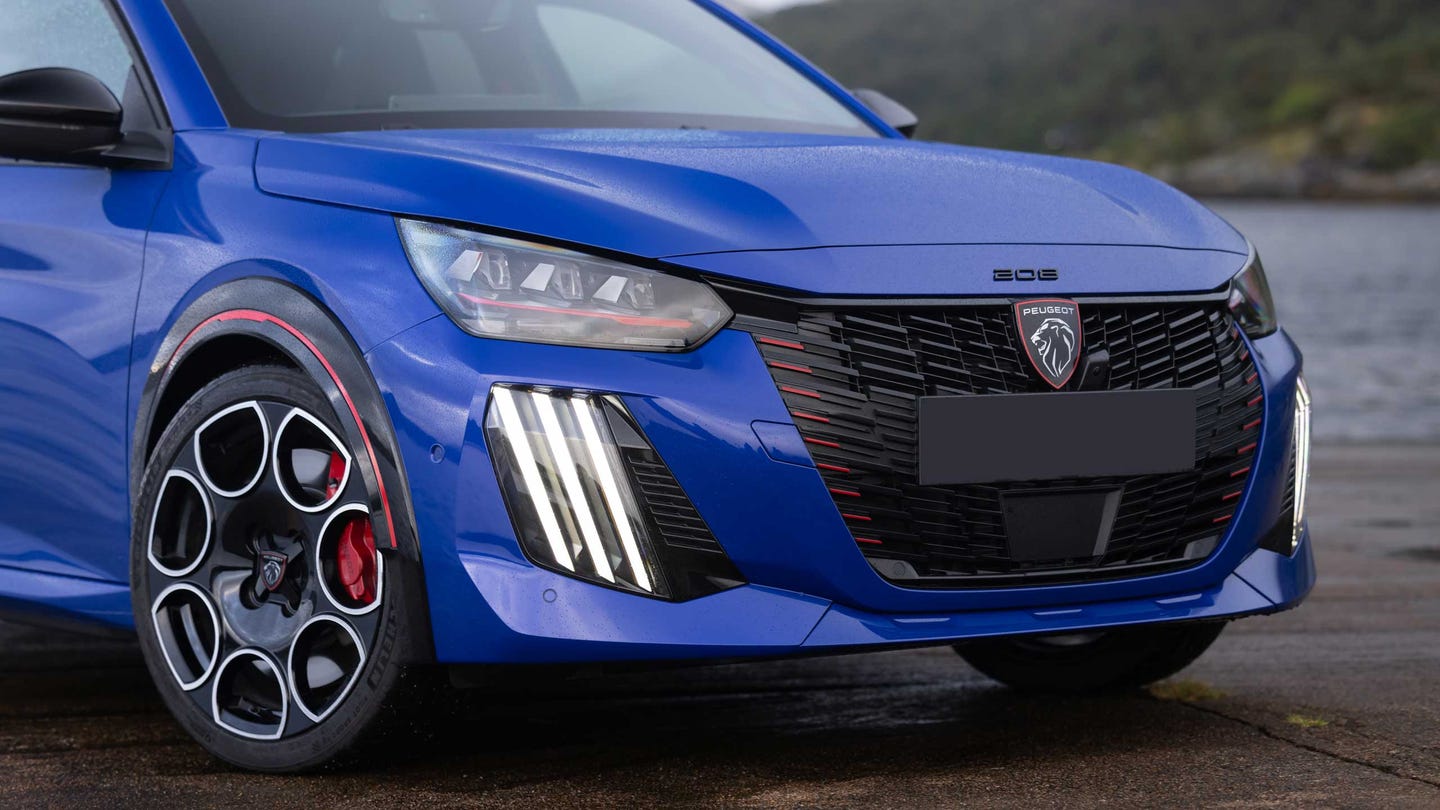
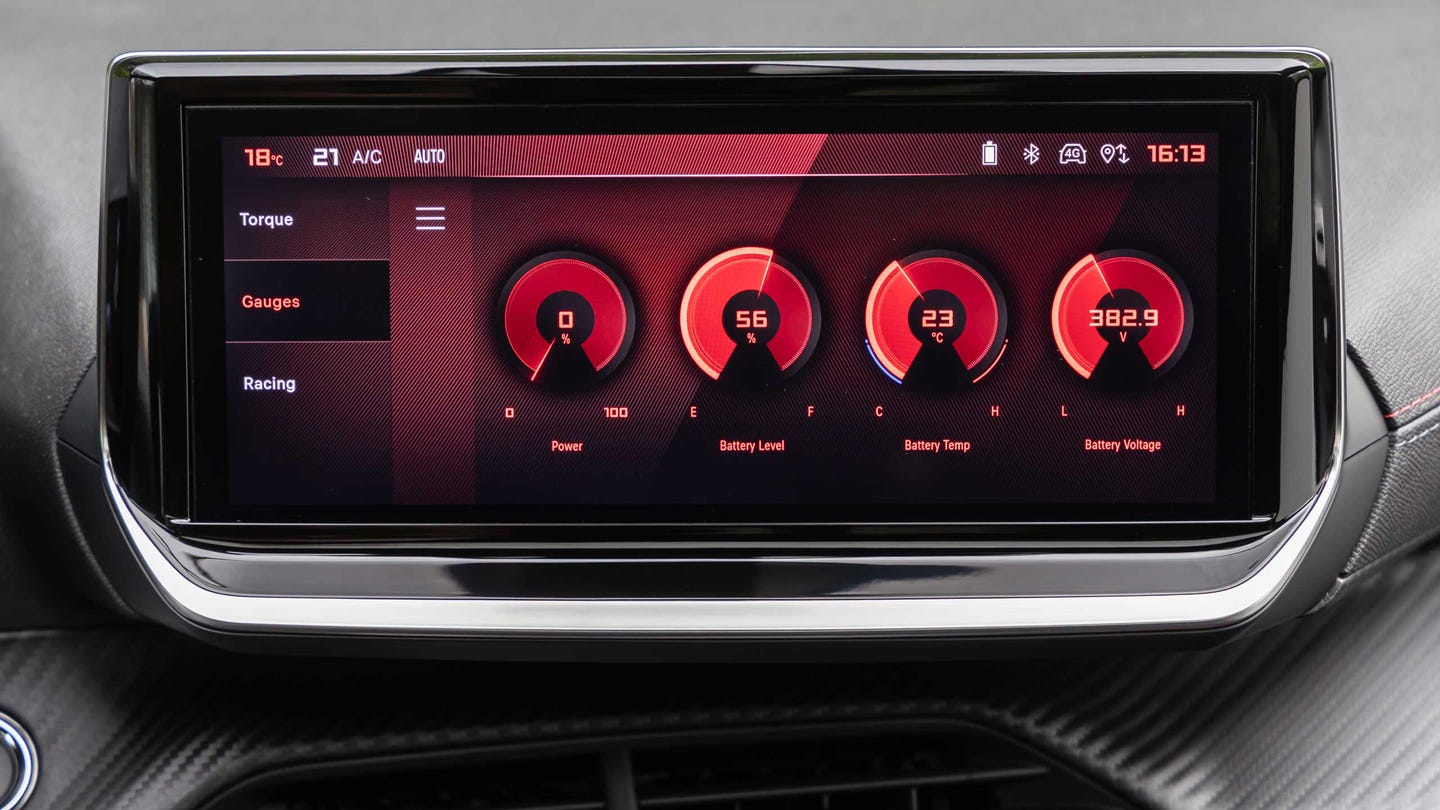
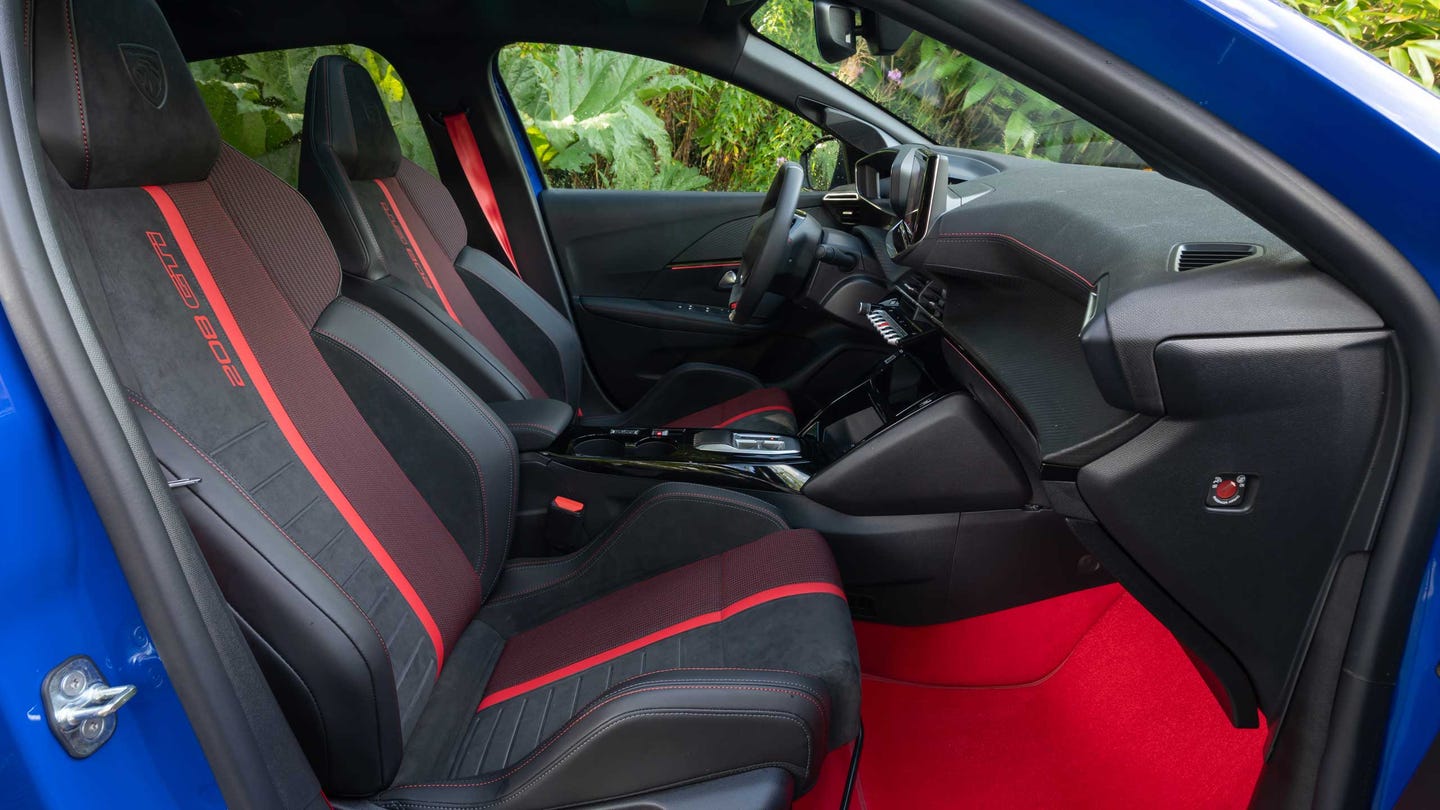
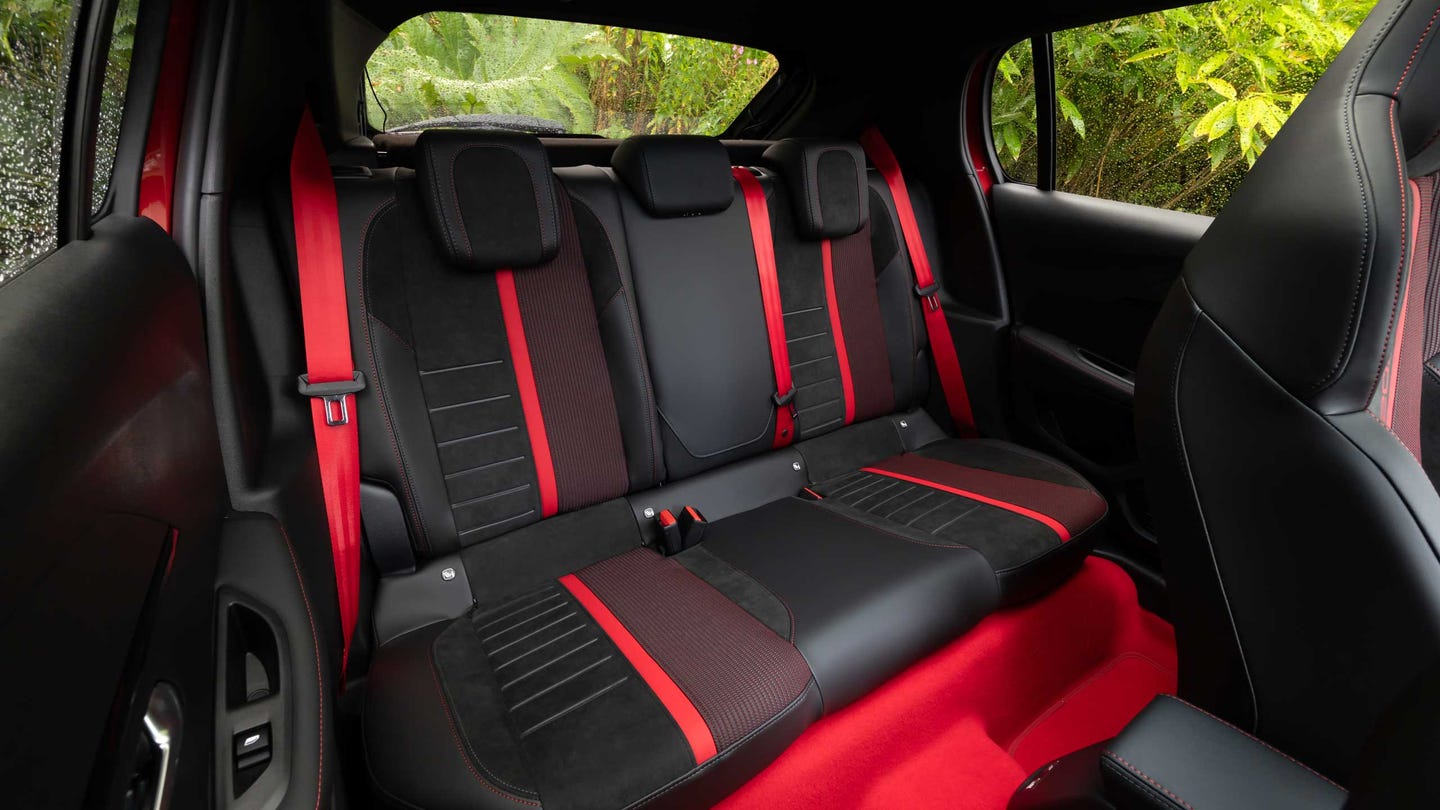
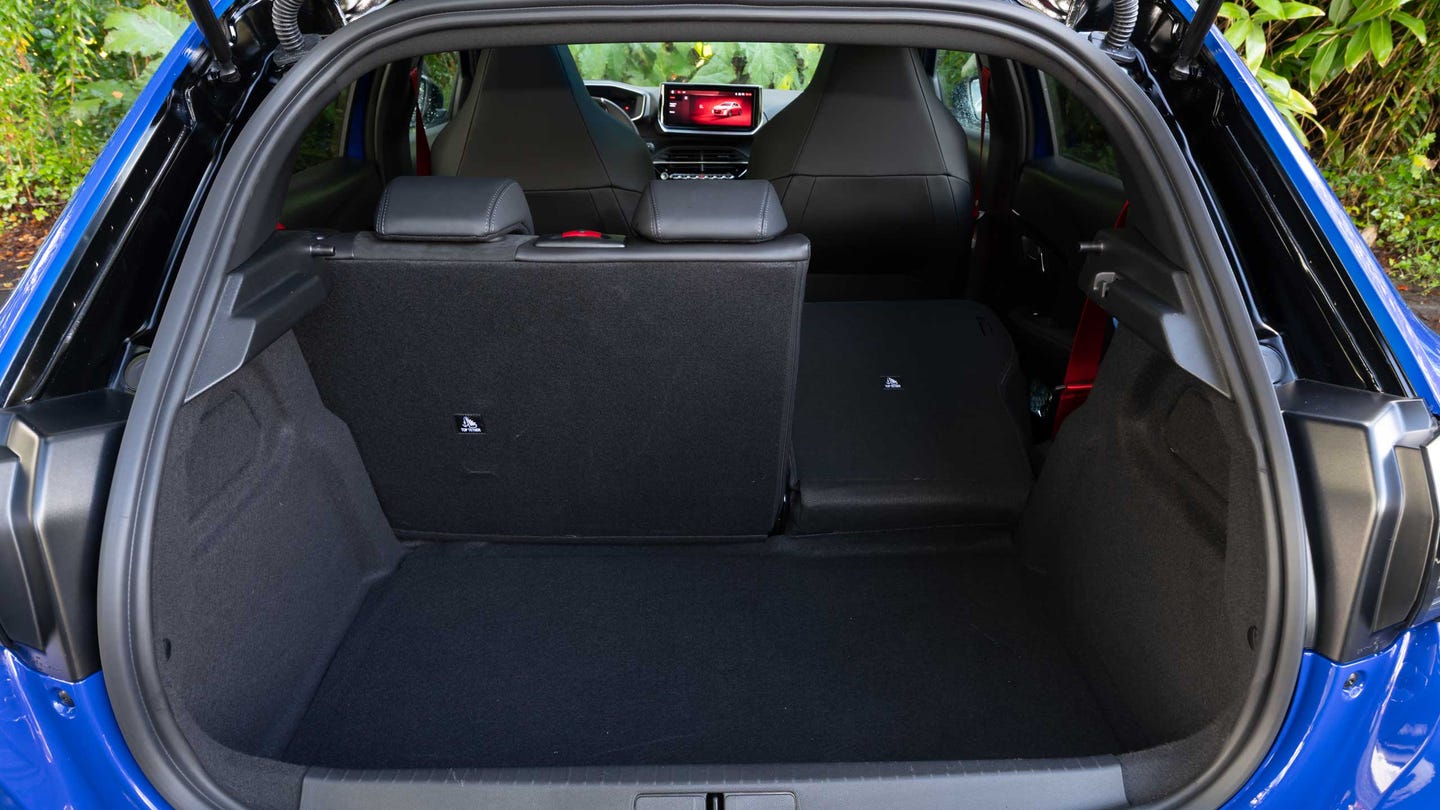
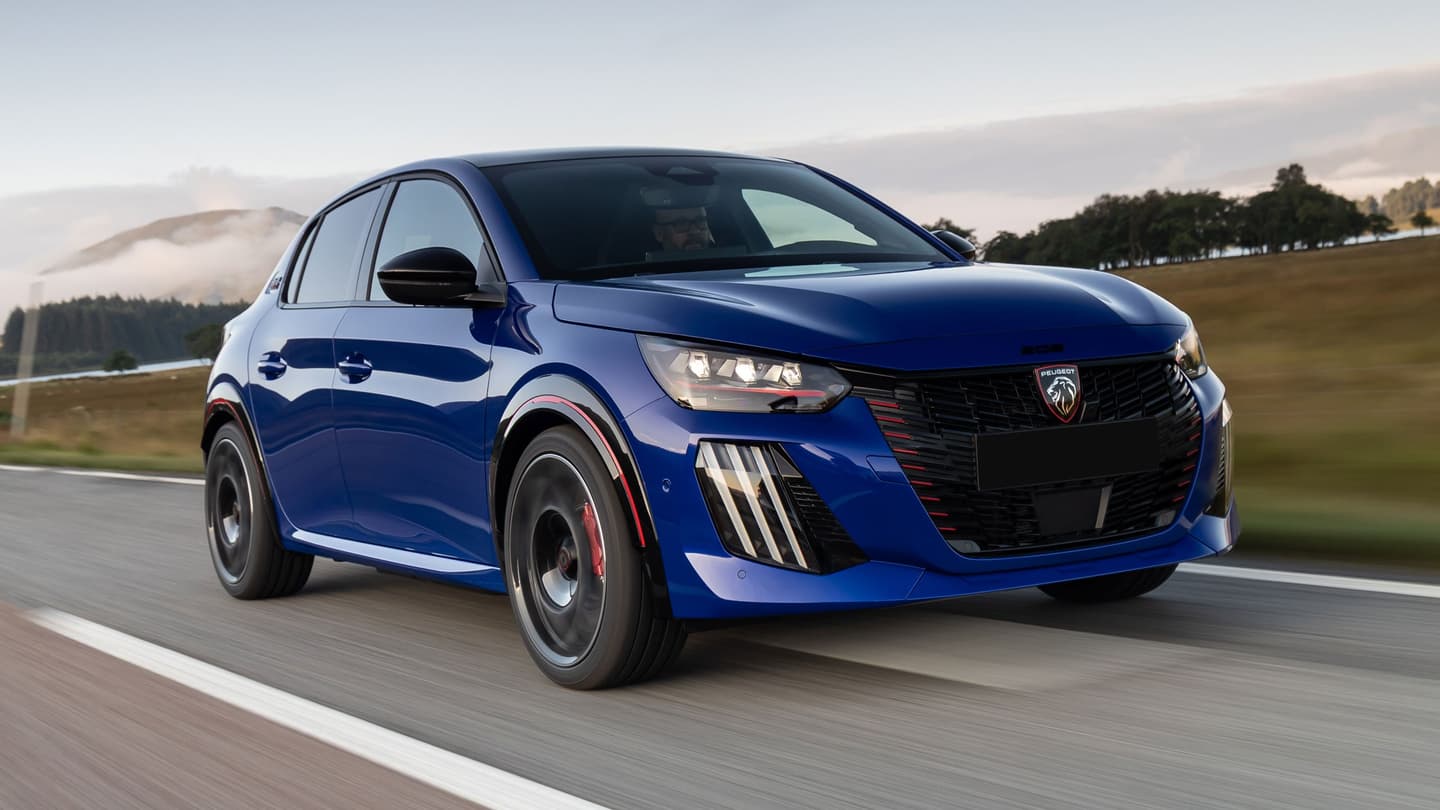

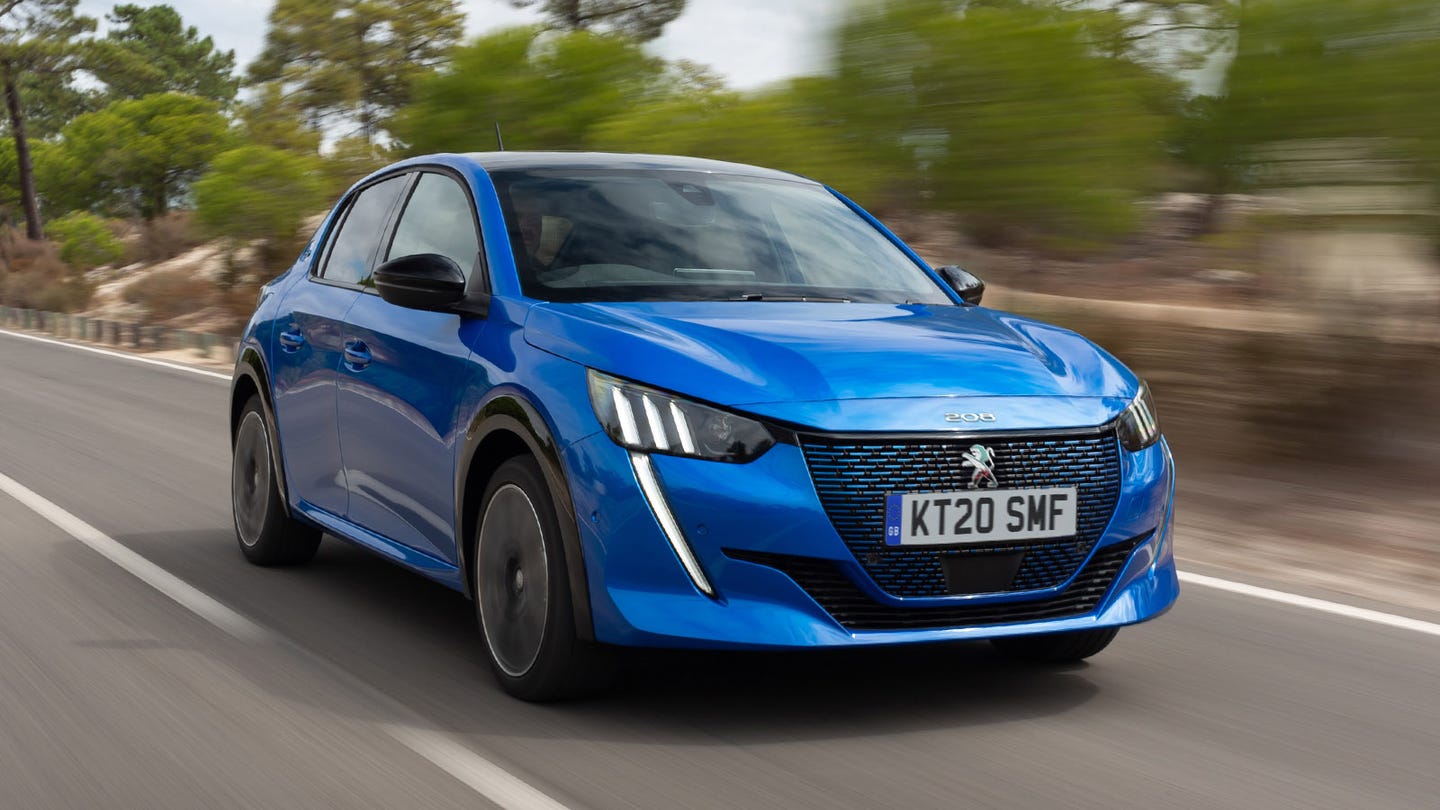
A hot hatch solely carried by nostalgia and heritage could have been a recipe for disaster, but the E-208 GTi is a very satisfying car to drive.
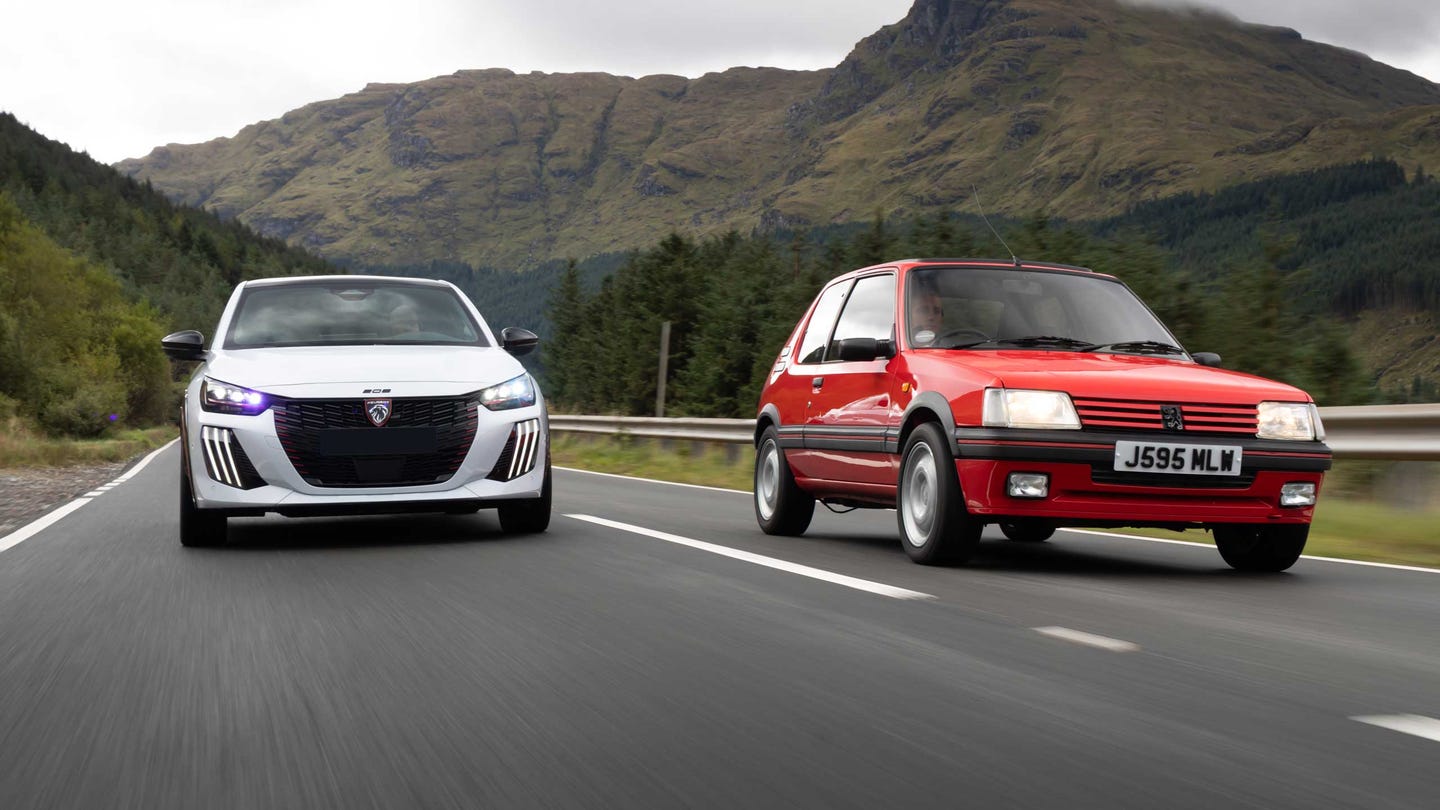
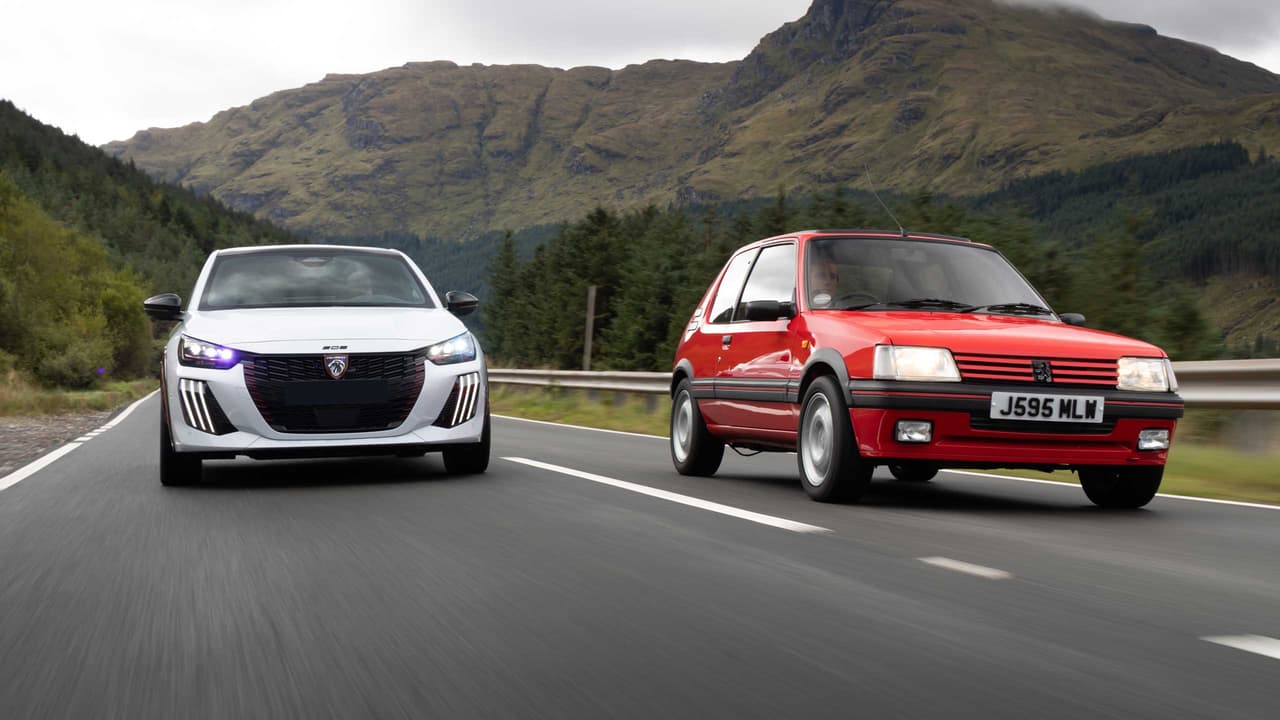
Peugeot is very keen to show the parallels between the iconic 205 GTi and this new all-electric E-208 GTi with familiar styling cues inside and out. The reality is they’re quite different, but the E-208 GTi is still a lot of fun, writes Charlie Harvey.
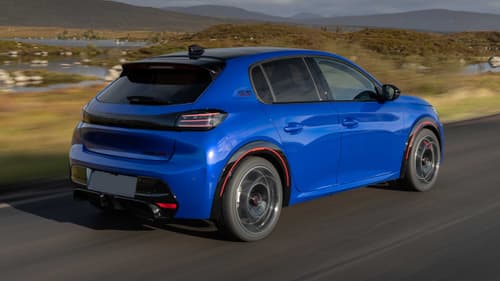
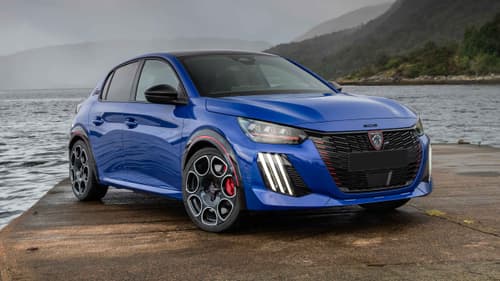
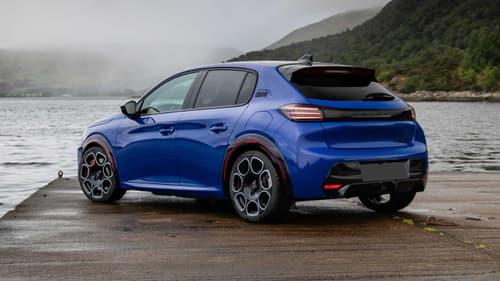
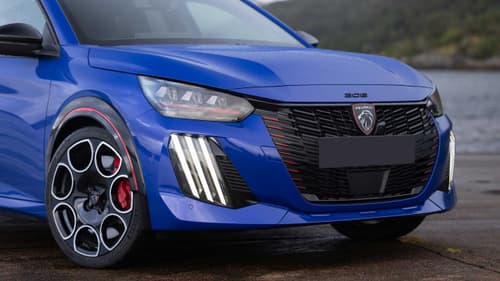
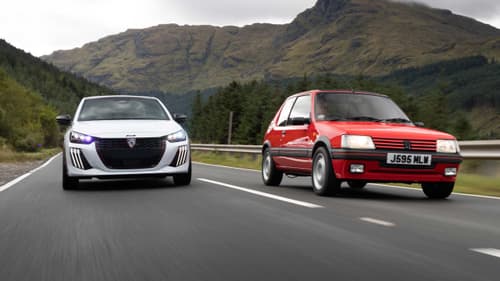
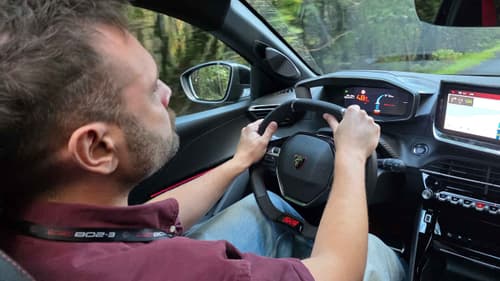
A new wave of electric hot hatches has arrived. The Peugeot E-208 GTi promises cheap running costs, everyday practicality and spine-tingling thrills, but does it deliver in practice?
Peugeot’s keen for you to compare this new E-208 GTi with the iconic 205 GTi, but, to be blunt, it’s arguably never going to be a success on that front. The 205 GTi, like many a classic hot hatch, offered an involving, analogue driving experience you had to work for – that ultimately made it feel rewarding by the end of the drive. The E-208 GTi, by contrast, is from a completely different age where oodles of electric power available at the prod of the throttle is a given. There’s no use comparing them.
"The E-208 GTi is a little late to the electric hot-hatch party, but it’s admittedly good fun"
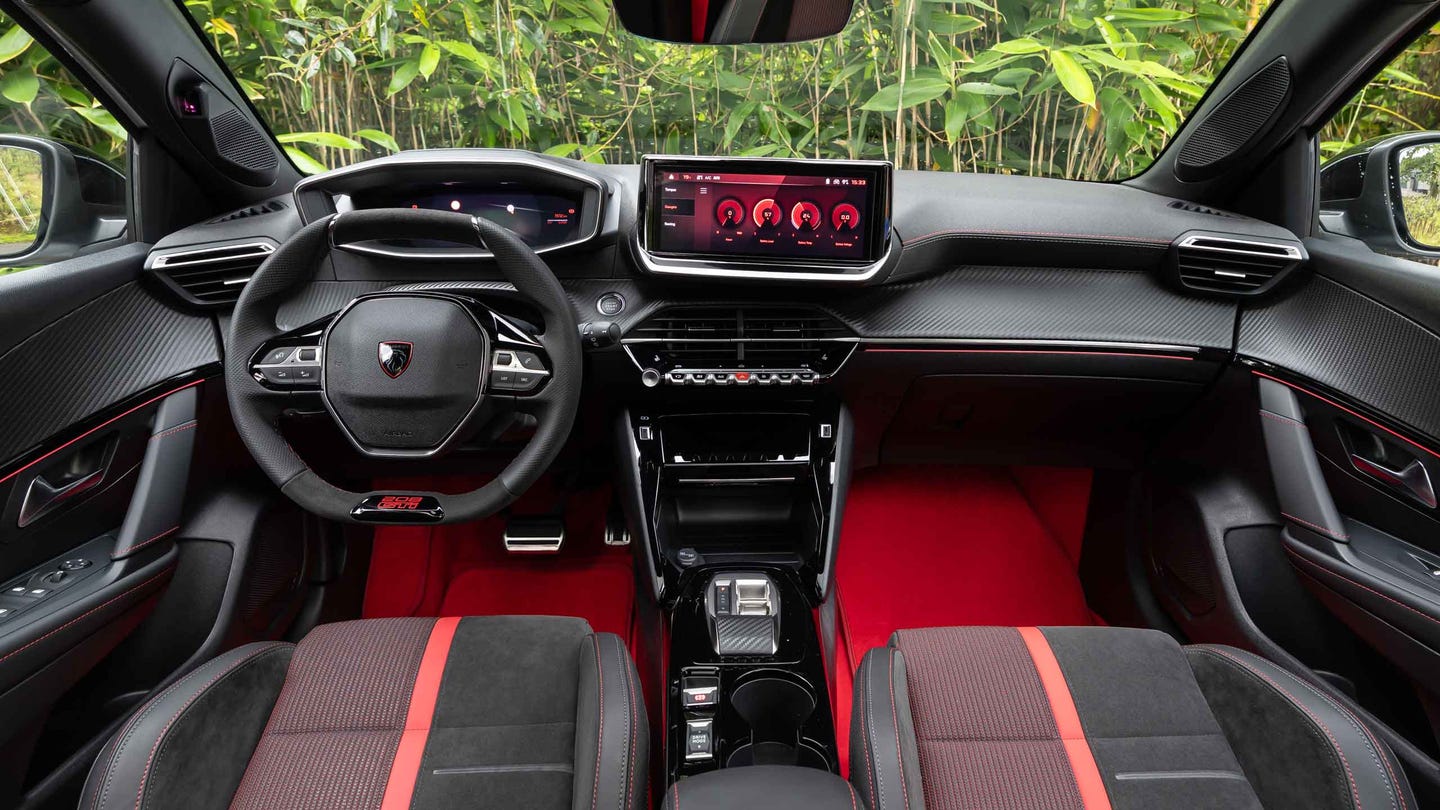
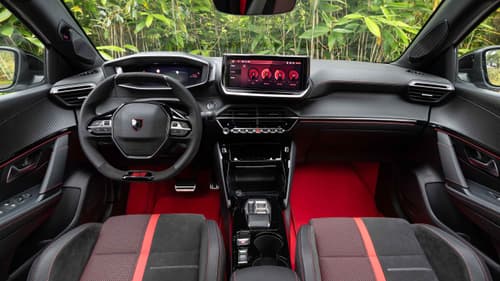
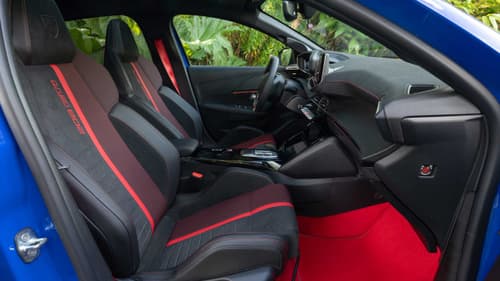
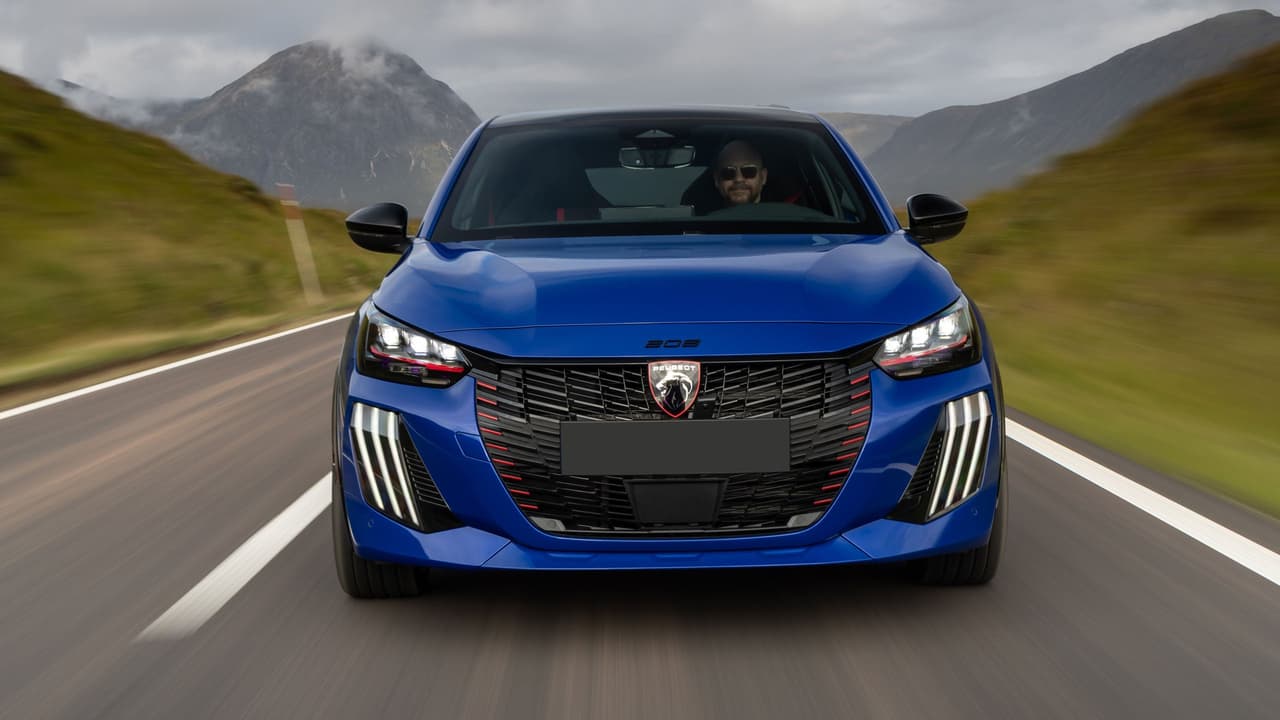
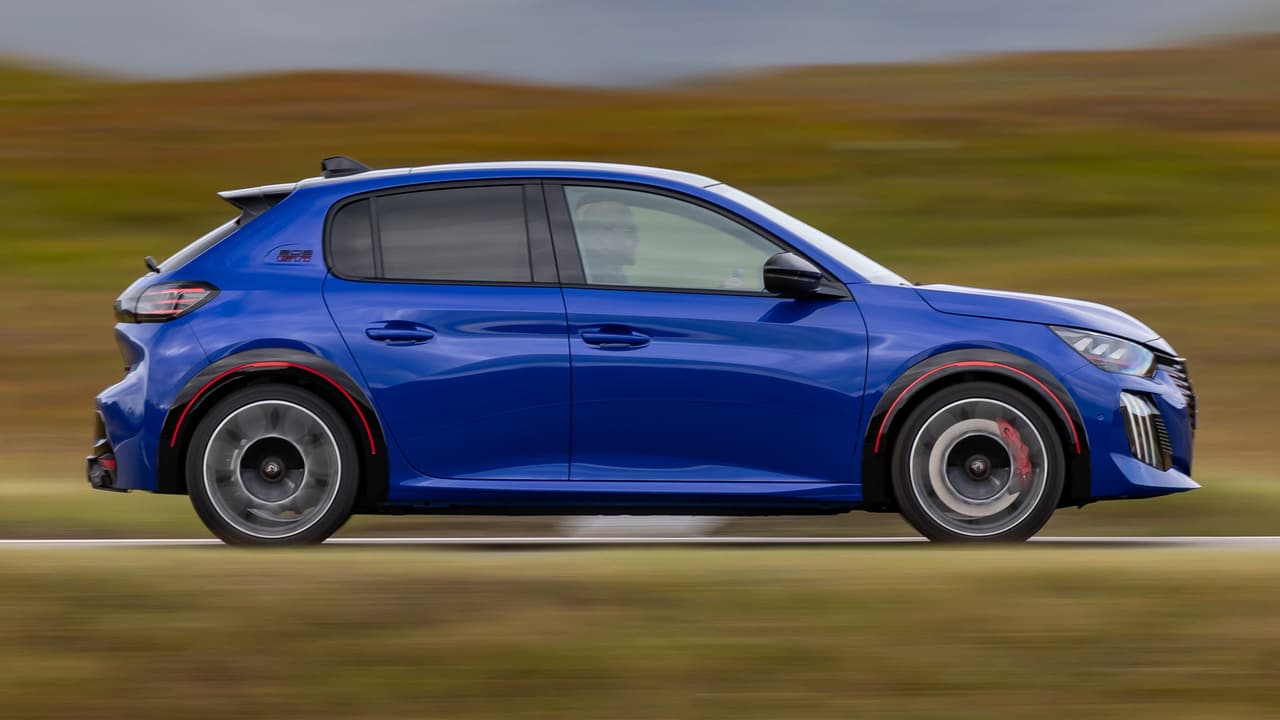
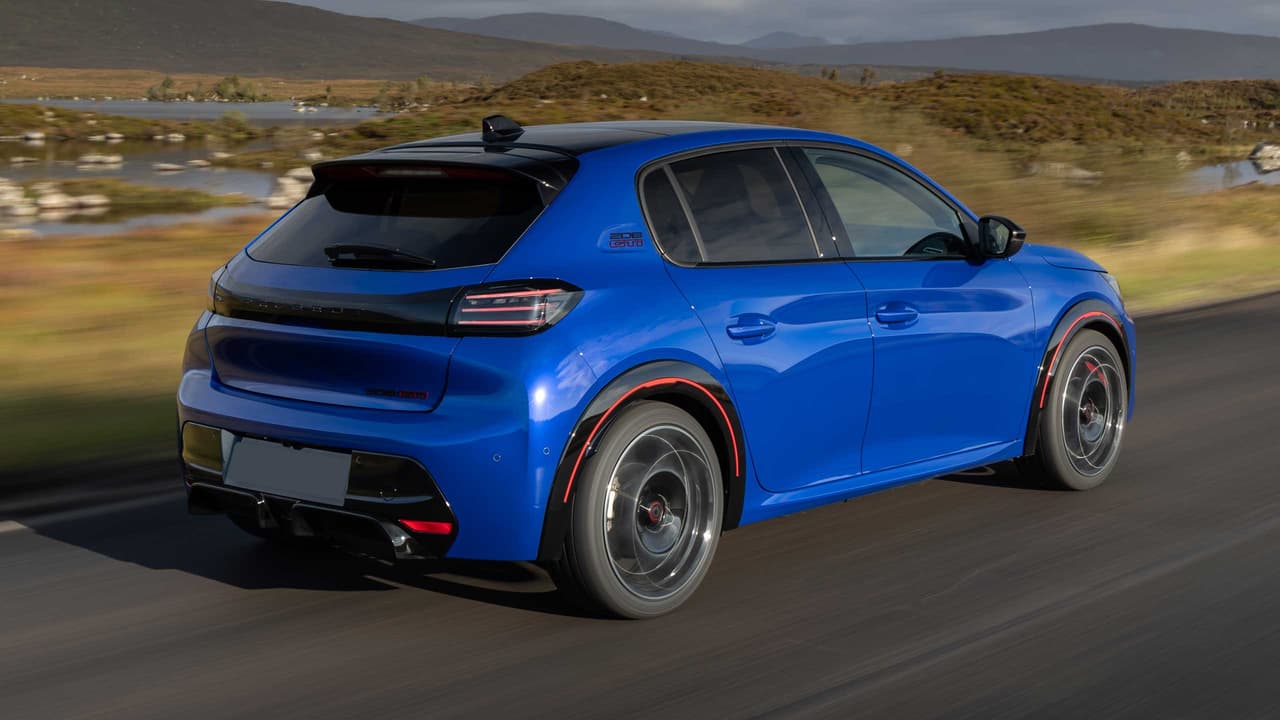
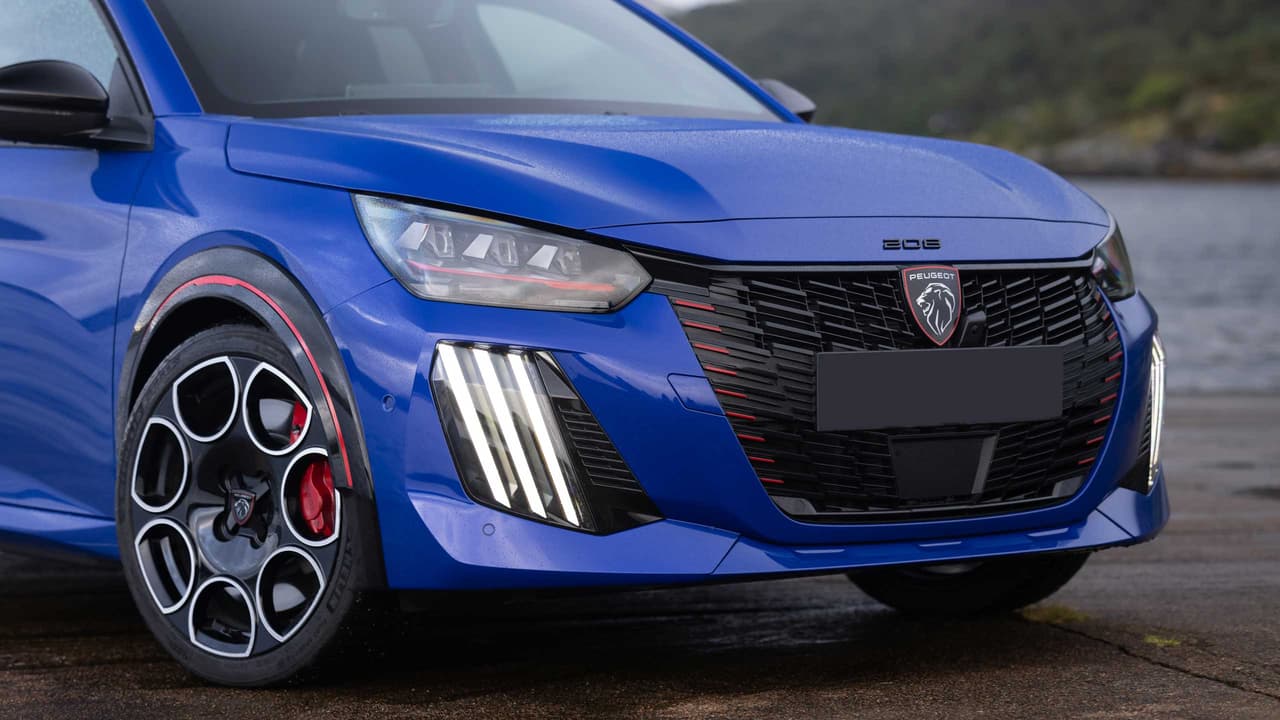
We’re not writing the E-208 GTi off, though, because that chassis is brilliantly balanced, with loads of feedback and feel that doesn’t come at the expense of a rock-hard ride. It certainly looks the part, too, with a wide, aggressive stance, attractive red accenting and the premium-feeling interior updated with supportive sports seats and red carpeting – a nod to the 205 GTi’s cabin.
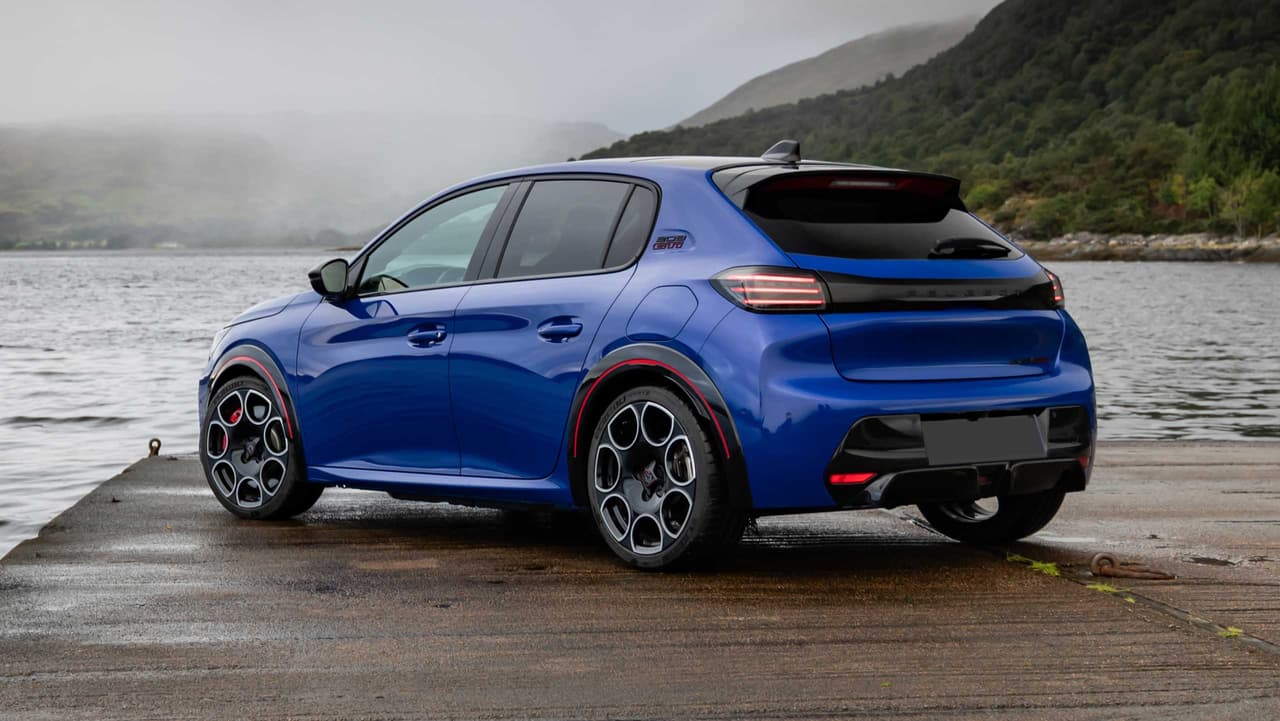
One of the big questions when it comes to the E-208 GTi is ‘why now?’. The standard 208 and E-208 have been around since 2019 and already underwent a mid-life facelift, so why has Peugeot waited so long to bring out a hot GTi halo model?
Well, the EV game has moved on dramatically since then. Peugeot's closest French rival brand has since released the Renault 5 EV – a car that’s done a great job of coaxing buyers into the electric era with the help of retro nostalgia. The Renault's desirability has since been boosted with the hot version: the Alpine A290.
Closer to home, Peugeot’s Stellantis stablemates include Fiat and its hot Abarth sibling, as well as Vauxhall – both of which offer spicy EVs of their own, including the Abarth 600e and Vauxhall Corsa GSe. The E-208 GTi shares lots of parts with these models, including a high-output 277bhp electric motor, so the move to bring back the iconic Peugeot GTi name was obvious given the ingredients at their disposal.
The E-208 GTi shares the same 54kWh battery pack as the longer-range version of the standard E-208. In the GTi this will eke out up to 233 miles according to official figures, compared with the 268-mile figure of a standard E-208. That doesn’t feel like much of a tradeoff, considering the GTi’s performance, but you'll see a lot less if you drive quickly.
The E-208 GTi is a fun car to weave round B-roads, but the lack of driver involvement – not having a manual gearbox, the absence of a raspy note of a petrol engine and, frankly, the ease and instantaneousness of the power delivery – might still put off aficionados. See the E-208 GTi as a car you can live with everyday with a little fun thrown in, and it’s a winner. Arguably, that was always the ethos of the hot hatch.
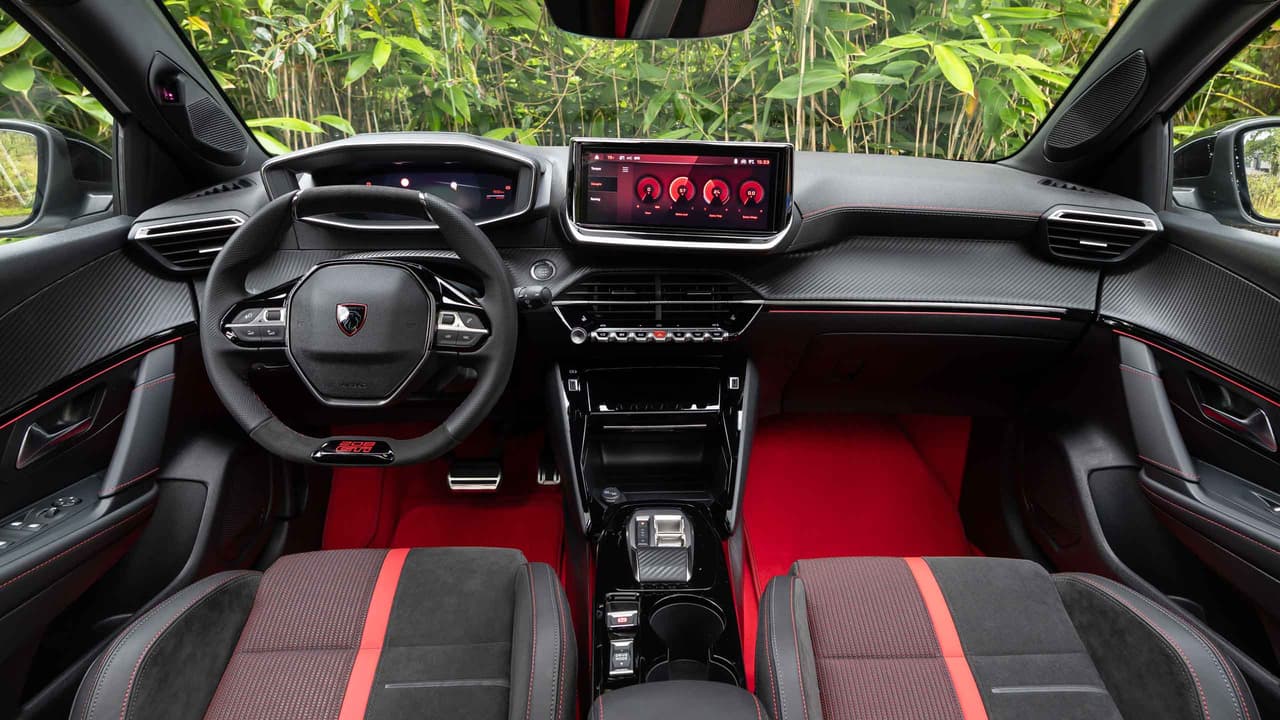
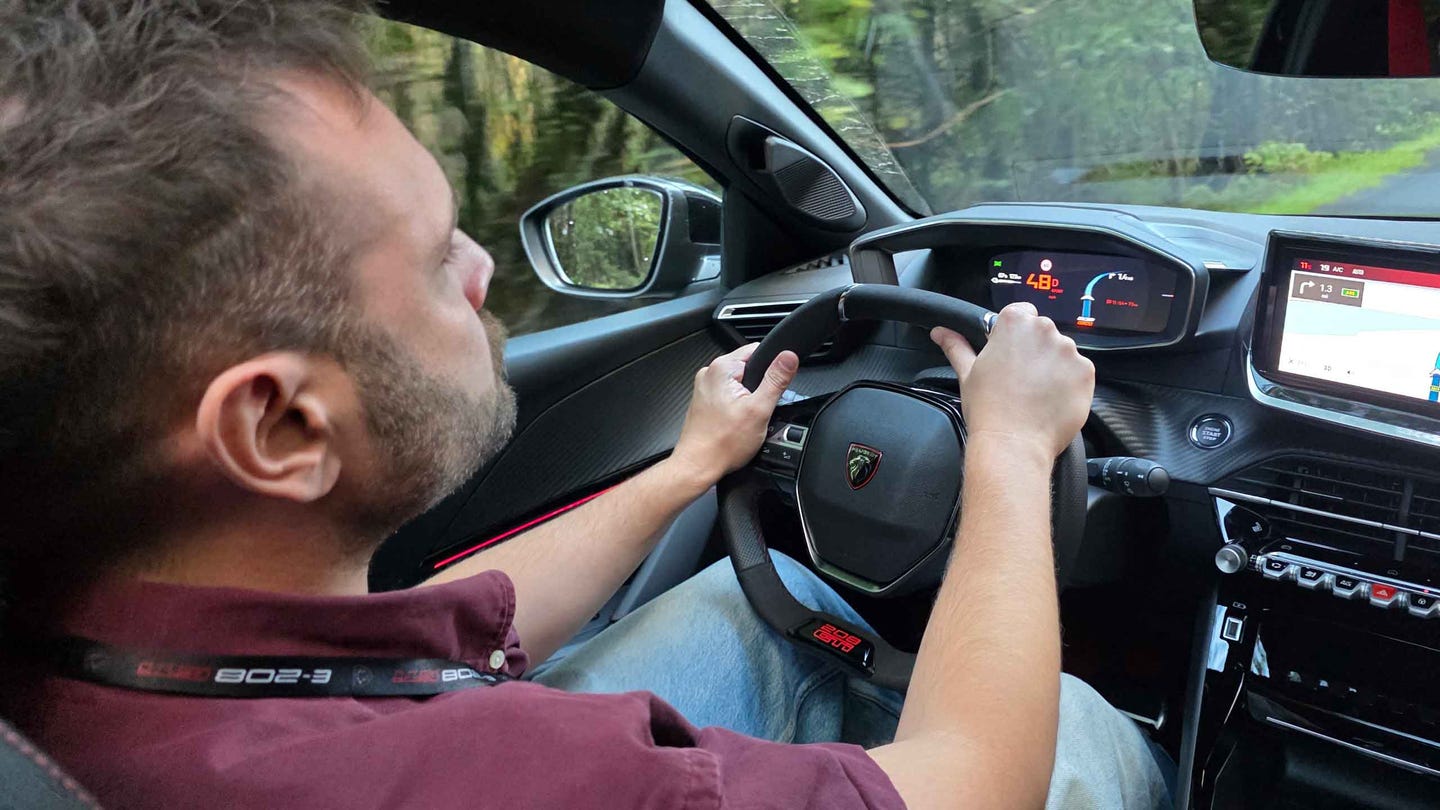
There’s nothing much new to report on inside the E-208 GTi, but the standard E-208’s interior was always a winner. The perception of quality is good, and the GTi brings a few unique upgrades compared to the standard models.
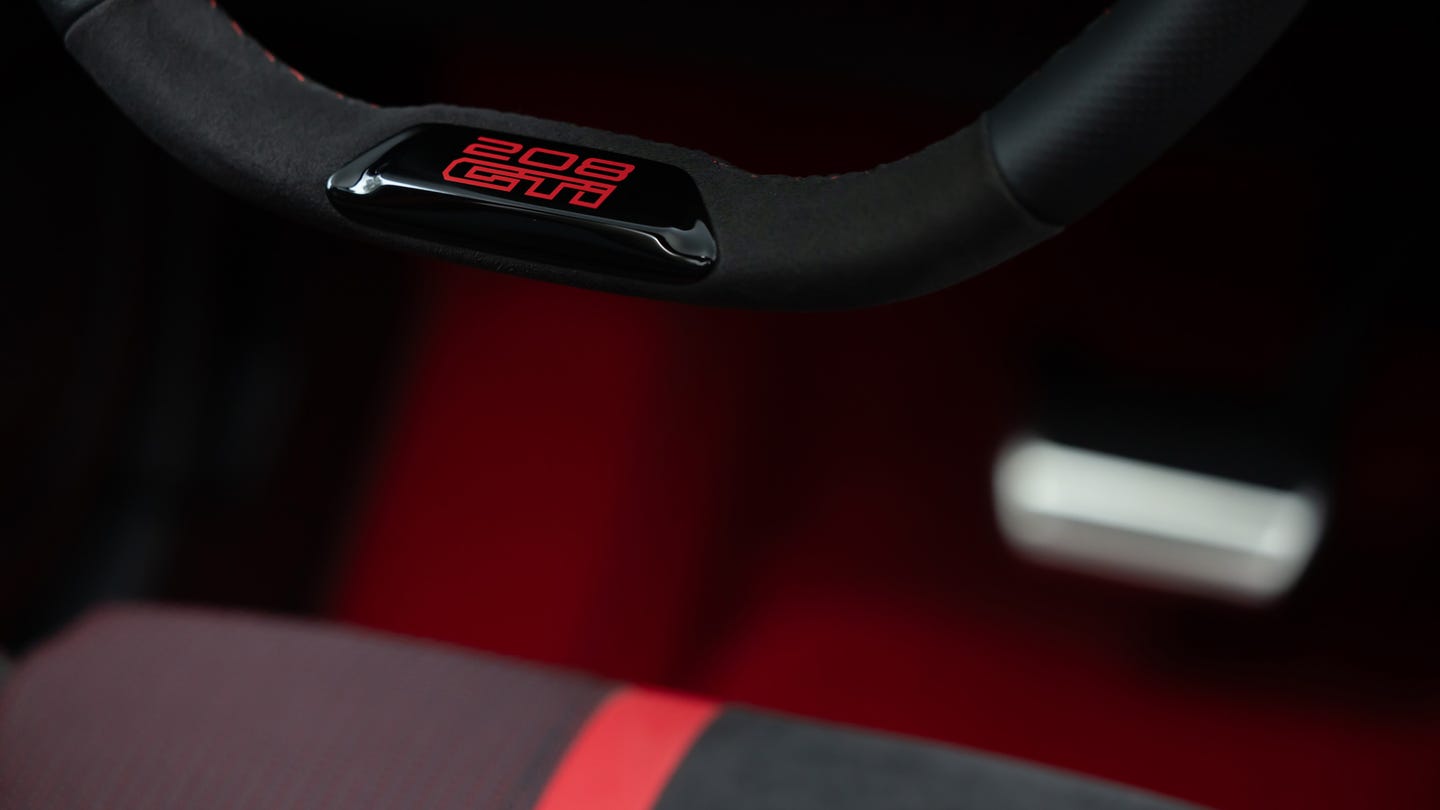
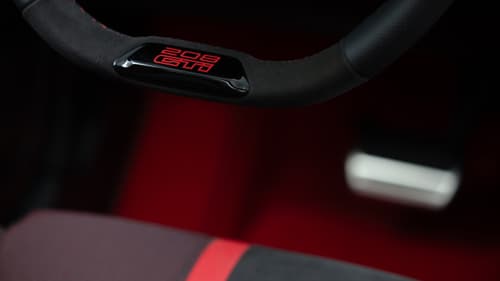
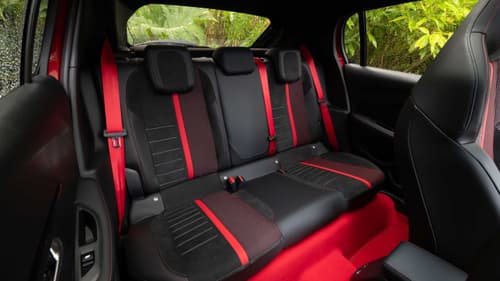
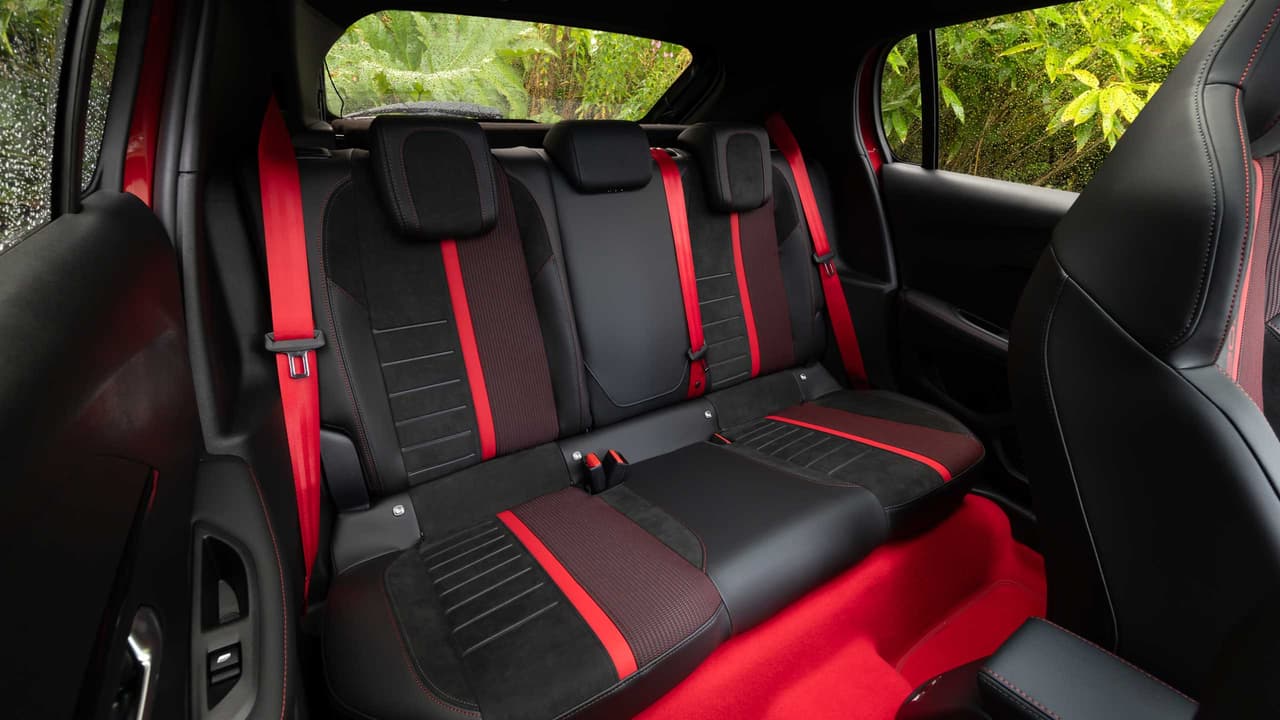
The connections between the original 205 GTi and the new model are at their strongest here – the bright red carpeting, red seatbelts and GTi branding on the bucket seats echo those of the 80s model, which is a nice touch for those old enough to remember. It might put off fans of subtler upholstery, but we think it’s a cool touch.
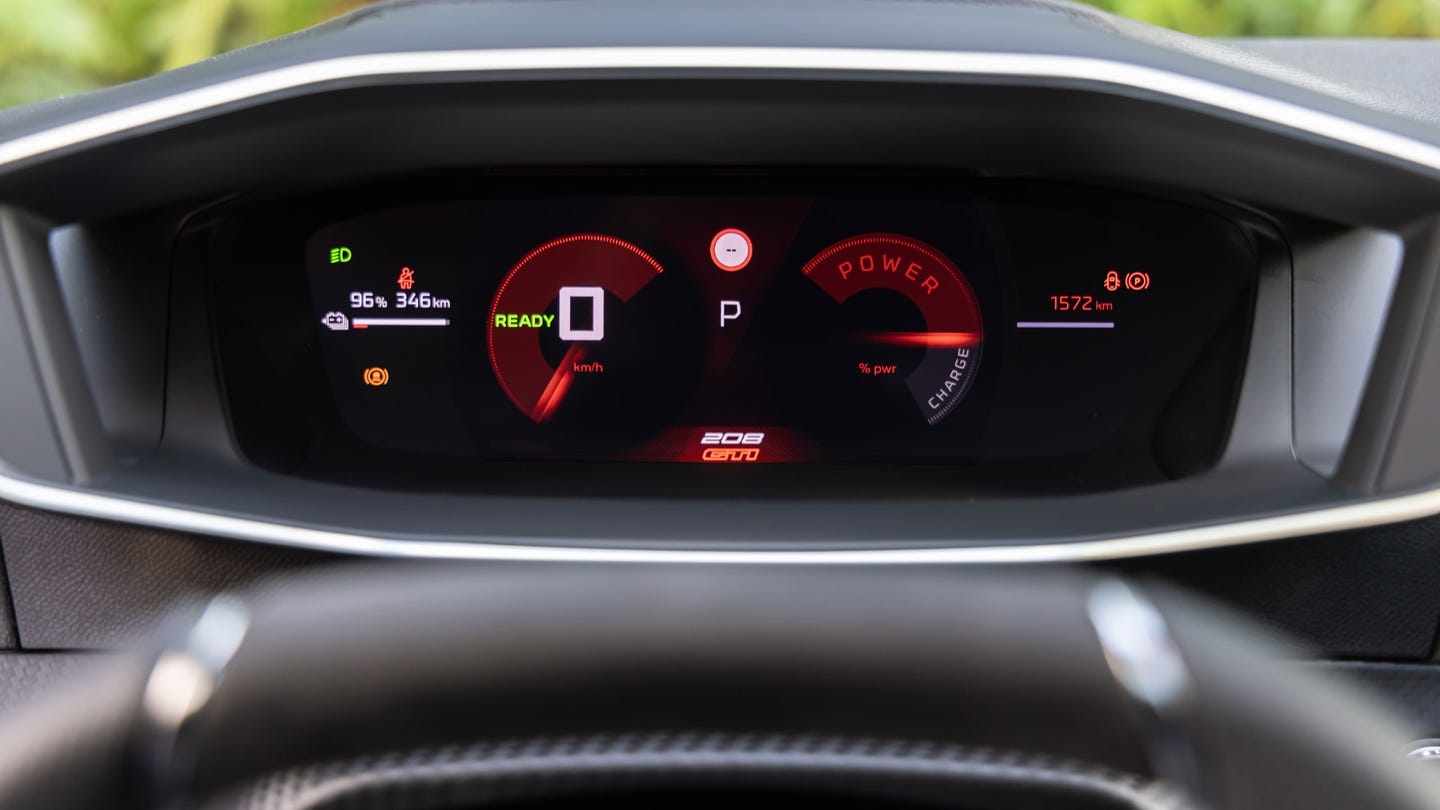
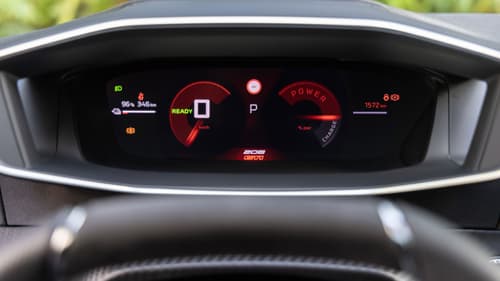
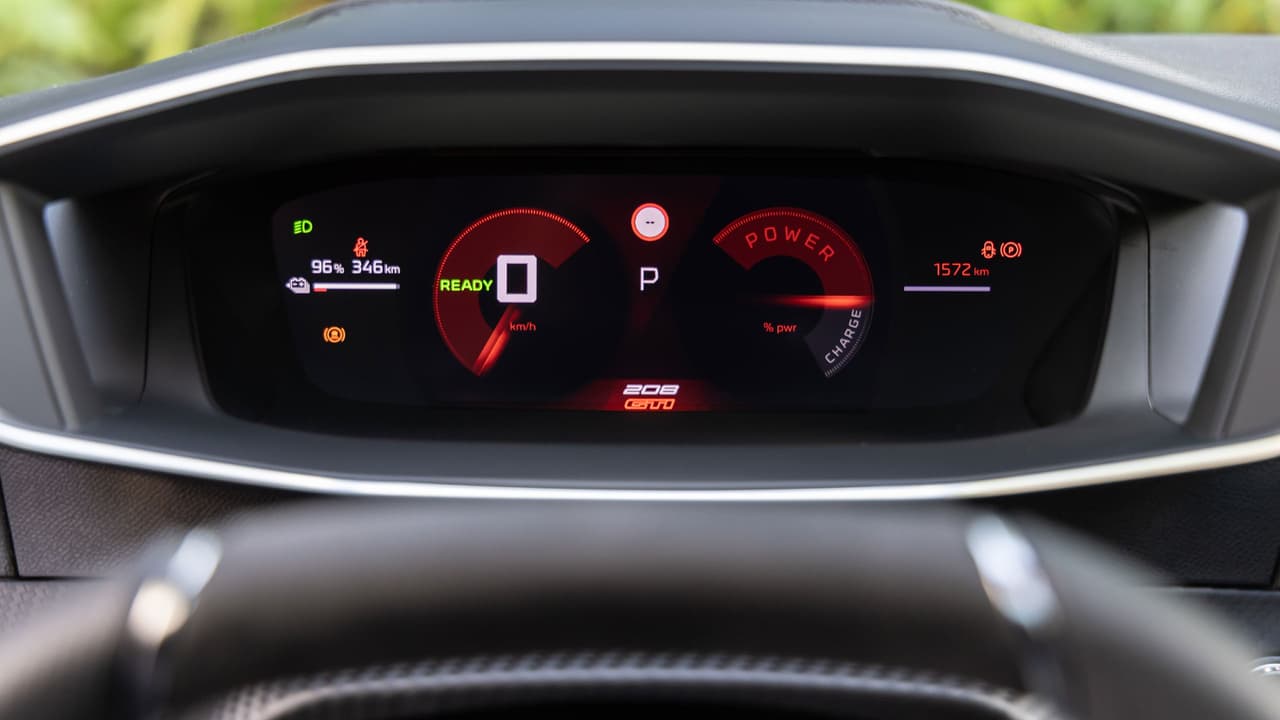
As in the rest of the Peugeot lineup, you get the brand’s unique ‘i-Cockpit’ setup, which puts the driver’s display up high above a small, stubby steering wheel, so you look over it rather than through it. It can take some getting used to and divides opinion, but we think it makes for a sportier feel that suits the GTi well.
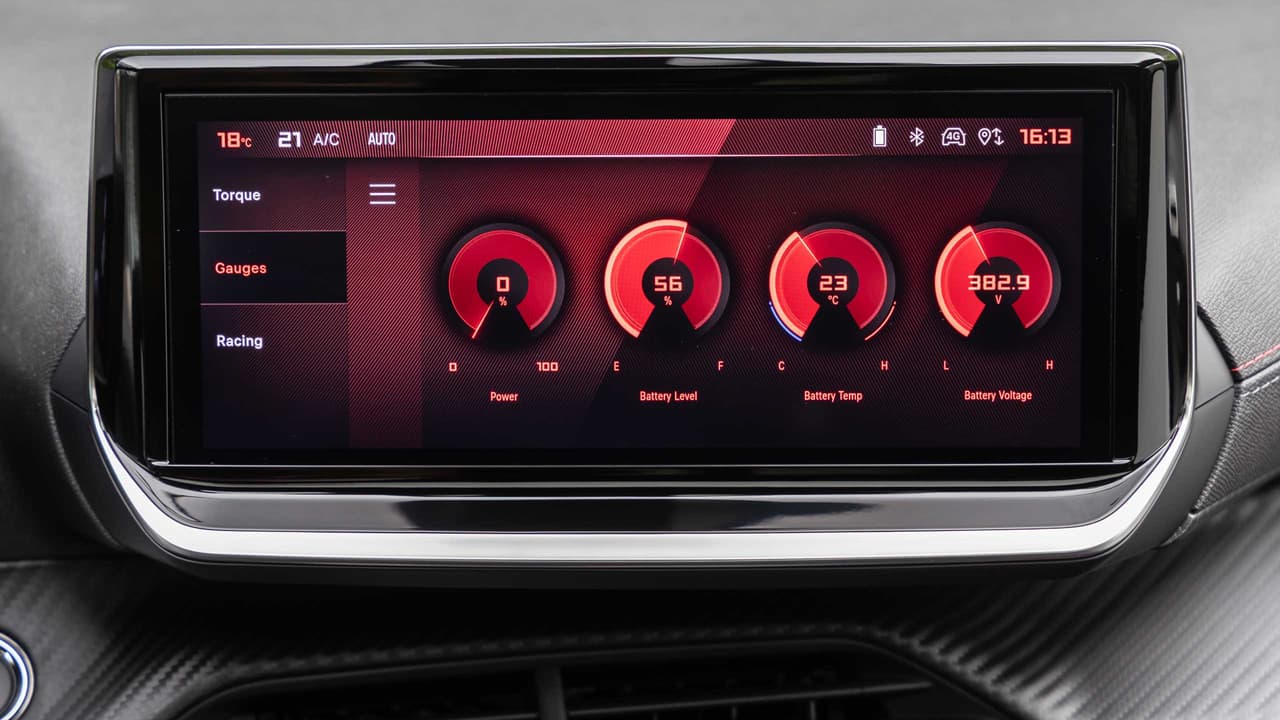
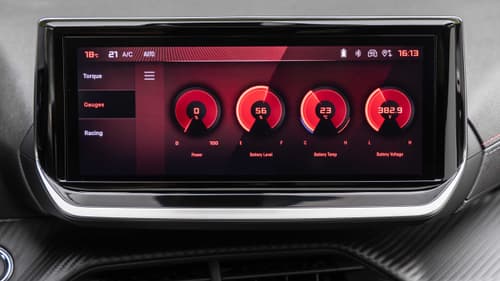
The central touchscreen infotainment system is small by modern standards, but you know what? That actually feels like a good thing. It’s simple, responsive and easy to navigate, and its size feels appropriate and stops the interior feeling cluttered. If having the latest tech and big touchscreens is more your thing, then you might be disappointed with the E-208’s infotainment, as it’s admittedly a few years out of date now if you compare it to the Alpine A290’s large flashy setup.
As in the standard 208 and E-208, we wish there were a few more physical buttons for things like the climate control. This can simply be turned on or off via a piano key button on the dash, but for any temperature or fan-speed tweaks you’ll have to prod the touchscreen above it.
The steering wheel media controls are also a little curious – there’s a slider for skipping the song on the right hand side, while there are volume up and down buttons on the left. It’s a strange choice; we reckon the slider would be better suited to controlling the volume and the buttons should be used to skip tracks forward and back, but these are small niggles.
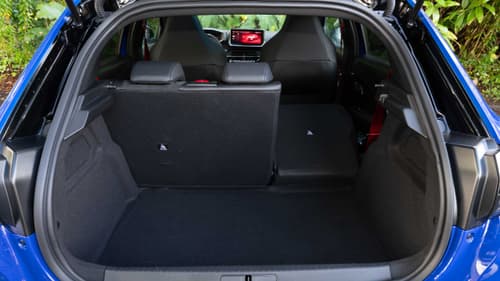
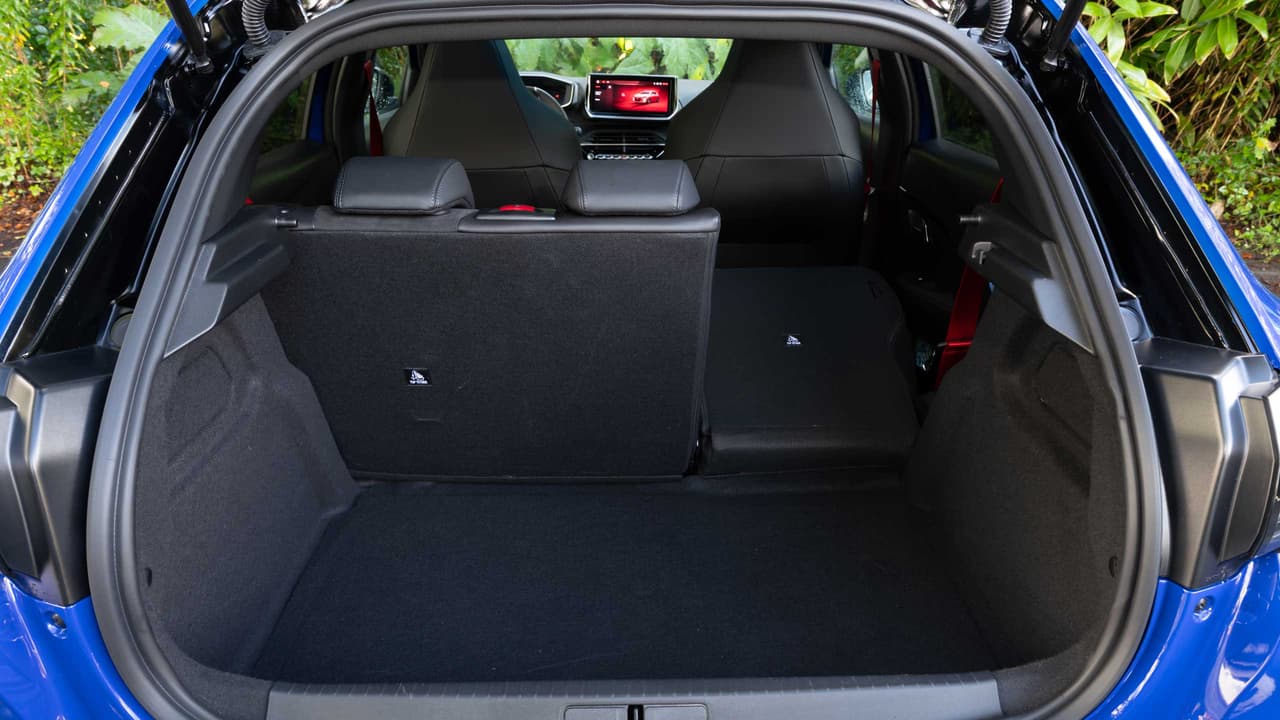
The beauty of the hot hatch was that it offers sports-car performance while retaining the practicality of a hatchback. The 208 is pretty middle-of-the-road when it comes to boot and interior space, but it will offer enough practicality for singles or couples.
The boot has a capacity of 309 litres, which is smaller than the 326 litres available in the Alpine A290. The Vauxhall Corsa GSe offers up 276 litres, while the larger SUV-esque Abarth 600e’s boot is 360 litres large.
Interior space isn’t bad for a hot hatch, either. Up front, the dash curves round in such a way that the passenger side feels very spacious. Depending on how long your legs are, though, the driver might not get on with the Peugeot’s i-Cockpit arrangement – the steering wheel sits lower than in most cars, and some might find it hits their knees.
There’s enough space in the rear for two full-grown adults, which is more than can be said for most cars in the segment. The Corsa’s rear seat space is rather more limited, and only really suitable for small children. The Abarth 600e might straddle the line between hatchback and SUV on the surface, but its retro design means it compromises on interior space than you’d expect – its higher roof offers up more headroom, but legroom is still rather lacking.
The main selling point of a hot hatch is performance mixed with everyday practicality. Now that the GTi badge has gone electric, Peugeot has to beat range anxiety in the minds of potential buyers, too.
The good news is that the 233-mile on-paper range figure will be good enough for drivers who can charge at home, and it doesn’t differ all that much compared with the standard E-208 with the same 54kWh battery (you’ll get up to 268 miles from that car), despite the impressive 277bhp power figure of the GTi. You can expect around 80% of that range in the real world, which would give you about 180 miles on a charge – still pretty doable for most lifestyles.
The 54kWh battery in the E-208 GTi can take just under 30 minutes to charge from 20 to 80 percent at its quickest, with peak DC charging speeds of 100kW. To benefit from the cheap running costs of an EV, you really need to have your own home wallbox charger and a cheap electricity tariff. With a 7.4kW home charger, the E-208 GTi will charge in around 4 hours 40 minutes.
Unfortunately, the desirability of this latest GTi, plus being an EV, means high insurance costs. The E-208 GTi is in a lofty group 37 out of 50. For perspective, the standard E-208 sits between groups 26 to 32, depending on trim and spec levels, and a petrol Ford Fiesta ST is also in group 26.
During our time with the E-208 GTi, Peugeot was quick to highlight the electric hot hatch’s hefty 277bhp power figure. In the age of everyday EVs that can rip your face off with near-instant torque, that alone isn’t enough. No – the hot hatch enthusiast is looking for something more. The E-208 GTi must have that ‘X Factor’ that delivers the fizz you can’t quite put your finger on. In the past, that hot hatch pleasure was rewarding precisely because you had to work for it; by learning the car’s quirks, knowing exactly when to change gear, and subsequently sliding the lever into the right spot at the right time.
In an EV, you don’t have to work for it, and therein lies the challenge. As the Peugeot E-208 GTi doesn’t offer a manual gearbox or even a simulated one like you get in the Hyundai Ioniq 5 N, the handling is where this hot hatch needs to stand out.
Happily, Peugeot clearly knows what it’s doing here. The E-208 GTi gets a limited-slip differential to ensure all that power stays down on the tarmac when you press on through the twisties, and a wider track than the standard car means it feels grippy and satisfying to drive. Though the power may be arguably too easy, at least the chassis is confidence-inspiring and begs you to push on through the corners – that’s fun.
While some of parent-company Stellantis’ other efforts have felt artificial and inconsistent when it comes to steering feel (looking at you, Abarth 600e), the E-208 GTi’s is perfectly weighted, communicative and progressive, meaning it’s easy to calibrate your own inputs and accurately expect what you’ll get out of it.
While it won’t be to everyone’s tastes there’s some audible feedback by way of a sound generator that lets out a noise that can only be described as a hybrid between a traditional combustion engine and a futuristic space-age burble. We’re all for the inclusion of artificial sound for added feedback, but one can’t help thinking Peugeot missed the obvious trick of recording the 205 GTi’s charming four-pot sound and pumping that through the speakers to strengthen that retro connection – at least as an option. The problem with the current set up – as with so many other EV sound generators – is that the sound just increases in pitch with your speed, rather than ‘changing gear’ like it would in reality, and that can get irritating and droney. Still, it’s much less annoying than the Abarth 500e’s sound generator, because it seems to quieten down more as you let off the throttle and is easier to turn off in the infotainment menu.
Some hot versions of everyday cars feel ruined after the spicy treatment because the ride ends up too hard to live with on an everyday basis, but Peugeot has judged this well on the E-208 GTi – it didn’t feel uncomfortable at any point, even over the occasional bump or shallow pothole, so the fact that this has been balanced with a drive full of feedback is a great achievement. While the standard E-208 will be more comfortable over pothole-ridden urban roads, there’s not too much of a tradeoff.
The 208, and by extension, the E-208 GTi, is a small car so it’s incredibly easy to use around town and manoeuvre in tight spaces. No one should find it difficult to park.
As in other EVs across the Peugeot, Citroen, Vauxhall and Fiat brands, there’s a ‘B’ option under the gear selector which, when pressed, turns on regenerative braking. This harvests energy that would otherwise be lost to braking and puts it back into the battery, slowing the GTi down more aggressively when you let off the accelerator. Sadly, it’s not the most sophisticated system, and there are no ways to tweak its intensity as there are in many rival EVs, which might bother regularly users of this feature.
Though long motorway drives may not be the focus for the E-208 GTi, it was surprising how quiet and serene it felt at speed. There’s very little wind noise, and of course there’s no notable sound from the electric motors aside from the augmented sound generator, which can be turned off anyway.

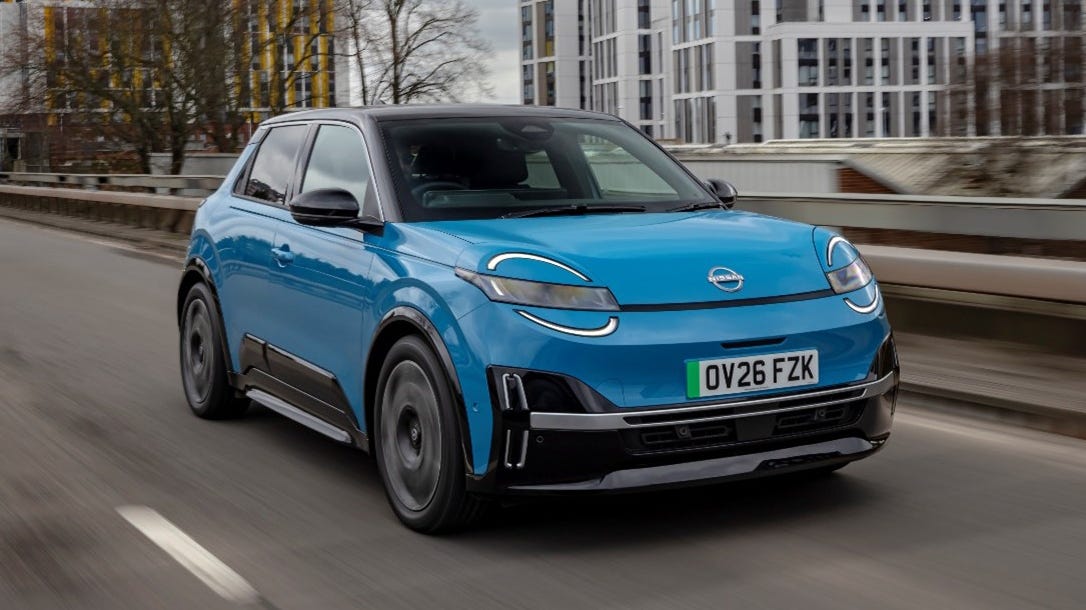
Can Nissan’s new Micra EV escape the shadow of the related Renault 5?