





Of course you’re considering the Qashqai if you want a family SUV – but is it big enough, or should you step up to the X-Trail?
By the end of this page, you’ll have your answer. And soon, you might have a shiny Nissan SUV taking up prime position on your driveway.
Nissan Qashqai vs X-Trail compared
| Nissan Qashqai | Nissan X-Trail |
Pros:
| Pros:
|
Cons:
| Cons:
|
Styling
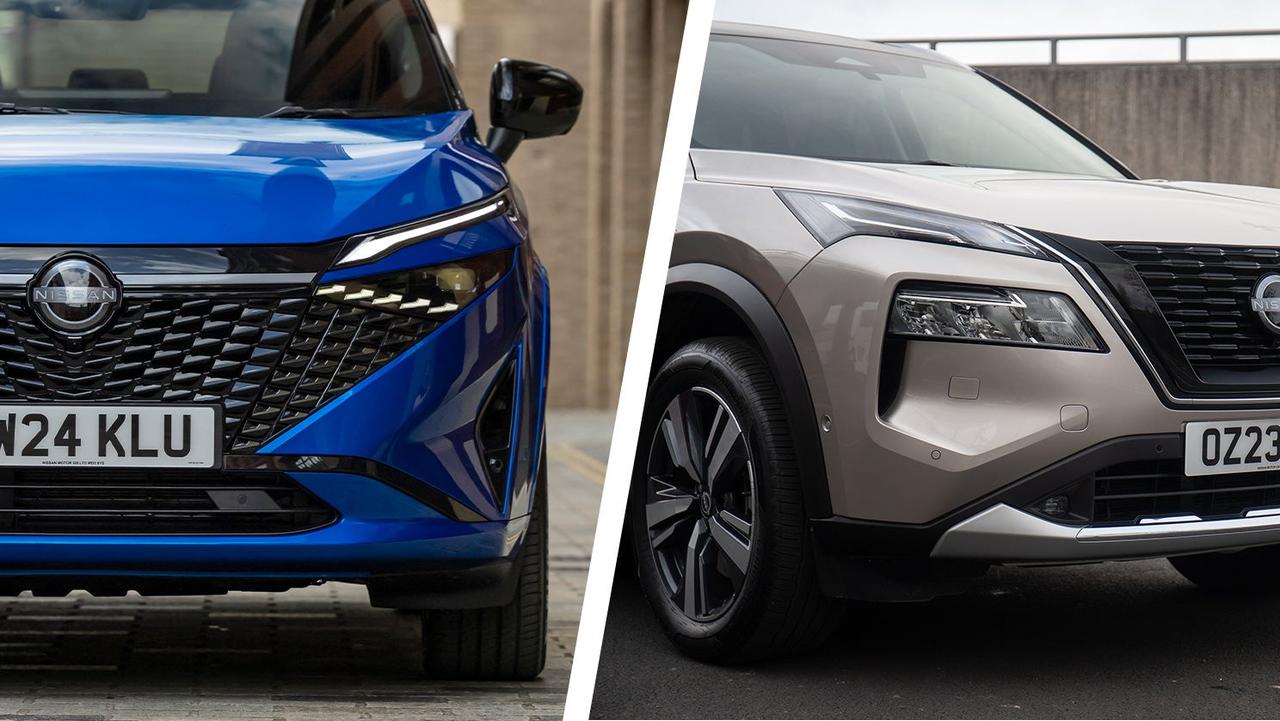
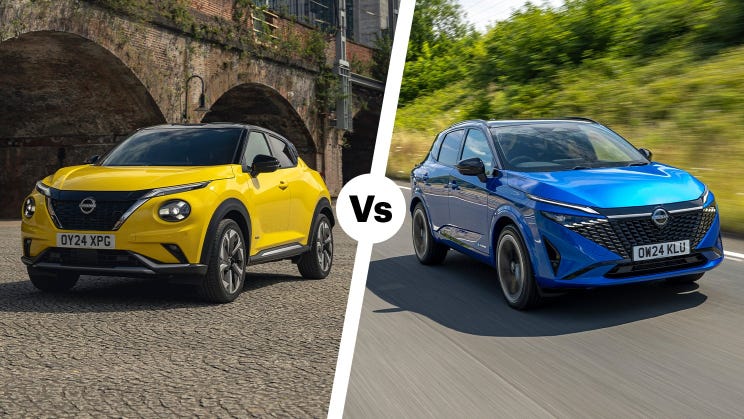
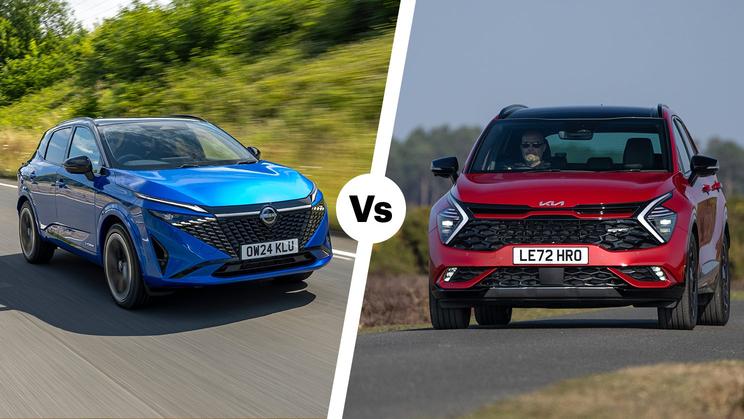
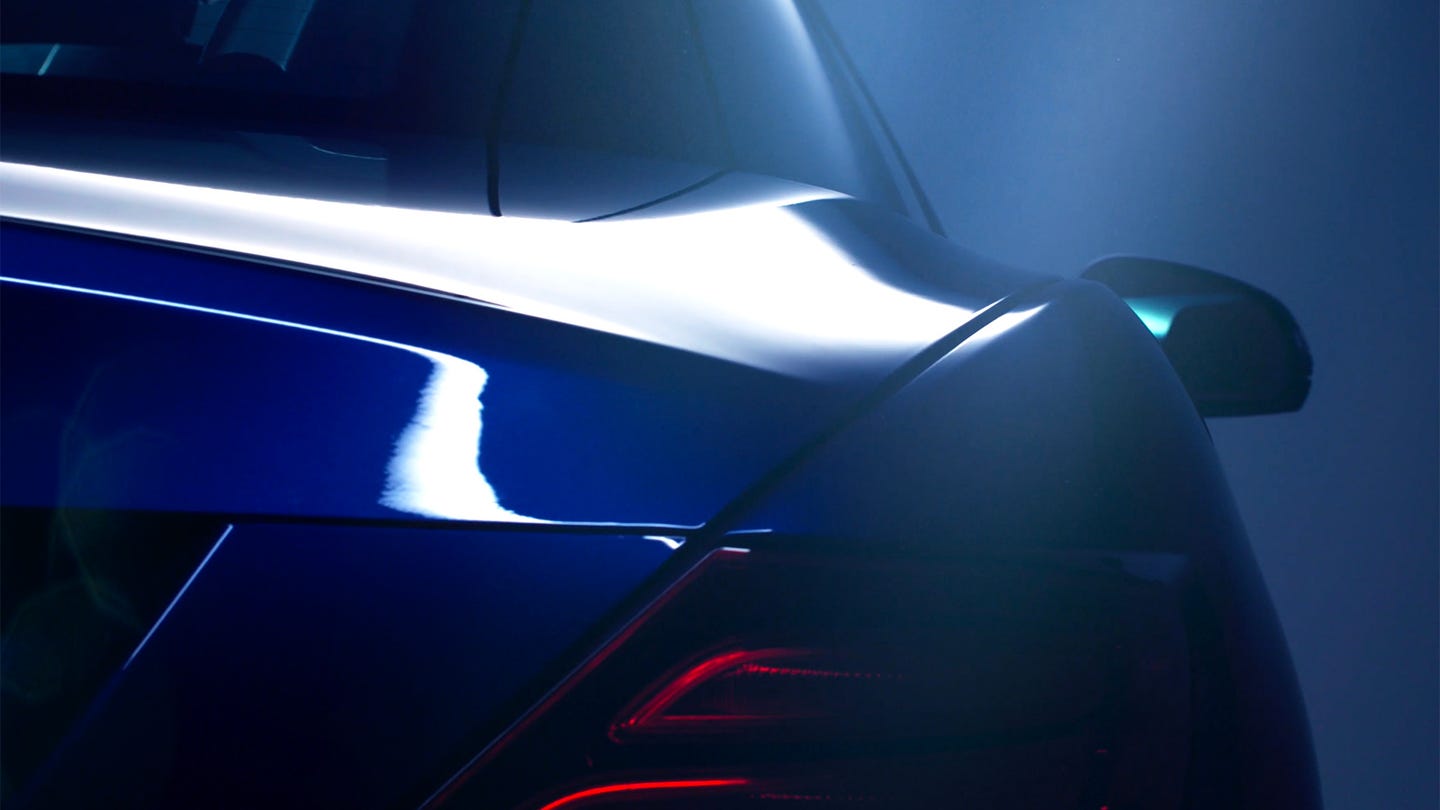
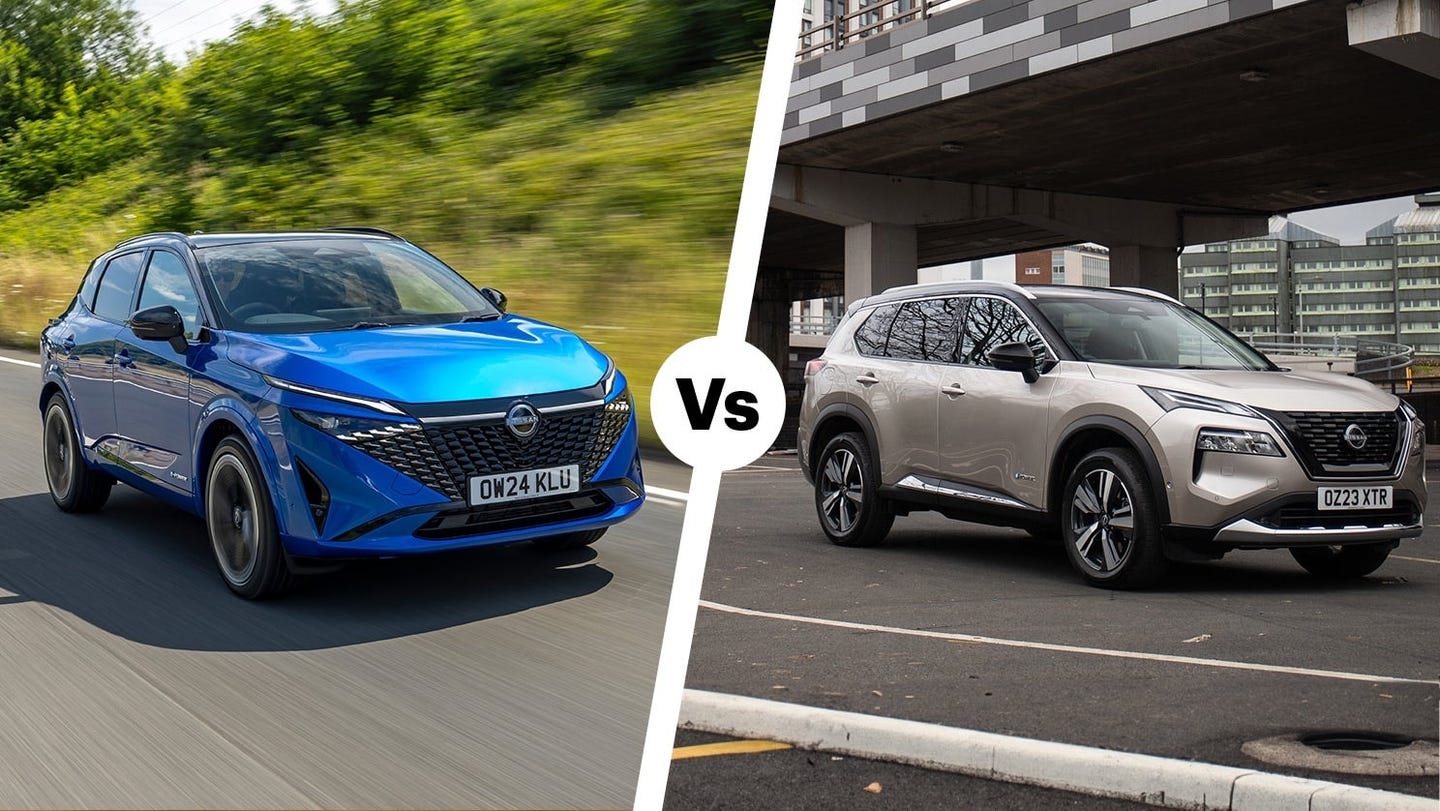
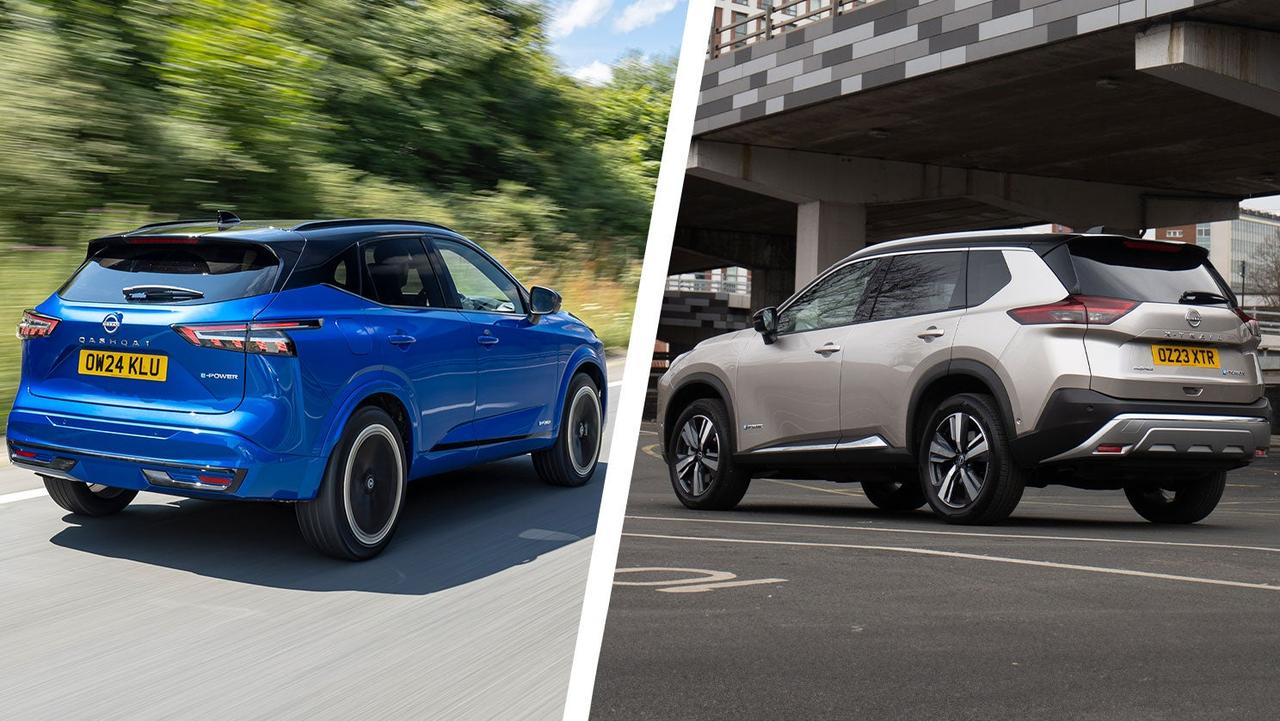
Until the third-generation Qashqai launched in 2021, the model had never tried to stand out. But, in the face of competition from the newly emboldened Kia Sportage and Hyundai Tucson, Nissan gave its heartland car a modern look with C-shaped LED headlights. In 2024, a facelift brought even more styling juice to the party – the new intricate grille and a triangular focus are apparently inspired by samurai armour.
The X-Trail, in comparison, is stockier and more upright looking. We suspect that’s partly due to the X-Trail being sold in markets such as the USA (where it’s called the Rogue and is Nissan’s ‘compact’ SUV!). Besides modern-looking split headlights, the X-Trail’s design has a timeless quality to it.
Interior
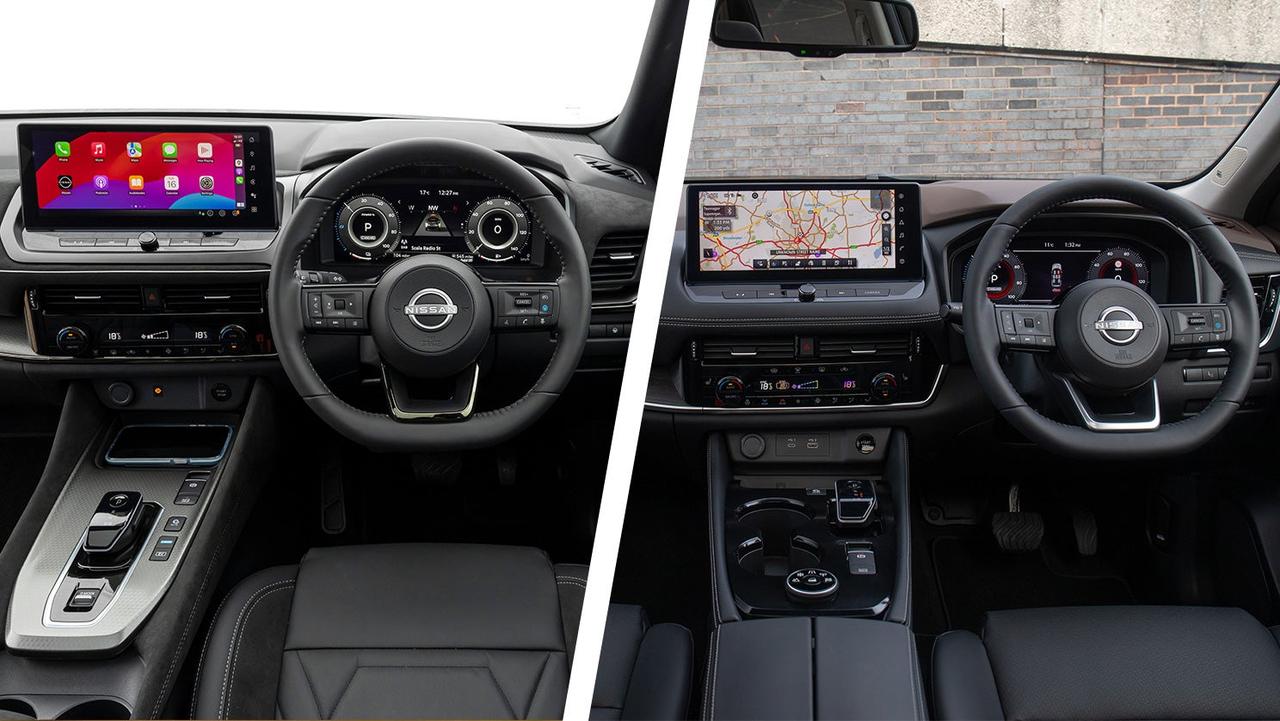
Both of these cars have really thoughtful interiors. They feel modern and up-to-date without resorting to a vast touchscreen full of confusing sub menus. There are physical climate controls and steering wheel buttons, which are ably assisted by the clear screens.
The Qashqai now gets the bigger, wider screen as standard, while the X-Trail in Acenta Premium trim retains Nissan’s older screen. We think it’s worth going for the bigger screen as it’s more modern-looking. However, you’ll need at least N-Connecta trim on both cars to benefit from built-in Google software, including Google Maps.
Dimensions and practicality
| Nissan Qashqai | Nissan X-Trail | |
| Length | 4,425mm | 4,680mm |
| Height | 1,625mm | 1,725mm |
| Width (exc mirrors) | 1,835mm | 1,840mm |
| Boot space | 504 litres | 120/485-585 litres |
As a five-seater, the Nissan X-Trail offers an impressive 585-litre boot (575 in the e-Power hybrid). That’s a noticeable improvement over the Qashqai, which lags behind a lot of other midsize SUVs for boot space. Don’t get us wrong, the Qashqai is still very spacious and it’ll handle the majority of tasks with ease, but if you pack the car full on a regular basis you’ll be better off with a five-seat X-Trail.
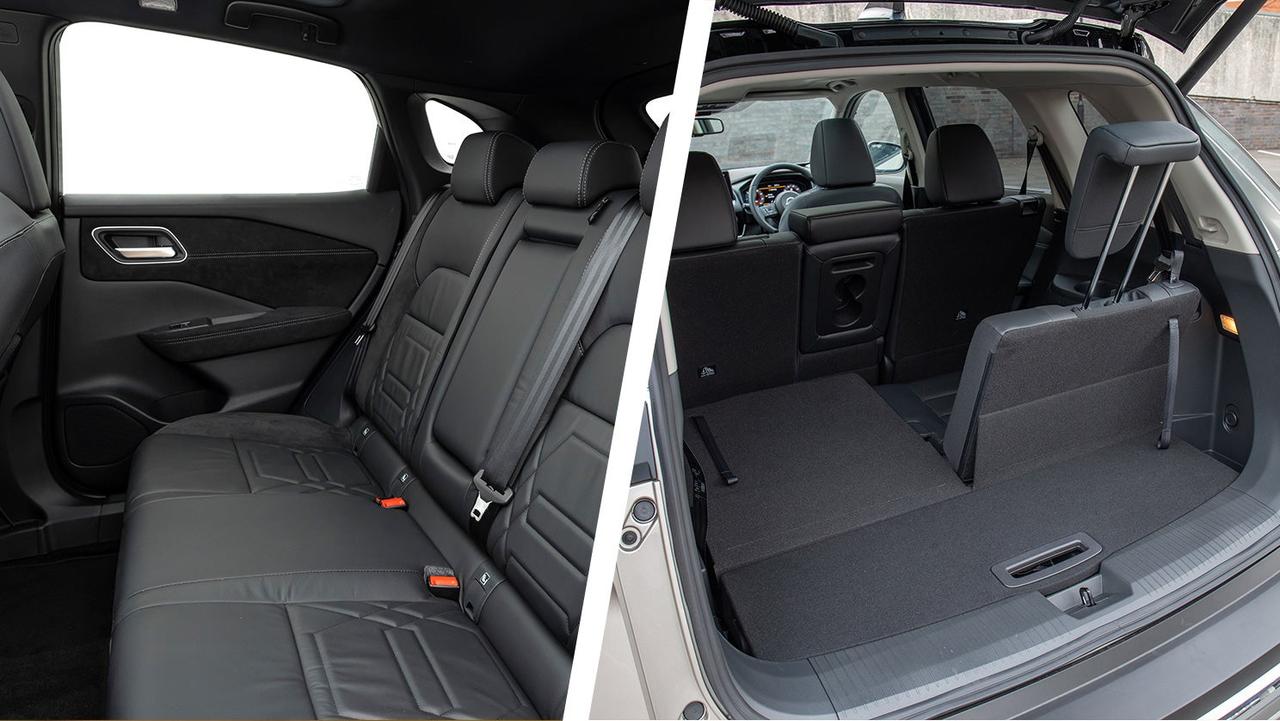
The X-Trail comes with the option of seven seats, which should add versatility but in reality the seven-seat version is compromised. There's only enough room in the rearmost seats for people under 1.6m tall, but no Isofix points. So, for a family buyer, the third row will probably only be suitable for younger teenagers.
Fold the third row down and you’ve got a 485-litre boot, which isn’t massive considering the size of the car. And, with the seats up, the luggage space drops to just 120 litres. You’re not getting much of the weekly shop in.
Engines
The standard engine in the Qashqai is Nissan’s tried-and-tested 1.3-litre petrol, used in things as varied as the Dacia Duster and Mercedes A-Class. Here, it gains mild-hybrid assistance to improve fuel consumption, and you can expect up to 44mpg in mixed driving. With either 138hp or 158hp, the 0-62mph sprint takes between nine and 10 seconds.
The X-Trail’s petrol engine is a 1.5 with 163hp and a similar 0-62mph time. But its bigger bodywork means it’s slightly less efficient, and you’ll struggle to crack 40mpg.
In both cars, the other engine choice is Nissan’s clever e-Power hybrid. Unlike many hybrids, the electric motor plays the starring role by driving the wheels, and so the e-Power models feel like electric cars in the way they drive. But you don’t have to worry about plugging in, and you get the efficiency benefits of a hybrid. Expect up to 49mpg in the X-Trail e-Power, or an astonishing 62mpg from the very latest Qashqai e-Power models.
Neither car offers a diesel engine any more – you’ll have to pick a last-shape Qashqai or X-Trail for that.
Value
In the X-Trail, you’re over the £40,000 mark as soon as you pick the N-Connecta trim with the e-Power engine – and that raises your annual road tax to over £600 for the first five times the tax is renewed. So, in terms of overall running costs, the standard petrol is likely to be cheaper if you’re only keeping the car for several years.
You have to go to the very top of the Qashqai range to get to that point, which means the majority of used Qashqais won’t attract the luxury car tax – they’ll be subject to the standard rate of £195 instead.
On the used market, the Qashqai is the clear winner. Not only because it’s more widely available, but because you can save £10,000 against a brand-new car on a 2025 car with delivery mileage.
Which is best?
The X-Trail is a good car, but it’s best as a five-seater and it’s quite expensive compared to the Qashqai. If you need seven seats, there are better alternatives out there, including the Skoda Kodiaq and Peugeot 5008.
Unless you know you’ll need the X-Trail’s extra space, go for the Qashqai. It’s cheaper to buy and to run, a little easier to park and more prevalent. You don’t even have to go for a top-spec model to get lots of kit – the mid-range N-Connecta includes an all-round parking camera, wireless phone charging and the aforementioned Google brilliance. Oh, and the Qashqai’s built in Britain.
Read our Nissan Qashqai review and Nissan X-Trail review for more information on these cars. Made up your mind? Shop used Nissan Qashqai and used Nissan X-Trail cars for sale.
.jpg&w=744&q=75)