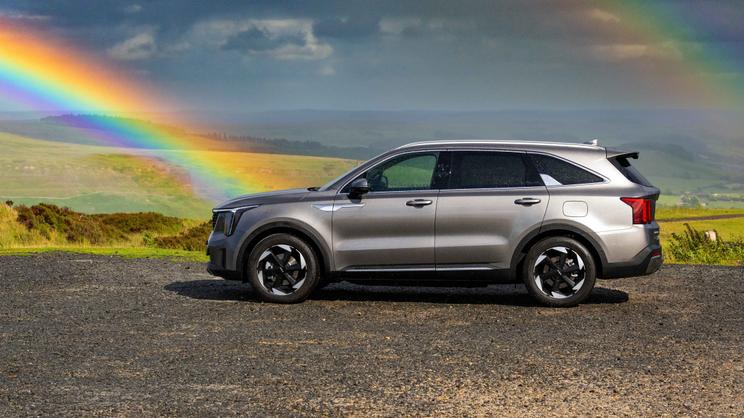
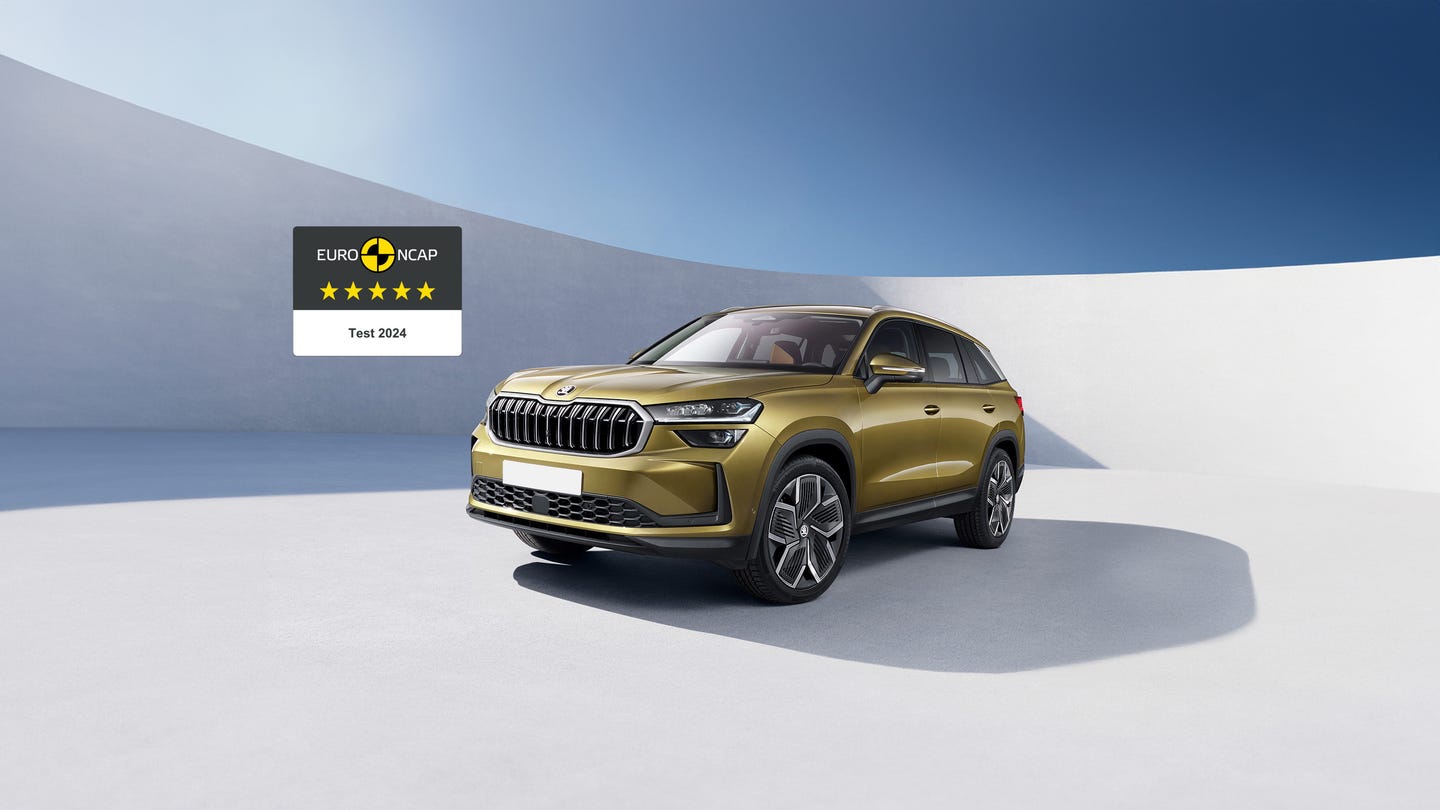








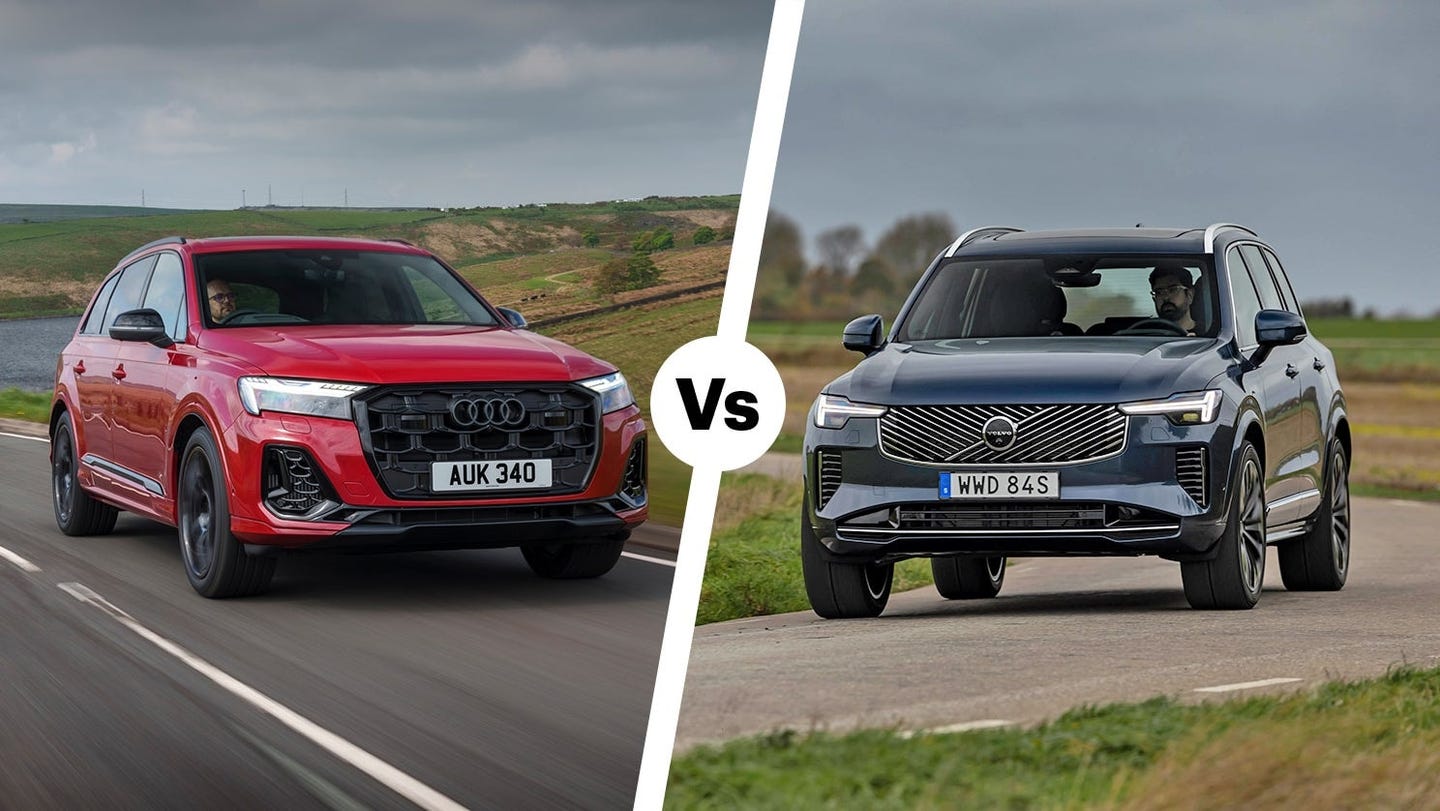

The Audi Q7 and Volvo XC90 are family buses with lots of tech and even more kerb appeal.
These are elder statesmen of the premium seven-seat SUV market. Both the Audi Q7 and Volvo XC90 have been on sale for over a decade, with just a few changes here and there to keep them fresh. Proof that the formula was right the first time around.
So, whether you’re one-upping the Joneses or fitting in on the Surrey school run, we compare the XC90 and Q7 back-to-back here to find out which you should buy.
Audi Q7 vs Volvo XC90 compared
| Audi Q7 | Volvo XC90 |
Pros:
| Pros:
|
Cons:
| Cons:
|
Styling
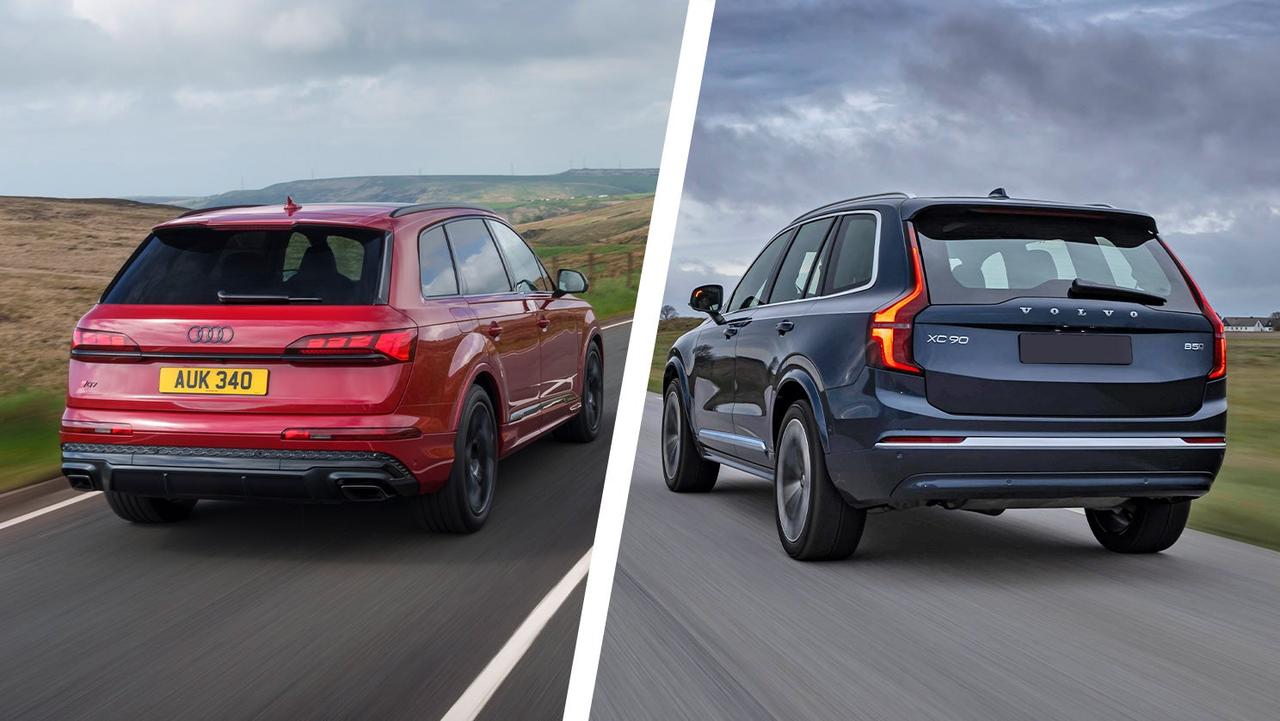
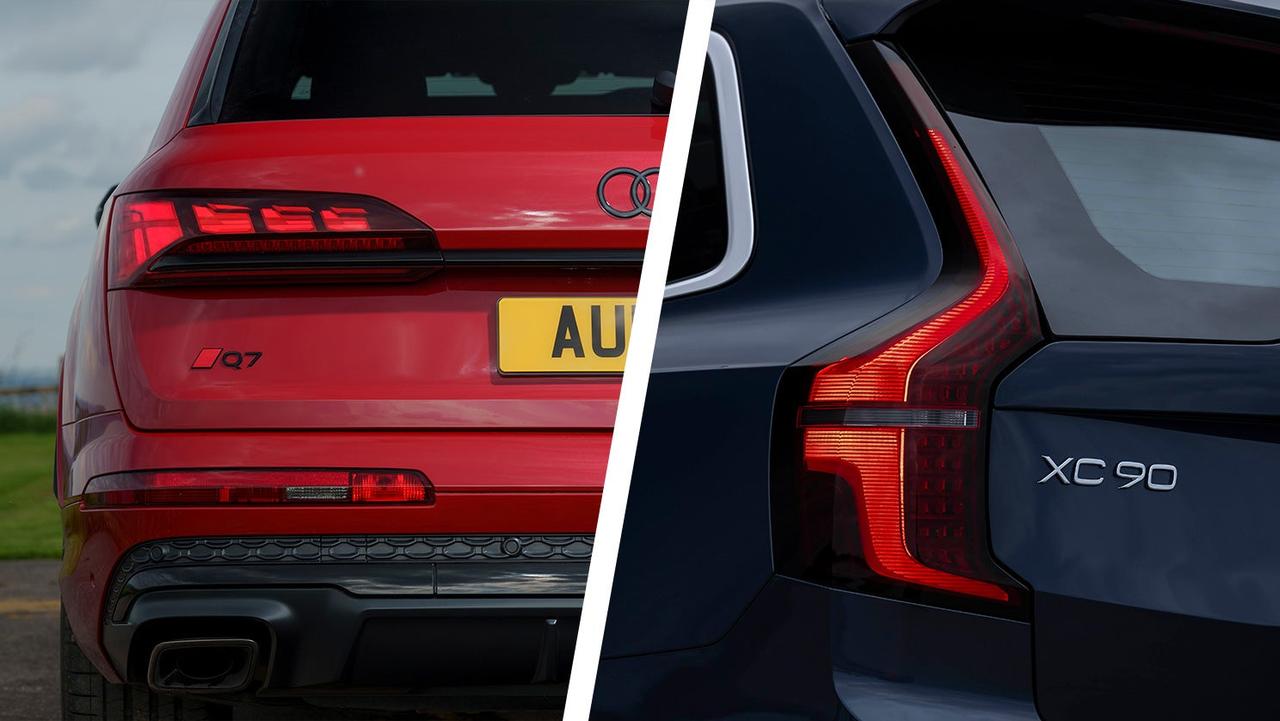
You’ve had plenty of time to get to know the styling of the Q7 and XC90, given that both were introduced in 2015, but both have been updated in the last couple of years to stop them looking and feeling outdated.
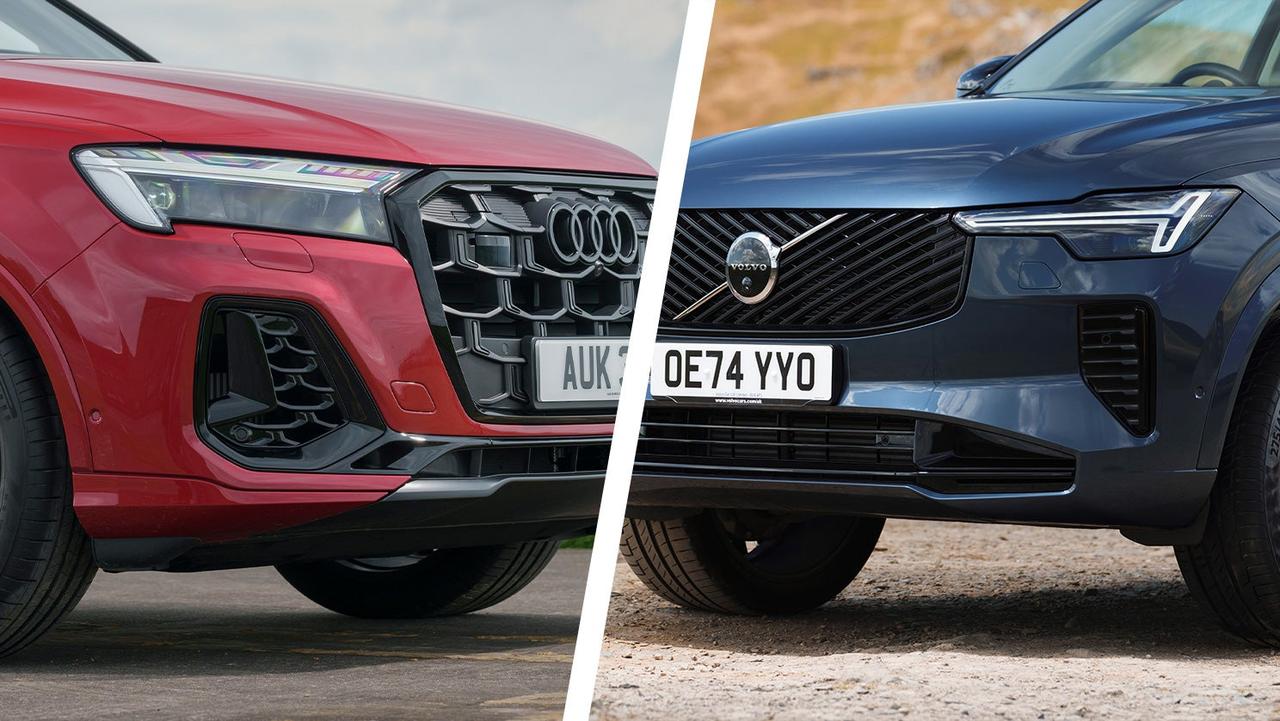
The Q7 has a sharp, presenceful design language, with quite a technical front end that features a whopping grille, more air vents further down, chromey grille inserts and fancy headlights. These days, the entry-level Q7 is Audi’s sporty-looking S Line version, or you can upgrade to the Black Edition spec that adds bigger wheels and exterior trim that’s harder to see.
Volvo updated the XC90 to coincide with the launch of the fully electric EX90. The sides and the rear are largely the same as they’ve always been, while the front end has been tidied up with slimmer headlights and a new grille. There’s no sporty trim level here, although you can add a black styling package and vast 22-inch alloy wheels if you really want to.
Interior and technology
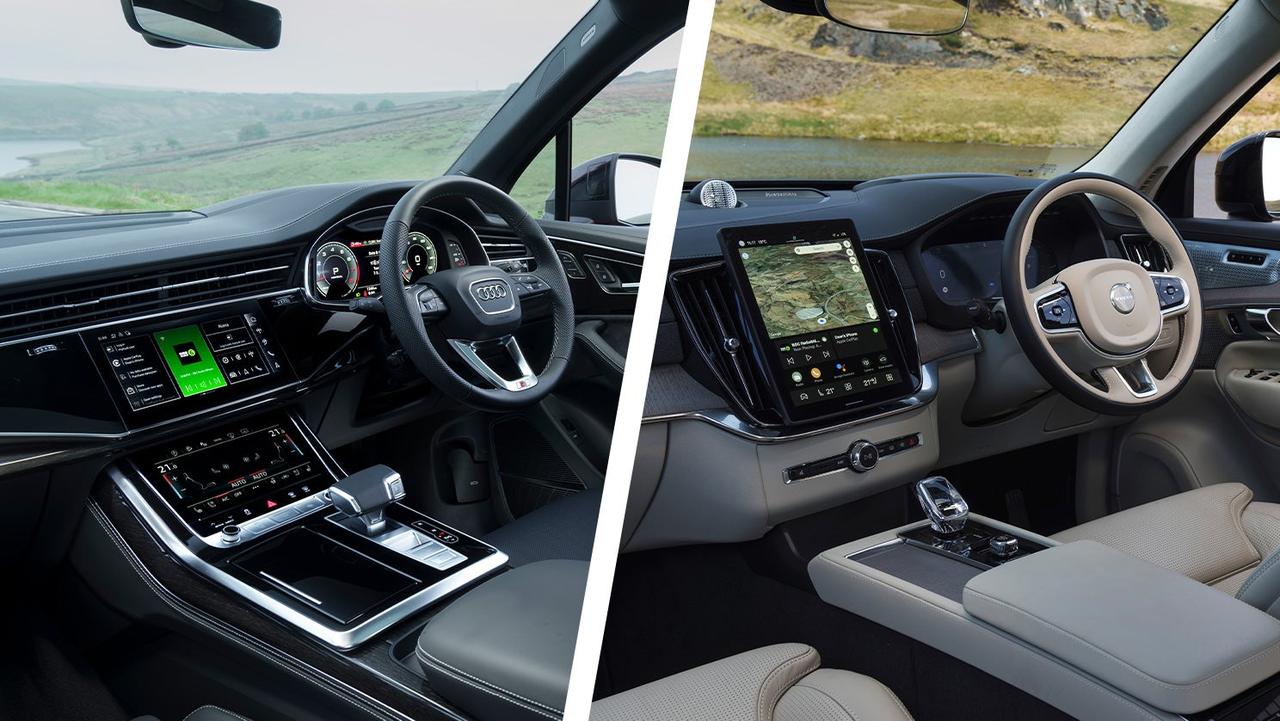
Whether you pick the Q7 or XC90, you’re guaranteed a stylish interior with lots of standard equipment and monolithic build quality – as you’d hope given the price tags of these cars.
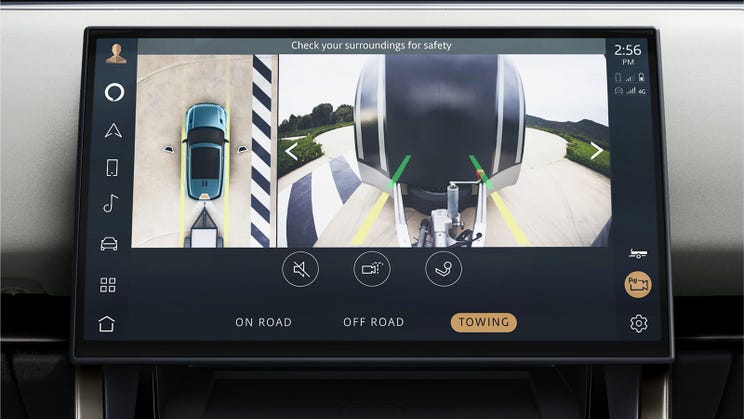
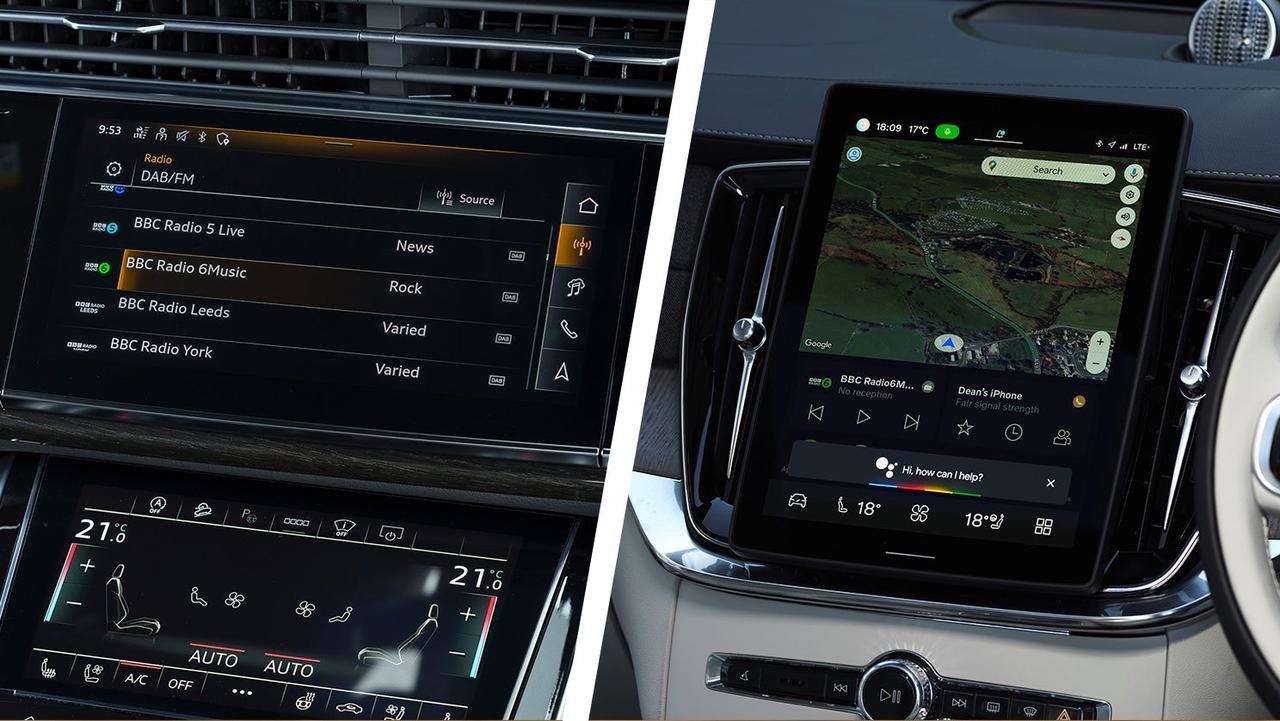
The Q7 gives you two touchscreens: the bottom one handles the climate control functions and the top one does basically everything else. You also get Audi’s Virtual Cockpit digital dials, which are clear, configurable and timeless.
Almost everything in the XC90 is integrated into the portrait touchscreen, so you’ll be prodding at it a lot. It runs a brilliant Android Automotive infotainment system, although the Q7’s touchscreen is a little less cluttered and a little easier to use while driving.
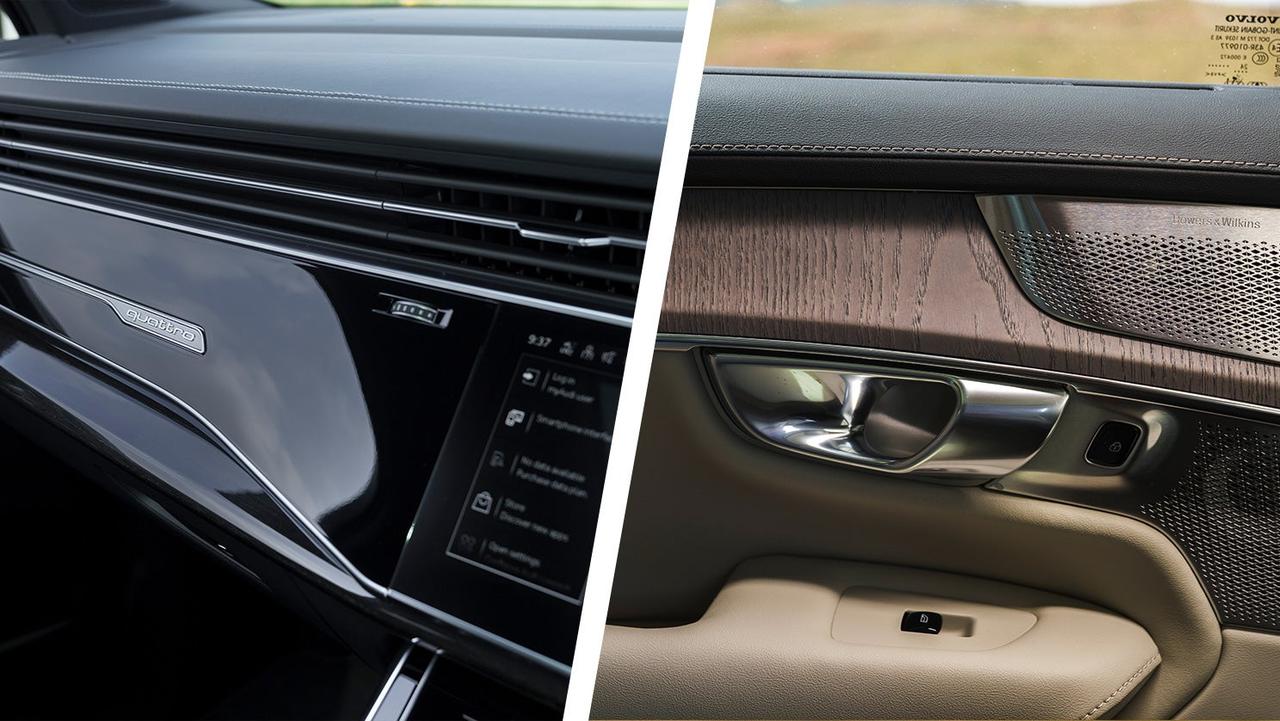
Material quality is better in the XC90, with wood-effect trim in obvious places and the option of a crystal gear lever. Fancy. There’s too much glossy black plastic in the Q7 for our tastes.
In the pursuit of sustainability, leather has been banished from the Volvo catalogue. Audi still gives you Valcona cowhide as standard.
Dimensions and practicality
| Audi Q7 | Volvo XC90 | |
| Length | 5,072mm | 4,953mm |
| Wheelbase | 2,994mm | 2,984mm |
| Height | 1,734mm | 1,770mm |
| Width (inc wing mirrors) | 2,212mm | 2,140mm |
| Boot space (7/5/2 seats up) | 295/780/1,908 litres | 301/680/1,950 litres |
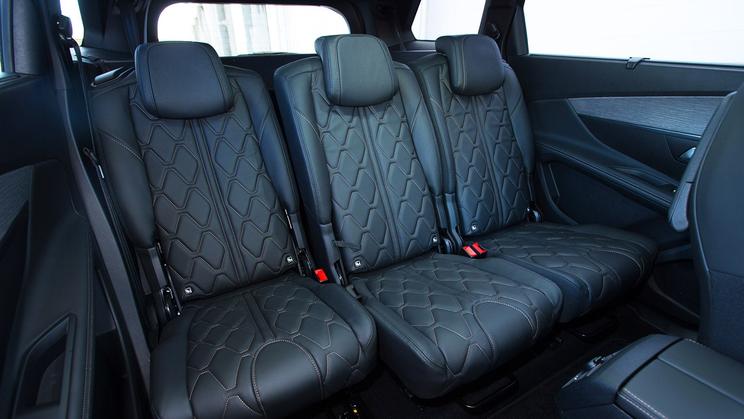
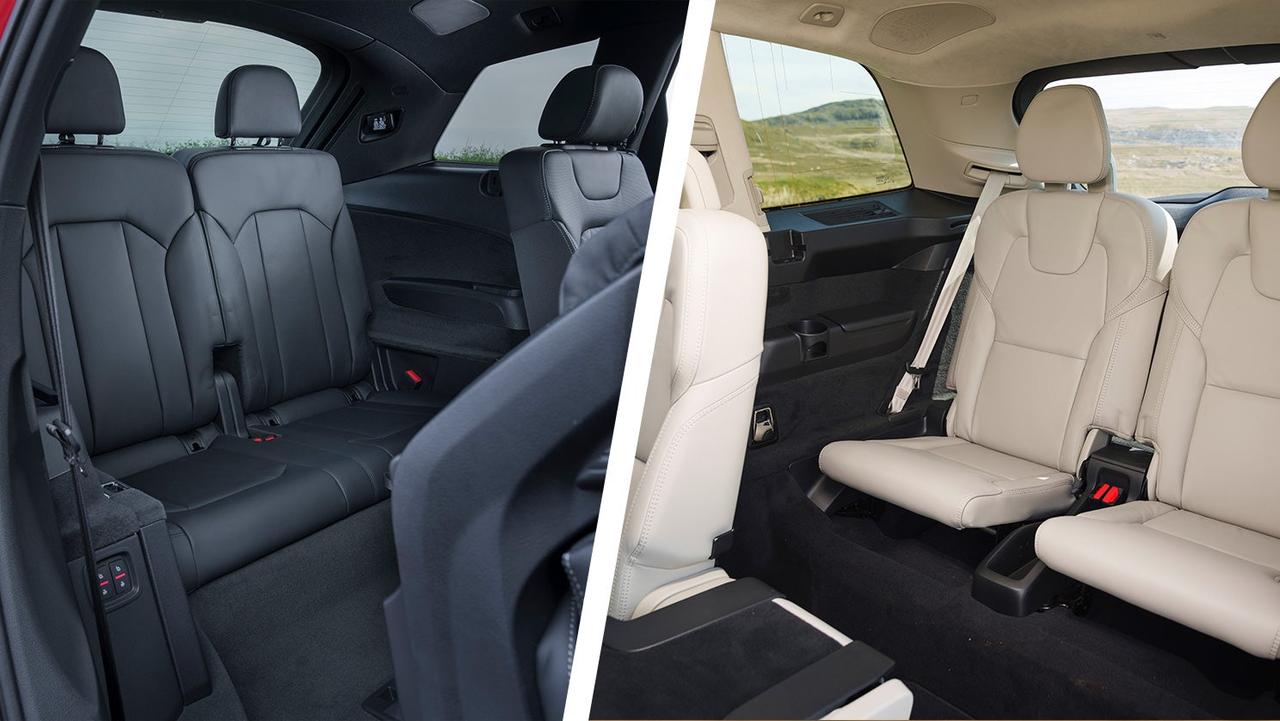
The Q7 is a better family hauler if you’ve got young kids, while the XC90’s more spacious cabin makes it better for taller kids and adults. Impressively, adults can fit in the rearmost seats of both cars, but the XC90’s a little roomier back there. The Q7 has a set of Isofix points on each of its passenger seats, making it one of the best choices if you need to fit lots of child seats in.
Both of these cars do a good impression of a removal van when you fold the second and third row of seats down, giving you over 1,900 litres of real estate if you’re happy to load to the roof.
It’s disappointing that the Q7 TFSI e plug-in hybrid is only a five-seater, given how big it is. When Audi sells the Q5 and A6 estates with a plug-in powertrain, it makes no sense to go for the Q7. The 563-litre boot isn’t exactly cavernous, either. The XC90 PHEV still offers three rows of seats and a big boot.
Engines
Volvo doesn’t offer diesel engines any more, which limits your choice to a petrol engine or a plug-in hybrid engine. Even with mild-hybrid assistance, the petrol engine is expected to return no more than 33mpg (high 20s is more likely), while the plug-in hybrid offers up to 44 miles of electric driving and the promise of three-digit fuel economy figures (if you drive in a very specific way that almost never involves the engine). When the PHEV’s out of battery, the XC90 becomes a thirsty petrol car. For long-distance drivers, neither of these engines are particularly cost-effective.
Black-pump engines are still present in the Q7 lineup, although the 35mpg estimate isn’t noticeably better than what you’ll get from the petrol XC90. The petrol Q7 officially returns 27mpg, which might make motorway dwellers wince. Or, if burning fuel sounds like fun, there’s the 507hp SQ7 that’ll manage just 23mpg at a steady cruise – or hit 0-62mph in just four seconds.
The Q7 plug-in hybrid gets a bigger battery than the equivalent XC90, for an all-electric range of 52 miles.
The XC90 is a little more comfortable than the Q7. The Audi doesn’t really aim for sportiness – it’s a 2-point-something tonne SUV – but it feels more tied down than the sometimes floaty XC90. Therefore, it’s well worth avoiding the 22-inch rims on the XC90 in particular, as these sacrifice comfort for looks.
Value
As a new car, the Audi Q7 starts at a little over £72,000 for the S Line model with a 231hp diesel engine; the petrol engine and the more powerful diesel engines are £3,000 more. The cheapest XC90 is just over £66,000, although both top out at about £80,000.
A three-year-old XC90 is likely to be a couple of thousand pounds cheaper than a Q7 with a similar mileage – but most used Q7s for sale look to be higher-spec models with the big wheels and moody black trim.
Which is best?
The Volvo XC90 is the more sophisticated-feeling car, both inside and out. It arguably makes better use of its interior space, and it’s typically a little less expensive to buy and run.
The Q7’s superb screens claw back some points for Audi, and its torquey diesel engines will be better options if you need to tow something heavy. It’s just a shame that the PHEV only seats five and that there’s so much plastic across the dash.
Made up your mind? Shop used Audi Q7 cars and used Volvo XC90 cars for sale at Motorpoint.