









10 of the best cheap 4x4s 2026

Ben Custard
•
Choosing A Car

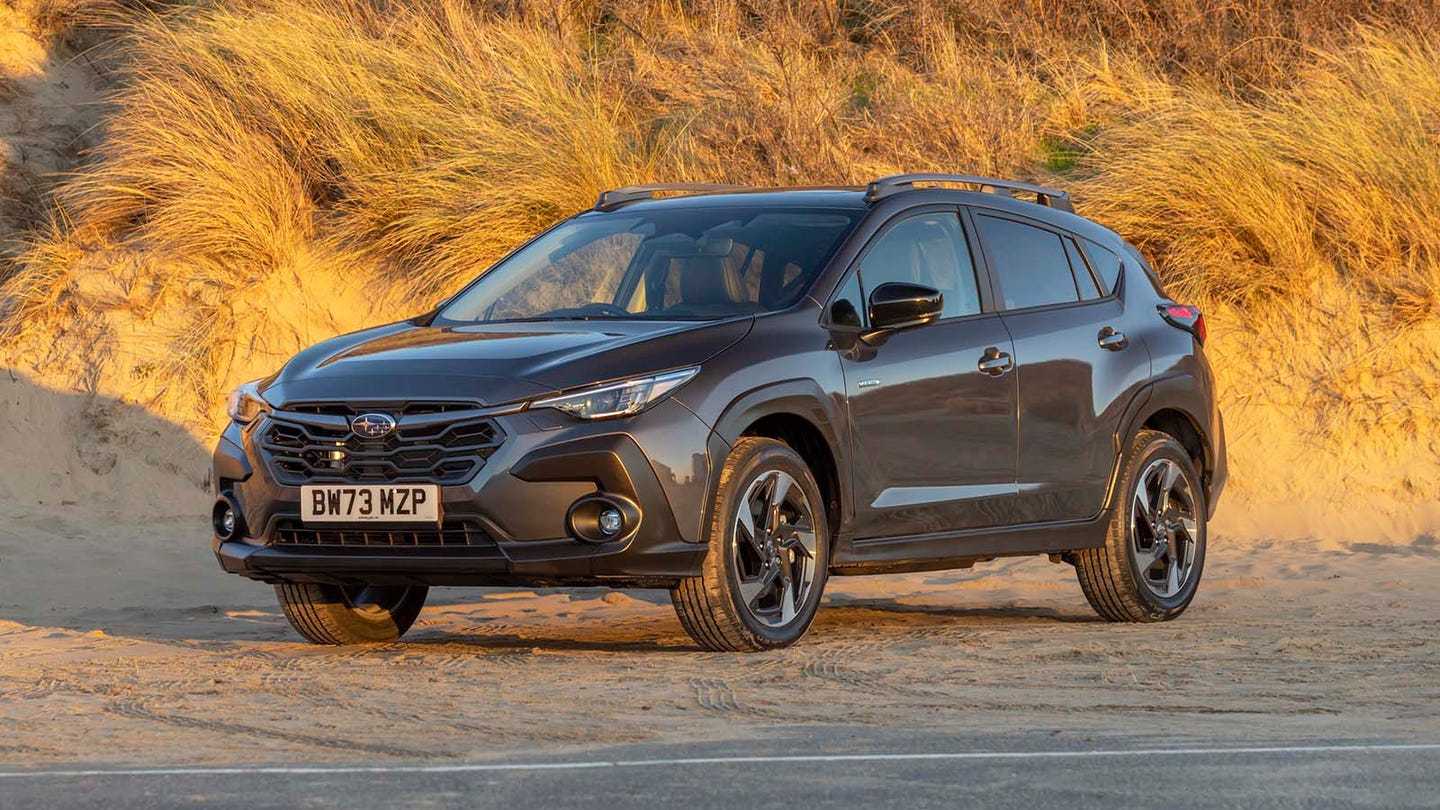
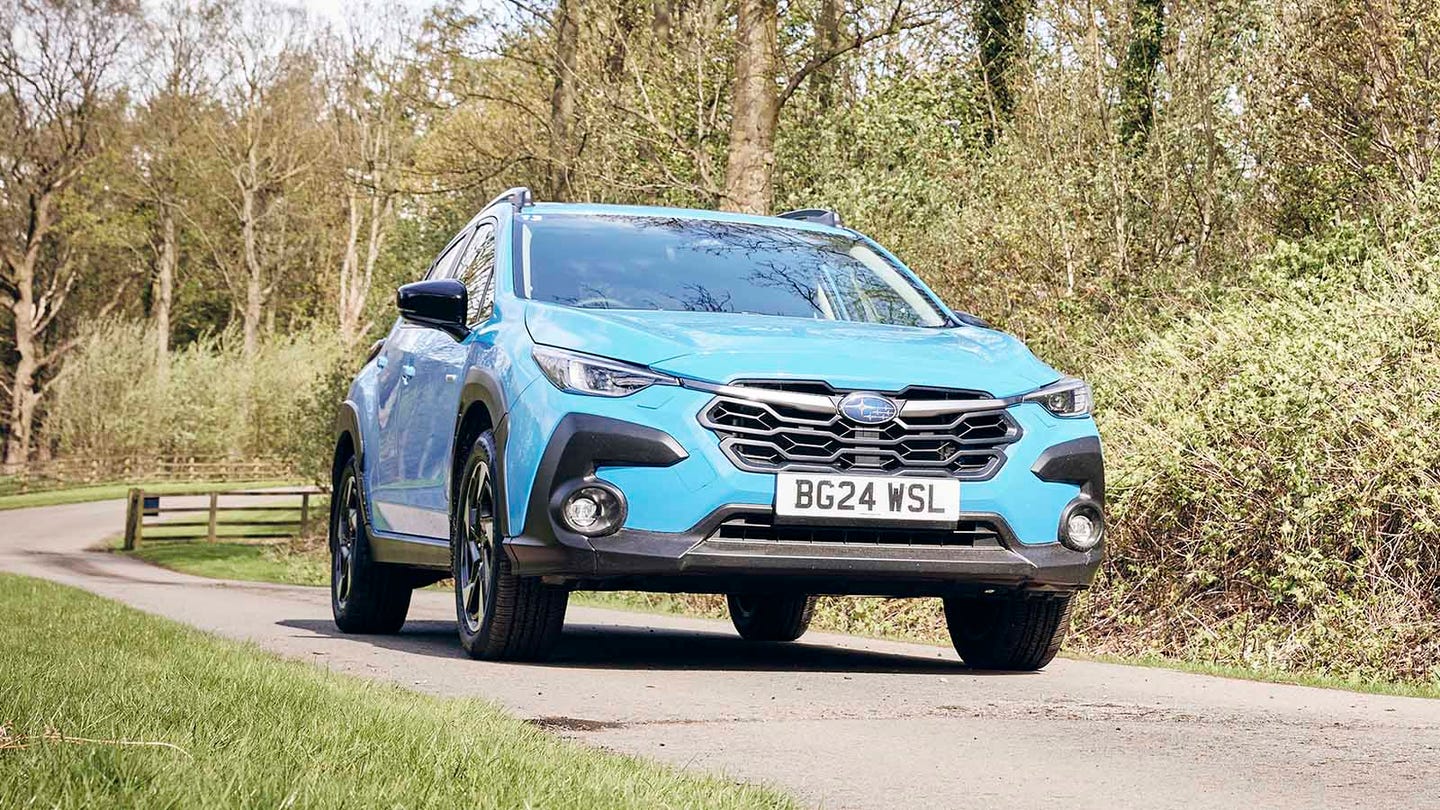
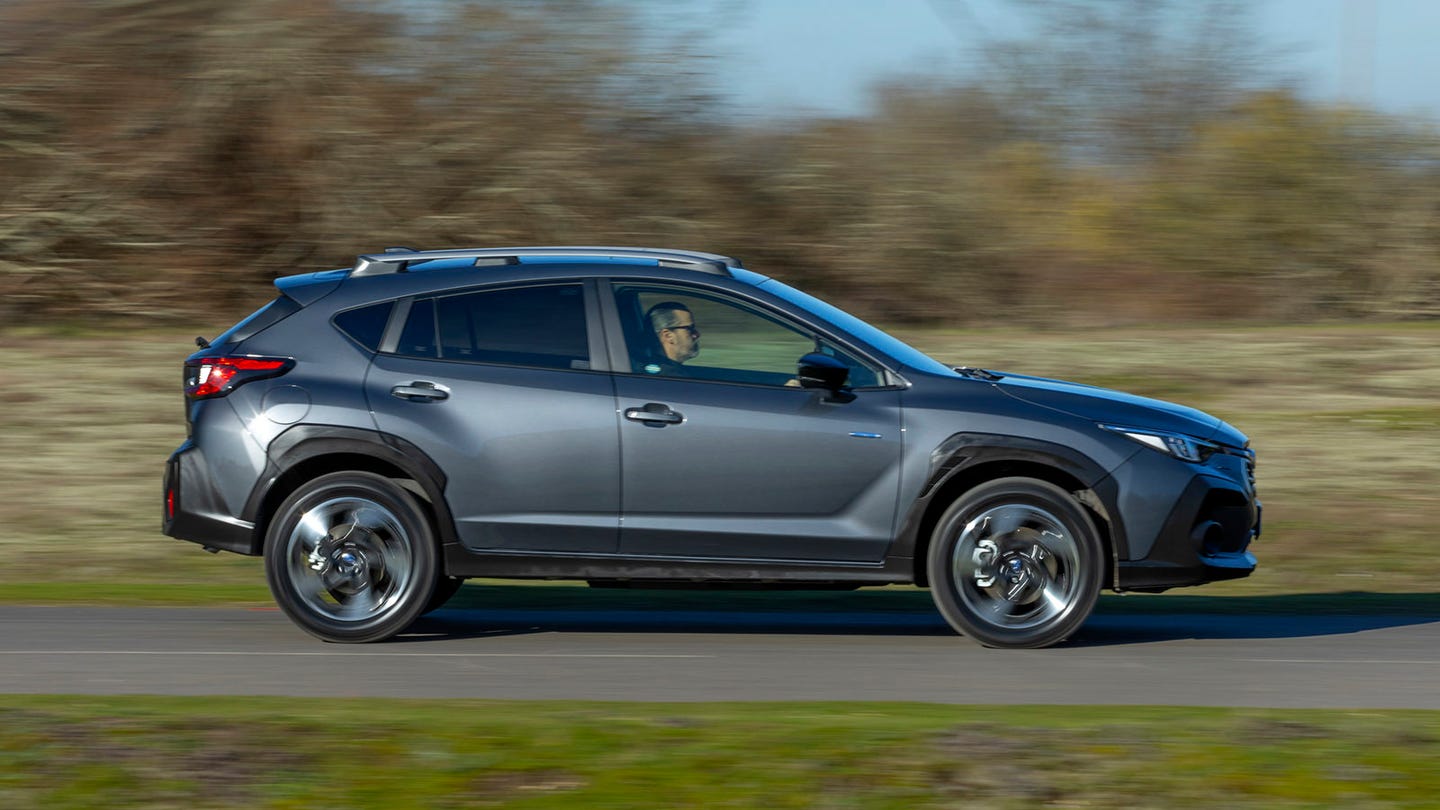
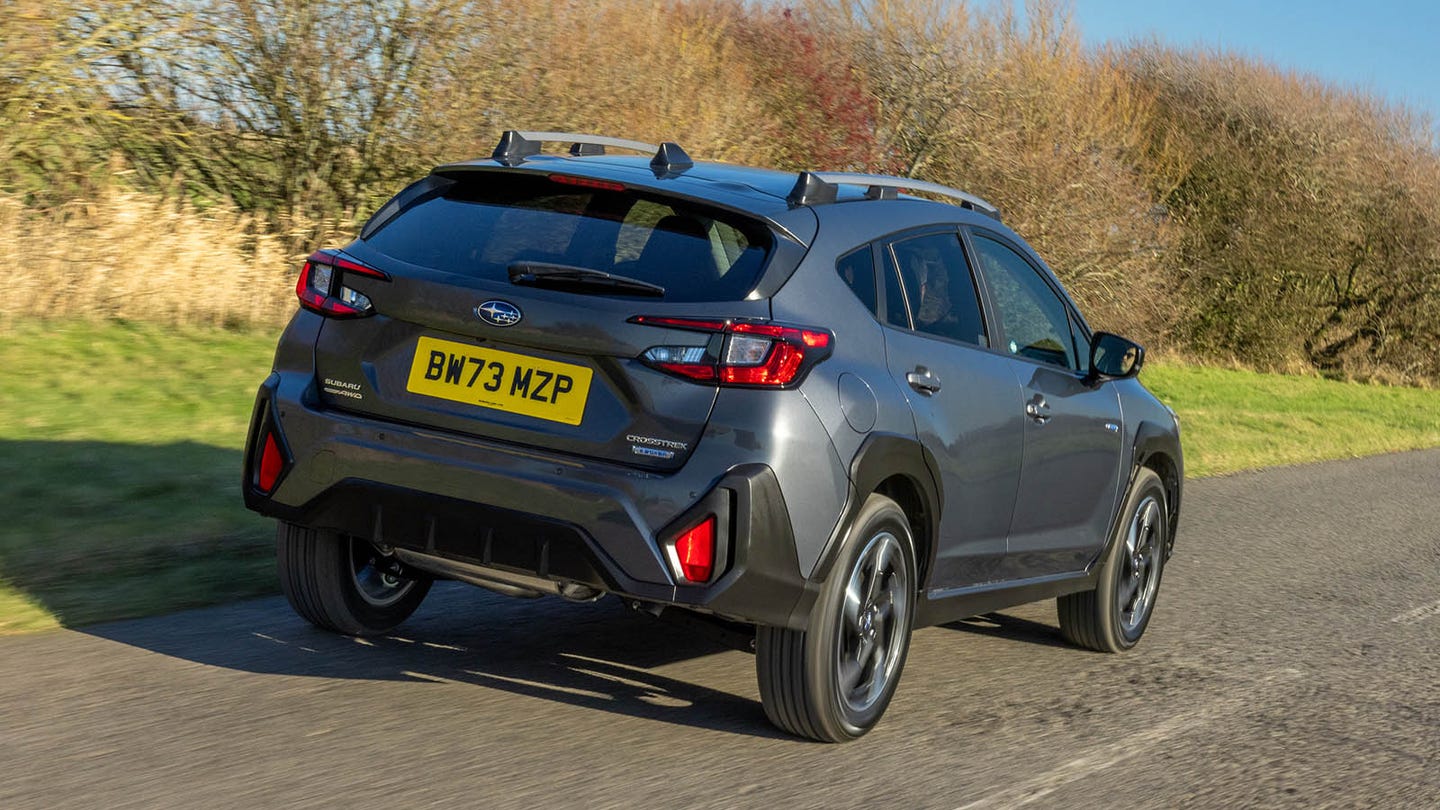
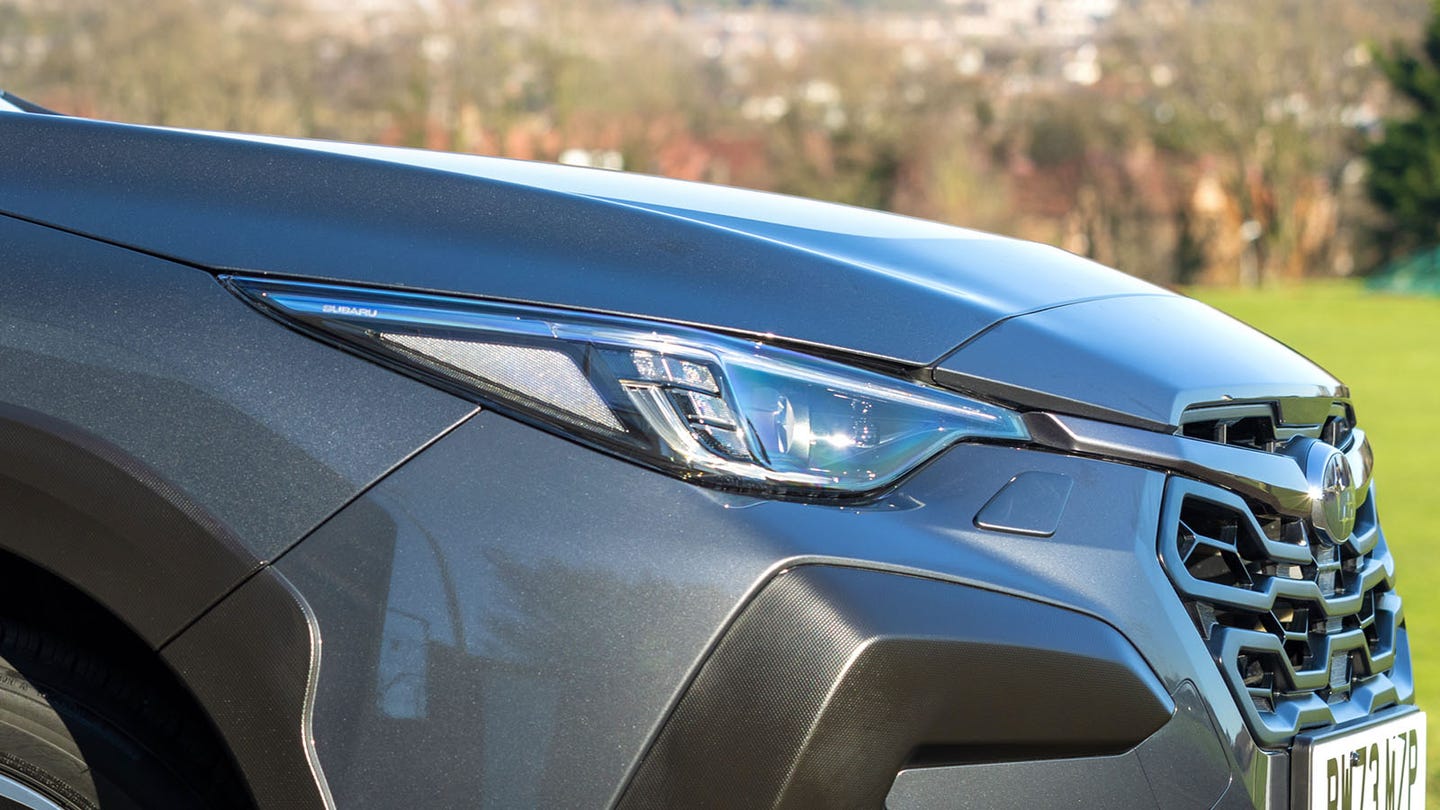
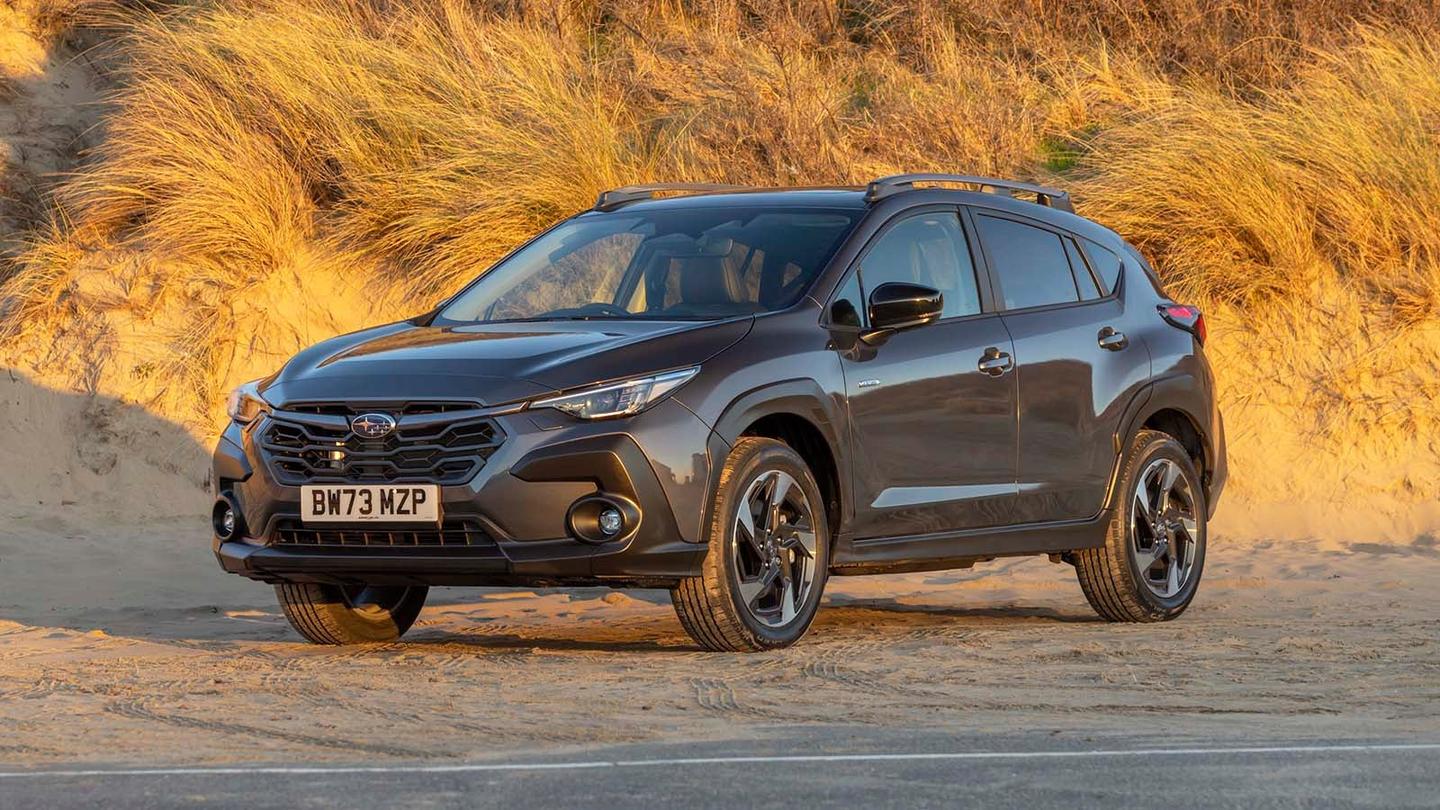
The Subaru Crosstrek arrived in the UK at the end of 2023. It replaced the aging XV, while also adopting the same name as its US-market counterpart.
Despite the thorough overhaul, the Crosstrek's fundamentals remain the same. This is a petrol-powered, hybrid-assisted hatchback sitting on raised suspension, chunky tyres and Subaru's permanent all-wheel-drive system.
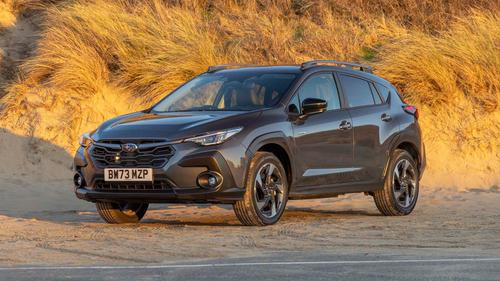
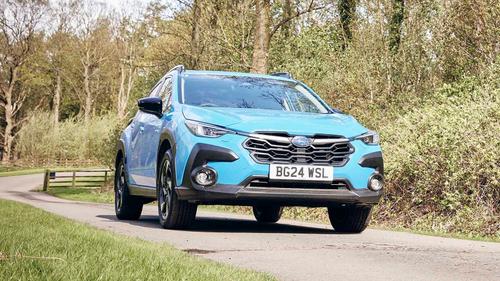
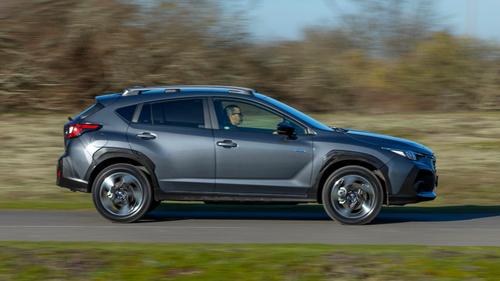
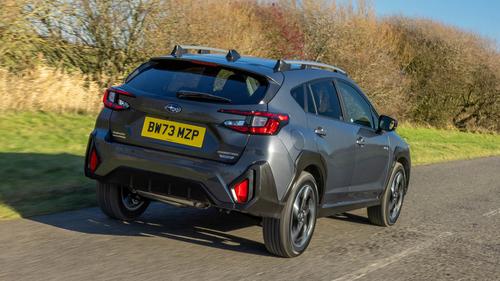
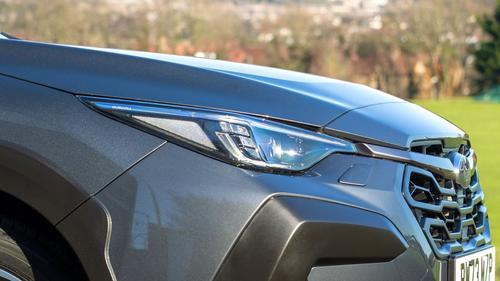
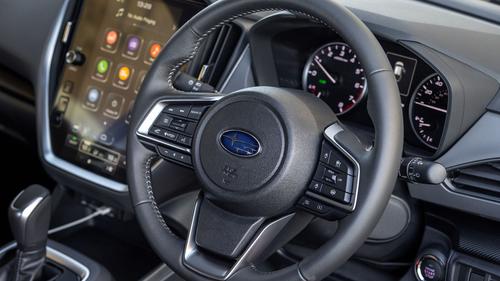
The market is overflowing with cars that mimic the looks of SUVs, but use unremarkable road-biased mechanicals from regular hatchbacks. They have all the image and appearance of 4x4 vehicles, but none of the actual off-road ability. And, for most drivers, that's actually what they want – a car that drives well on the road, with a small practicality boost from its SUV-like body.
"It feels set up for cruising rather than enthusiastic driving. Keep your speed and acceleration under control and the sluggish engine won't bother you too much"
That makes the Subaru Crosstrek nearly the perfect opposite of this formula. This car starts out with the body of a sensible family hatch, then outfits it with a permanent all-wheel-drive system and a lofty ride height – hardware found in proper off-roaders. As a result, the Crosstrek has almost no direct competitors in the UK.
Continuing the Crosstrek's quirky theme is the engine choice. You might expect a brawny turbo setup based on the brand's rallying heritage but, instead, there's just a 2.0-litre petrol engine paired with a mild-hybrid setup and a CVT auto gearbox. With 136hp in total, performance is pretty leisurely and feels at odds with the car's tough off-road appearance.
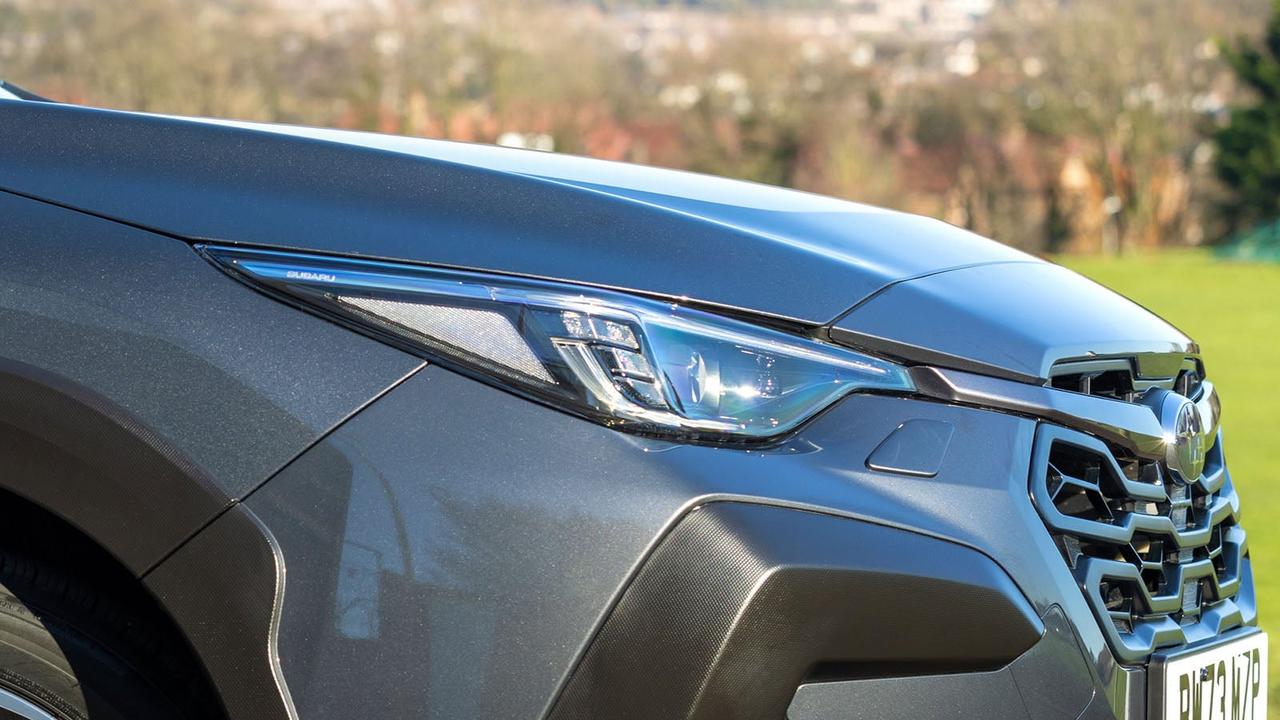
We'll cover the driving experience in detail below but, for the most part, the Crosstrek is easy and unremarkable behind the wheel. There's no evidence that the car's off-road hardware has negatively impacted the on-road handling. The suspension is fairly soft and the controls are accurate, so you can easily get from A to B without the Subaru getting in your way.
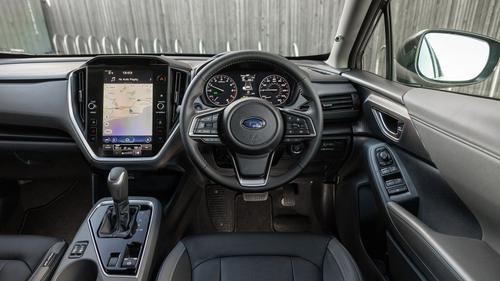
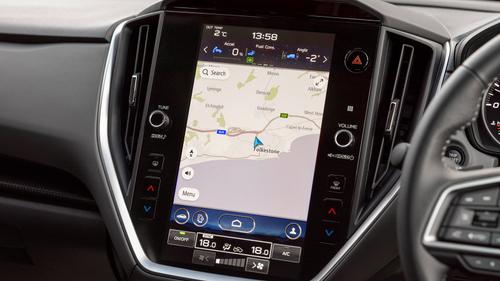
Similarly, the user experience inside the cabin is mostly solid. There are physical controls for most of the adjustments you'll make regularly, and they're all broadly where you'd expect to find them. However, the touchscreen's graphics and performance feel noticeably last-gen compared to the competition. Plus, some of the materials are a bit disappointing considering the car's purchase price.
At the time of writing, the Crosstrek starts from £36,000. That buys a well-equipped Limited model, while Touring versions with leather upholstery and a sunroof cost just over £38,000. Those numbers are steep compared with road-biased rivals like the Toyota Corolla and Honda Civic, which both cost a few thousand pounds less, and both outperform the Subaru on paved roads. That means you should really consider whether the Crosstrek's off-road abilities are worth the extra purchase price to you.
Keep reading to learn more about the Subaru Crosstrek's interior, engine and driving experience.
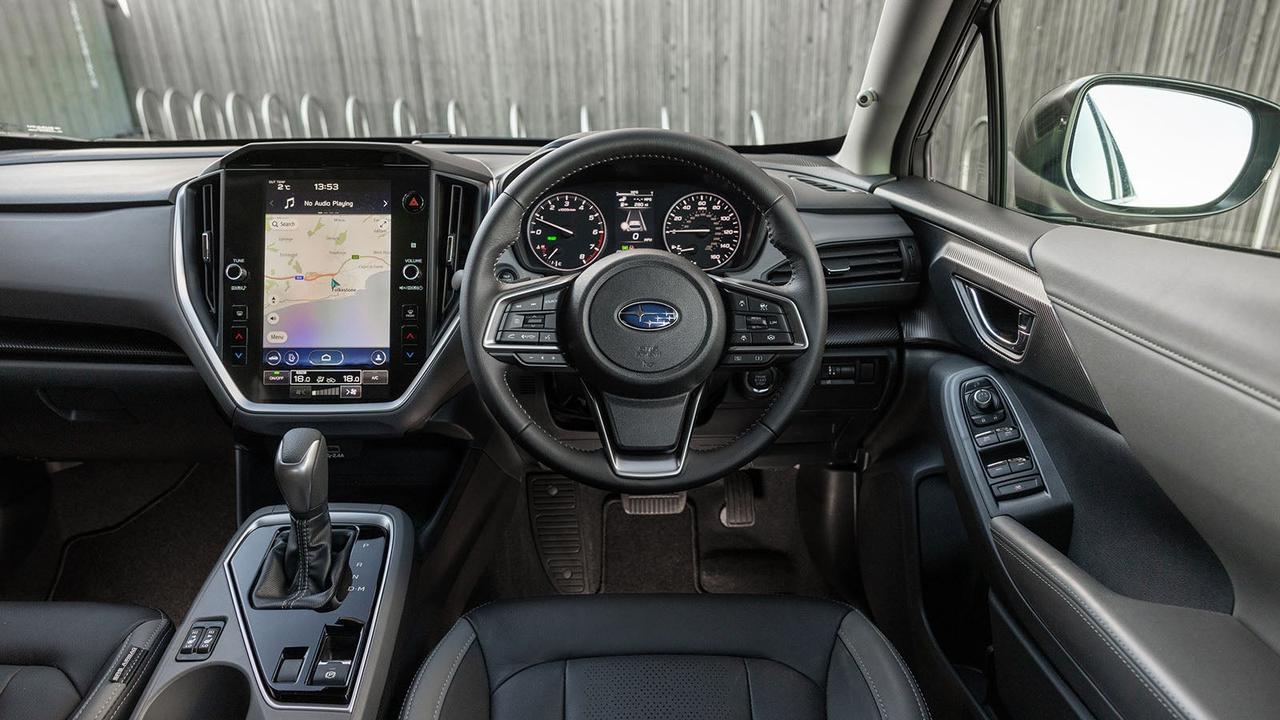
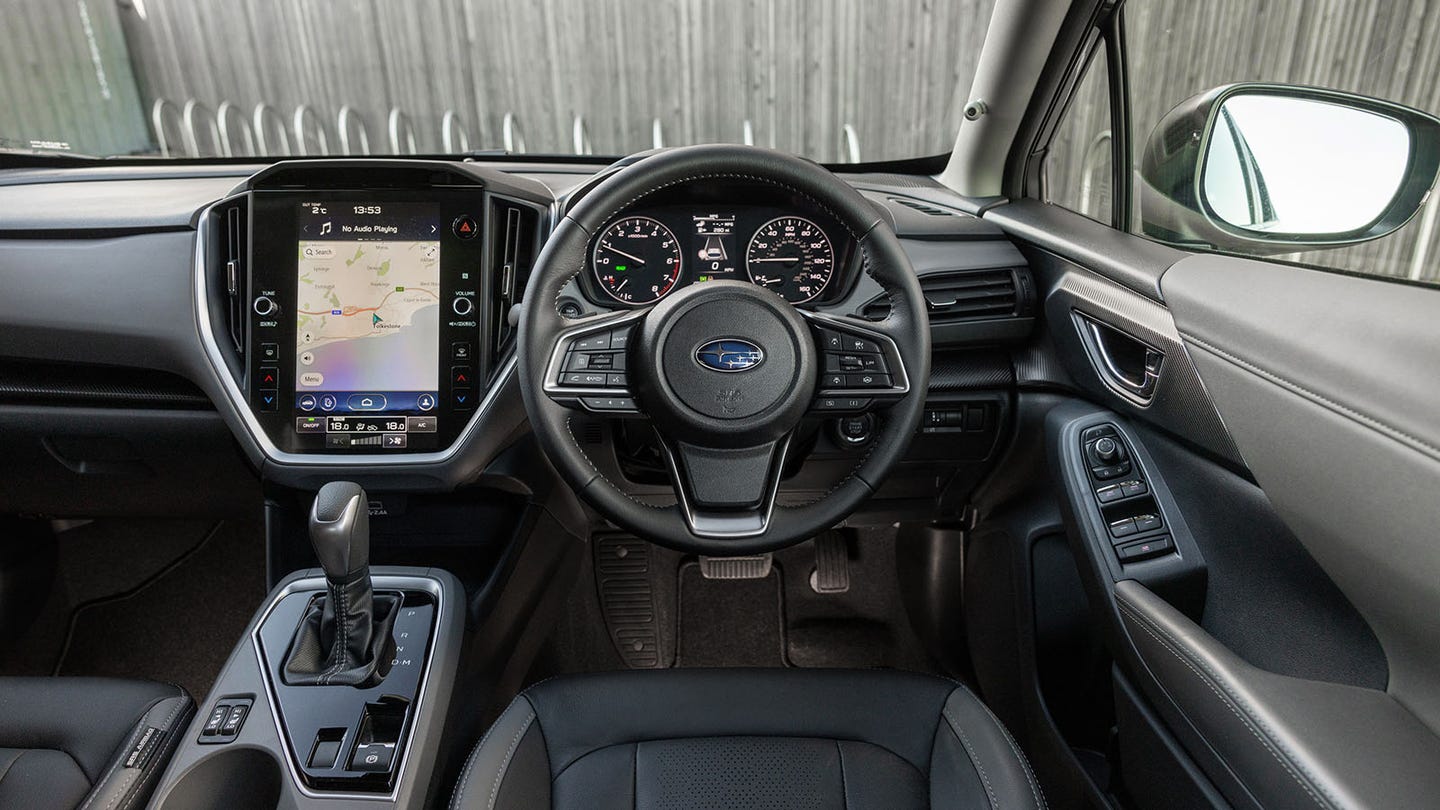
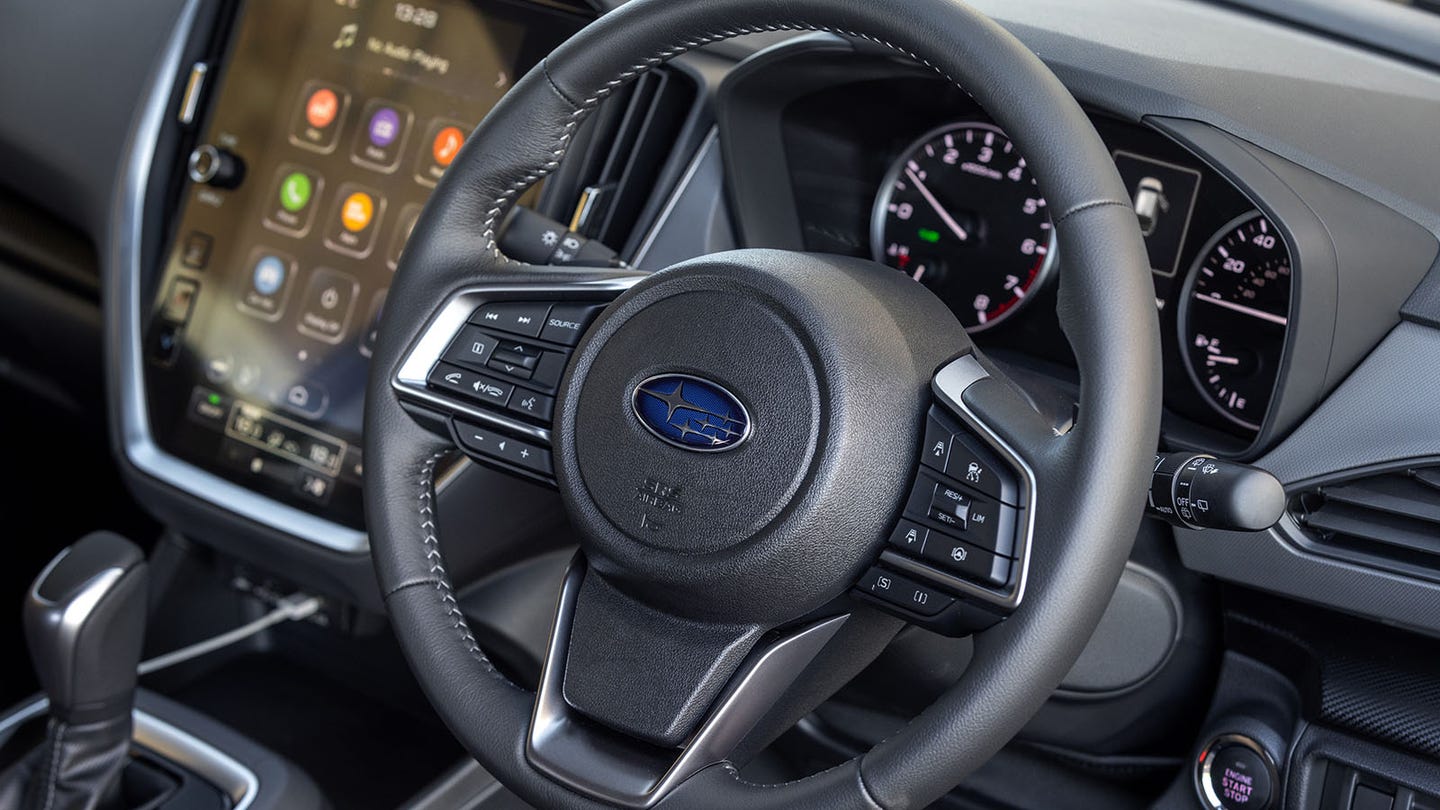
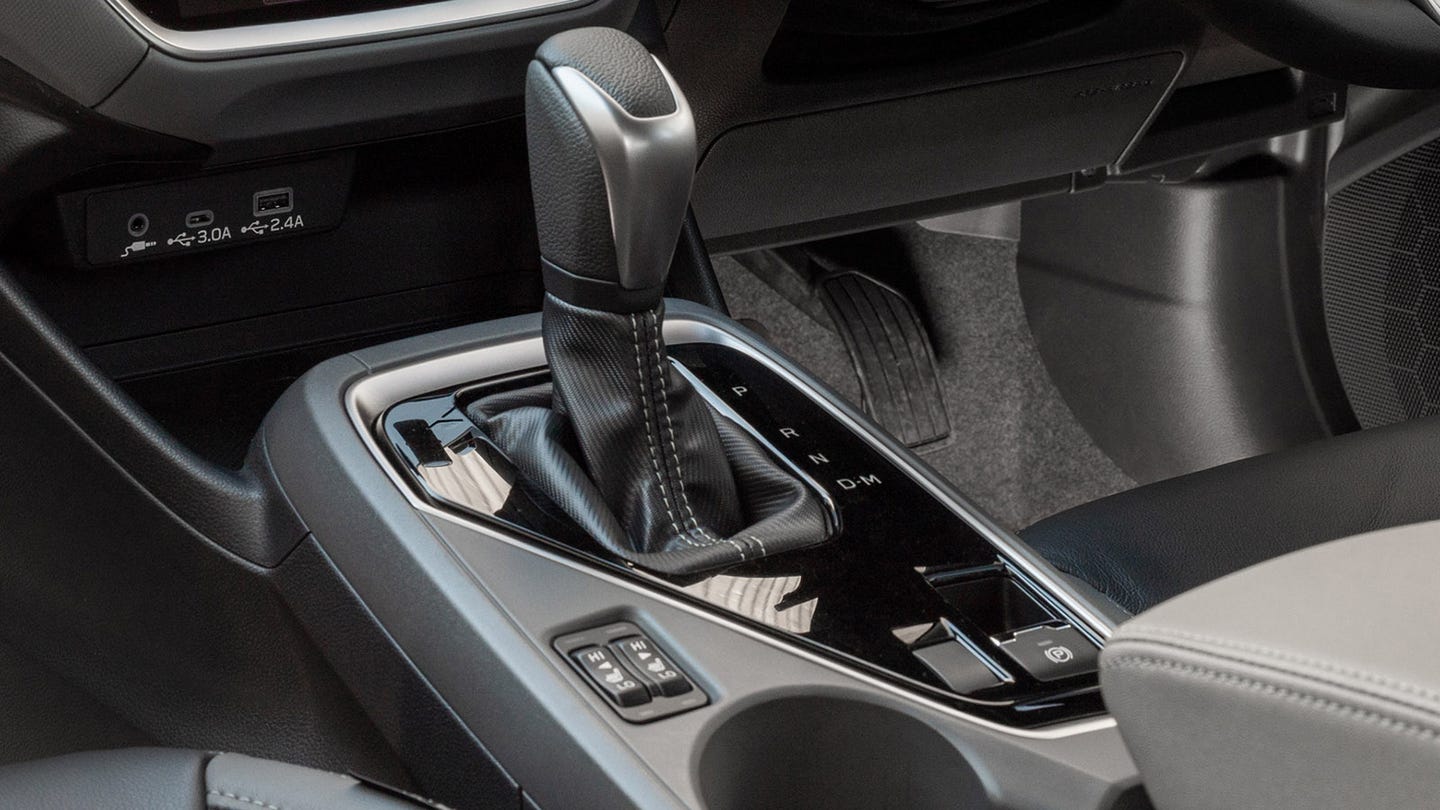
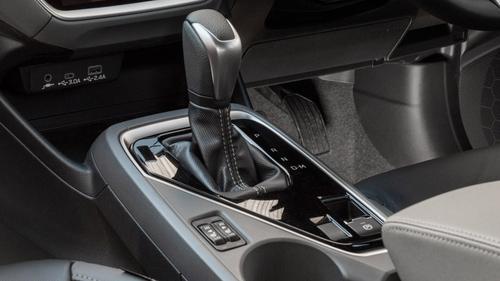
Inside the Crosstrek, things are a bit of a mixed bag. Build quality feels pretty solid but material quality isn't up to scratch. The centre console and dashboard feature cheap, grey moulded plastic that looks like it belongs on a child's toy, although these are offset against strangely soft panels on the front doors. Especially egregious is the steering wheel – the part you touch most often – which feels worse than most plastic wheels we've tried, despite claiming to be leather-trimmed.
We can't fault the dashboard layout, however. Major controls like temperature, volume, window defoggers and heated seats are all clearly labelled physical buttons and dials, exactly where you'd expect to find them. In fact, nearly all control points including the steering wheel and the indicator stalk are laid out intuitively, so there's virtually no acclimatisation period the first time you step inside.
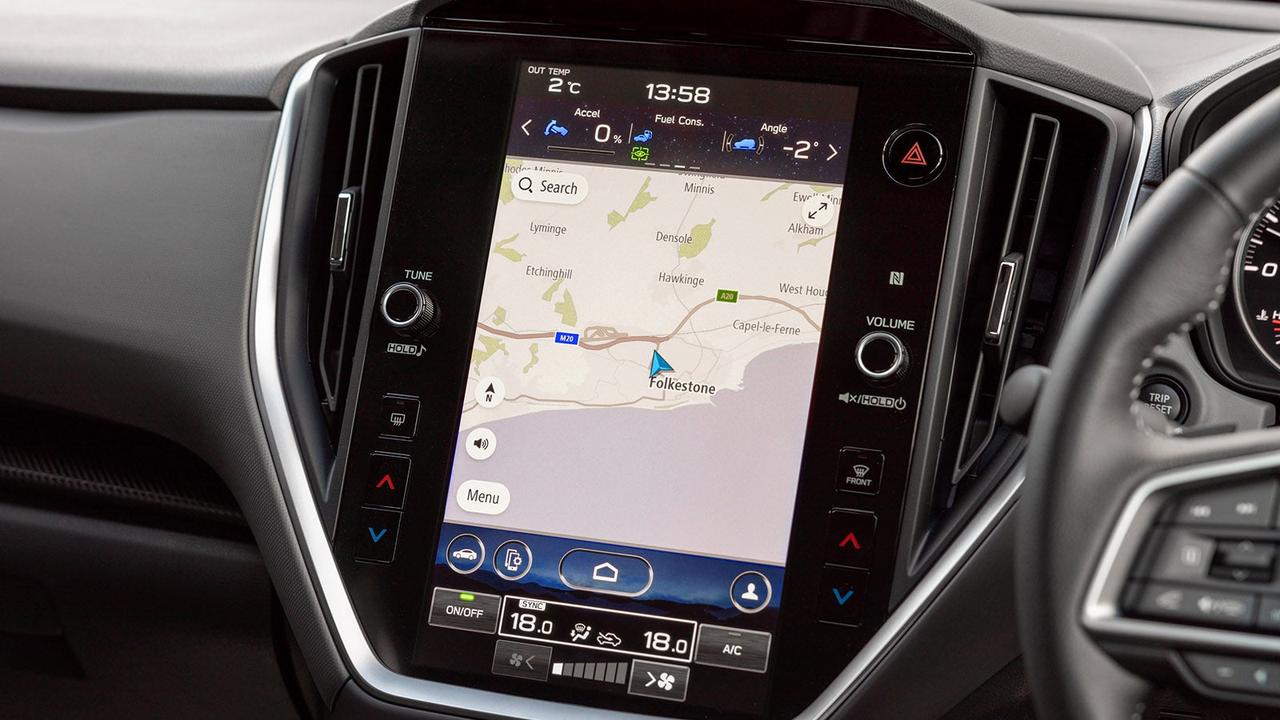
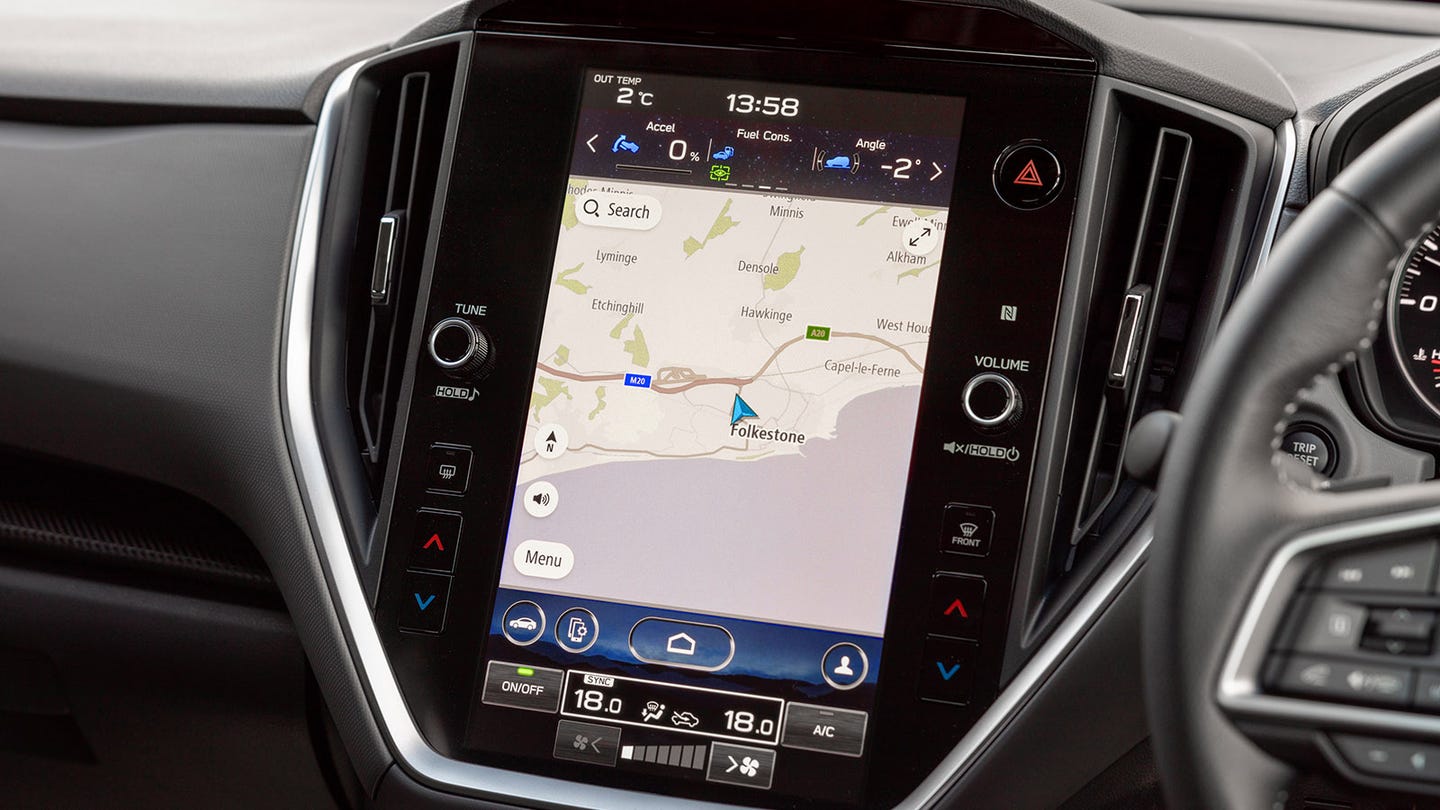
You can't miss the large, portrait infotainment system sat in a gloss black panel in the middle of the dash. This is one of the Crosstrek's least impressive areas, with the screen looking and feeling old-fashioned compared to virtually all other rivals. Taps can take a few moments to register, so you're sometimes left double-guessing whether you hit the icon you were aiming for.
On the plus side, all Crosstreks include Apple CarPlay and Android Auto so you can bypass the built-in software. Plus, the relatively limited number of features means there aren't too many menus to get lost in. We'd normally dock points since the more detailed climate controls are consigned to the bottom of the screen, but this is a persistent menu that always stays available so they're not too hard to find in a hurry.
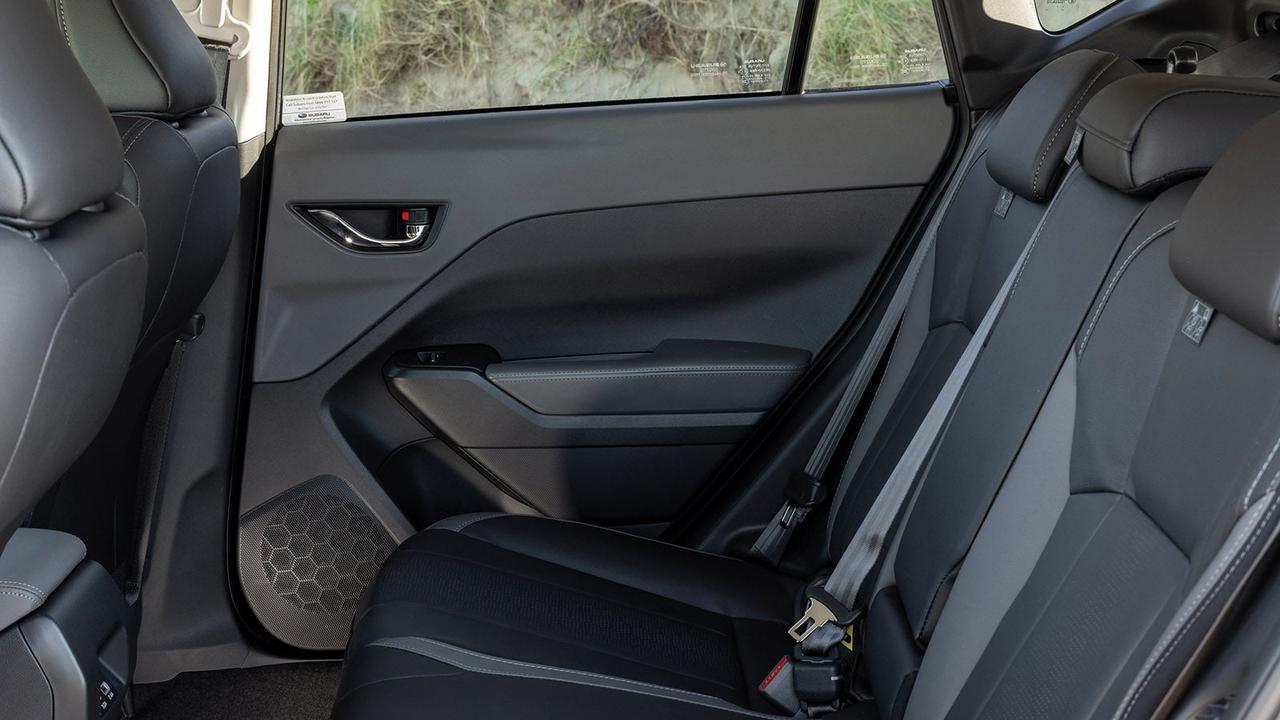
The Crosstrek measures just under 4.5 metres long. That means it's a hair longer than typical family hatches like the Volkswagen Golf and Ford Focus, and within touching distance of the roomy Honda Civic. As a result, you'd expect the Crosstrek to be spacious and, generally speaking, it is. Front-seat occupants get plenty of adjustment, making it easy to find a comfy driving position.
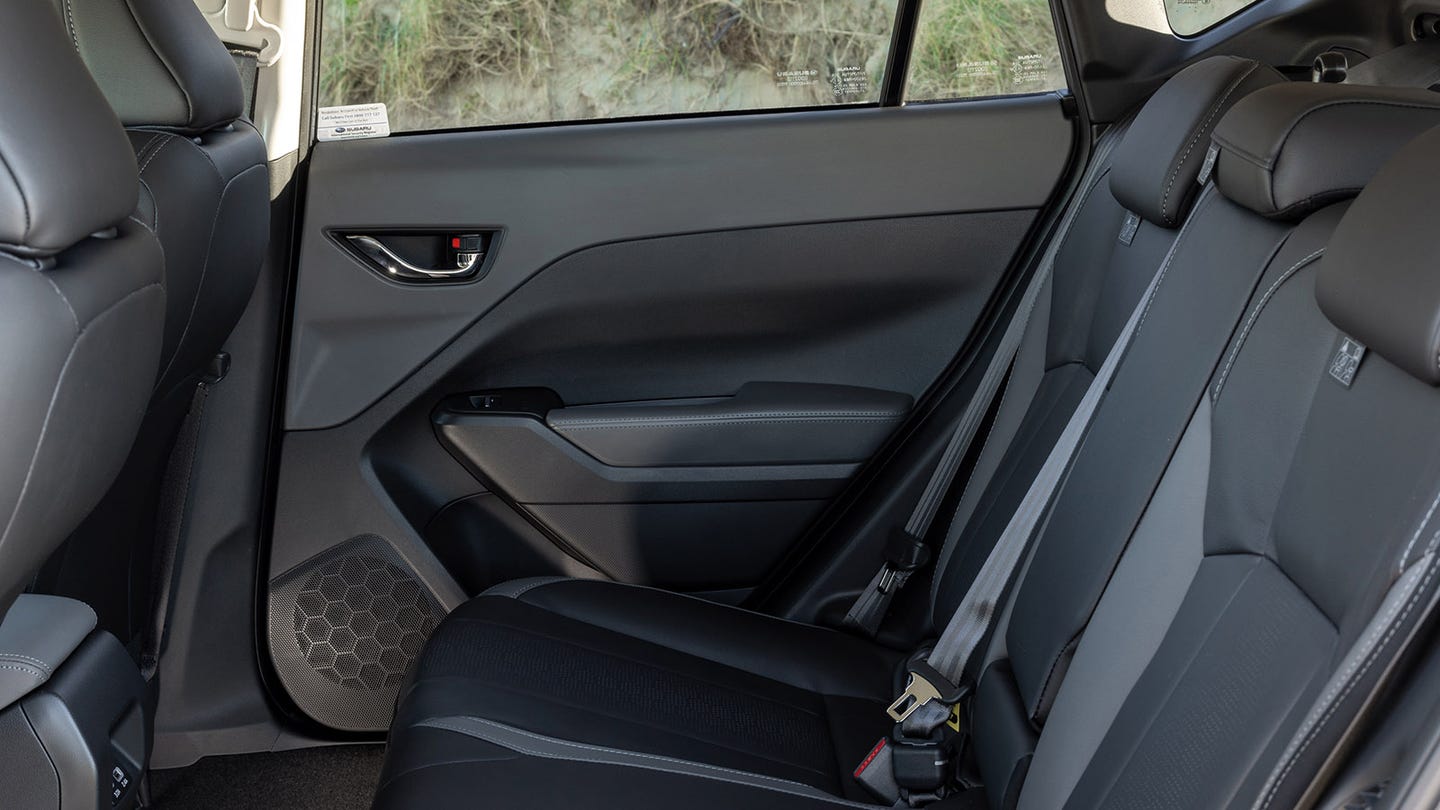
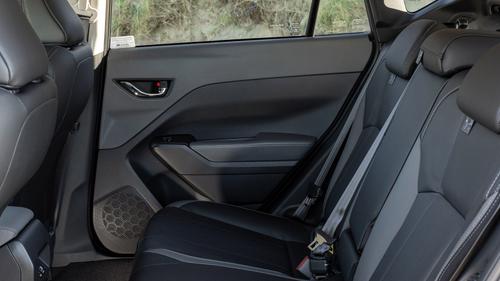
As for those in the back, there's a fairly generous amount of legroom so you'll only start to run out of space if you seat one tall adult behind another. Assuming a few of your passengers are average height or less, everyone will fit comfortably in the Crosstrek. Rear headroom is probably the least impressive area, with the sloping roofline eating into space and forcing you to stoop slightly when stepping in.
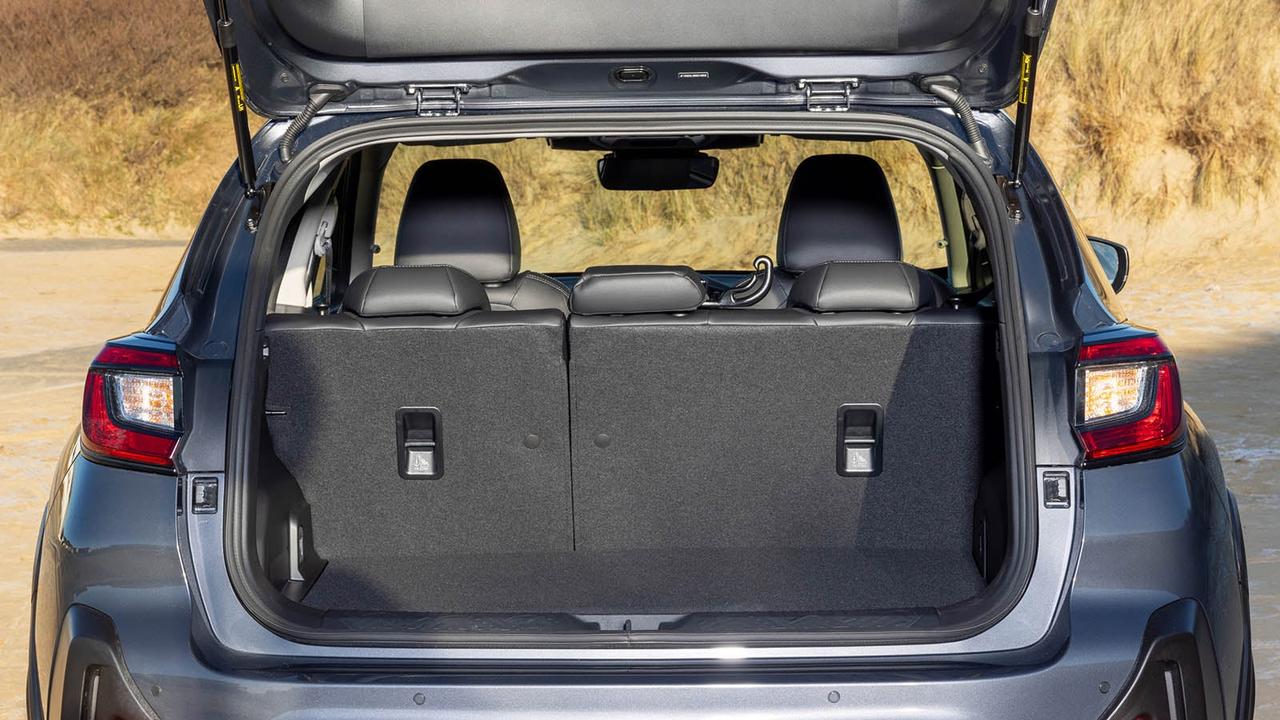
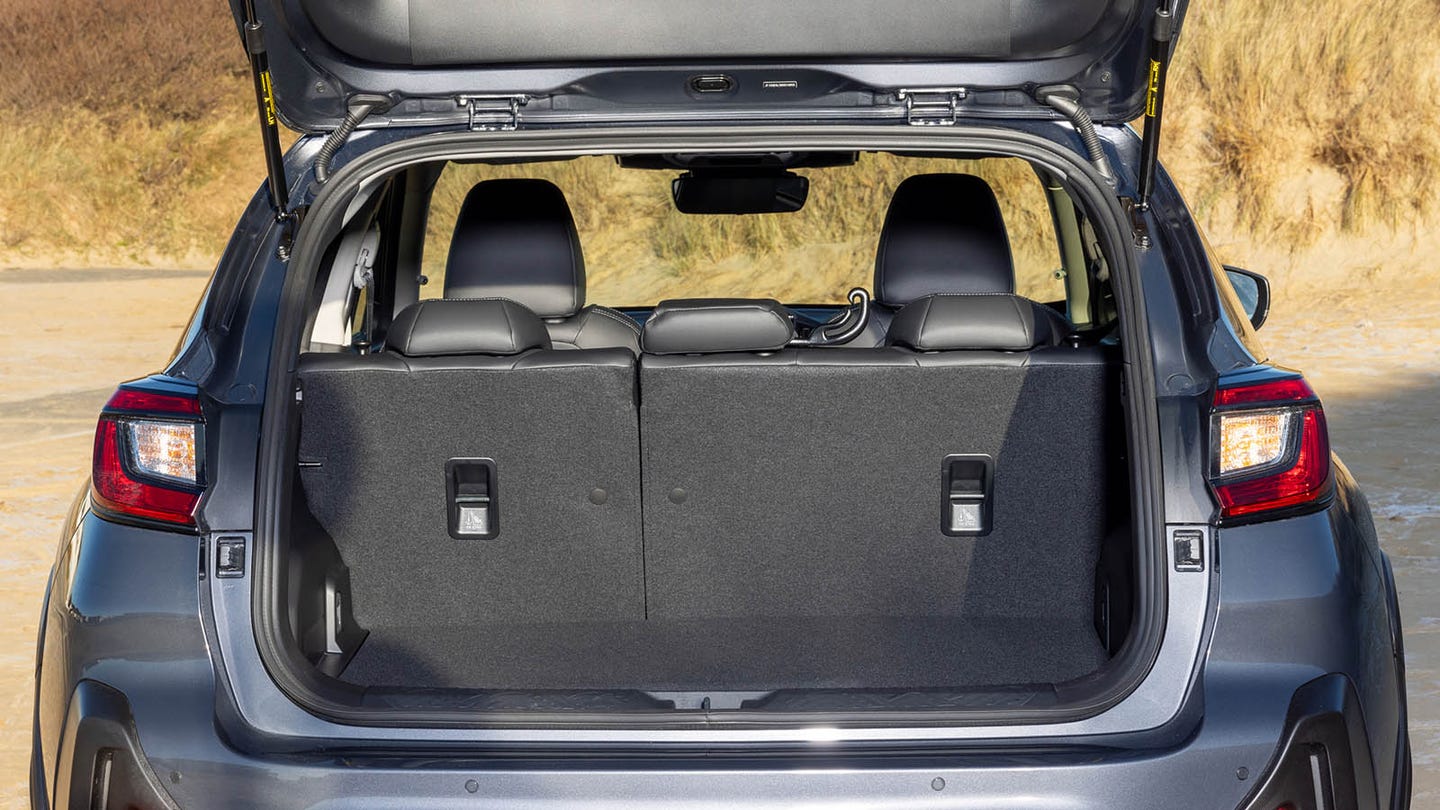
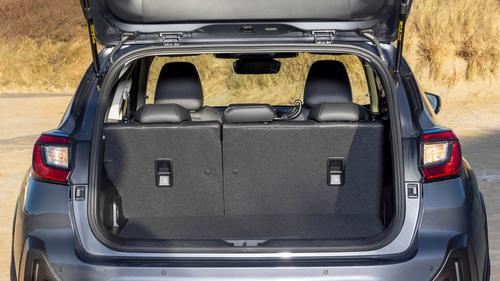
With the hybrid and all-wheel-drive gubbins under the boot floor, cargo space is disappointing. Its 315-litre boot is smaller than almost all main rivals and nearly 100 litres down on the Honda Civic. The same sloping roofline that impacts rear headroom also affects boot height, with very little space above the parcel shelf. The boot floor is quite high, so you have to lift your luggage quite far off the ground but, thankfully, the load lip is pretty minimal.
On the plus side, cabin storage is pretty good. All door bins have enough room for a drinks bottle, plus other small odds and ends. The centre console cubby is reasonably sized while the glovebox is on the larger side. All Crosstrek models include roof rails as standard, allowing you to carry extra cargo on the roof.
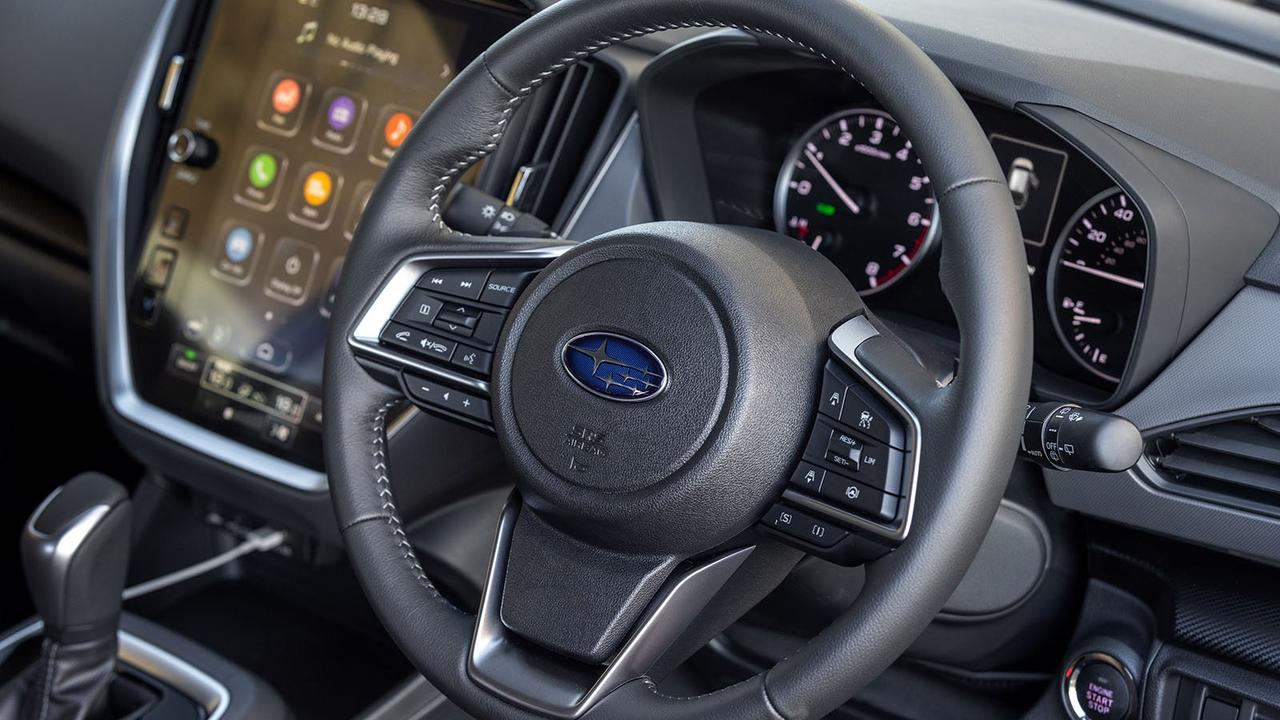
In the UK, there's just one engine available for the Crosstrek. It's a 2.0-litre petrol four-cylinder in Subaru's signature 'boxer' arrangement. This is paired with a CVT automatic gearbox and assisted by a mild-hybrid system. Power is directed through an always-on all-wheel-drive setup, which you can optimise for surfaces like mud or snow through the screen.
The result of all that hardware is a measly 136hp – enough for a pedestrian 0-62mph run of just under 11 seconds. You'll mostly notice the Subaru's leisurely performance when you're accelerating on a slip road, or going for a fast motorway overtake. In these cases, you'll hear the engine roaring away at high revs as the speedo drags its feet towards the national limit.
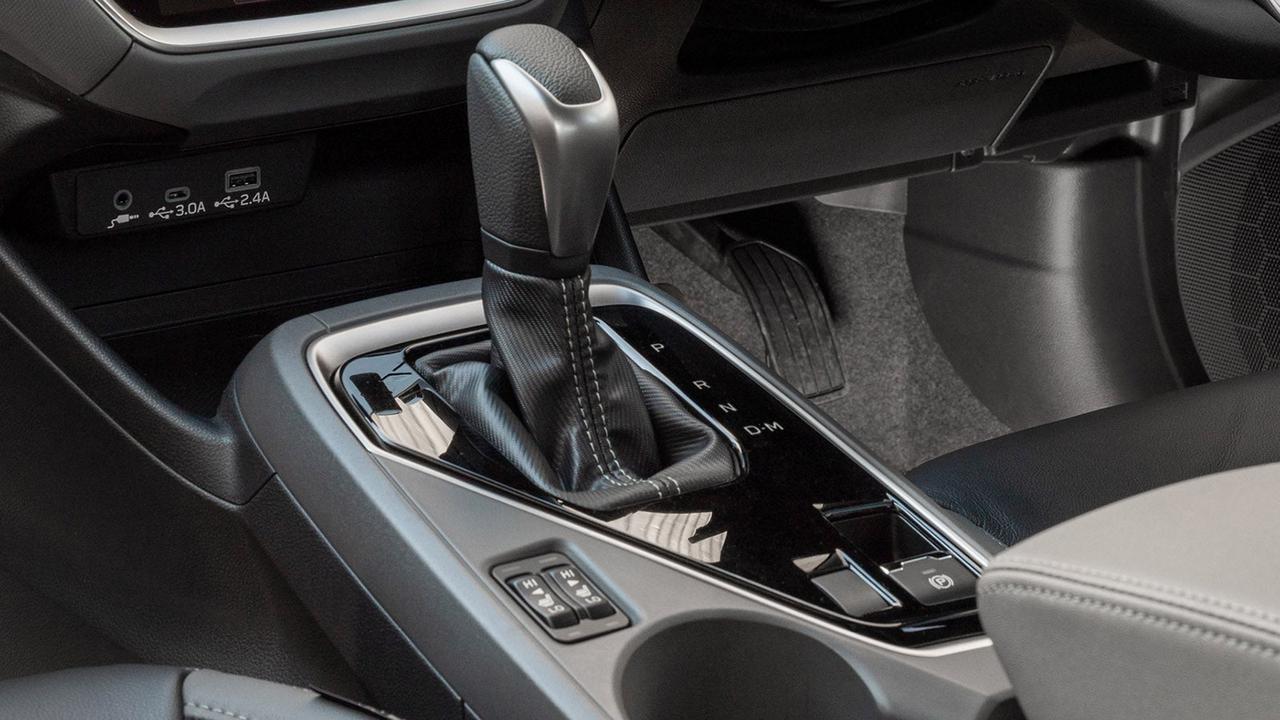
Happily, the Crosstrek's weak-sauce powertrain is much less obvious at lower speeds. That's mainly thanks to the mild-hybrid system, which has to be one of the hardest working on the market considering it's lumbered with this engine. Setting off from a standstill, you instantly feel the reactive electric motor get the car going, just as petrol power starts making its way to the wheels. Launch with too much throttle, however, and you get a brief pause as the engine lazily spins up to join the overworked hybrid motor.
Ultimately, the Crosstrek is a car that feels set up for cruising rather than enthusiastic driving. Keep your speed and acceleration under control and the sluggish engine won't bother you too much. Plus, the smooth hybrid and automatic setup make the car easy to tiptoe through stop-start urban traffic. Don't expect fuel economy to rival full hybrids from Honda and Toyota, however, as the Crosstrek struggles to crest 35mpg in real-world driving.
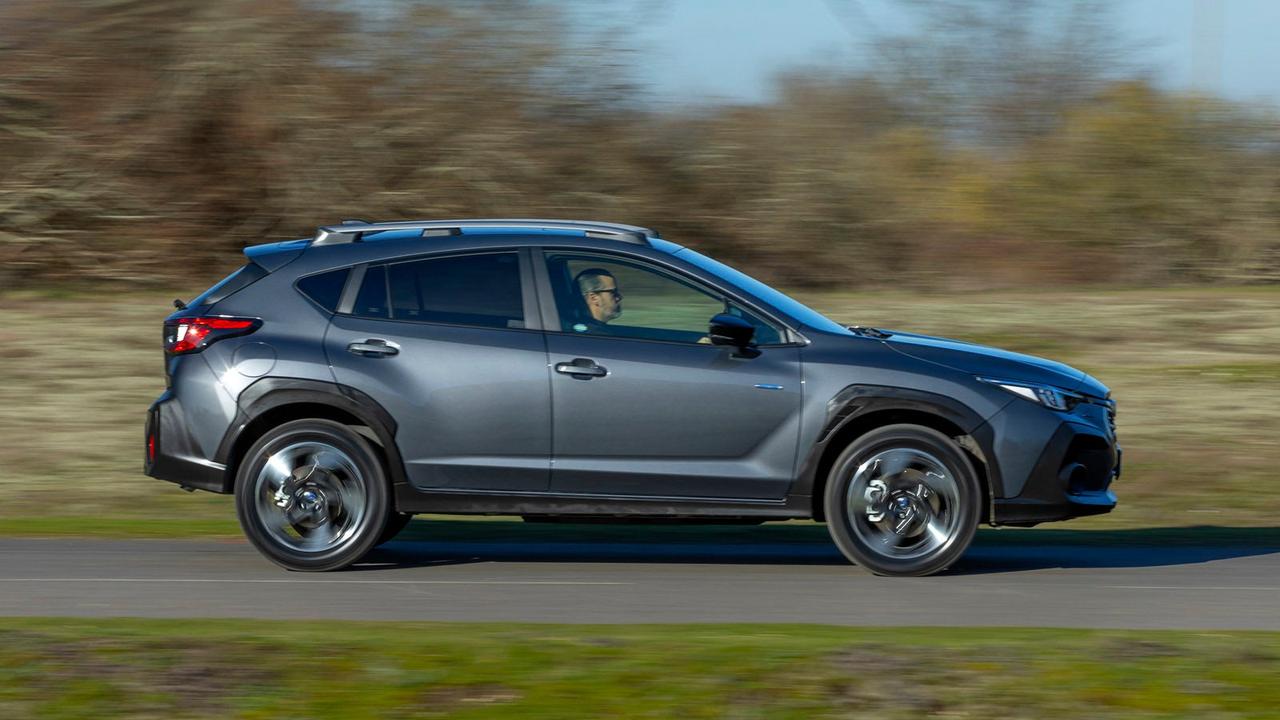
While the Crosstrek disappoints under the bonnet, it's a much more cohesive experience out on the road. Subaru's bestowed the car with long-travel suspension to match its tall ride height, and this lends the ride a soft, cushioned quality. As a result, the Crosstrek makes light work of big bumps like potholes, isolating them effectively before they make it to the base of your seat.
Like certain softly sprung Citroen models we've tried, however, the Subaru's setup can let higher-frequency vibrations from rough road surfaces into the cabin. It feels like this is because the overly soft suspension simply can't react fast enough to these imperfections. Nevertheless, this isn't so bad that it distracts from the Crosstrek's generally soft, comfy ride.
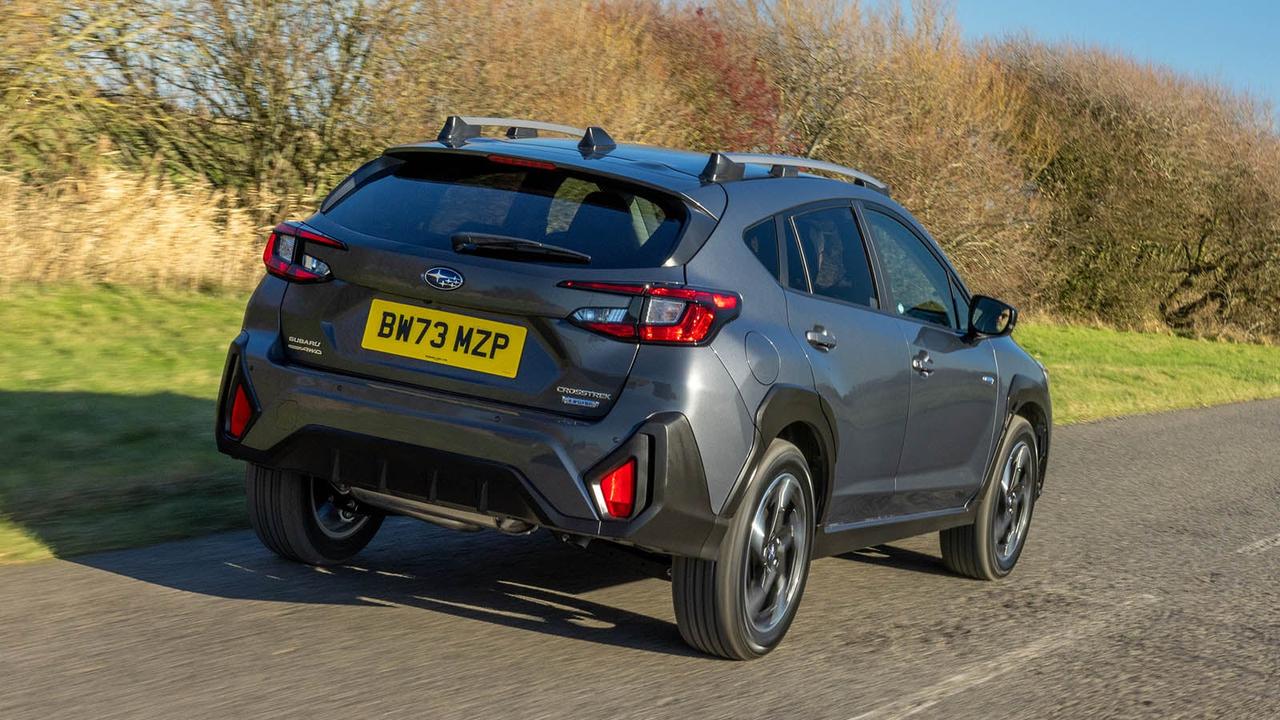
With the calm setup and hybrid engine, you probably wouldn't expect the Crosstrek to be a particularly sporty car… and you'd be right. There's lots of body roll, and steering the car tighter into a corner simply heaves the body further onto the outside wheel. As soon as you stop those shenanigans and settle down to a cruise, the Crosstrek makes much more sense, with light-but-accurate controls and good everyday compliance.
We weren't able to test the Crosstrek off-road, which is a shame because many of the car's compromises are driven by its rough-road ability. Compared to most road-biased SUVs, the Subaru has genuine ground clearance and plenty of plastic cladding to protect against scratches and scrapes. That plus the permanent all-wheel-drive system means this is a great choice if you live somewhere remote but don't want a typical 4x4.
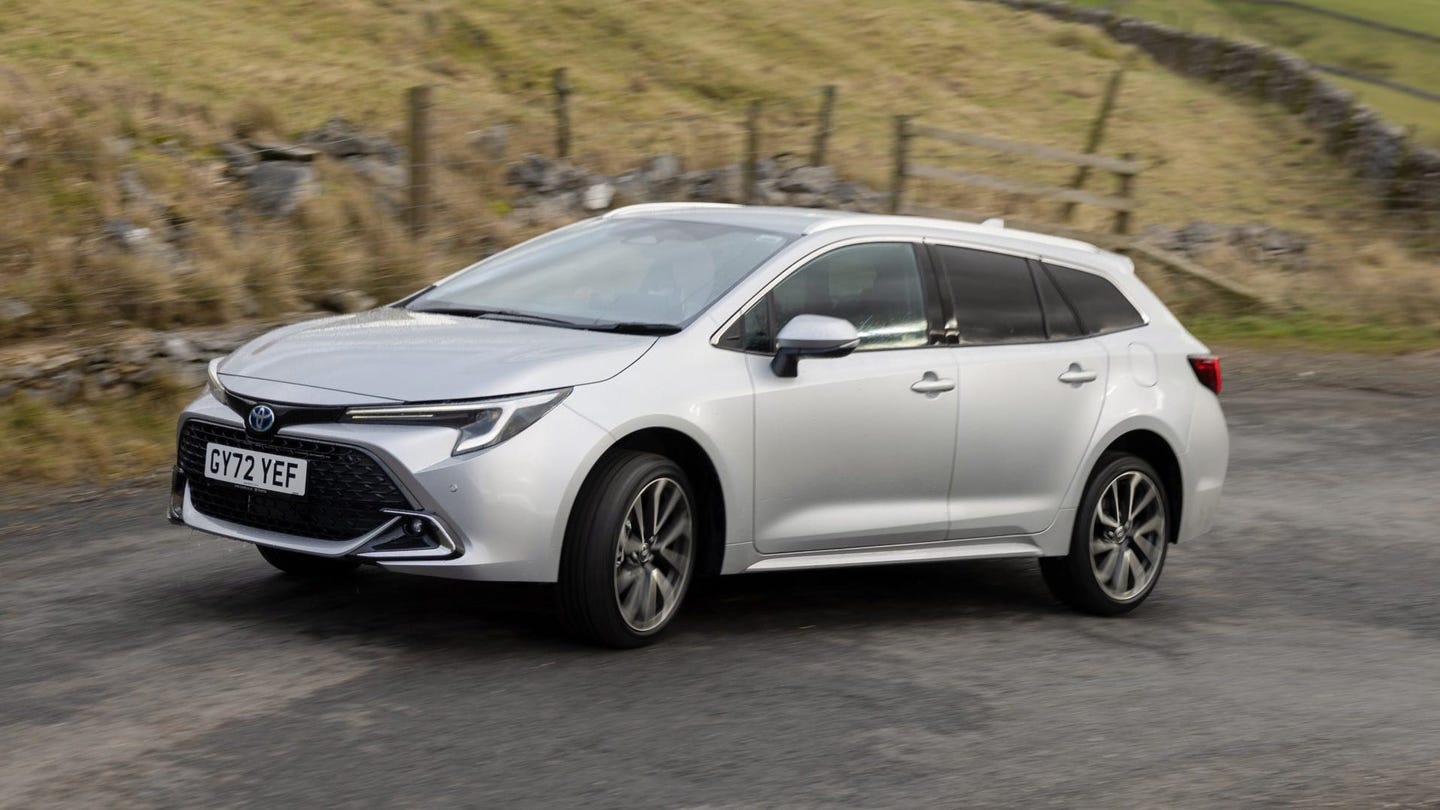
All the Corolla’s qualities with a bigger boot. What’s not to like?
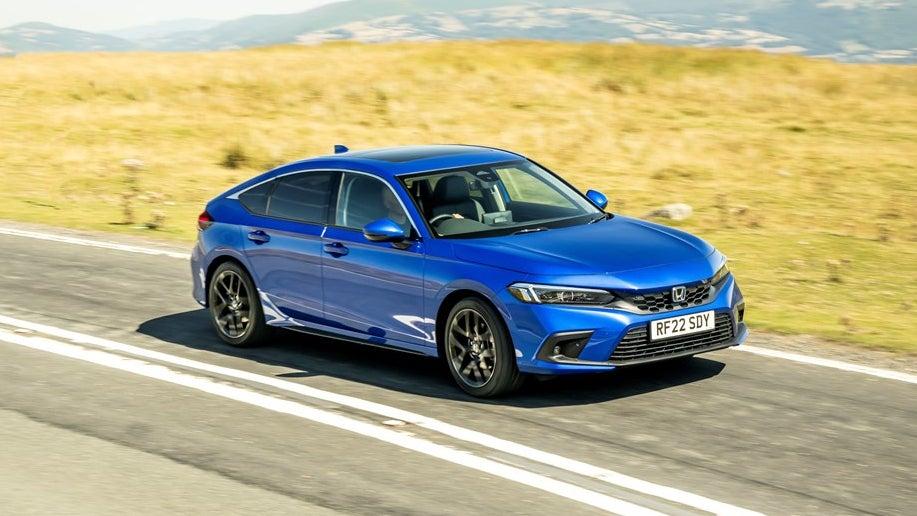
It’s a bit pricey, but the latest Civic is the best hatchback on sale
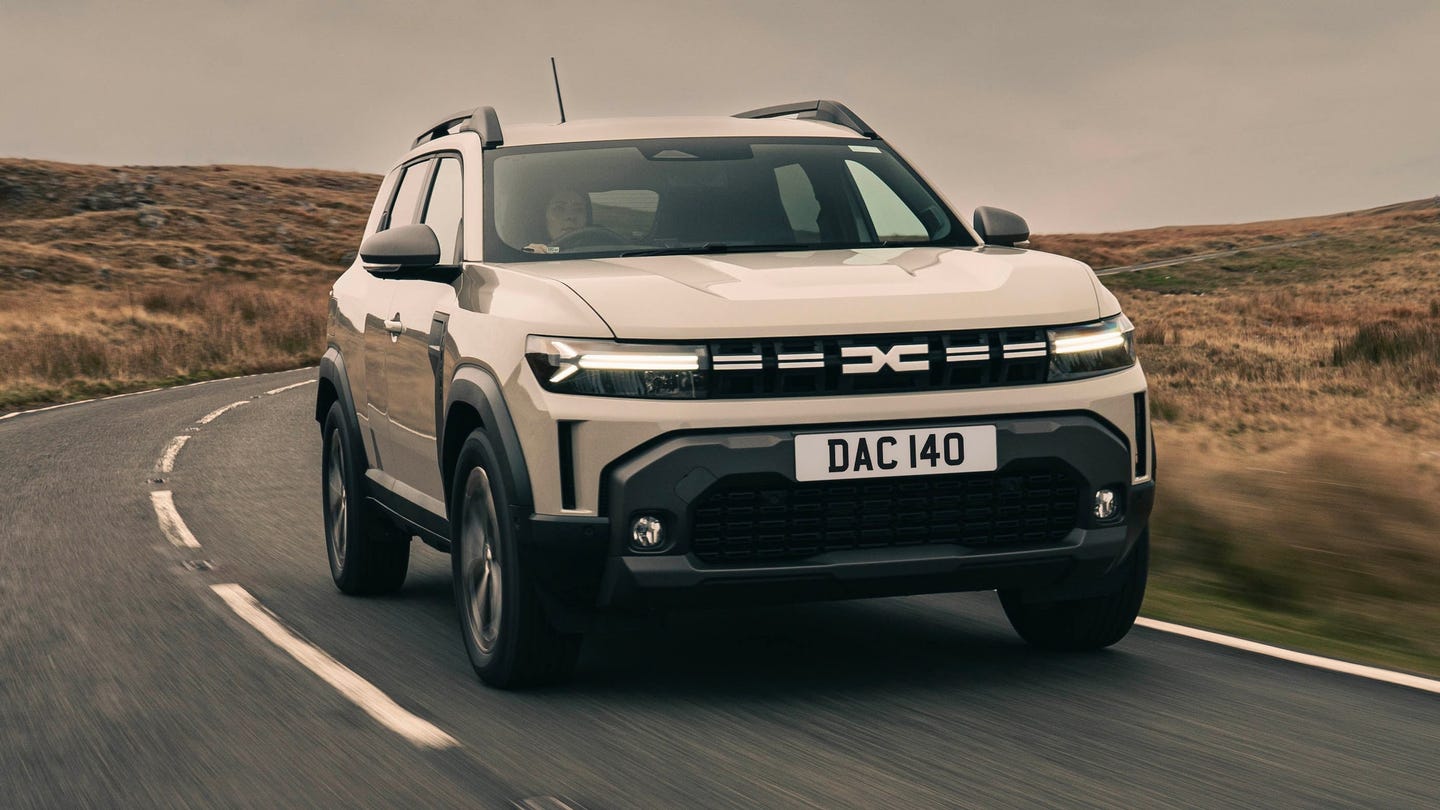
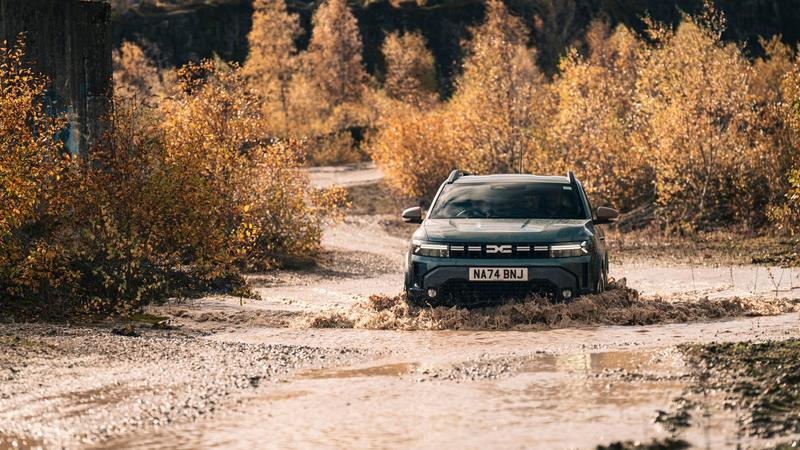
Latest Duster is a top family SUV – durable, spacious, cool and cheap