








The best cheap electric cars to buy

Ben Custard
•
Electric Cars

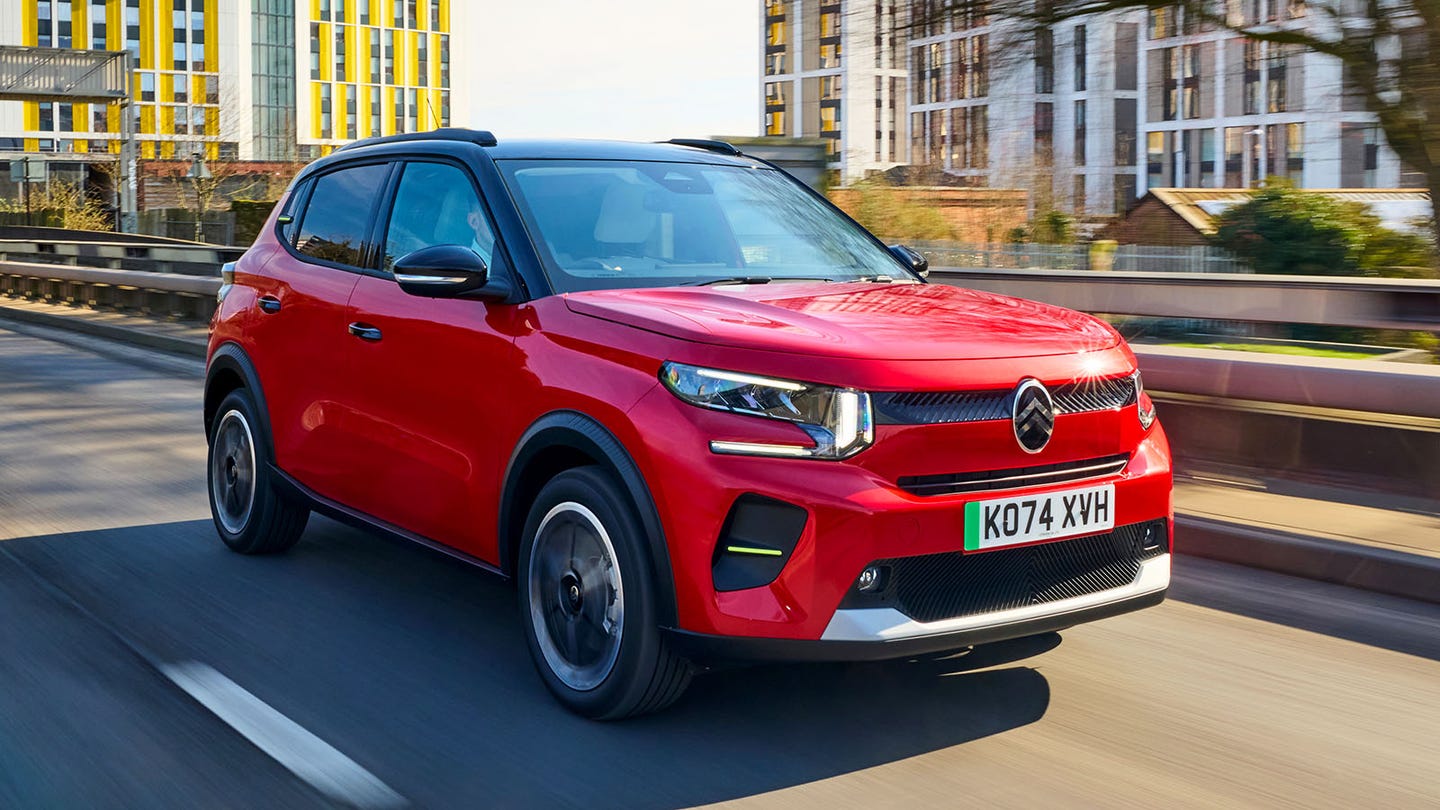


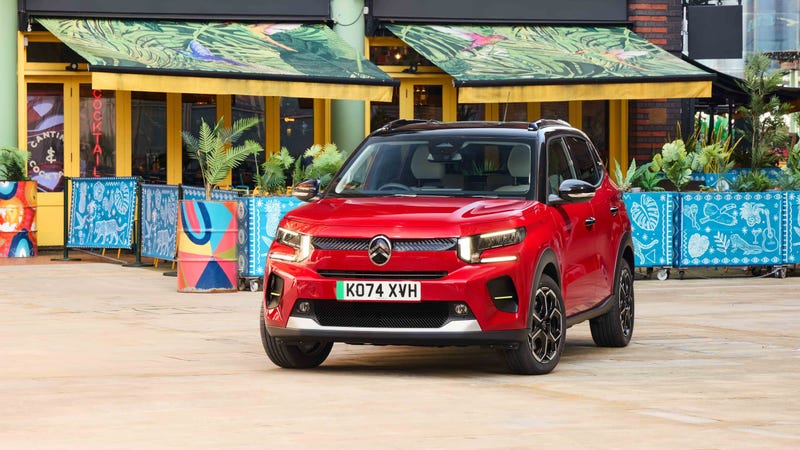
Commenters have complained for years that electric cars are too expensive. Could the Citroen e-C3 be the car to finally silence those critics?
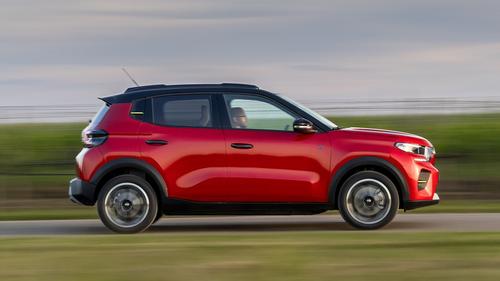
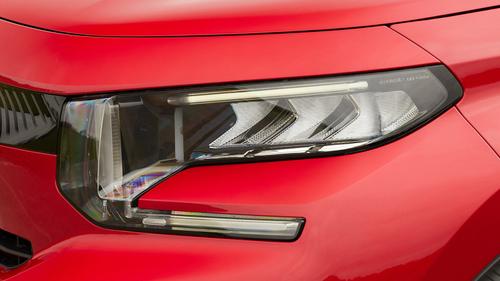
Well, maybe. It gets off to a good start with a sub-£20,000 asking price and chunky SUV-inspired looks. But there's no hiding its cheap-car origins, and the 200-mile max range won't win any Top Trumps rounds. Let's find out what it's like to live with…
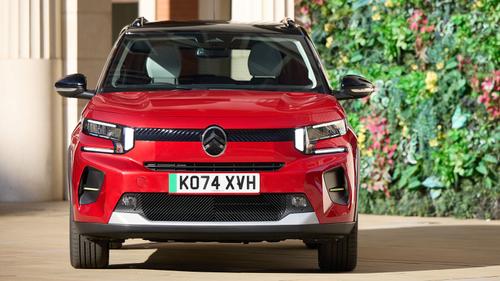
EV drivers often shop spec sheets – and that's a problem for the e-C3 as its performance numbers aren't particularly impressive in isolation. You need to take its low cost into account, however, because there are virtually no rivals that match its range and size at this price point.
"Picking words to describe the e-C3's driving experience throws up adjectives like 'composed' and 'compliant', but not 'fun' or 'fast'"
There are EVs that undercut the C3 – the Dacia Spring or Leapmotor T03, for example – but they're tiny city cars with very little range and even less cabin space. Closer rivals include the BYD Dolphin Surf – this matches the big-battery e-C3's £22,000 price and 200-mile range, but it's physically and visually smaller than the Citroen. Then there's the achingly cool Renault 5, priced just under £22,000 – it's smaller than the e-C3 and has a slightly shorter range, but it definitely has the edge for desirability and a longer-range model is available for a bit more cash.
You might find the Citroen suits you best if you're looking for a commuter car that feels at home in the city. With up to 200 miles of range – probably 150 in the real world – that's plenty to cover most people's daily driving needs. Plus, the reasonably sized 44kWh battery will only need a few hours of charging overnight to recover what you used that day. You can tackle the occasional long trip – aided by 100kW fast charging – but you might want to consider an EV with more range if you're a motorway regular.
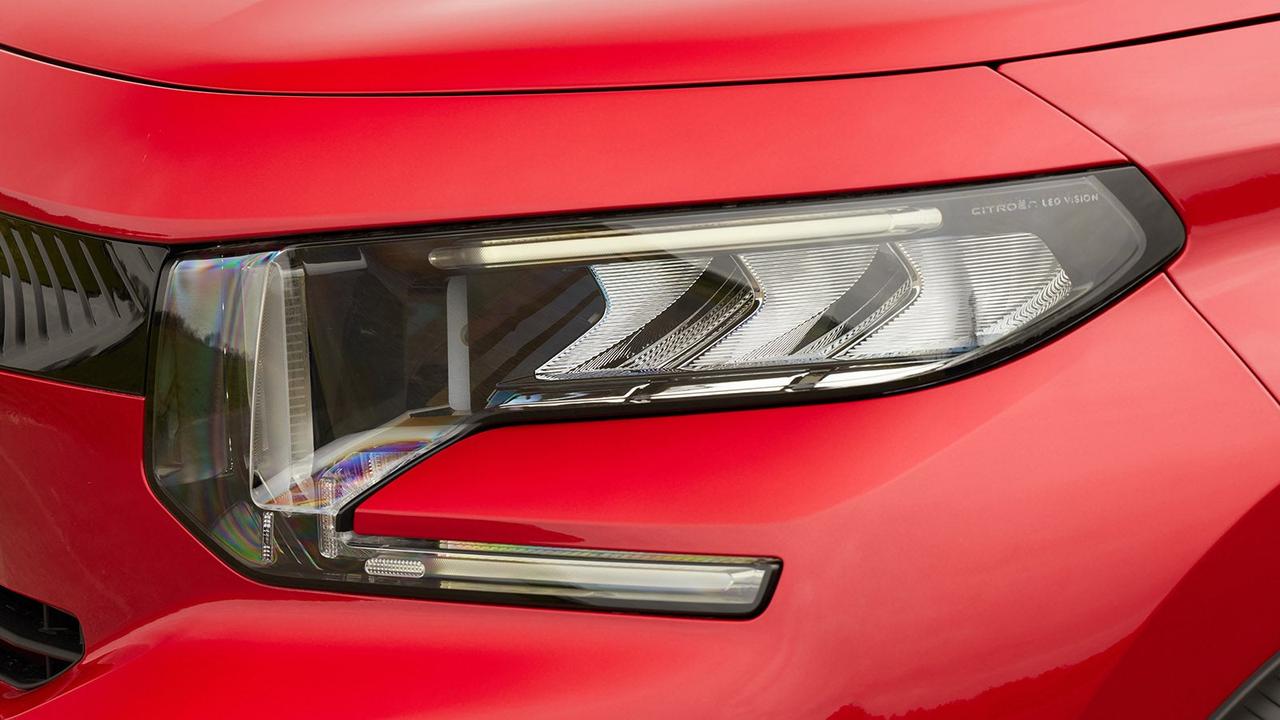
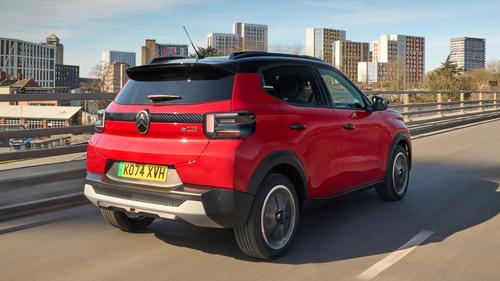
Compared to the old C3, the new e-C3 barely takes up any more space on the road. It's less than 2cm longer and just 6mm wider than the old car, making it easy to thread through gaps and squeeze into tight spaces. Despite this, practicality is noticeably improved in the new car, with more passenger space and a small cargo space boost. This is partially thanks to the e-C3 swapping from a clear hatchback bodyshape to a more upright SUV-style one, which you can spot from its extra 10cm of height over the old car.
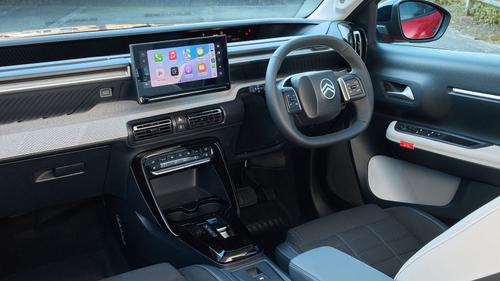
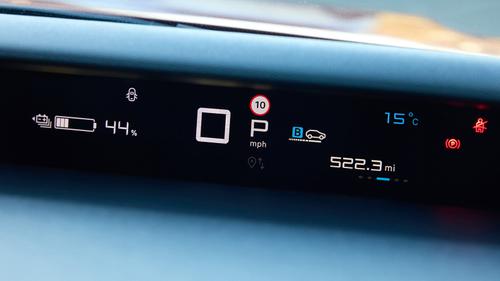
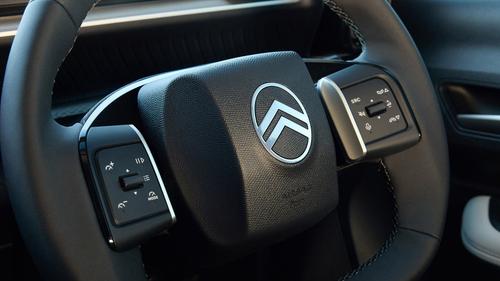
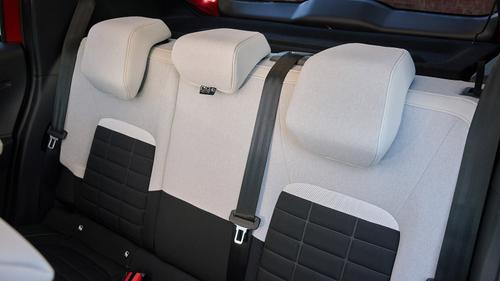
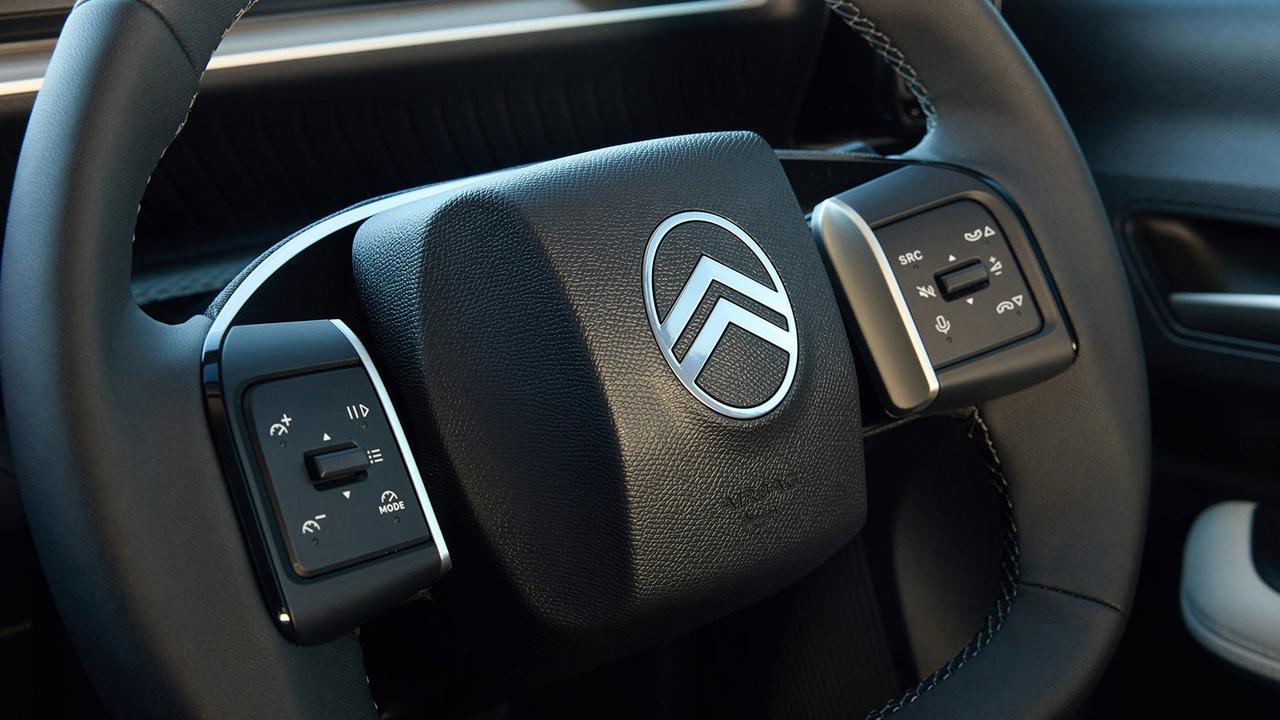
This is a cheap car but, like with most Citroens these days, that's accompanied by plenty of charm. Inside, you'll find hard, moulded plastics on the doors and centre console, but these are offset by the tactile cloth dashboard and, on Max models, part-faux-leather upholstery. We enjoyed details like the car's oddly squat steering wheel and the quilted rectangles in the seat cushions. From the driver's seat, you'll also spot the minimalist digital drivers dials embedded in a background dashboard panel, which feel like they were lifted from Star Trek.
With its rugged-chic cabin and dinky-SUV looks, perhaps the least interesting thing about the e-C3 is the way it drives. The 113hp electric motor has enough power to get the car up to motorway speeds without straining, but also lacks the urgent shove you get in more powerful EVs. Handling is easy, ride quality is decent, but the car's refinement could've used a little more work. We also ended up briefly trapped at a public charging point in our test car, but we'll cover that in more detail in the driving section below.
If you like the sound of the e-C3 but aren't ready to swap over to an electric car, you can still buy the standard C3 with a 1.2-litre petrol engine and a choice of manual or automatic gearboxes. The auto version is around £1,000 more expensive than the entry-level e-C3, and about £1,000 cheaper than the big-battery e-C3.
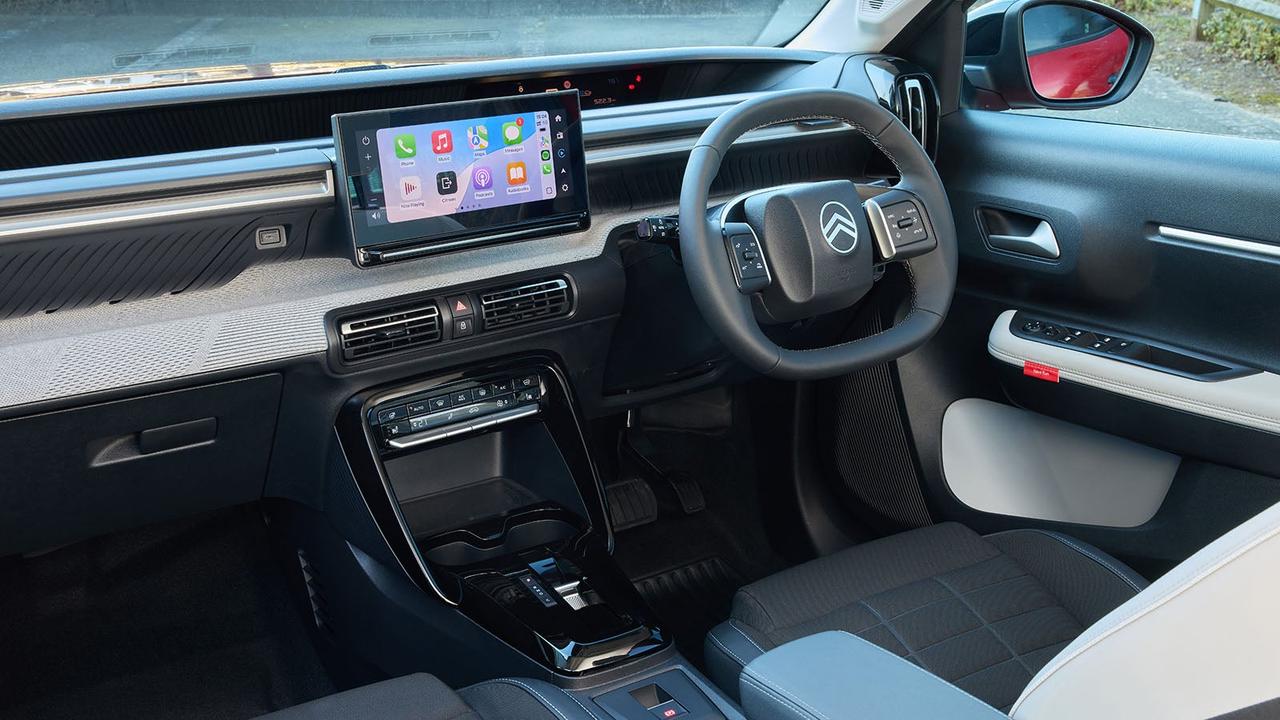
Recent Citroens have embraced the lineup's affordable status and managed to make a virtue of it inside. So, yes, there's lots of hard plastic surfaces on the doors, centre console and lower dashboard, but you forgive them because the overall design is charming. Most prominent in your eyeline is the dashboard, which has been segmented into two 'shelves', allowing you to store odds and ends within easy reach. The lower shelf is trimmed in a grey textile cloth that feels nice to touch and breaks up the black plastic.
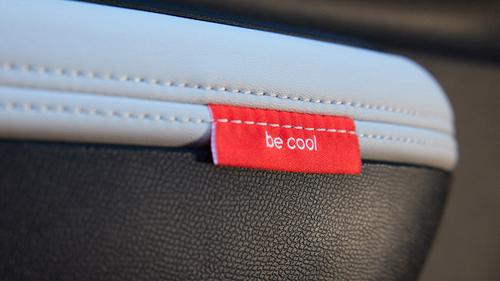
Above and further back, there's a second shelf with little Citroen chevron details that match the car's bumpers. To the right of this shelf is the seamlessly integrated digital driver's dials. These are very easy to read thanks to their admirably minimal, monochrome design, lending the car a slightly retro-sci-fi aesthetic. You'll also spot four labels sewn into the door panels printed with affirmations like "be cool" and "have fun", which you'll either find cute or the automotive equivalent of Live Laugh Love.
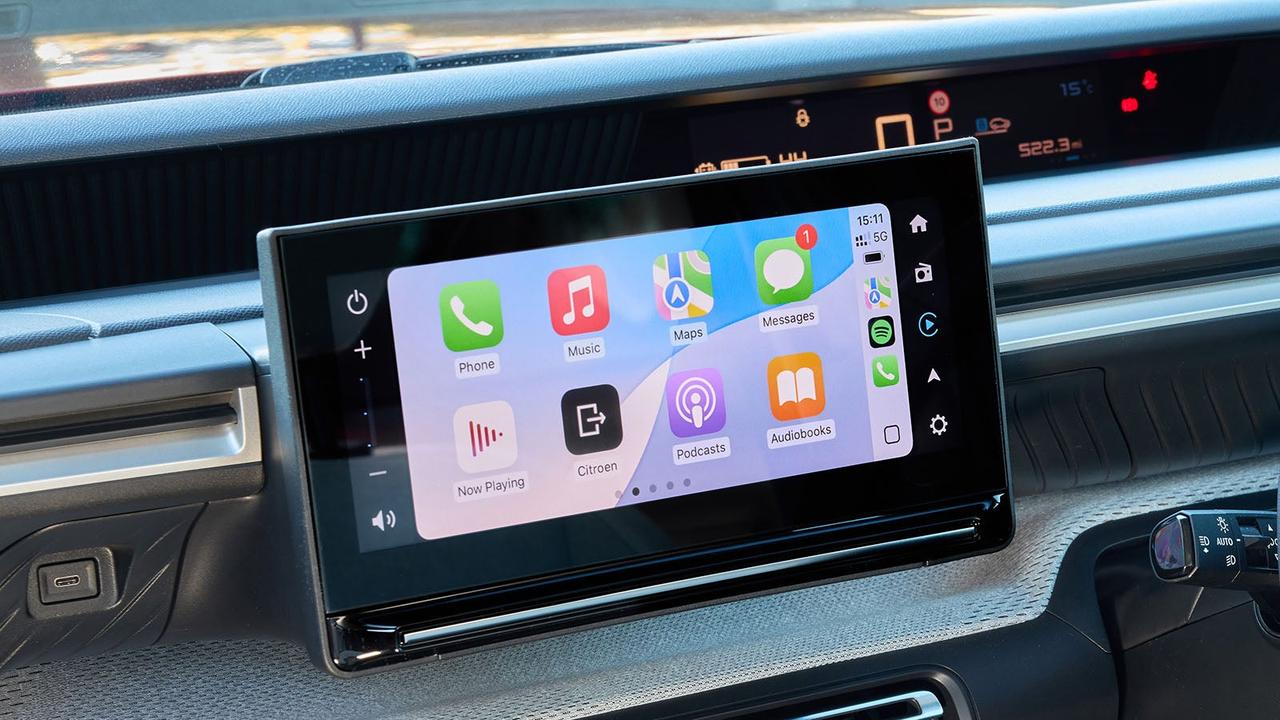
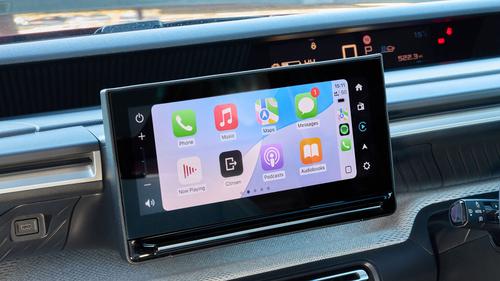
We've complained that many cars' infotainment systems are too fussy and complicated, with lots of different menus, graphics and fonts all competing for your attention. Citroen's clearly heard our cries, because the e-C3's screen is mostly free from visual clutter. There's a bare minimum of on-screen controls and persistent shortcut icons to jump between functions. You don't have to go hunting through the screen for the climate controls either, with a proper set of easy-to-use physical controls positioned below the infotainment system.
Oddly, there are virtually no vehicle settings in the screen. That means no drive modes, no ability to turn gearbox creep on or off, and no adjustable regen – though the latter can be switched with a small switch in the centre console. While we applaud Citroen for keeping the car's infotainment functions simple, this might be a little too restrictive for owners who want to more closely tailor their experience.
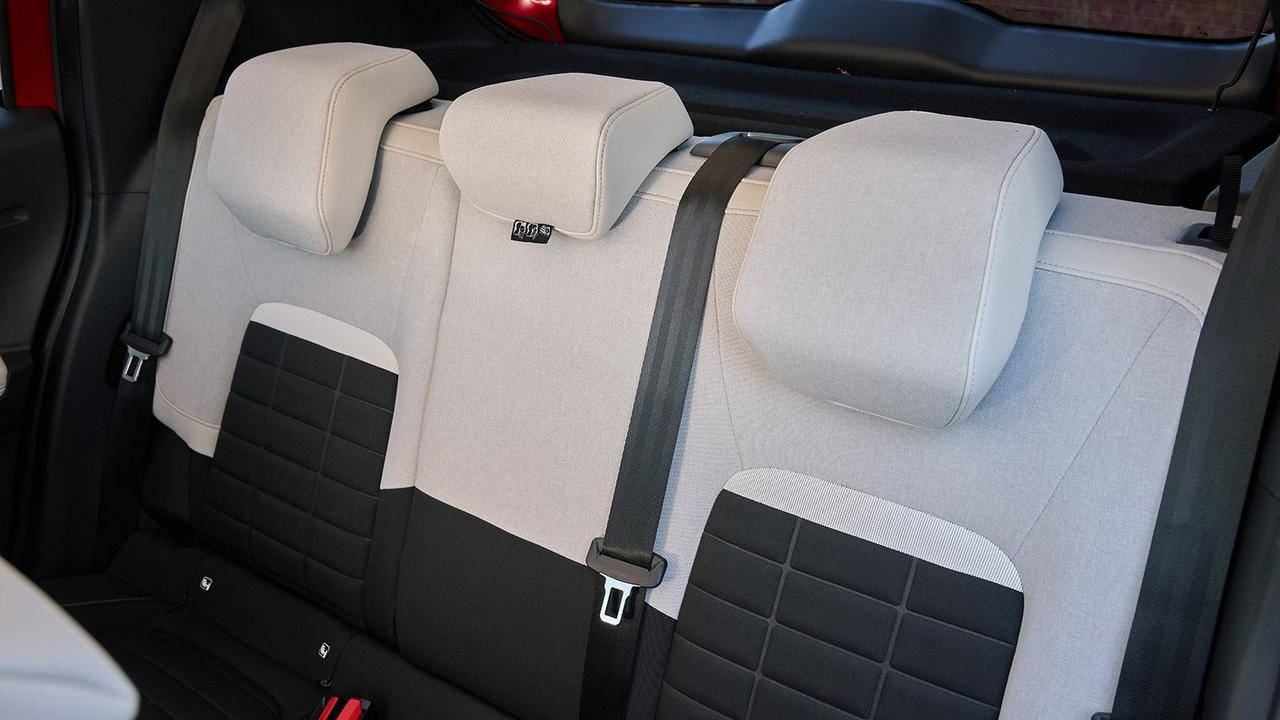
At just a hair over four metres long, the e-C3 is still a small car, taking up less space on the road than a Volkswagen Polo, for example. With that in mind, the Citroen's cabin is very impressive, with lots of adjustability up front to allow even tall people to get comfortable. Headroom is noticeably improved over the old C3 thanks to the new car's higher roofline, and the firewall extends quite deep into the engine bay, freeing up more leg and foot room than you might expect.
Of course, there's a limit to the e-C3's accommodation, so you'll struggle to fit a tall adult behind another one. However, even with the front seat slid all the way back, there's still space to squeeze an average-height adult behind it – something that can't be said for most supermini-sized cars. Those rear seats are fairly stiff and upright, so they're better suited to short hops rather than long drives, but you can just about squeeze a child seat back there if you slide the front seat forwards.
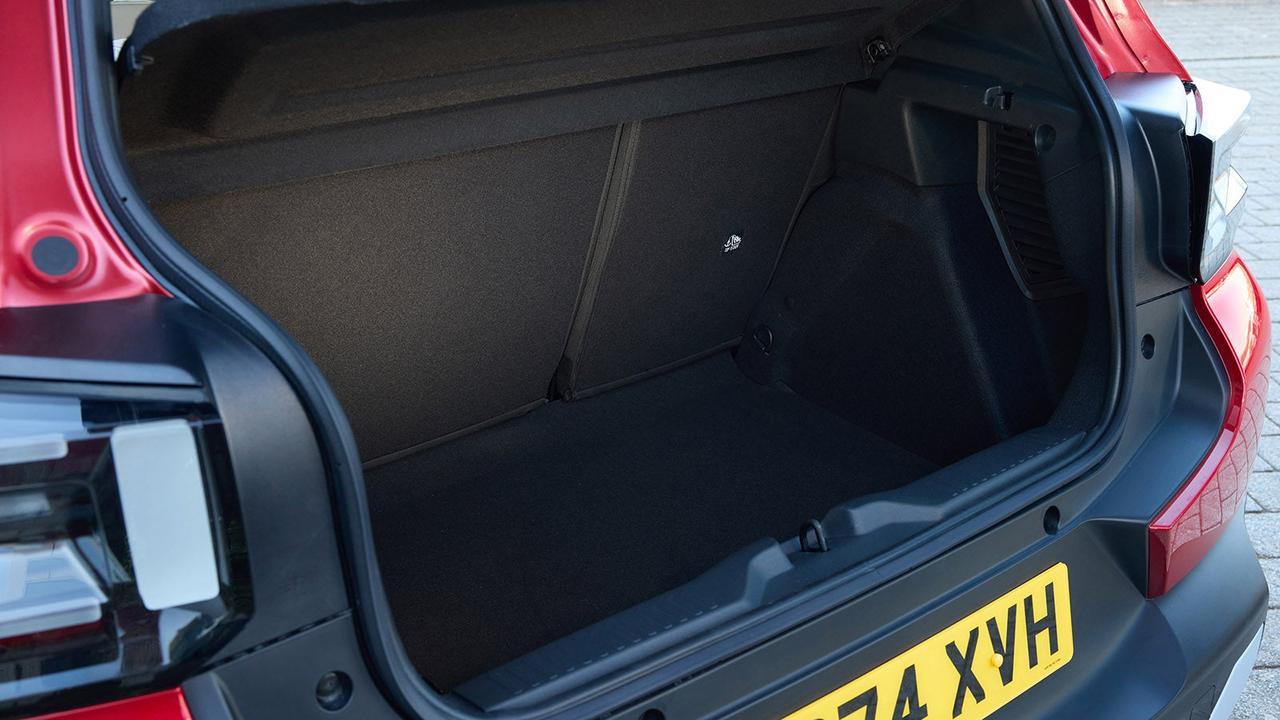
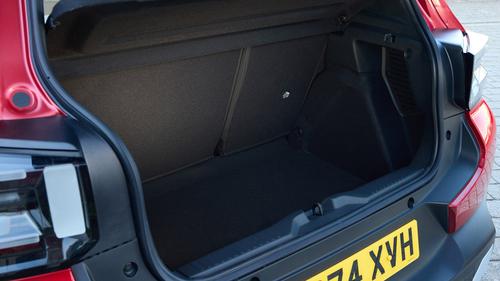
There are 310 litres of cargo space in the e-C3 – exactly the same as the current petrol-powered C3, and 10 litres more than the previous-generation C3. While that's not the biggest space in the supermini segment, it's definitely above the class average. Plus, the area itself is usefully shaped with enough length, width and height to tackle a big shopping trip or a couple's holiday luggage with ease. Access through the hatchback bootlid is reasonably good, but there's a bit of intrusion from the brakelights that limits overall width.
Cabin storage would be fairly unremarkable if it weren't for the aforementioned shelves that make up the e-C3's dashboard. It's very easy to chuck your phone or some snacks up there for easy access. Otherwise, the doorbins and centre console cubby are about average for this class. Like a number of other French cars, half the glovebox's width is taken up by the fusebox, significantly limiting its capacity.
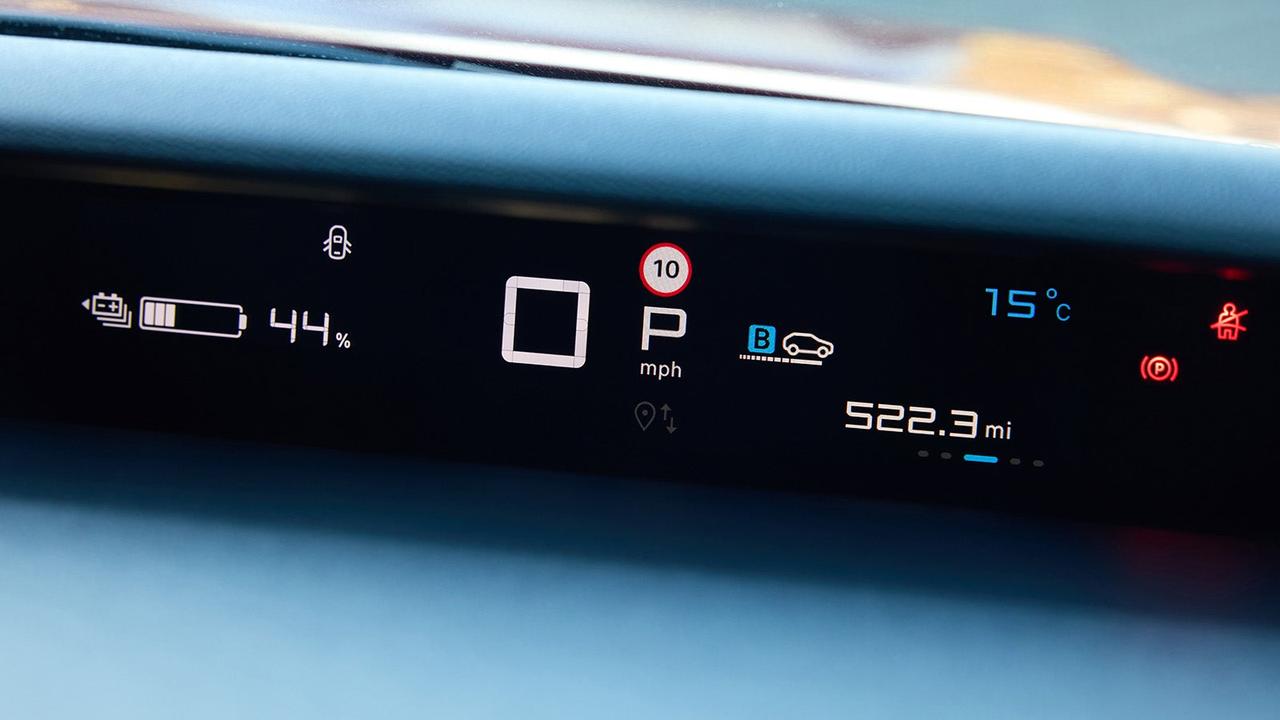
There's just one electric motor option in the e-C3 and a choice of two battery packs. The entry-level 30kWh pack has a claimed range of 186 miles, while the larger 44kWh pack bumps this slightly to 202 miles. Both versions are Li-ion cells based on lithium iron phosphate (LFP) chemistry, which trades a little overall energy density for better affordability and durability compared with typical nickel manganese cobalt (NMC) chemistry.
The motor itself is a 113hp unit powering the front wheels. This setup will crack off the 0-62mph sprint in 10.4 seconds – not great, not terrible. In practice, it's a good companion for the e-C3 with lots of low-down muscle so you can leap with confidence into roundabouts and junctions. Press the accelerator harder and point the e-C3 down a motorway slip road and you'll find the motor still has enough grunt to whisk you to 70mph easily. You do begin to sense the power begin to ebb away past this point, however.
Having 'enough' power isn't exactly a problem, but many EV buyers have come to expect a mule-kick of acceleration from their EVs. Electric models from Tesla and Kia, for example, offer loads of performance even on entry-level models. Drivers expecting the e-C3 to tick this box might find themselves disappointed.
We also found ourselves a little underwhelmed by the e-C3's refinement. This is a common complaint in affordable EVs because they don't have much sound deadening, and lack an engine under the bonnet generating white noise. As a result, you hear low-level tyre roar, wind whistle and suspension thuds almost constantly while driving the e-C3. The motor was occasionally quite vocal too, with a faint but high-pitched whine bleeding into the cabin at certain speeds. These complaints can all be cured by turning the stereo up slightly, but it's not as hushed as the best EVs.
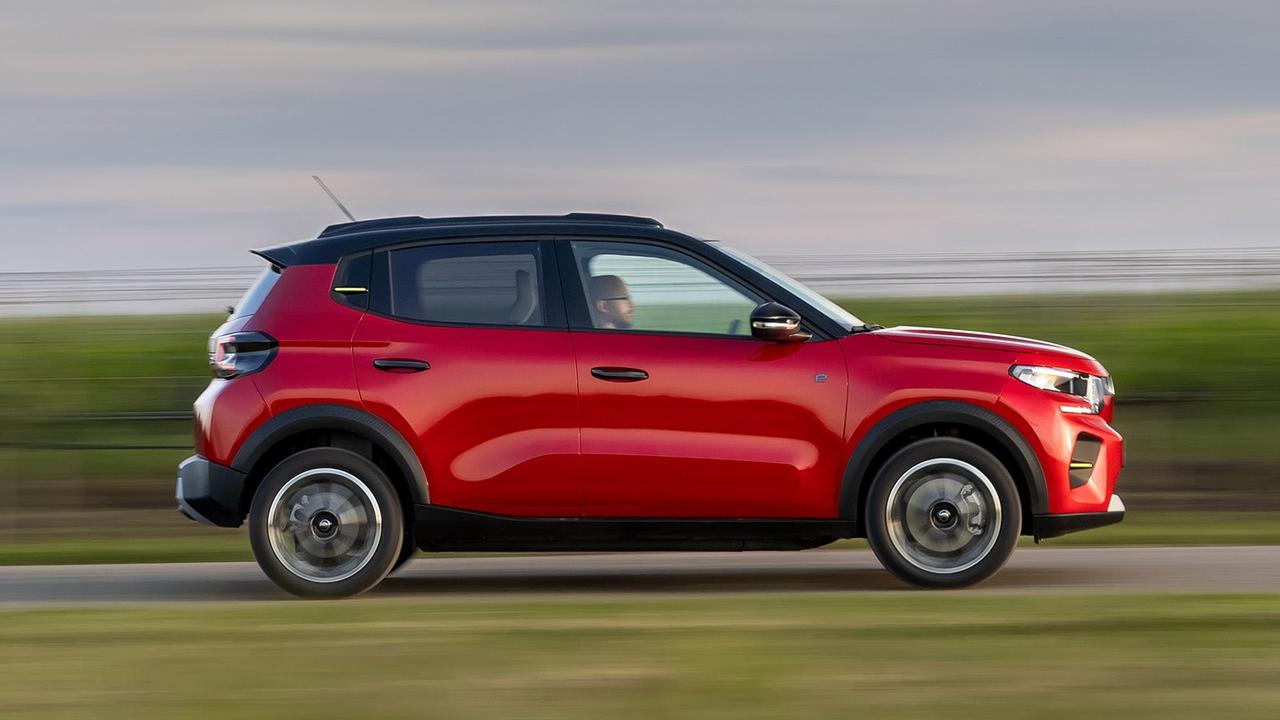
Picking words to describe the e-C3's driving experience throws up adjectives like 'composed' and 'compliant', but not 'fun' or 'fast'. Body control is solid and the car feels more grown up than the C3 it replaces, with a greater sense of stability at motorway speeds.
It doesn't quite have the soft, cushioned suspension of the old C3, however. That car could glide over potholes and motorway expansion joints better than many larger cars. While we wouldn't describe the new e-C3 as uncomfortable – far from it – it is a little crashier over very big road bumps. Big suspension impacts seem to overwhelm its soft setup and get directly transferred to the cabin before the springs have had time to deal with it.
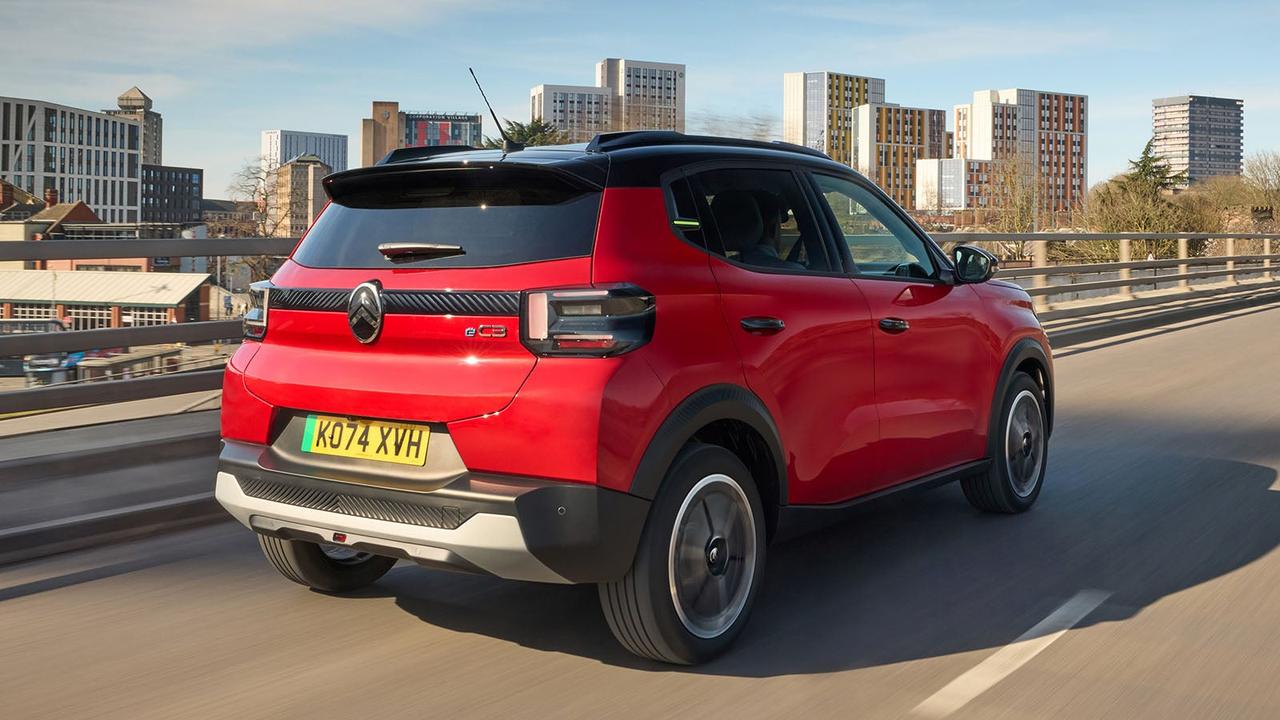
There's little excitement to be extracted from the e-C3 on a twisty road, either. The fairly compliant setup means there's a lot of body roll as the car goes through corners. This effect is exaggerated in the new e-C3 thanks to its taller bodywork and higher centre of gravity. That means there's little sense the car wants to dive into the apex of a corner and, instead, would prefer you gently ease it through the turn.
In fact, the whole setup starts to feel much more cohesive when you just calm down and drive the e-C3 normally. Here, the responsive motor, good visibility and accurate controls make it easy to slip through city traffic. The oddly small steering wheel feels nice in your hand when puttering about, though we did find its shape felt a bit unfamiliar when tackling tight parking spots.
Finally, while out on test, we plugged our 25-plate test car into a BP Pulse public fast charger. While trying to pay for the charge we realised the card reader on the charging post was out of service, which declined the transaction. Obviously that failure was a charging network problem, but our particular e-C3 then absolutely refused to release the plugged-in cable, and was unresponsive to all attempts to unlock it. Only after cycling the car on and off, and locking and unlocking it more than a dozen times could we free the stuck cable and go find a working charger. This was probably a one-off software hiccup, and a dealer update may prevent future occurrences, but it was an extra challenge we haven't encountered with other EVs on test.

Small electric SUV trades interior space for impressive efficiency

A capable, compact electric SUV competing in a crowded market