




















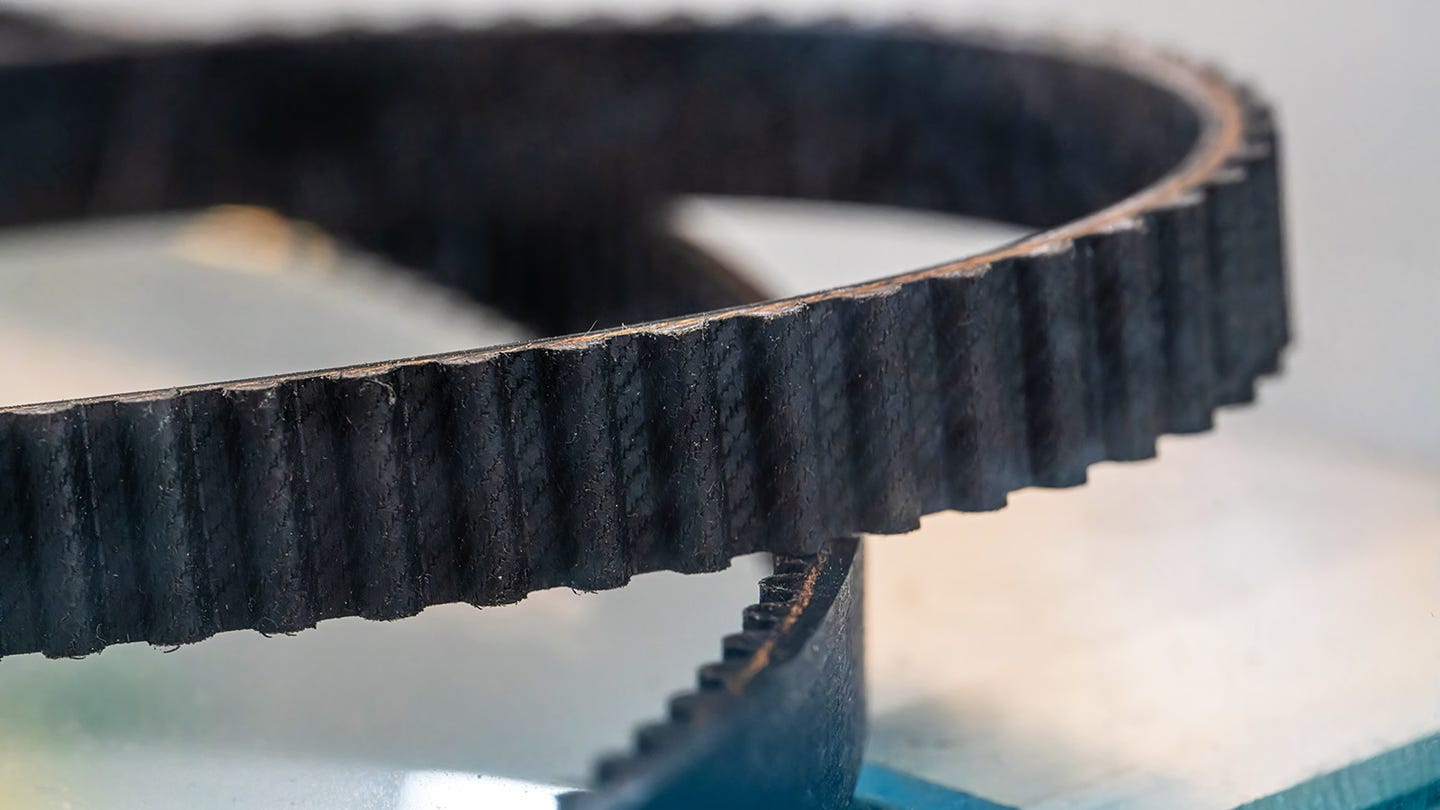

Every car engine uses some form of timing belt or chain.
It makes sure each operating step happens at exactly the right moment. If it fails, the best case scenario is being stranded on the side of the road, while the worst case will mean a complete engine replacement.
From the late 2000s onwards, some carmakers introduced 'wet' timing belts. These are rubber belts that are mostly the same as their 'dry' counterparts, but they run through a bath of oil at the bottom of your engine.
This guide explains wet belts and explores their pros and cons, along with how often you should replace them and at what cost.
What is a wet belt on a car?
Virtually all car engines have pistons going up and down inside cylinders, which turns the crankshaft and, ultimately, the wheels. Thousands of little explosions happen inside those cylinders every minute to push the pistons down and generate that turning force. Valves at the top of the cylinder open and close to let a fuel-air mixture into the cylinder, and then release the exhaust gases out once the mixture has exploded.
The crankshaft is connected with a belt or chain to the camshaft(s) that controls those valves. This makes sure the valves open and shut at the exact right moment to let gases in and out of the cylinder in time with the piston's movement.
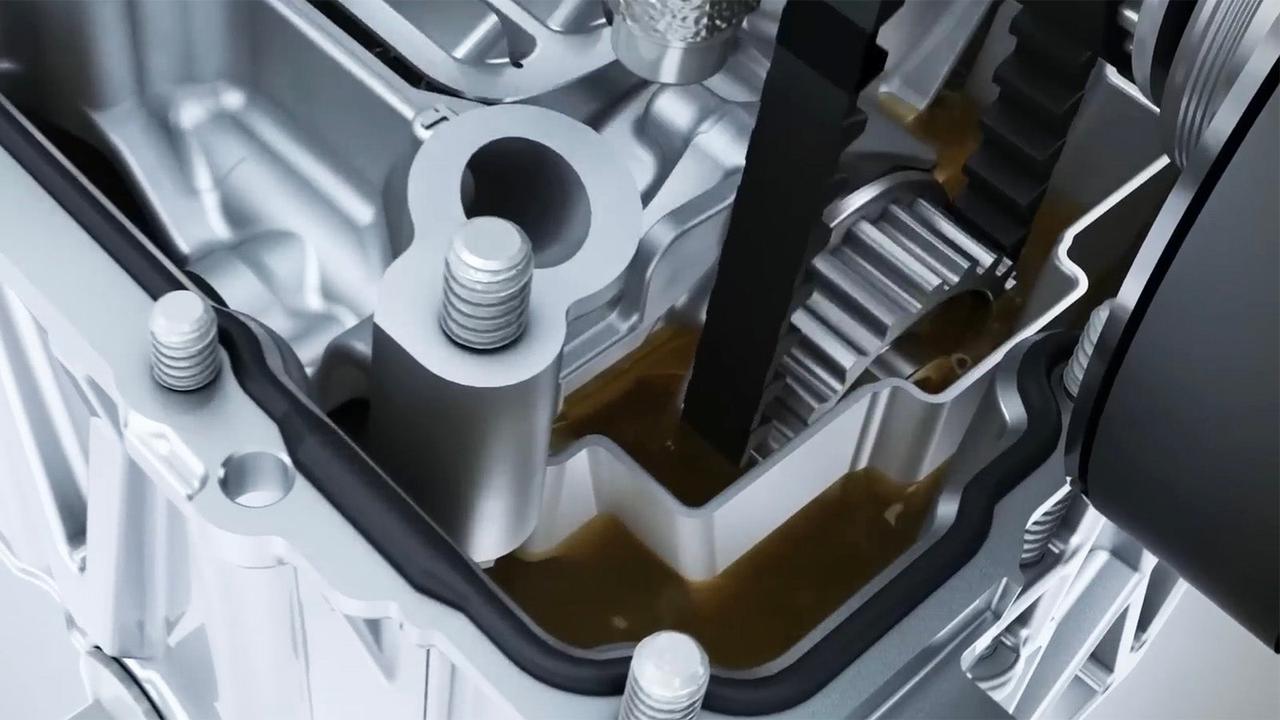
As mentioned, carmakers usually used either a rubber belt or a metal chain to link the crankshaft and camshafts together. However, a new option emerged in the late 2000s called 'belt-in-oil' technology, or more commonly 'wet belts'. These were similar to existing 'dry' rubber belts, but ran the belt through the oil in the engine's sump.
Traditional wisdom would normally advise against running a rubber belt through oil. Usually, this would cause the belt to swell up or otherwise degrade and, eventually, fail. However, these new wet belts were made from a different rubber formulation and used specific engine oil to prevent them from wearing out.
Are wet belts bad?

You might reasonably wonder why carmakers bothered equipping their cars with wet belts. The answer is that a belt running through oil experiences a little less friction than a dry belt, and even less than a timing chain. This slightly reduces the engine's parasitic loses, causing a small improvement to fuel economy and emissions. There is also a marginal reduction in noise and vibration.
Chances are, however, you're reading this guide because you've heard about wet belt problems. Search online and through forums and you'll encounter some owners who've experienced various degrees of engine failure resulting from wet belt issues. So how bad are wet belts?
Firstly, it's important to say that a wet-belt-equipped car should still be able to last a long time with proper servicing and maintenance. However, it's also fair to say that early expectations of how long wet belts would last were overly ambitious. When they first were fitted, carmakers either kept the same timing-belt service interval as regular dry belts or extended it, with no expectation that these belts wouldn't perform as promised.
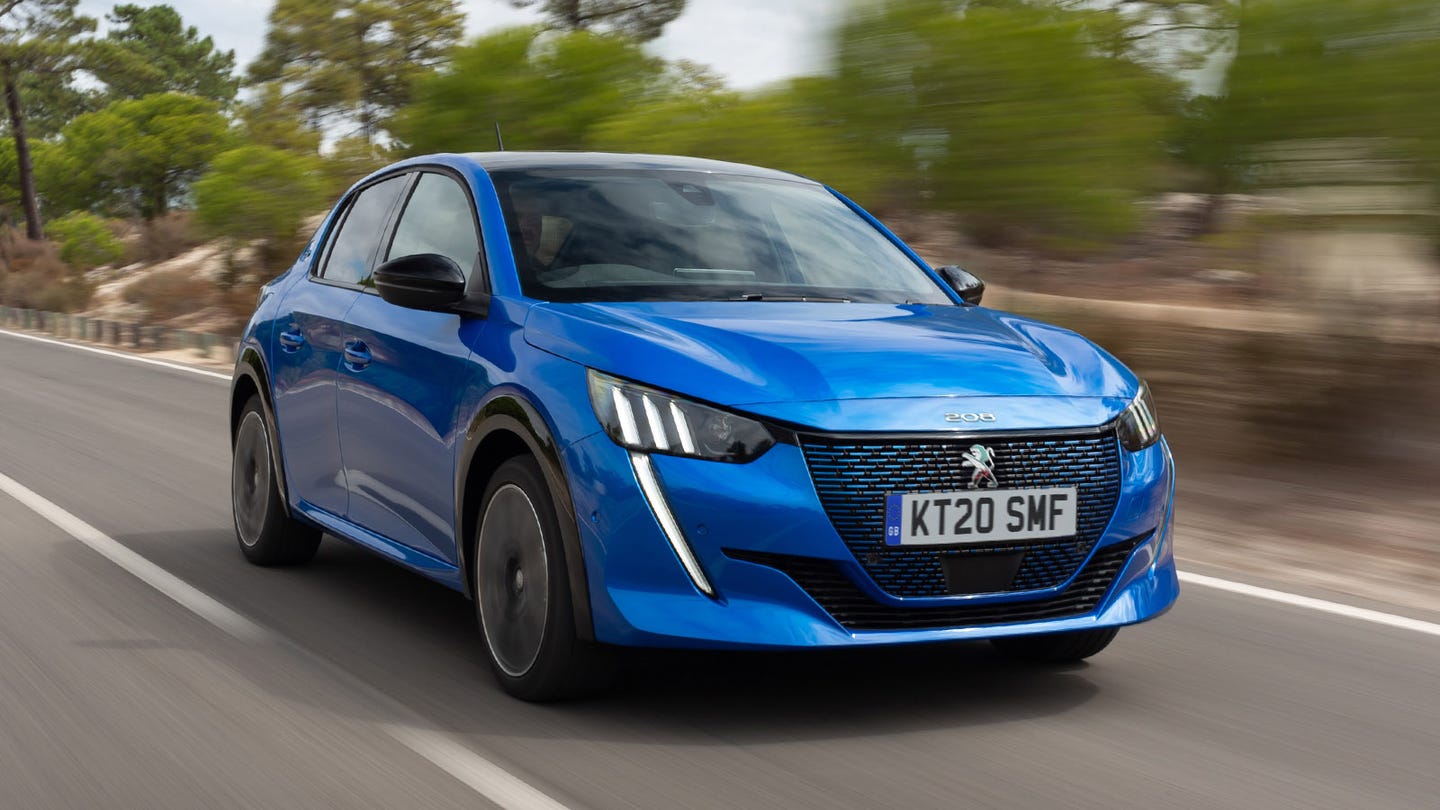
Over time, however, some owners have seen these belts fail or wear out sooner than planned. In response, companies like Stellantis – which owns brands like Peugeot and Citroen – reduced the replacement interval for its wet belts to six years, which is shorter than a typical dry belt replacement interval. Meanwhile, both Stellantis and Ford – another company that fitted wet belts to its cars – have since moved away from the technology.
While the long-term durability of wet belts isn't as good as hoped, it's likely that a proportion of those failures have happened due to incorrect oil or additives being used. Wet belt systems are very sensitive to the type of oil that's used, and need a specific formulation to prevent premature damage. They are also not rated for any kind of additives – fuel, oil or otherwise – and using these items will probably cause the belt to fail.
Benefits of wet belts
- Slightly reduced fuel consumption
- Lower emissions
- Less noise and vibration
Drawbacks of wet belts
- Must be replaced more frequently than initially expected
- Replacement often includes a few extra steps
- Requires specialised oil
Does my car have a wet belt?
This table below covers the brands and models that have wet belts:
| Make | Model |
| Citroen |
|
| DS |
|
| Ford |
|
| Honda |
|
| Jeep |
|
| Peugeot |
|
| Vauxhall |
|
Note that we've excluded cars that use regular timing chains or belts, with a separate wet belt to drive the oil pump. This includes cars from the VW Group with certain 1.6 or 2.0-litre diesel engines, as well as revised Stellantis and Ford engines that have updated to timing chains.
How long does a wet belt last?
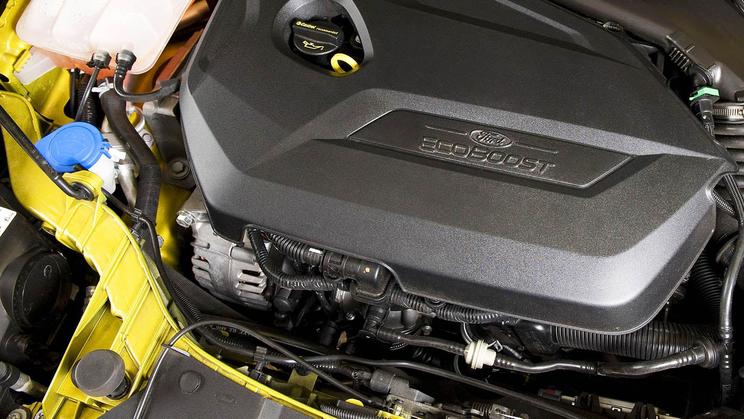
The two main manufacturers utilising wet belts – Ford and Stellantis – give different recommendations for how long their wet belts should last. Ford puts the replacement interval for the EcoBoost wet belt at 10 years or 150,000 miles – whichever comes first. Meanwhile, Stellantis revised its replacement interval down to six years or 62,000 miles.
These are the manufacturer-recommended intervals, but owners who want to keep their car running as long as possible might want to think about more frequent replacements. Some specialist garages recommend a replacement wet belt every five years and this more conservative approach might be worth taking if you want to substantially minimise your risks of future problems.
Are wet belts reliable?
Wet belts can cover many thousands of miles without any problems. This is especially true of examples that have been maintained strictly in line with manufacturer recommendations, with replacement parts fitted when needed and the correct oil used at all times.
That said, the recommended replacement interval for wet belts is generally shorter than an equivalent dry belt, as they can wear out a little quicker. Our recommendation is to keep your car serviced on time at a trusted service centre, and consider a more frequent wet belt replacement schedule to ensure long-term durability.
How much does it cost to replace a wet belt?
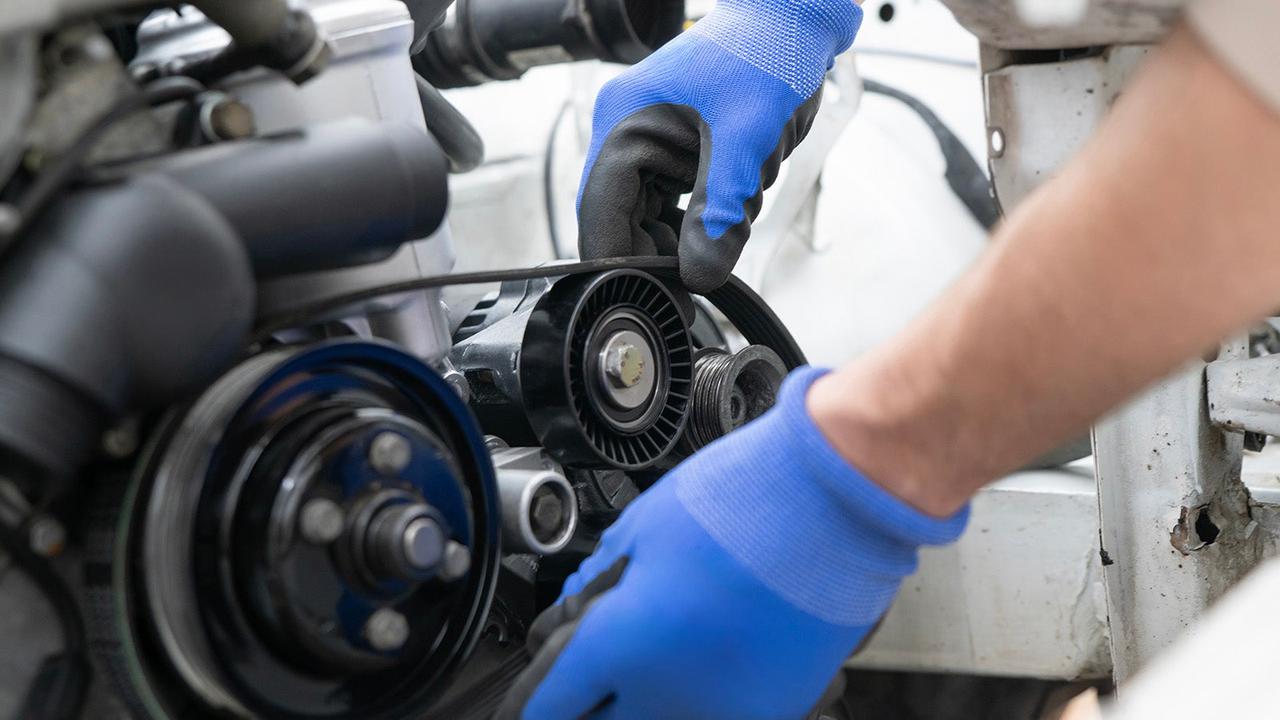
Like changing a dry timing belt or timing chain, replacing a wet belt is typically more expensive than your average car service. Prices vary widely depending on your particular model and where you choose to get the replacement done. Expect to pay anywhere between £500 to north of £1,000 for a timing belt replacement, which is broadly in line with the same cost for a dry belt.
Remember that this is preventative maintenance. You'll be spending a bit of money now to save yourself from having to spend lots of money in the future if your wet belt fails. Replacing the belt will always be substantially cheaper than replacing a whole engine.
Should you avoid cars with a wet belt?
In general, no. Cars with wet-belt engines can last just as long as cars with dry belts, especially those that are serviced specifically in line with manufacturer recommendations. All you need to do as an owner of a car with a wet belt is be mindful of the replacement interval, and make sure you swap it out as recommended.
Your car's manufacturer along with certain specialist garages will have tools to inspect your belt for swelling or deterioration. That way you can monitor its condition and replace it before a problem begins.