





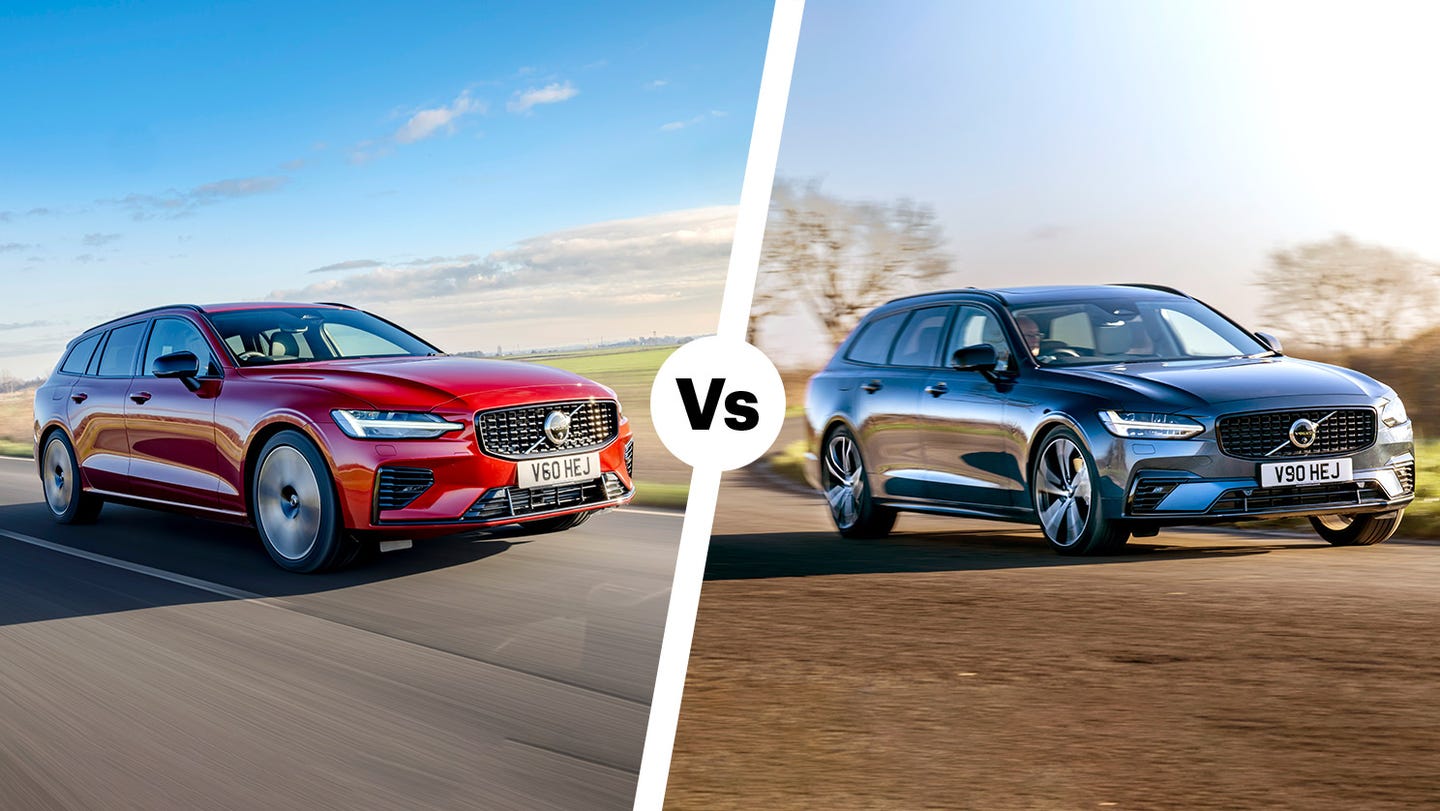

Volvo estates are a classic choice for family-car buyers.
Their quiet, confident Swedish styling, and unrelenting safety focus has seen them ferry countless families over the years. The most recent choices are the V60 and V90 and, as the numbers suggest, the former is a smaller and cheaper, while the latter is bigger and pricier.
We'll compare the Volvo V60 and Volvo V90 here, looking at their practicality, engine lineup and value for money. Both of these cars and many more are available as nearly new and used cars for sale at Motorpoint.
Volvo V60 vs V90 compared
| Volvo V60 | Volvo V90 |
Pros:
| Pros:
|
Cons:
| Cons:
|
Styling and design
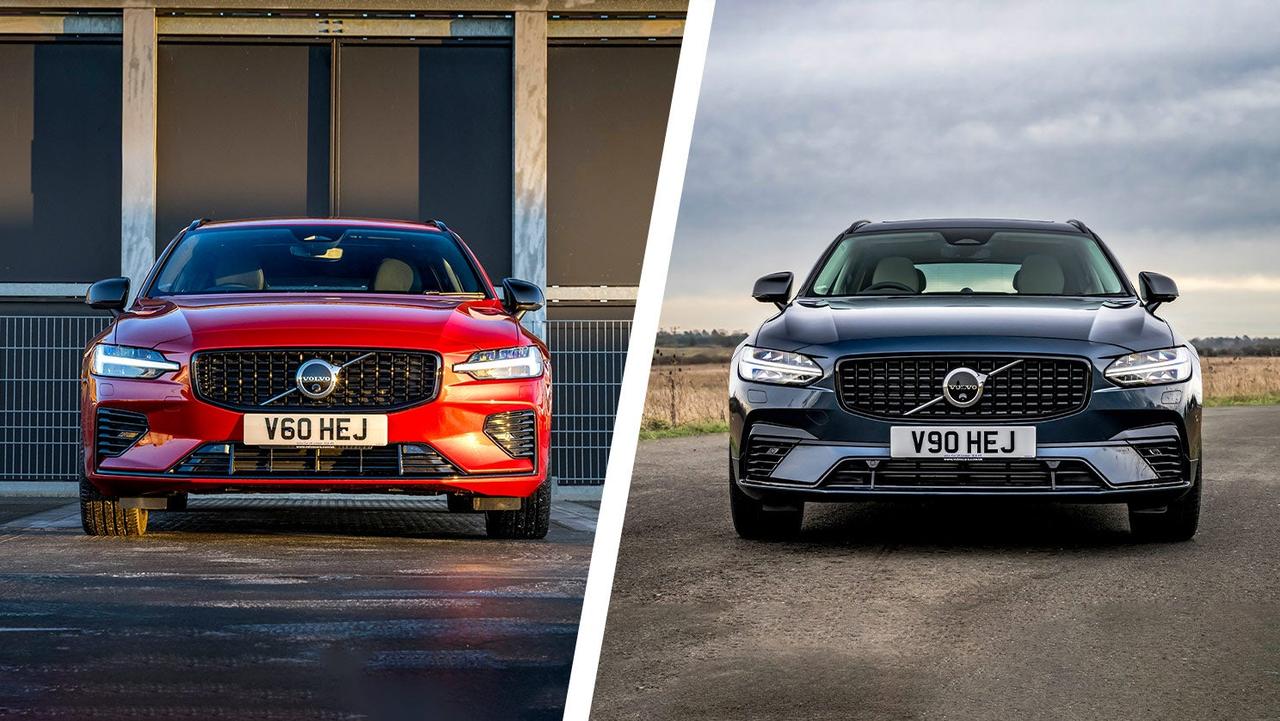
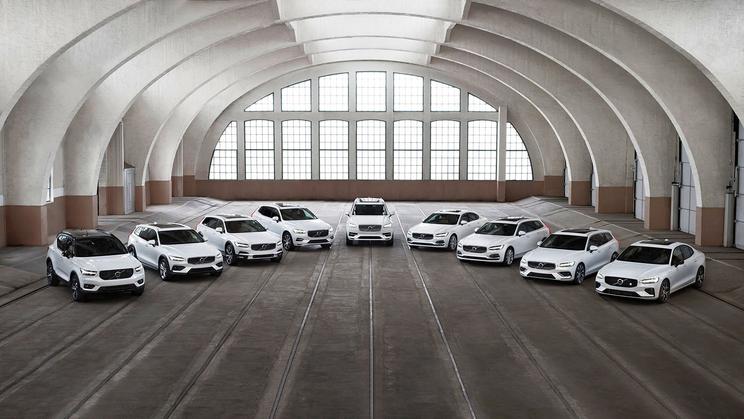
You'll need your magnifying glass for this comparison because the V60 and V90 look nearly identical from most angles. And why shouldn't they? Volvo's current styling language is a big part of its success – it's cool, it looks expensive, and it lacks the over-the-top aggressiveness that afflicts many premium German alternatives.
Getting into the nitty-gritty, you might spot that the inner edge of the headlights differs slightly, with the V60's LED detailing extending a little further towards the front grille. Meanwhile, the lower air intake and bumper shape design is unique to both cars, though clearly hailing from the same lineage overall. You have the option of R-Design trim on both cars, which adds a sportier body kit and bigger alloys.
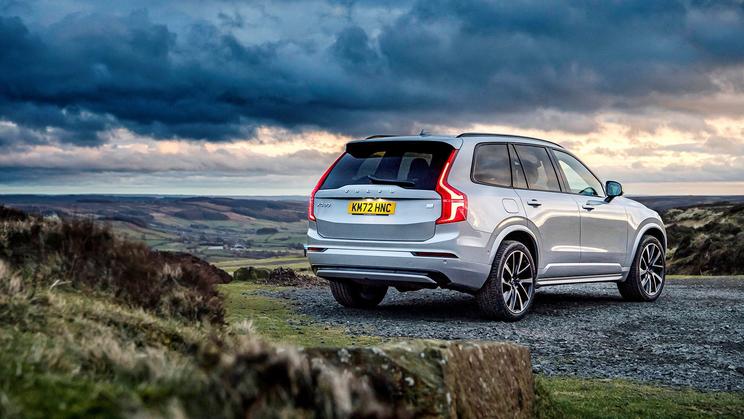
Again, the sides and rear are so similar between these two cars, you'd need a tape measure to make the differences visible. In this case, the V60 is 17.5cm shorter than the V90 giving it a more compact profile and a slightly stubbier rear end.
Interior and practicality
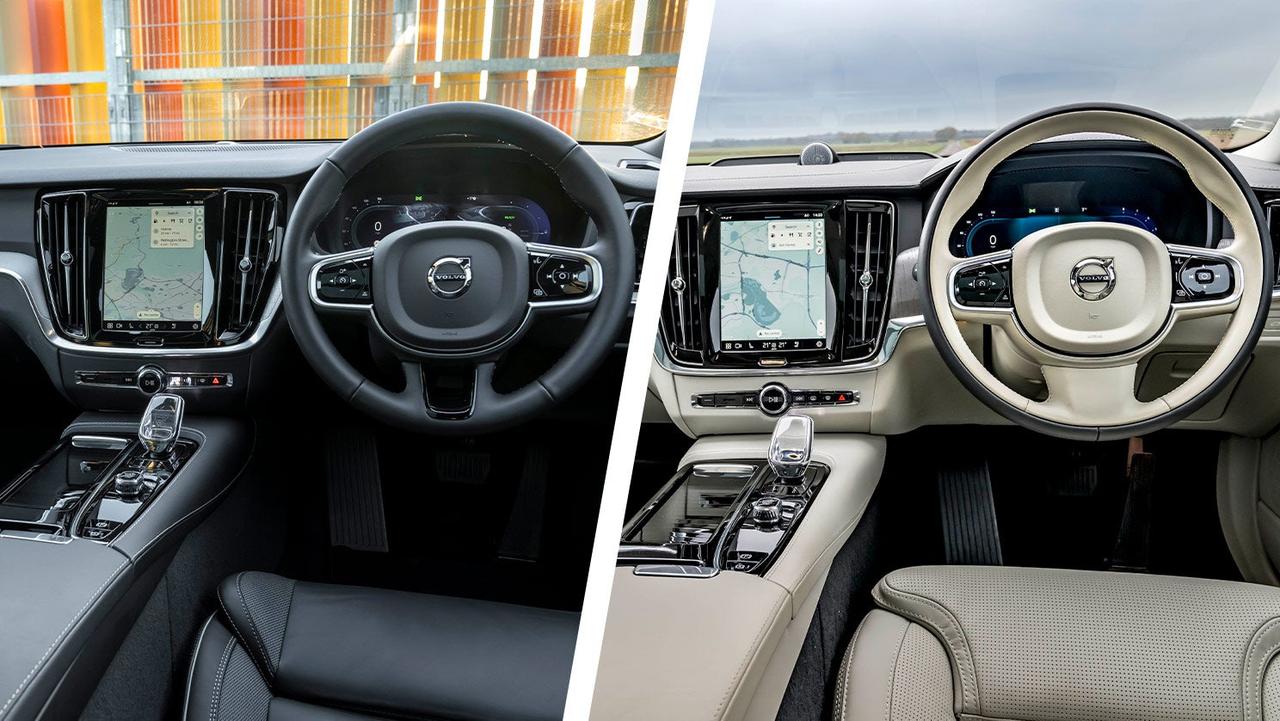
Like the outside, these two cars are astonishingly similar inside and the most significant difference is simply how much cabin space you get. The dashboard is essentially the same – a vertical infotainment screen flanked by upright air vents, plus a digital screen for the driver's dials sat behind almost the exact same steering wheel. One of the very few changes is the shape of the trim piece that separates the upper dash from the lower section.
Common to both cars is Volvo's minimalist interior design. It's stylish and premium, but there are very few buttons overall. We have to dock some points as the climate controls have been relegated to the touchscreen, making them hard to use on the move. On the plus side, we like the knurled start-stop dial in the centre console, the well-positioned gear selector, and the big, friendly stereo volume control in the middle of the dash.
Size and dimensions
| Volvo V60 | Volvo V90 | |
| Length | 4,761mm | 4,936mm (+175mm) |
| Width (excl. mirrors) | 1,850mm | 1,879mm (+29mm) |
| Height | 1,433mm | 1,475mm (+42mm) |
| Boot space | Up to 529 litres | Up to 560 litres (+31 litres) |
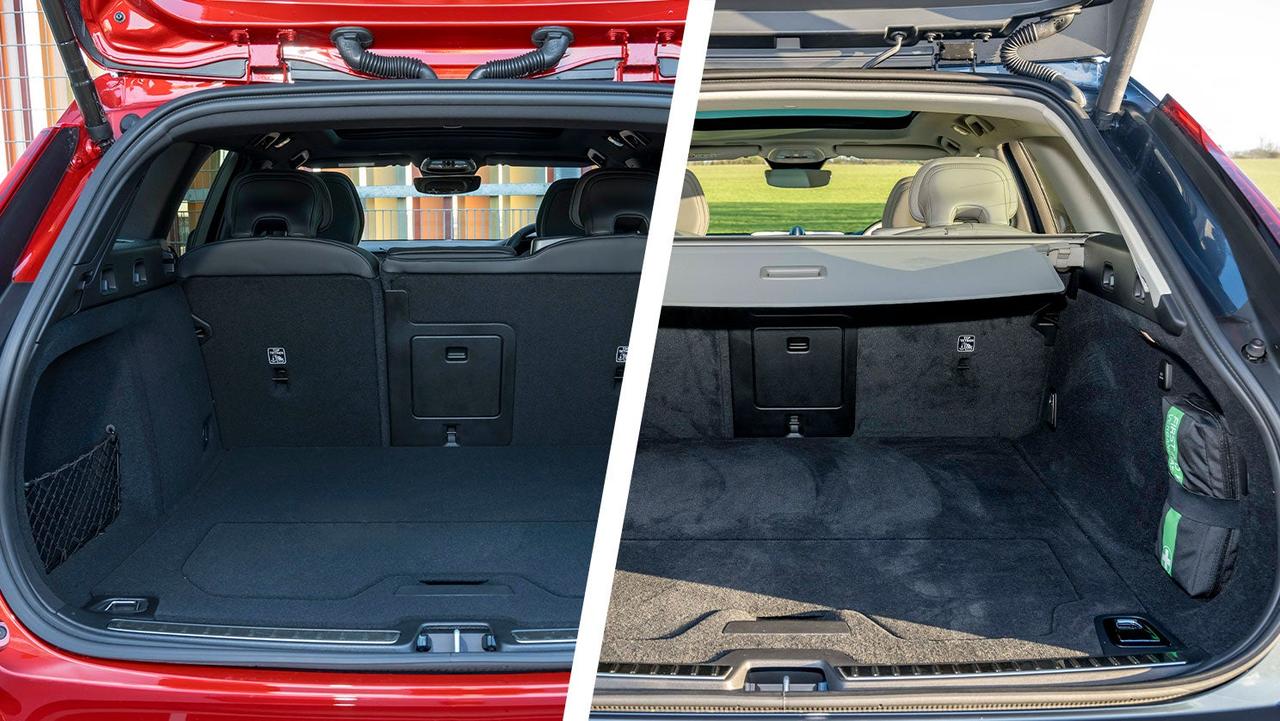
You can see the V90 outstretches the V60 in every dimension. It's nearly 18cm longer, 3cm wider and 4cm taller. Both cars score reasonably well for cargo space, with capacities above 500 litres, though the V90 is only slightly more practical despite its larger body, with most of the extra room going to the rear-seat passengers.
Both cars have enough space for most families of four and their stuff. The difference can be seen if you sit a tall adult in the back behind another in the front. Here, the rear passenger in the V60 will find their knees up against the front seat, while they'll have more space to stretch out in the V90. Cargo space is respectable for both cars, though the larger V90 only gets an extra 31 litres of capacity, failing to press home much of an advantage.
Engines and performance
For its recent models, Volvo has abandoned bigger engines entirely and chosen to power its whole range with either 2.0-litre turbo petrol or 2.0-litre diesel engines. These are available in a range of power outputs, while the petrol models also have the option of a plug-in-hybrid setup for electric-only running and lofty mpg figures.
There's little to complain about in terms of performance. Even entry-level V60 B3 petrol models have 163hp and a sub-nine-second 0-62mph time, while punchier B4, B5 and B6 mean the V60 can almost hang with serious hot hatches. The V90 skips the V60's basic engine entirely, so all models have a decent slug of power.
More preposterous are the plug-in-hybrid models. No one seems to have told sensible Volvo's that these are meant to be a green option, as T8 versions of the V60 and V90 make well over 400hp. That means 0-62mph times in the mid-four-second range, which is about as fast as Ferraris from the '90s – totally unnecessary in a sensible family car and surprisingly entertaining as a result.
Driving
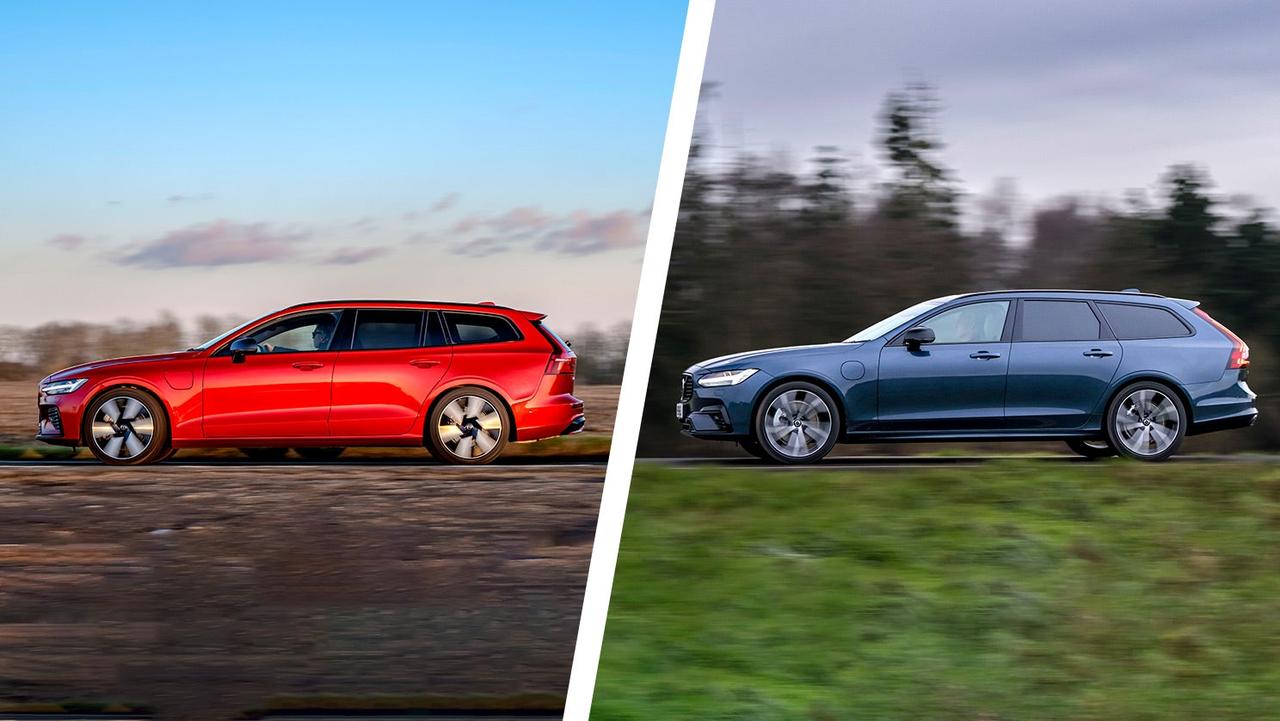
There are some seriously talented driving machines in this segment – the likes of BMW's 3 Series and 5 Series are the dynamic benchmarks here. Considering the calmer, less aggressive image Volvo's gone for, we were hoping these Swedish estates would ride softly and make a virtue of their comfort. However, in trying to match the athleticism of their German rivals, the V60 and V90 are neither outright sporty nor comfortable, and end up in something of a forgettable middle ground.
To be clear, most drivers will find them easy enough to control and probably won't find anything so offensive that it ruins the experience. But, in a market where most premium rivals are either a bit more exciting or more comfortable, it's a shame Volvo didn't spend a little more effort refining these vehicles.
Drive the V60 and V90 back-to-back, and it's the smaller car that comes out on top. The V60 feels lighter and, thus, a little more agile out on the road, coping with quick direction changes. Meanwhile, the V90 feels a little lazier to turn and less light on its feet. Ride quality in both cars is decidedly average, with some general compliance but most big bumps will be felt through the base of your seat.
Value for money
The V90 is no longer available as a brand-new car but, when it was, it cost at least £10,000 more than an equivalent V60. For us, the V90's extra space doesn't justify the extra cost when you consider that the V60 isn't that much less practical and drives a little more sweetly.
However, on the used market, the price gap between the two cars shrinks noticeably. While the V90 almost always costs more than a like-for-like V60, second-hand examples are usually only a couple of thousand pounds more expensive. At that point, the extra space and more glamorous image of the V90 might be enough to tempt you to stretch to the larger car.
Which is best?
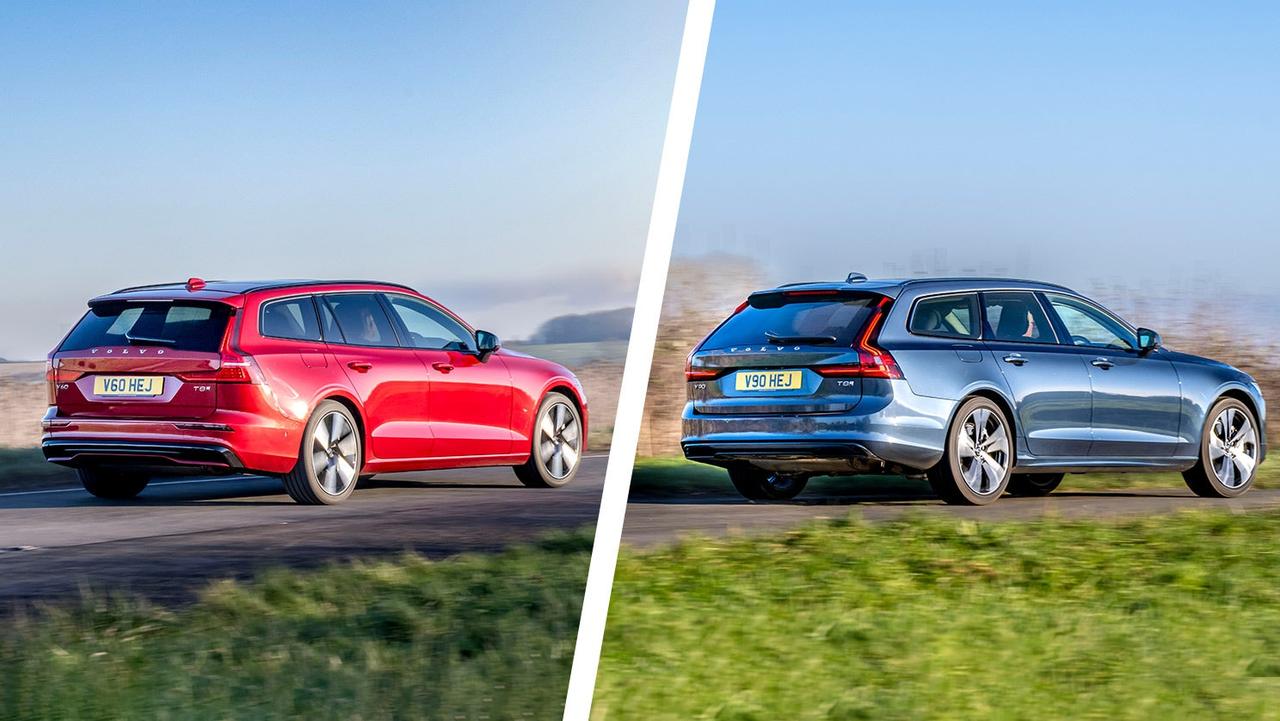
For the majority of drivers, the V60 is probably the better choice. It's still a stylish, practical Swedish estate car, but it's thousands of pounds less than the V90 and is a little more entertaining to drive.
The V90 is the better choice if you want the more ultimate expression of what a Volvo estate can be. It has luxurious levels of rear-seat space and more exaggerated long-roof looks that give it a little more presence in the metal.
Get a better value Volvo
Shop a range of used Volvo V60 and used Volvo V90 cars for sale at Motorpoint. See even more options with our choices for the best estate cars on sale.