









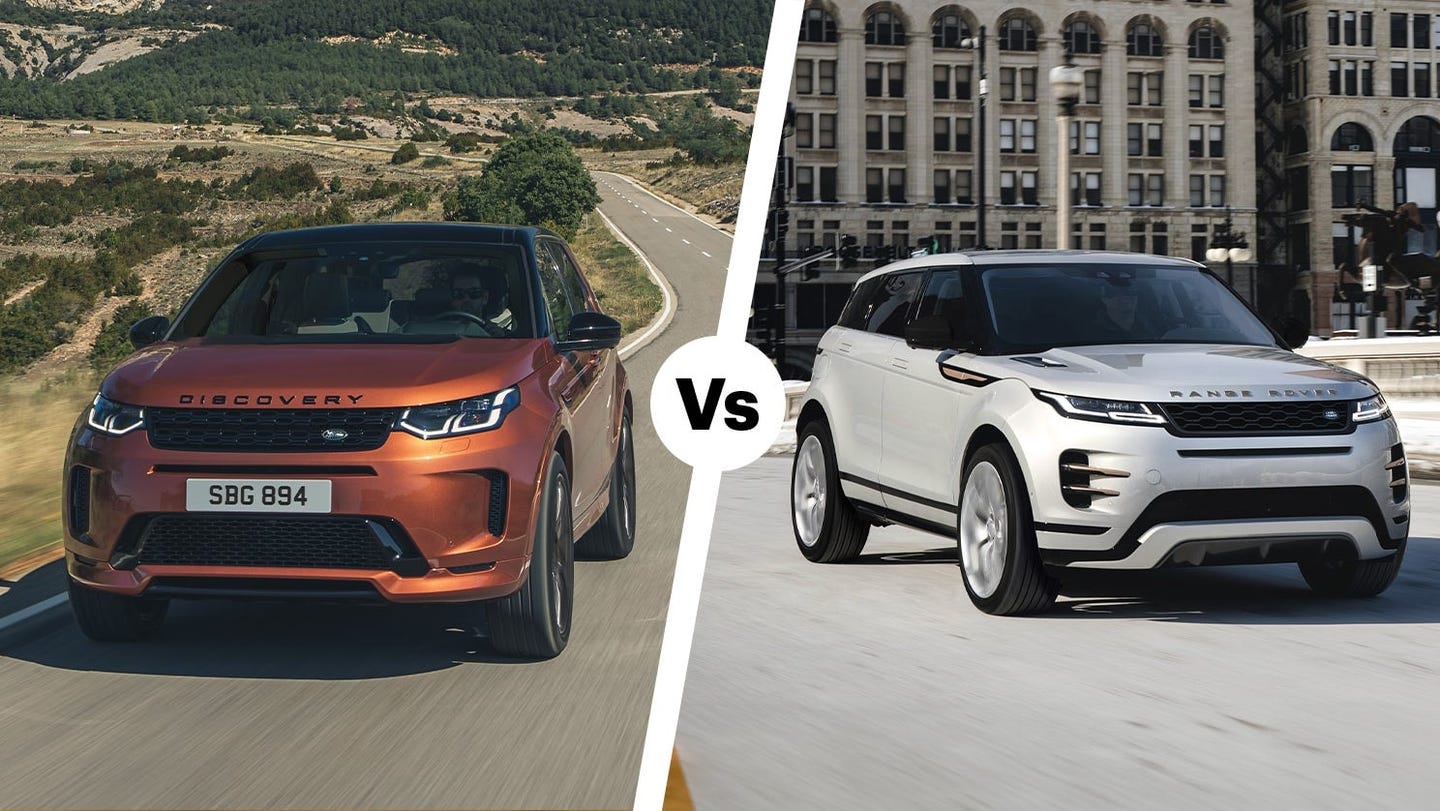

If you’re after a stylish SUV with go-anywhere ability, you’ve come to the right place.
Both the Land Rover Discovery Sport and Range Rover Evoque come from the same British powerhouse and, because as they’re the smaller models in the Land Rover lineup, they use a lot of the same parts. But while the Evoque is metropolitan and chic, the Discovery Sport gives a more rugged vibe. Which should you buy?
Land Rover Discovery Sport vs Range Rover Evoque compared
| Land Rover Discovery Sport | Range Rover Evoque |
Pros:
| Pros:
|
Cons:
| Cons:
|
Styling
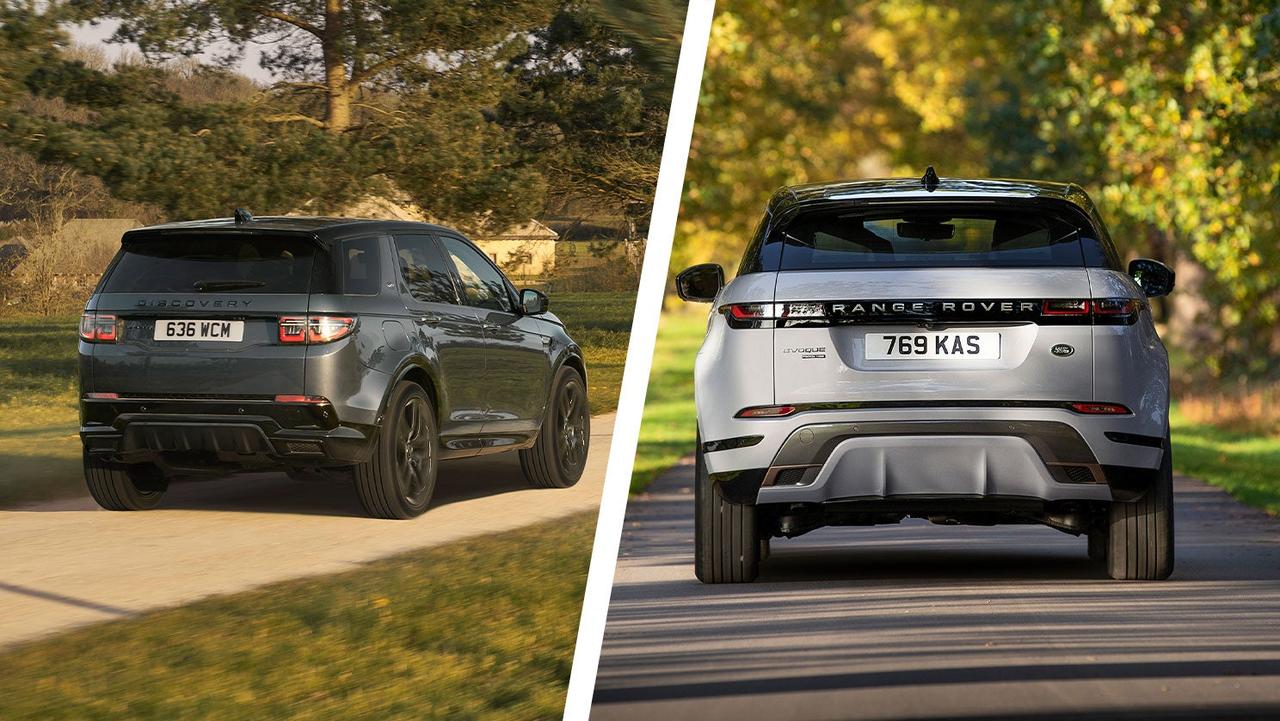
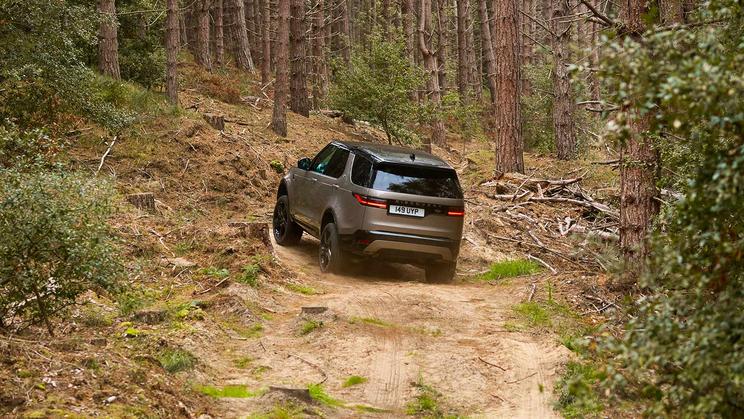
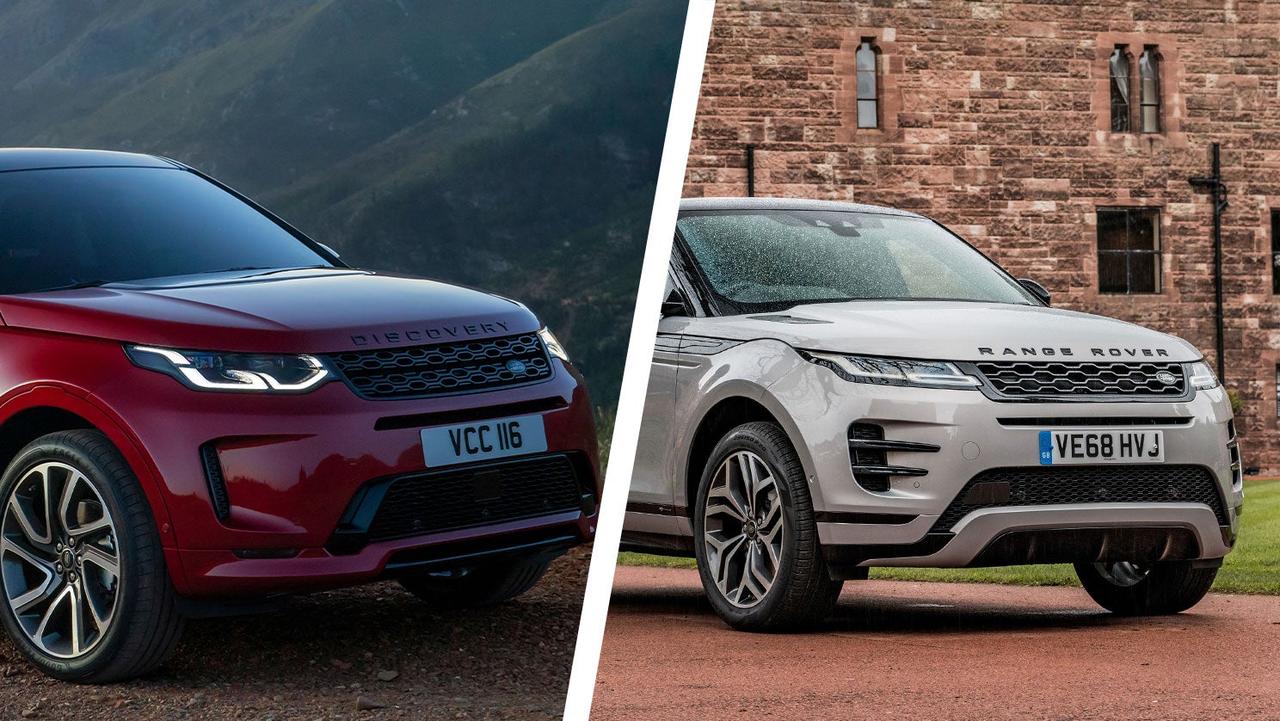
There’s not much sport on show in the Discovery Sport; instead, the design is blocky and robust. From the front, the similarities are clear with the full-size Discovery, while the side profile is tall with some clean surfacing.
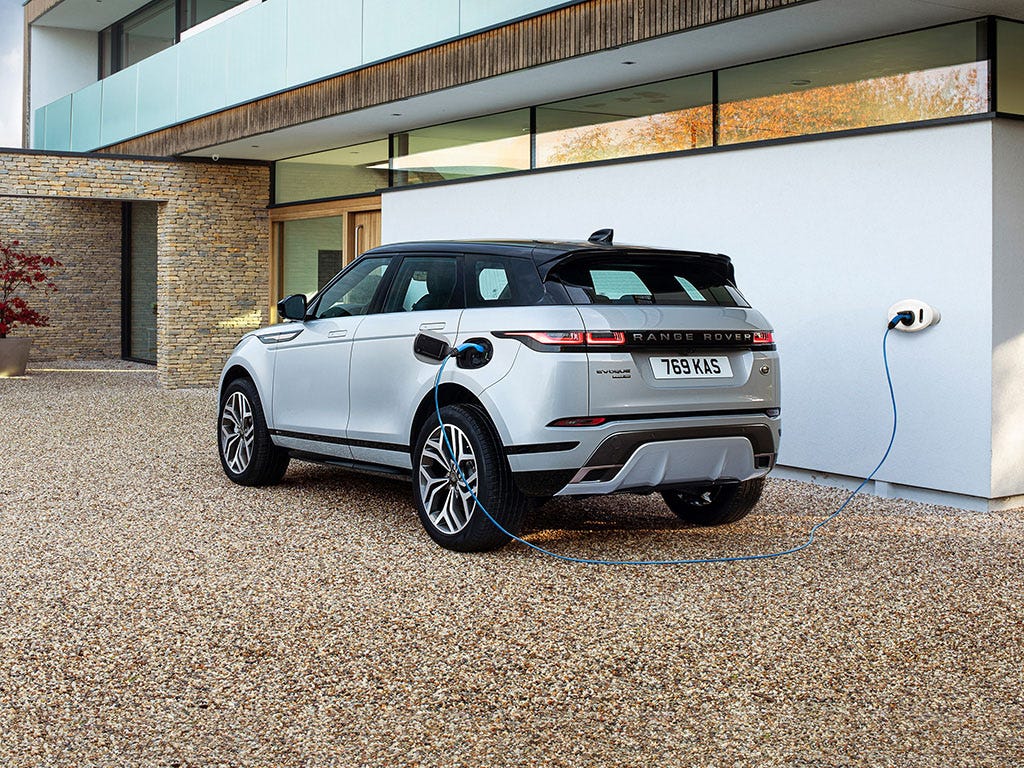
The Evoque is the sleeker of the two, with a lower, sloping roofline and slim headlights. It’s arguably a more stylish design, although the Discovery Sport looks more rugged and maybe a little more traditional. It’s common to find Evoques with the R-Dynamic package, which adds bigger wheels and rose gold detailing, amongst other details.
Interior
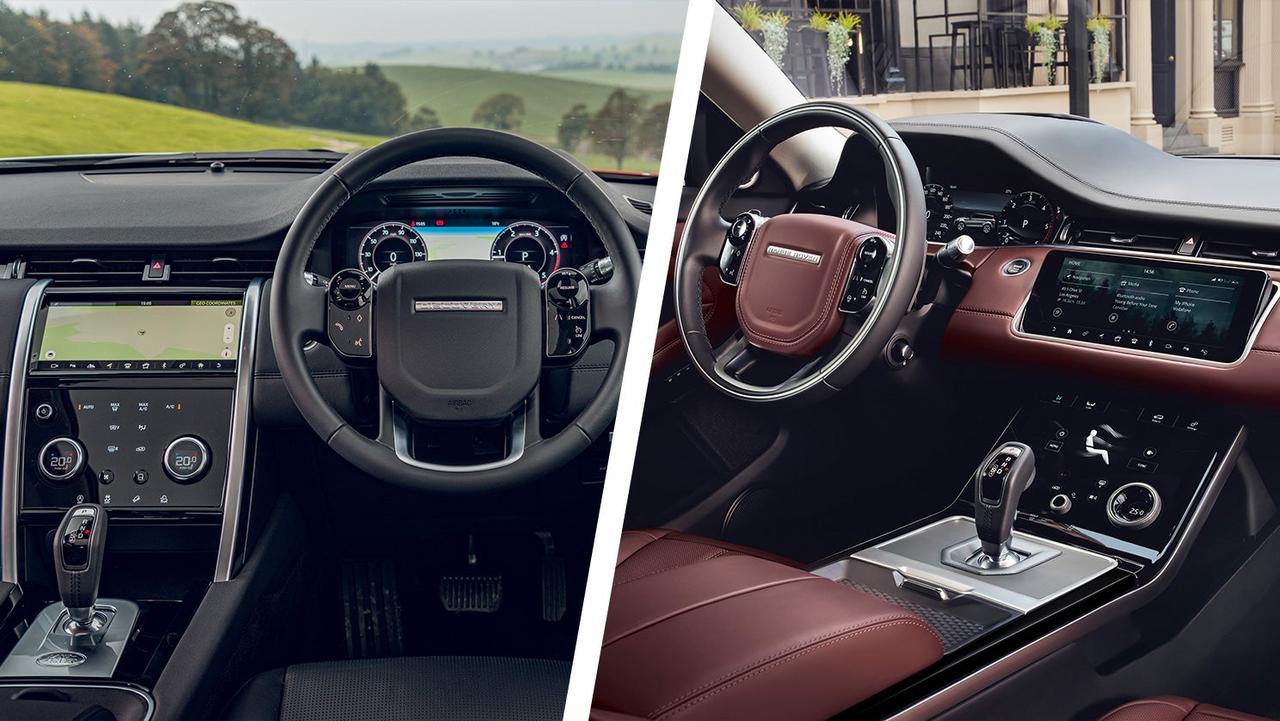
The Discovery Sport’s tough styling is matched to some extent on the inside, with vertical chrome detailing and large panels giving a strong feel. It’s a modern Land Rover, so you get lashings of leather and metal, and an overall high-quality feel.
Recent Discovery Sports have upgraded to Land Rover’s latest infotainment system, which is a big improvement – but you need to splash out for quite a new model in order to get this.
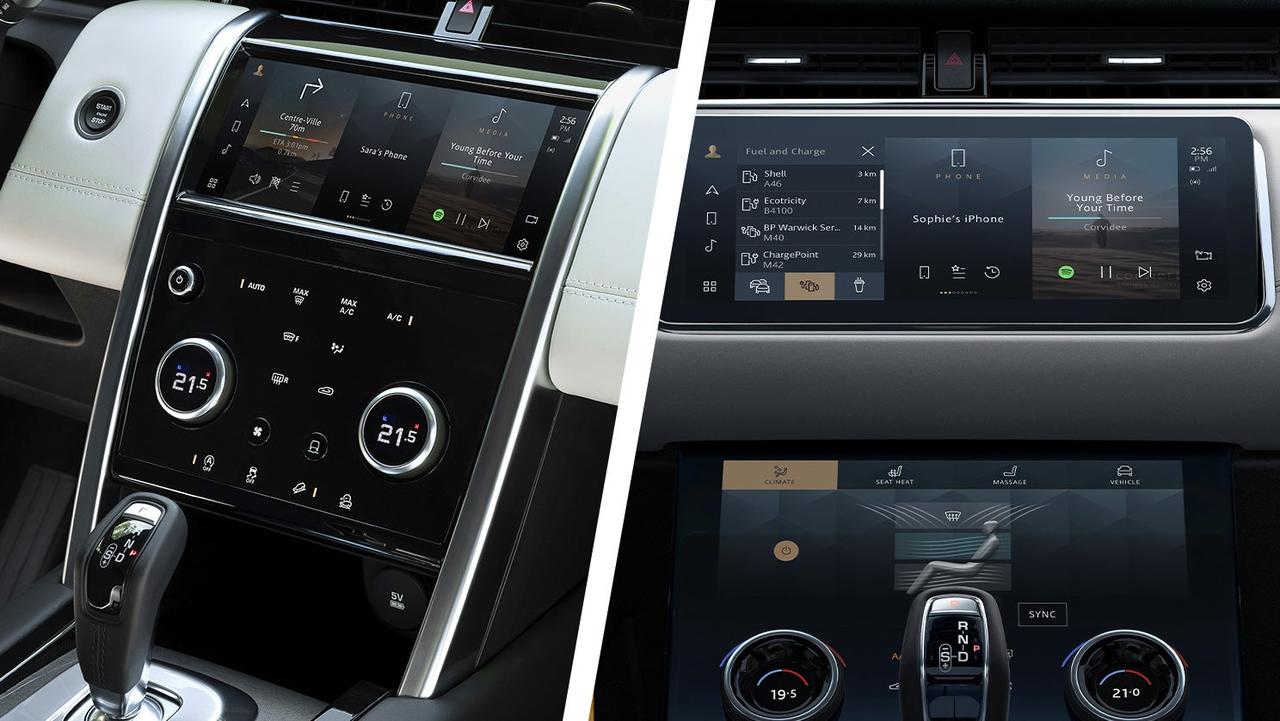
The Evoque’s glossy climate control panel and tilting screen feel very up-to-date, even though the interior isn’t that new. More recent Evoques, meanwhile, have an interior that’s very similar to the Discovery Sport’s, meaning there’s little difference between them now. Build quality is impressive in the Evoque, considering it’s the baby Range Rover, and it feels better put together than a Mercedes GLA.
Dimensions and practicality
| Land Rover Discovery Sport | Range Rover Evoque | |
| Length | 4,597mm | 4,371mm |
| Height | 1,727mm | 1,649mm |
| Width (inc mirrors) | 2,173mm | 2,100mm |
| Boot space (seats up/down) | 780/1,574 litres | 472/1,156 litres |
It’s a little surprising to see how much bigger the Disco Sport is than the Evoque, considering how much they share underneath.
The Discovery Sport is big enough to squeeze in a third row of seats, although these extra seats are pretty cramped if you’re out the other side of puberty. They might come in handy for occasional short trips – perhaps taking your kids and their friends to a football game – and fold flat when not in use.
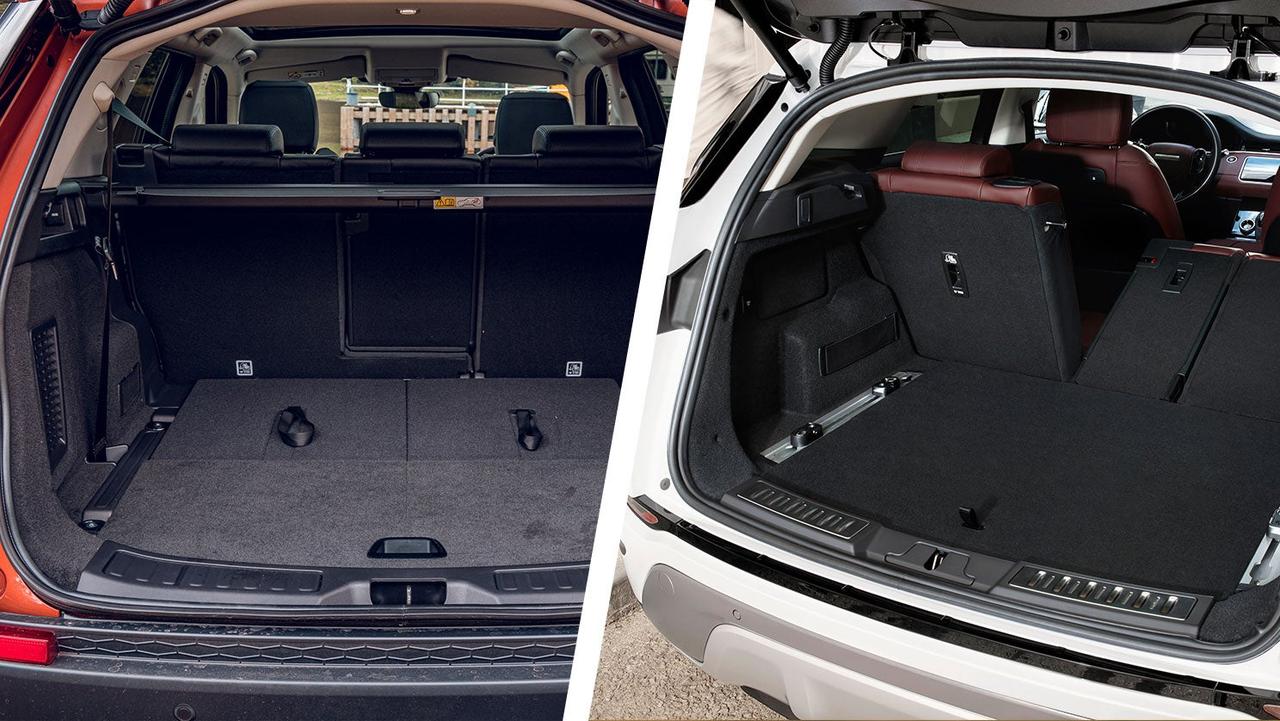
As a five-seater, the Discovery Sport is luxuriously spacious. You get loads of headroom and legroom, plus a commanding view out of its big side windows. The boot’s pretty big as well, although it’s a little hard to compare with rival cars as Land Rover measures to the roof, not the parcel shelf as is more common.
We also thought the Evoque was surprisingly spacious in the rear seats, where even tall adults can get comfortable. But its boot is significantly smaller than the Disco Sport’s, so it’s nowhere near as good at carting around family clutter or big hobby equipment.
Engines
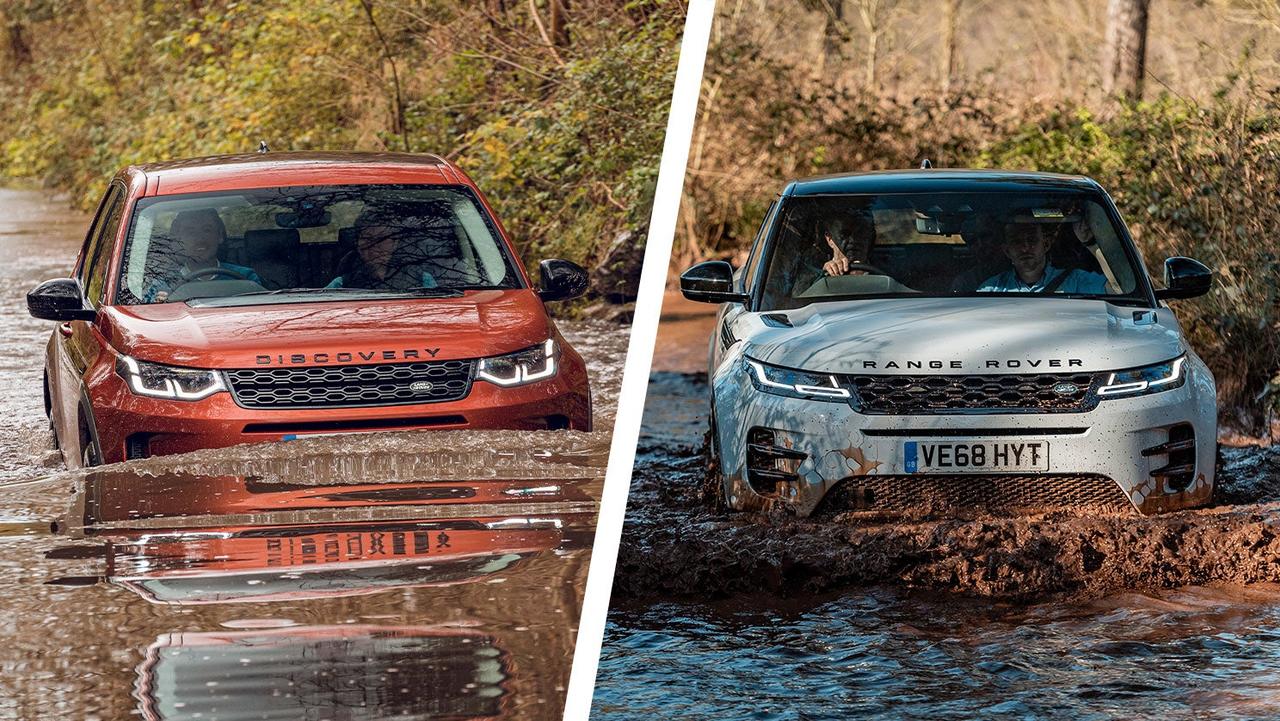
The Discovery Sport’s three engine options – two mild-hybrid diesel engines and a plug-in hybrid – are also available in the Evoque. Of the diesel engines, we’d probably recommend the D200 over the D165, because the more powerful one is as quick as you’d expect a premium SUV to be. Both return up to 43mpg in the Disco and 44mpg in the lighter Evoque.
Go for the plug-in hybrid and you might expect to see up to the official claimed figure of 180mpg, although getting close to that requires the vast majority of your journeys to be on electric power. Land Rover reckons you’ll get about 28 miles of EV power from a fully charged battery in real driving. And, somewhat unusually, you can plug into a 50kW fast-charger to get back to 80% charge in half an hour.
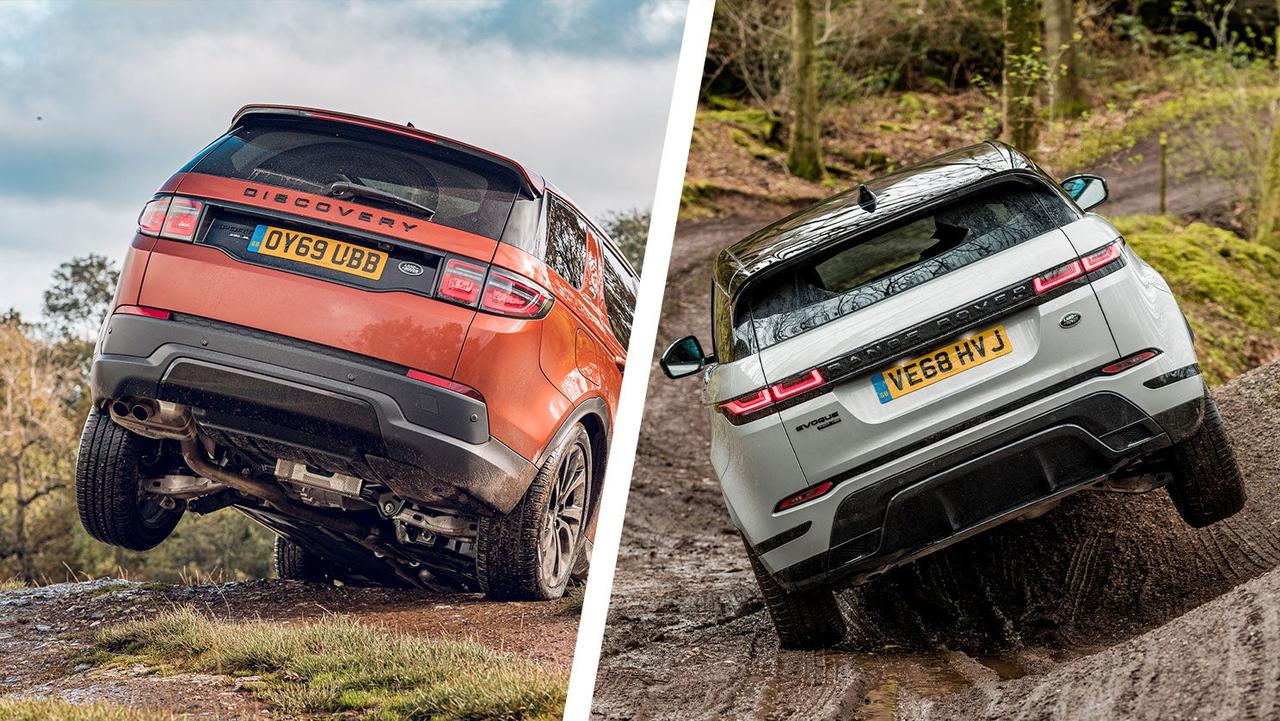
There’s also a front-wheel drive petrol engine in the Evoque, but the more popular four-wheel-drive diesel engines feel like a better match for the Land Rover character. Just remember that diesel engines aren’t particularly suited to lots of short journeys (you’ll block up the diesel particulate filter) and that you’ll occasionally need to top up the AdBlue tank.
Value
Both of these cars are expensive compared to some rivals – you can blame the desirability of the Land Rover badge for that.
In terms of brand-new cars, there’s only about £1,000 difference. If you’re having a car built specifically for you, the Discovery Sport will feel better value because it’s bigger.
Typically, the Evoque will be a bit cheaper on the used market as well, so you can get all the Land Rover qualities for slightly less.
Which is best?
The Evoque is more stylish to our eyes, and it’s a little bit cheaper. But the small boot lets it down a little, whereas the Discovery Sport has space to spare. You sit slightly higher in the Discovery Sport and visibility is better out of the tall windows. The plug-in hybrid will work for some use cases better than others; if you’re regularly doing long journeys or towing something heavy, the diesel engines will still be the better choice.
Shop used Land Rover Discovery Sport cars and used Range Rover Evoque cars for sale at Motorpoint