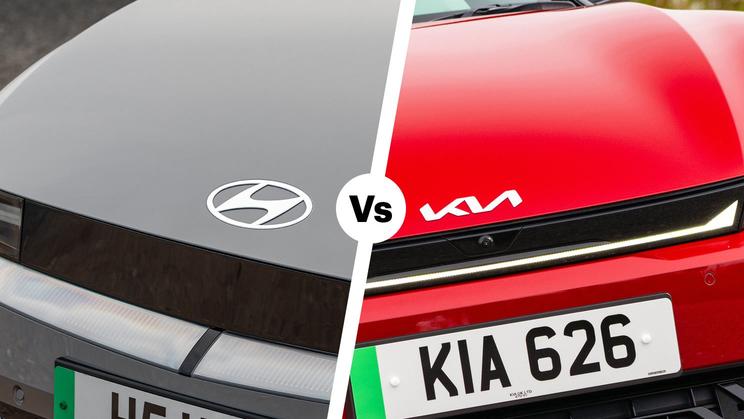








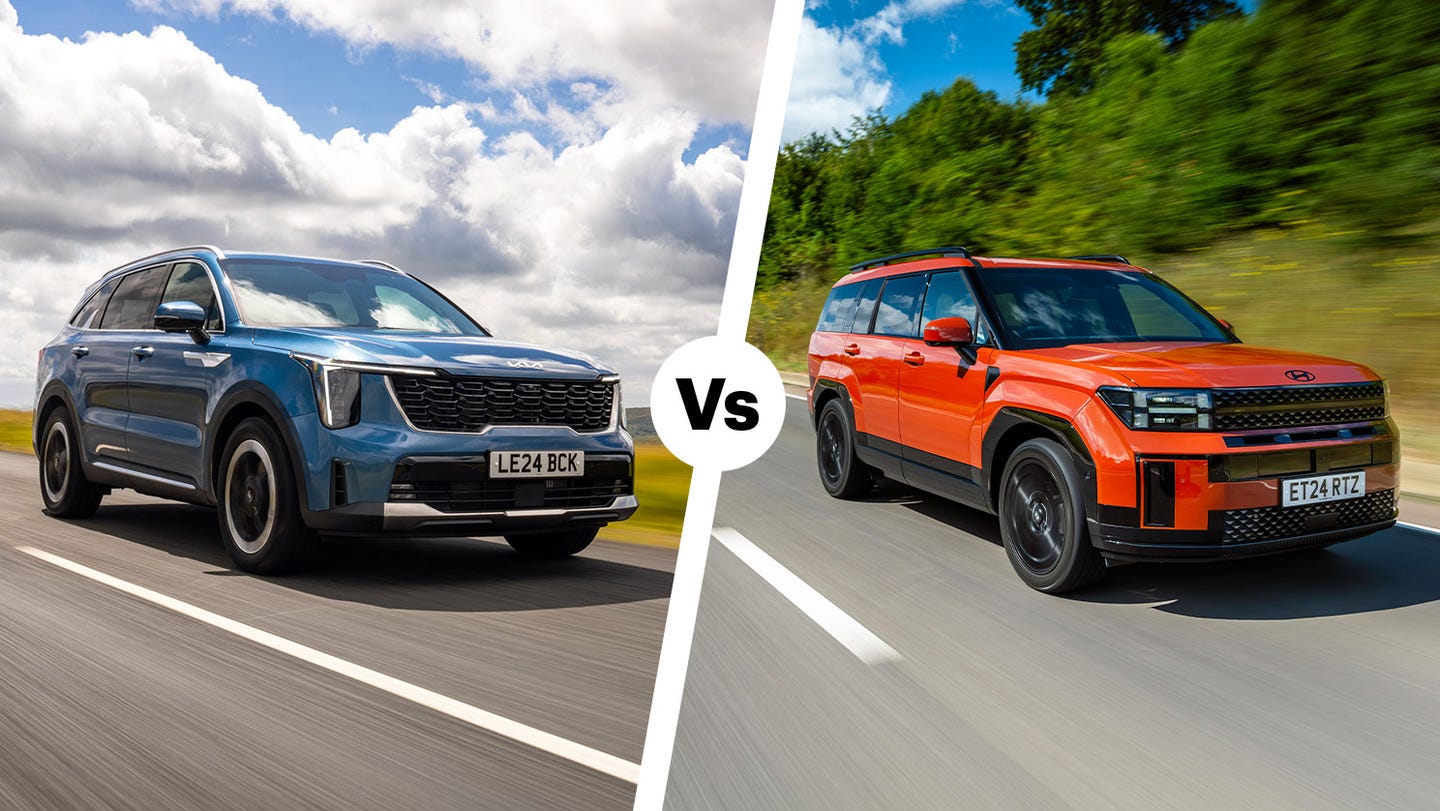

On the surface, it's easy to understand the Kia Sorento and Hyundai Santa Fe.
These are the two largest fuel-powered SUVs you can buy from these Korean sibling brands in the UK. They're both imposing, seven-seat family haulers, and they're both well built and well equipped.
However, dig deeper and more differences emerge. The current Sorento arrived in 2020 and, save for a single facelift, has gone unchanged since then. Meanwhile, the Santa Fe launched an entirely new model in 2024 with bold styling and a more luxurious edge.
We'll compare them here to help you pick your favourite.
Kia Sorento vs Hyundai Santa Fe compared
| Kia Sorento | Hyundai Santa Fe |
Pros:
| Pros:
|
Cons:
| Cons:
|
Styling and design
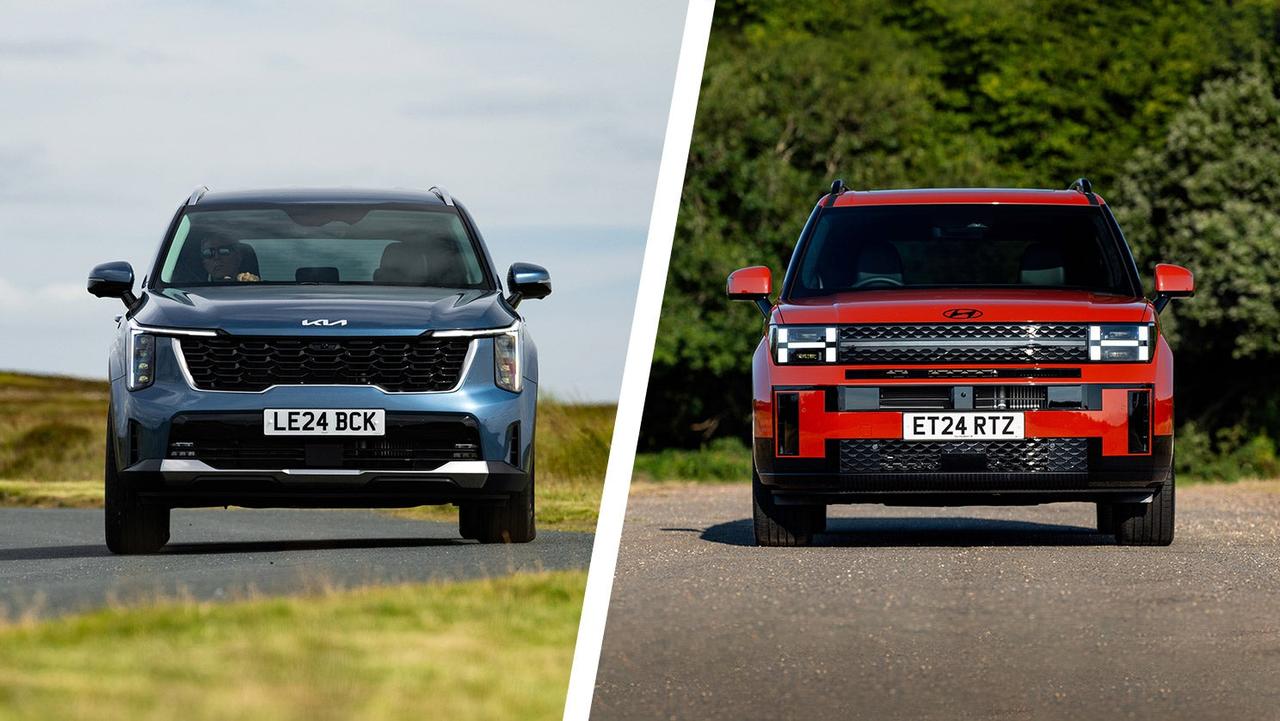
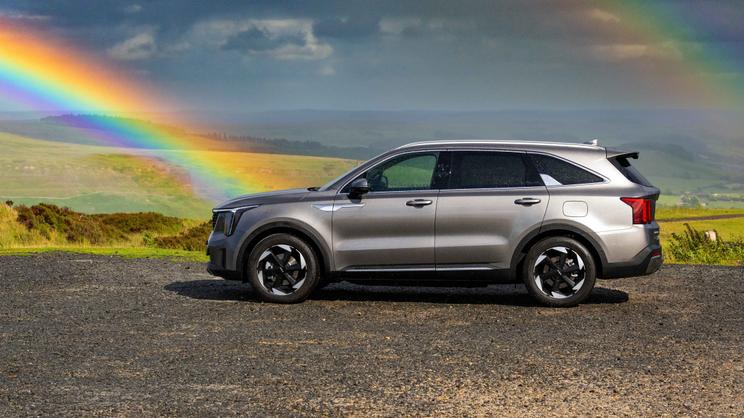
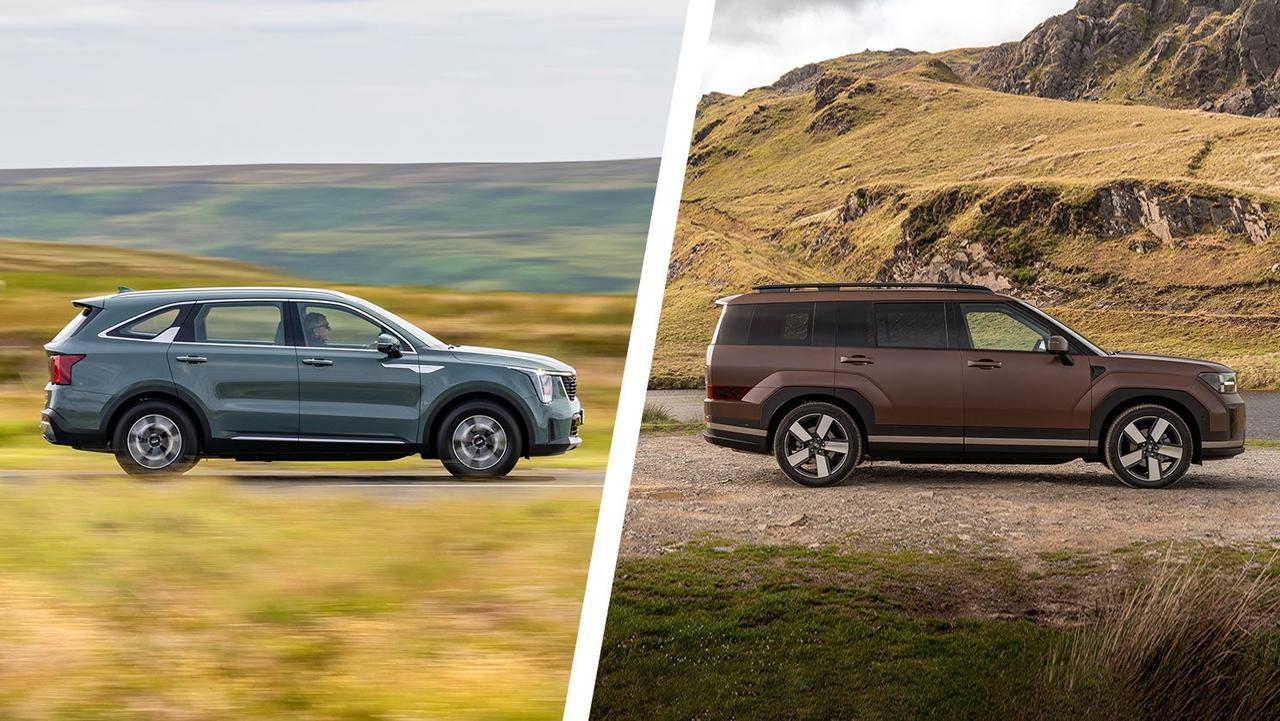
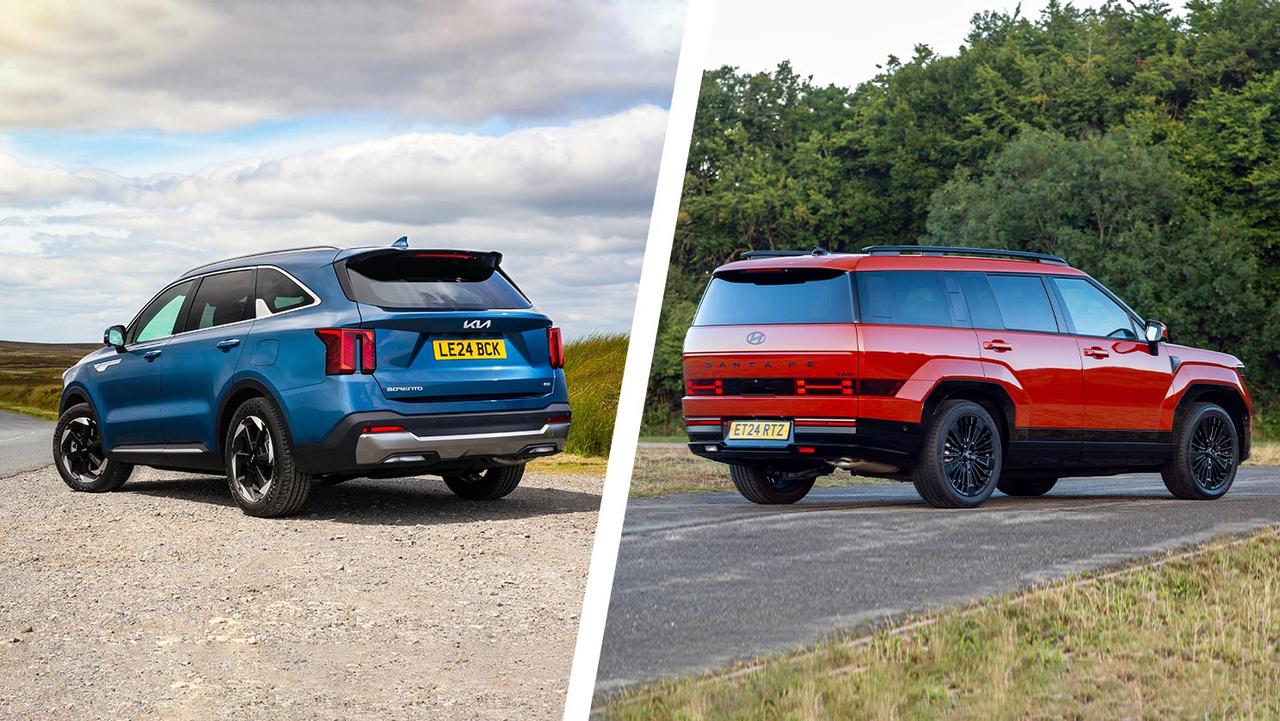
Starting with the Sorento, its profile and overall shape are pretty conventional in the SUV segment. Its sheer size lends it a fairly imposing image but it's a shrinking violet compared to the more outlandish Hyundai. Pre-facelift Sorentos arguably looked a bit more distinctive with headlights that incorporated the front grille and wrapped around the front of the car. After the facelift, it gained right-angle running light details and a more conventional rectangular grille, bringing it closer to Kia's current lineup.
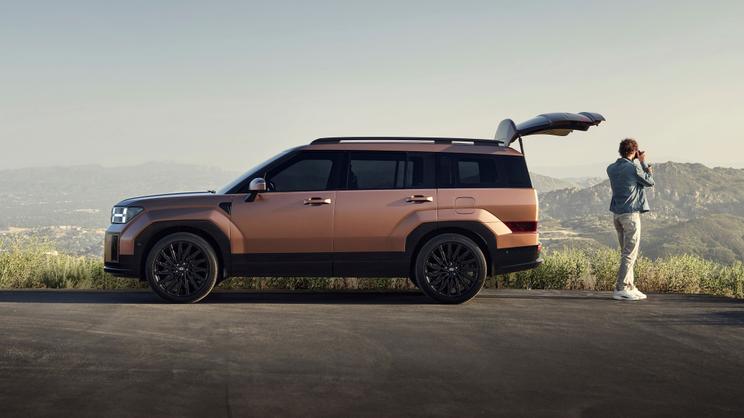
Despite sharing some mechanical parts under the bodywork, the Santa Fe looks like a totally different car outside. It has exaggerated, squared-off styling, with strong horizontal and vertical lines making up key parts of its overall image. There are clever details like the 'H' LED motifs in the exterior lights, plus blacked-out pillars to break up the slab-sided metalwork. You might prefer the Kia's more understated look but we reckon most drivers will think the Santa Fe is the more desirable of the two.
Interior and practicality
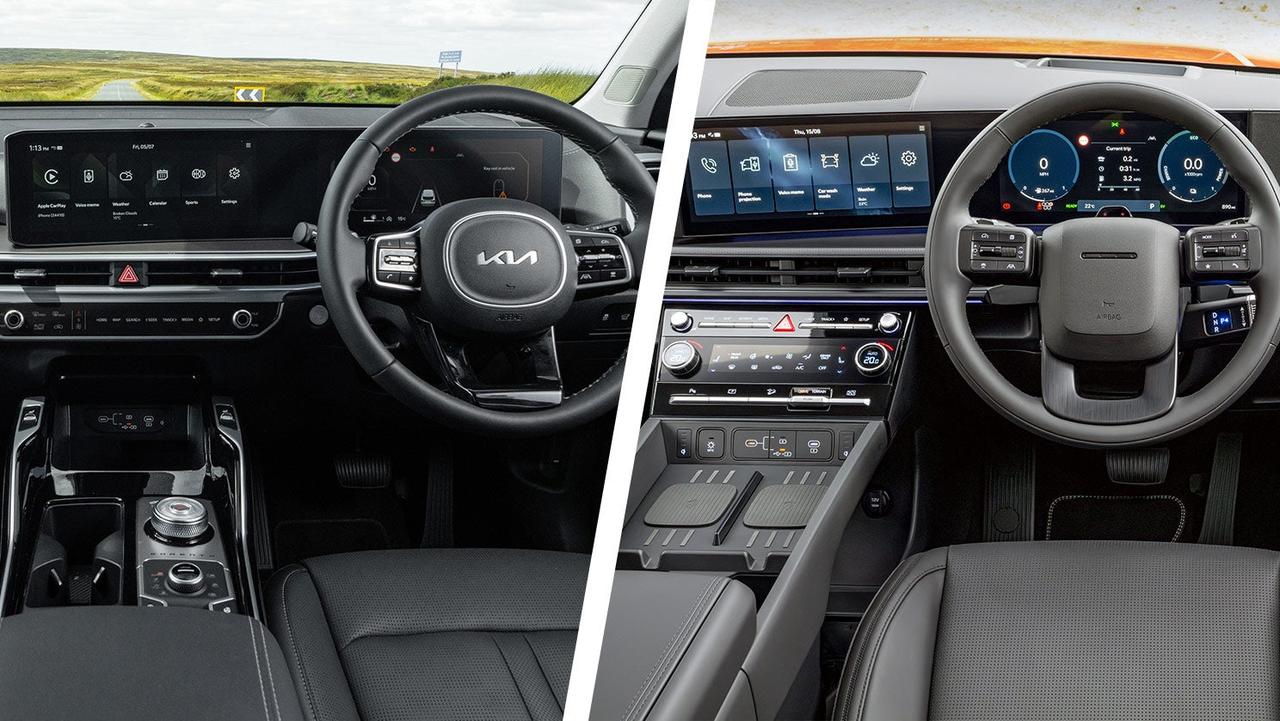
Of course, the most important feature of both cars' interiors is how much they can carry. But first, let's take a moment to compare the dashboard designs of both cars. Here, we can see the Sorento is a little more function over form. There's the now familiar twin-screen dash-top pod with climate controls in the middle and a chunky centre console splitting the seats. Get up close and personal with these features and you'll find the design is a fraction more dated than the Hyundai, and the materials feel just a tad more plasticky.
Step into the Santa Fe and you'll find the overall layout is fairly similar to the Sorento. However, there's a more deliberate side to the styling, with hard horizontal lines emphasising the car's width, and leaving clean edges on all the control panels. We think Hyundai's done a better job of the Santa Fe's centre console, too, with a handy lower cubby that can fit a small handbag, and obvious spaces for phones and drinks. That console space has been partially freed up by moving the gear selector to a column on the steering wheel.
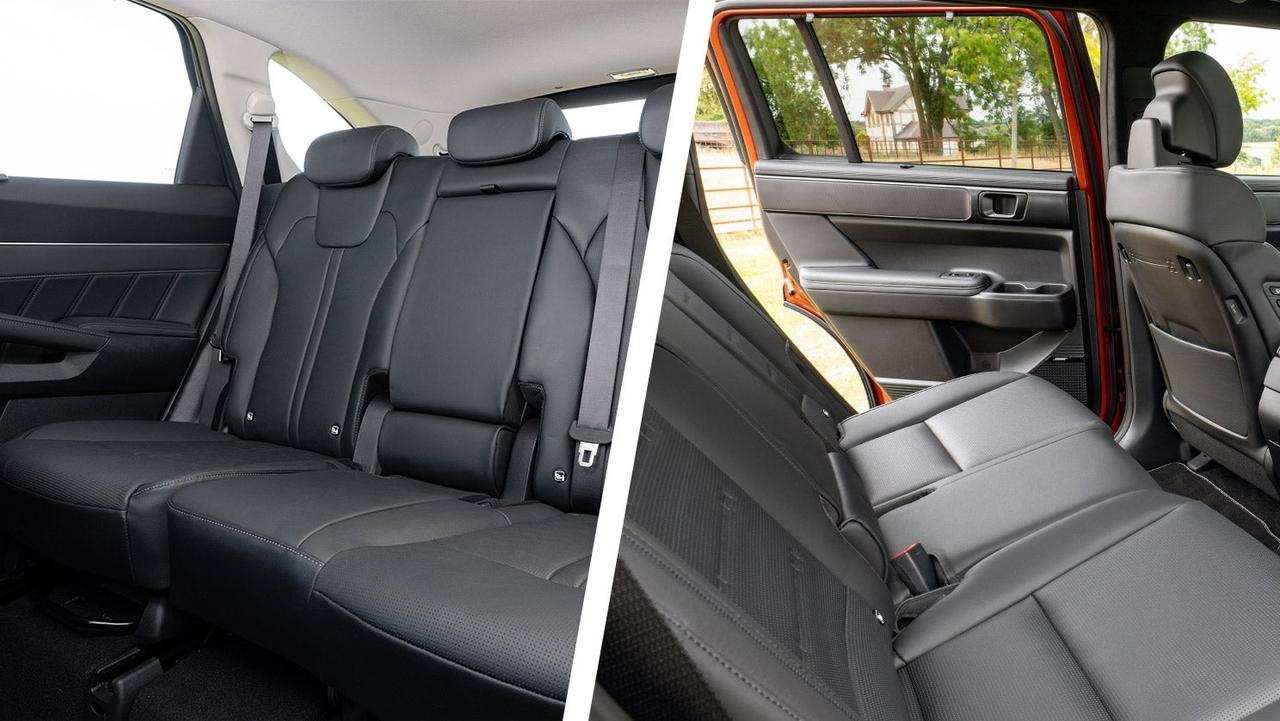
Both the Sorento and Santa Fe are more than 4.8 metres long – more than smaller seven-seaters like the Land Rover Discovery Sport, Nissan X-Trail and Mercedes GLB. As a result, there's acres of space in the first two rows, and even enough space for average-sized adults to get comfy in the third row. You're left with a small hatchback's worth of space with all seven seats in place, or a vast boot if you fold the third row. Fold the second row in either car and you'll be competing with small vans.
Size and dimensions
| Kia Sorento | Hyundai Santa Fe | |
| Length | 4,815mm | 4,830mm (+15mm) |
| Width (exc mirrors) | 1,900mm | 1,900mm (+0mm) |
| Height | 1,700mm | 1,770mm (+70mm) |
| Boot space | 608 litres (hybrid, five-seat mode) | 628 litres (+20 litres) (hybrid, five-seat mode) |
At more than 4.8 metres long, both the Sorento and Santa Fe are big cars by anyone's standards. The Hyundai is a negligible 15mm longer and 70mm taller. That 1.9-metre width figure is narrower than some other large SUVs, however, so the Sorento and Santa Fe aren't too challenging on tight country lanes.
Engines and performance
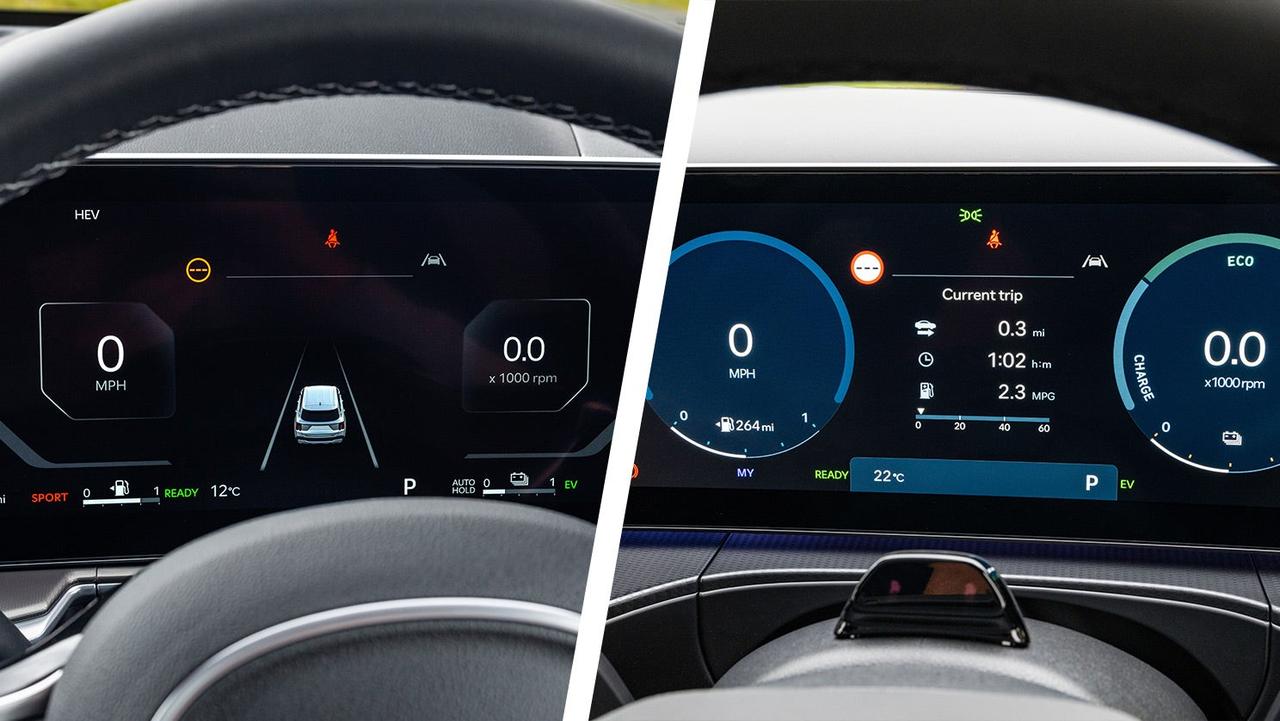
| Kia Sorento | Hyundai Santa Fe | |
| Engines |
|
|
Starting with the Sorento, you've a choice of diesel, self-charging-hybrid or plug-in-hybrid engines. The presence of a diesel engine is a key benefit for the Sorento, as you can no longer order the Santa Fe with diesel power. If you cover lots of motorway miles or if you plan to tow in your Sorento, this is the engine to pick as it's rated to pull a braked trailer weighing more than two tonnes. For comparison, the hybrids are rated for a little over one tonne.
The Santa Fe is now hybrid only, with a choice of self-charging or plug-in versions. While some drivers might miss the long-legged range or hauling ability of diesel power, this hybrid setup arguably makes the Santa Fe better for day-to-day mixed motoring. You have plenty of off-the-line response from the electric motor, then the backup of the 1.6-litre turbo petrol engine as speeds climb.
Refinement is a little underwhelming in both the Sorento and the Santa Fe. The Kia's optional diesel engine is a bit gruff and agricultural, and the hybrid versions can drone if you're accelerating hard. Considering the Santa Fe uses the same hybrid engines as the Sorento, it too suffers from a bit of droning when you floor it although, to our ears, it's just a fraction better insulated than the Kia.
Driving
This is one of the areas where there's the fewest differences between the Sorento and the Santa Fe. Get comfy behind the wheel in either car and you'll get a similar sensation – that you're in a tall, heavy car with a lofty confidence-inspiring driving position – exactly what buyers in this segment are looking for.
As mentioned earlier, despite their vast length and imposing height, neither the Sorento or Santa Fe are the widest cars in their class. That means they're deceptively easy to slot through tight gaps or wind down a narrow road, aided by the great forward visibility.
Controls in both cars are accurate and easy to use, so you're never left guessing how much steering or pedal input you need. There's plenty of body roll in both cars should you start to push the handling envelope so keen drivers need not apply. Being picky, we think the Santa Fe achieves a similar level of comfort to the Sorento, but with a little more sophistication to its body control so it feels a fraction less wallowy.
Value and reliability
The Sorento costs from just under £43,000, while the Santa Fe is just over £49,000. That's roughly mid-table for the class but, considering the Kia and Hyundai are both among the largest options of that selection, the value for money they offer is broadly impressive.
That's especially true when you consider that both cars are well-equipped as standard with climate control, driver aids and smartphone mirroring for their infotainment systems. If your budget is a little more accommodating, you could look at the Santa Fe's luxury options like the six-seater cabin with middle-row captain's chairs, or the range-topping Calligraphy trim.
Kia and Hyundai both earn strong marks for reliability and, considering the Sorento and Santa Fe share many mechanical parts, both should prove similarly durable. Note that Kia's seven-year factory warranty is a touch longer than Hyundai's five-year factory warranty.
Which is best?
Like many comparisons, your budget will probably be the deciding factor here. The Sorento offers most of the experience and function of the Santa Fe but at a discount of several thousand pounds. Plus, it's the only one available with a diesel engine for motorway regulars or towing duties.
However, the Santa Fe does feel a step above in terms of styling and drivability. The extra desirability and luxury features might be enough to justify the price premium for you.
Massive discounts on used SUVs
Shop a huge range of used SUVs for sale at Motorpoint, including a wide choice of used Kia cars and used Hyundai cars. For more inspiration, check out the best seven seaters on sale.
For more in-depth info, read our full Kia Sorento review and our Hyundai Santa Fe review.