





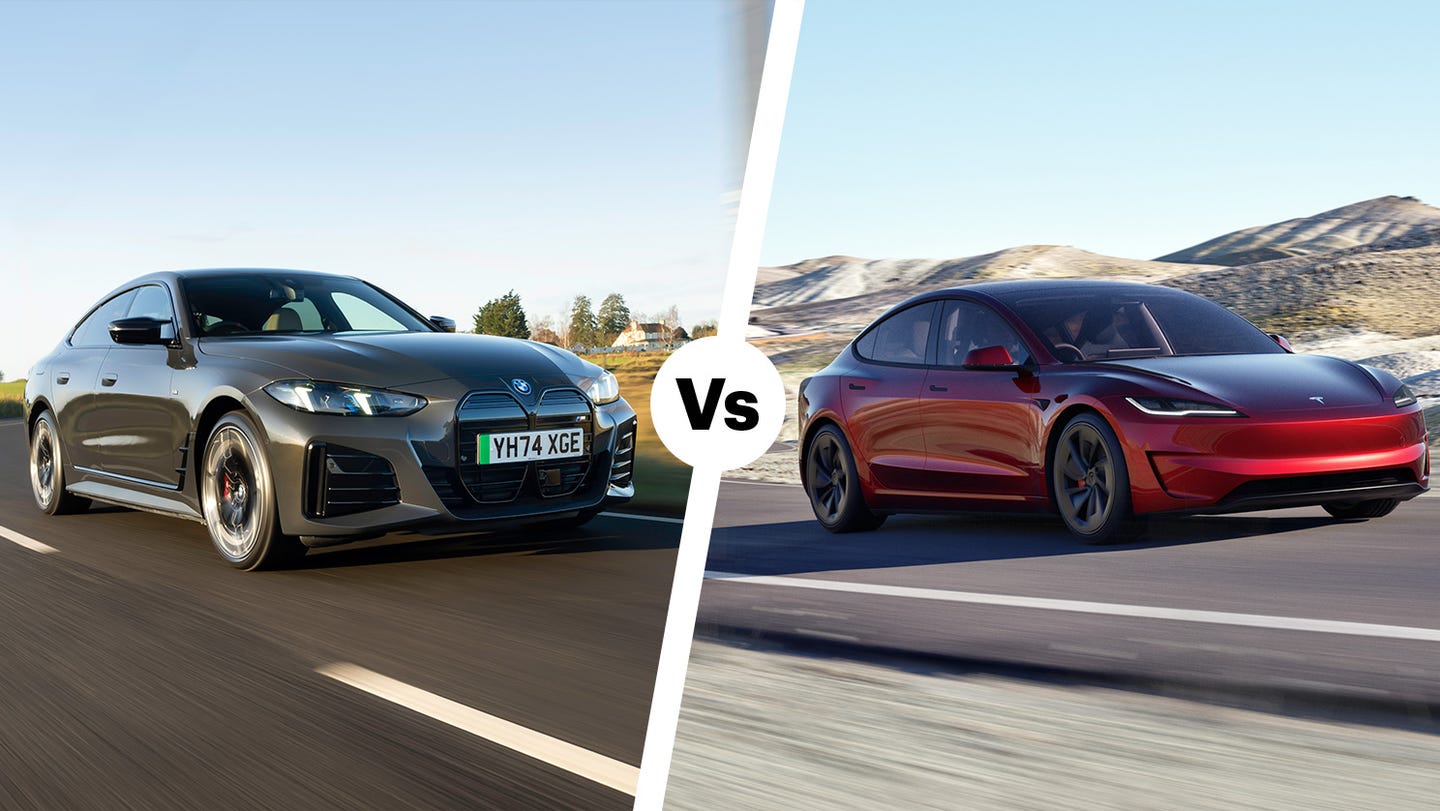

Both the BMW i4 and Tesla Model 3 prove EVs can do long-distance driving.
These two will comfortably return more than 300 miles to a charge, and both have aerodynamic bodywork with a coupe-like roofline. Plus, they deliver the kind of swift, silent performance we've come to expect from modern EVs.
We'll compare the i4 and Model 3 here to help you pick your favourite. Once you've chose, check our used BMW i4 and used Tesla Model 3 cars for sale at Motorpoint.
BMW i4 vs Tesla Model 3 compared
| BMW i4 | Tesla Model 3 |
Pros:
| Pros:
|
Cons:
| Cons:
|
Styling and design
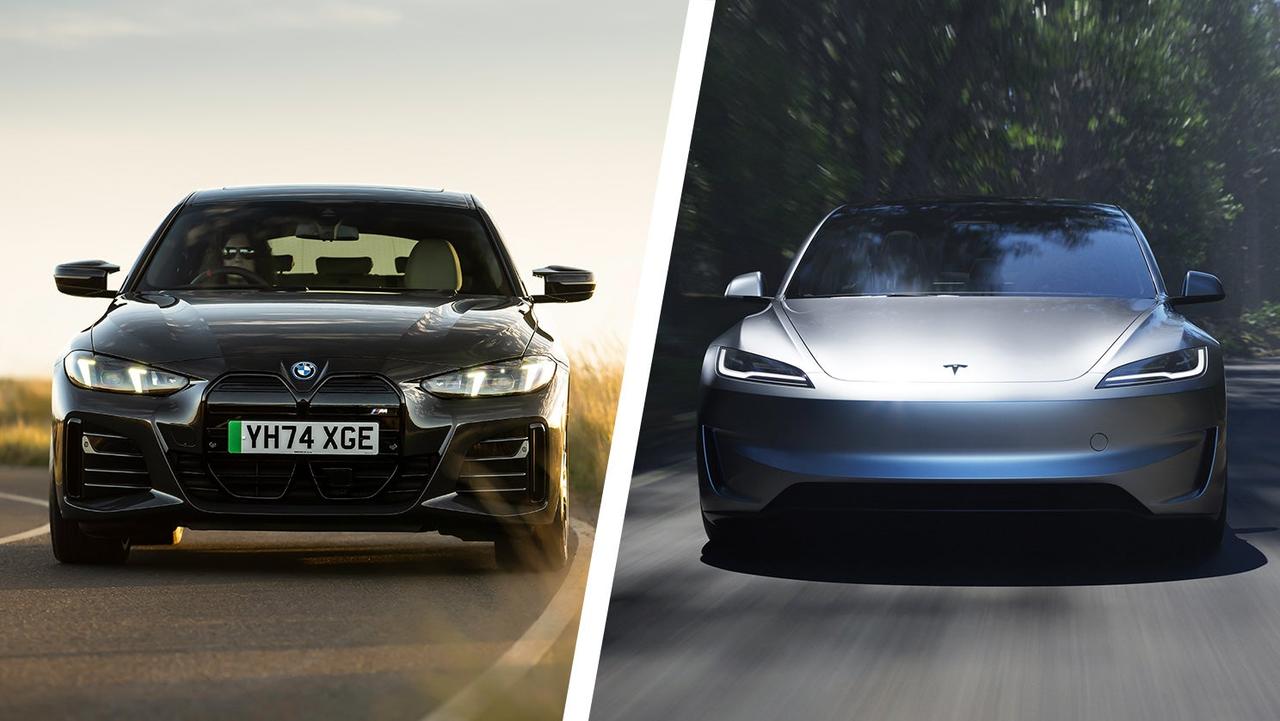
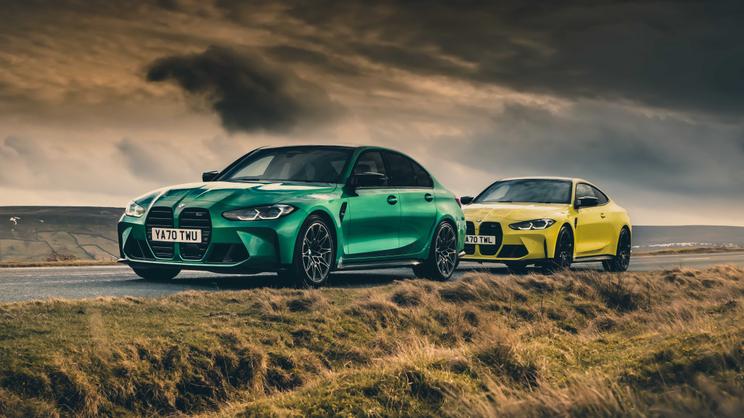
Starting with the i4, it's clear BMW wanted this car to fly under the radar. It shares much of its platform with the fuel-powered 4 Series Gran Coupe, but also most of its styling. The only real giveaway that this BMW is powered by electrons are the blanked-off front 'kidney' grilles that help improve aerodynamic efficiency. Otherwise, the i4 is essentially unchanged from its petrol counterpart with slim, piercing headlights and a gracefully curved roof.
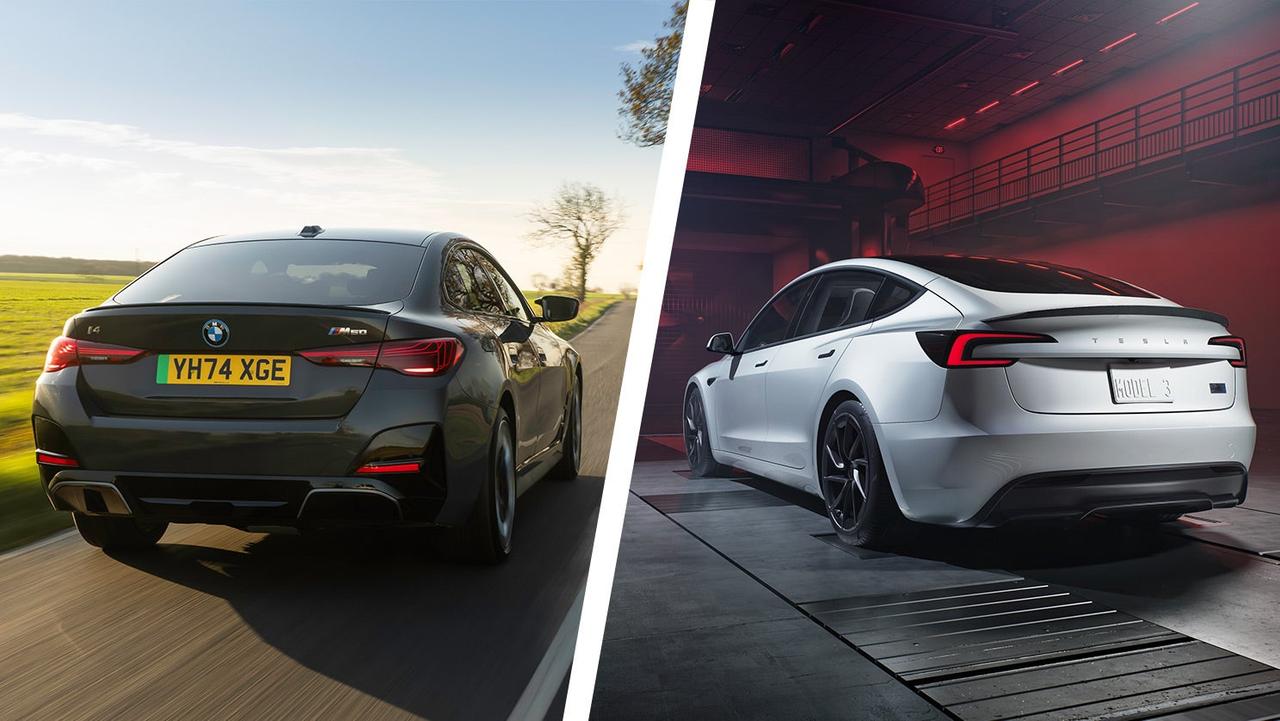
The Tesla, on the other hand, makes no secret of its electric powertrain. Even a layperson would spot the lack of front grille, since the Model 3 needs only a fraction of the cooling of a engine-powered car. Plus, the car's styling looks somewhat exaggerated, with a short, stubby front end ahead of a bulbous passenger compartment and a sharp cutoff down the boot lid. It's obvious most of these choices were made to improve aerodynamics and squeeze more range from the battery.
Ultimately, which car you prefer will probably come down to how much you want your EV to look like an EV. Some may prefer the i4's more stealthy approach, since most other motorists will simply assume it's just another BMW. Others, however, will prefer the Model 3's more forward-looking style.
Interior and practicality
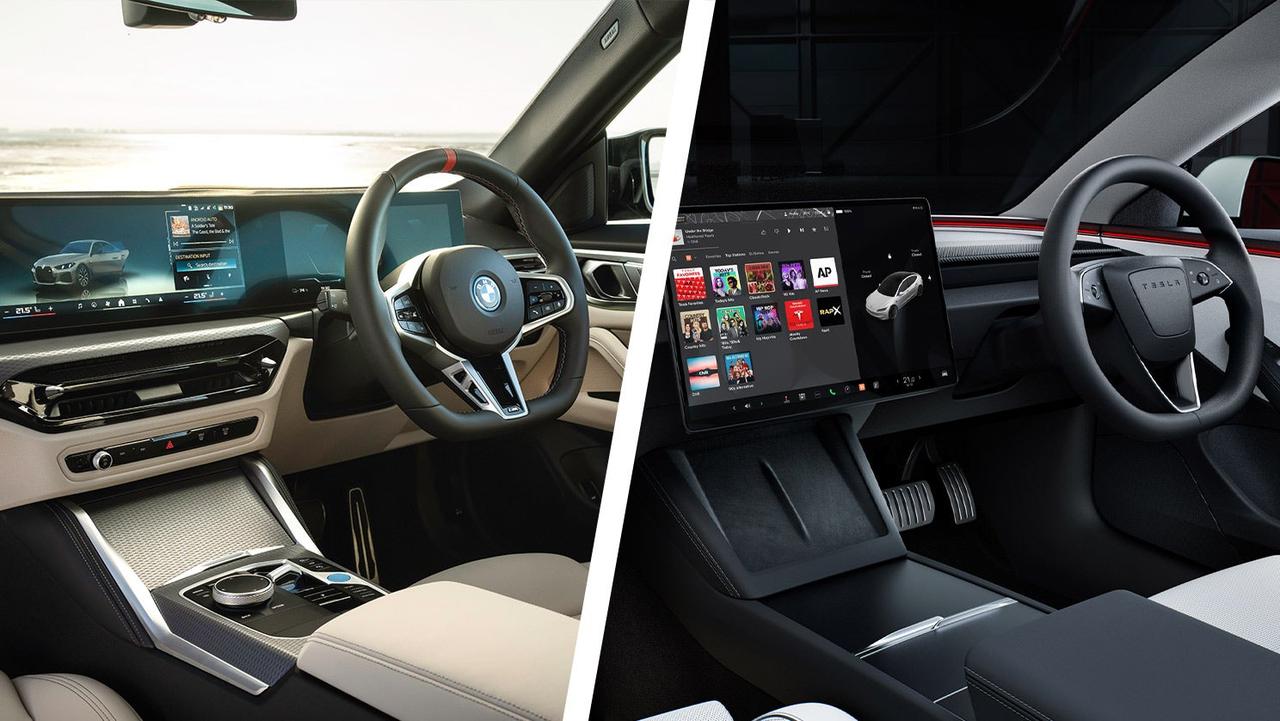
These cars are obviously different on the outside, but they're absolutely miles apart on the inside. Step into the i4 and you'll find an experience much the same as any fuel-powered BMW. There's a sweeping twin-screen pod atop the dashboard that serves as both digital driver's dials and the centre infotainment screen. Below that are a handful of key physical controls by the exposed air vents, and then a centre console containing the gear selector, drive mode buttons and a rotary controller for the infotainment system.
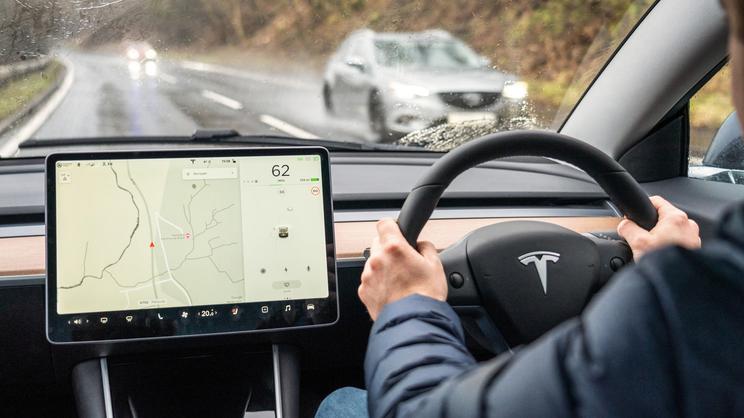
The Model 3 has almost none of these things, with Tesla settling on an ultra-minimalist design. You get a steering wheel, a massive centre screen and some centre-console cupholders – and that's about it. Controls for the stereo volume, climate control and even the gear shifter are all accessed through the screen. You will eventually get used to this paired-back setup, but it's not as intuitive as the BMW's dashboard, though it arguably looks more modern.
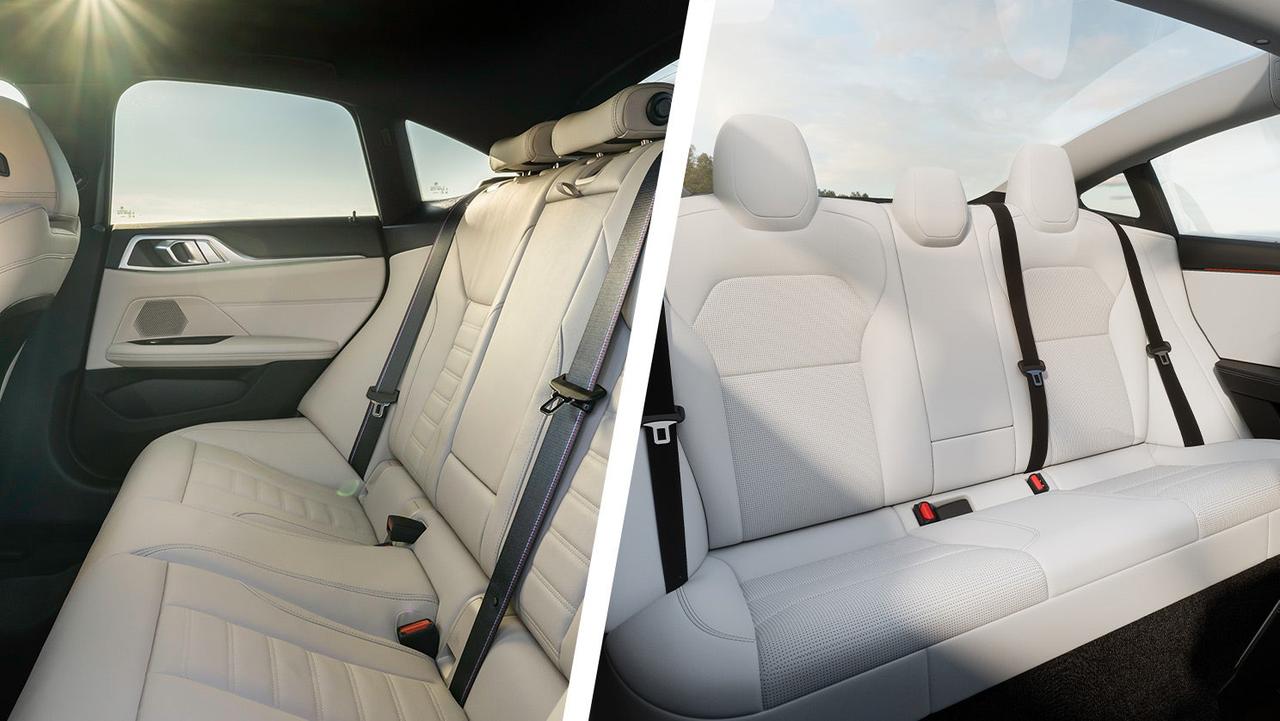
As for practicality, the Tesla scores the win here despite being a little shorter and narrower than the BMW. You'll find a touch more passenger space in the Model 3, with more headroom for rear-seat occupants and a more airy feel thanks to the standard glass roof.
On paper, the i4's 470-litre boot actually beats the Model 3's 425-litre space. However, the Tesla also has a large underfloor cubby plus an 88-litre front 'frunk', which means its total cargo capacity actually beats the BMW – although the i4's hatchback-style bootlid gives better access than the Model 3's saloon-style opening.
Size and dimensions
| BMW i4 | Tesla Model 3 | |
| Length | 4,783mm | 4,720mm (-63mm) |
| Width (excl. mirrors) | 1,852mm | 1,850mm (-2mm) |
| Height | 1,448mm | 1,441mm (-7mm) |
| Boot space | 470 litres | 425 litres (-45 litres) (boot only, excl. frunk) |
As you can see, these to cars are very closely matched on overall size, with the BMW just being fractionally larger in all dimensions. Both cars come with a suite of parking aids so you're unlikely to notice the BMW's extra 6.3cm length. Note that the boot space figure is only for space under the parcel shelf and excludes the Model 3's frunk.
Engines and performance
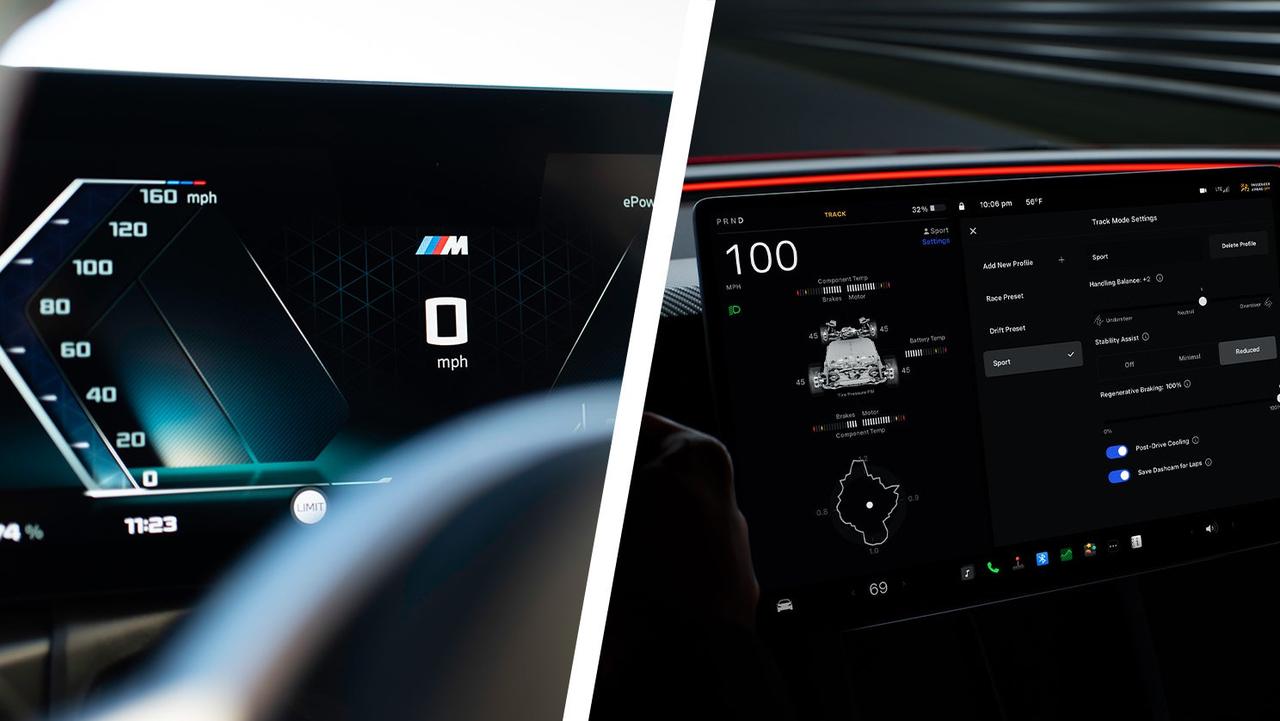
There's quite a lot of alignment across these two cars' lineups. Both the i4 and the Model 3 start with a basic rear-wheel-drive version with a small battery – the BMW claims 316 miles from this setup while the Model 3 returns 323 miles.
Next up are the long-range cars. These have the big battery option but retain a single-motor, rear-wheel-drive platform for optimum efficiency. In the BMW, this version returns a respectable 371 miles of range but the equivalent Tesla easily takes the win with a claimed 466-mile range – putting it right amongst the longest-range electric cars.
Finally, there are the dual-motor, all-wheel-drive cars. The BMW simply offers the range-topping i4 M50 with a bonkers 600hp output and supercar-rivalling 3.7-second 0-62mph time. Meanwhile, Tesla offers a long-range AWD Model 3 or the range-topping Model 3 Performance – the latter completes the slightly shorter 0-60mph benchmark in an astonishing 2.9 seconds, outpacing some extremely fast supercars.
While you get massive performance from the dual-motor cars, we think most drivers will be happy enough with the single-motor rear-wheel-drive versions. These are plenty quick enough, with loads of electric shove off the line, while keeping the range up and the price down.
Driving
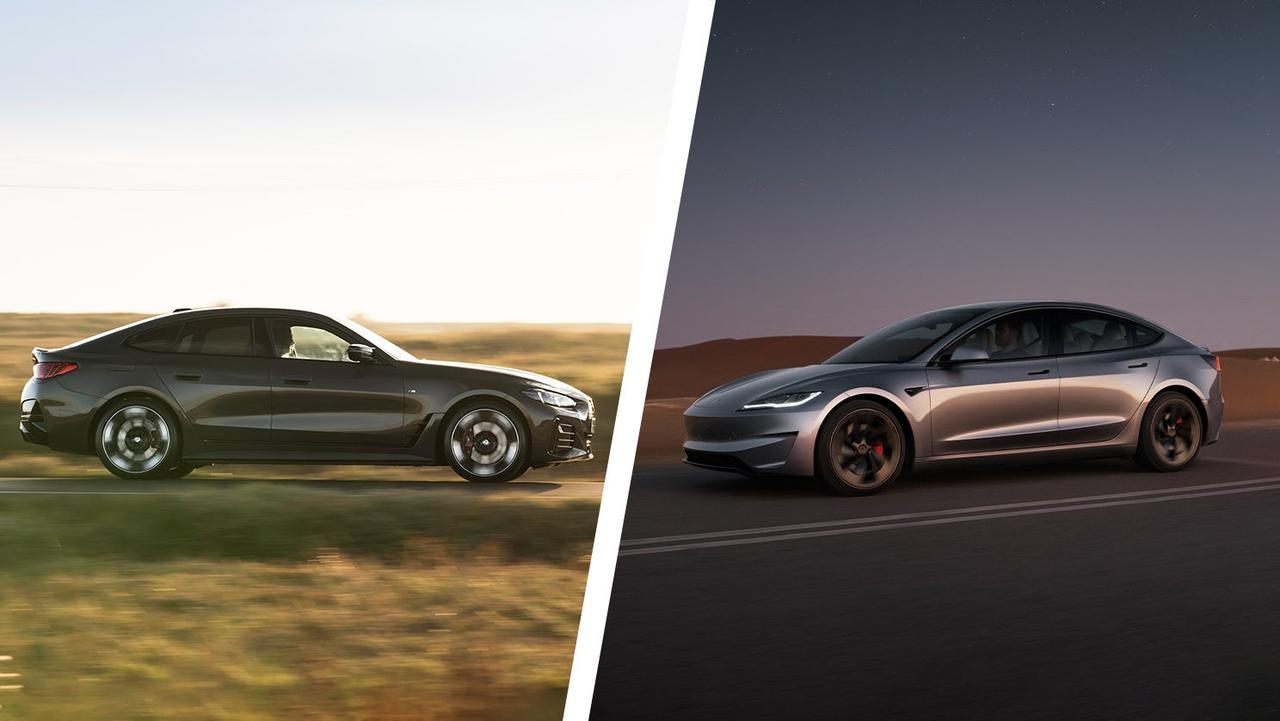
If you'd been handed the keys to a BMW i4, there's a chance you'd get some way into your journey before you noticed it's an EV. The sensation behind the wheel is very similar to a fuel-powered 4 Series Gran Coupe – a very stable platform that grips tenaciously through corners, while demanding very little effort from the driver. Everything from the steering to the pedal tuning feels very intuitive from the get-go, so it's easy to drive the i4 smoothly.
The Tesla Model 3 has always been quite a sporty car, but the 'Highland' facelift in 2024 brought much-needed improvements to the ride quality and refinement. As a result, recent Model 3s are much more comfortable than their forebears, preventing the worst road surfaces from impacting the base of your seat. Despite the more grown-up comfort, however, the ultra-responsive steering remains mostly unchanged. This, we feel, gives the Tesla a slightly hyperactive feeling, so you have to be very deliberate with your inputs not to upset the car's newfound supple suspension.
We can imagine some drivers might prefer the Tesla's faster-feeling controls. You have to physically turn the wheel less to get the same amount of steering at the front wheels, reducing how often you have to shuffle your hands. However, the BMW just feels more predictable and intuitive for more of the time.
Value and reliability
This is where the BMW's case takes a few hits. It's noticeably more expensive than the Model 3, usually costing at least £10,000 more on a like-for-like model basis. The Tesla also presses home its price advantage with a vast equipment list that includes luxuries like heated and ventilated front seats, heated rear seats and a separate rear entertainment screen.
On the used market, the i4 remains the more expensive car, but the gap between the two models shrinks. That makes it easier to justify the price rise for the German car, since it'll only be up to £5,000 or so more expensive than an equivalent Tesla.
Across recent reliability surveys, BMW has performed well, usually ending up near the top of the table ahead of direct rivals Audi and Mercedes. Tesla's results tend to be more of a mixed bag, with some surveys reporting high scores and other flagging up the occasional software or hardware issue. We've noticed that build quality feels much better on modern Teslas than earlier ones, with more solid-feeling construction and faultless panel fitment.
Which is best?
These are two EVs that serve a similar section of the market but approach the task from very different angles. The BMW will suit someone who wants to swap into an electric car with an experience that very closely mirrors the one they'll already be familiar with from fuel-powered models. This is a car that's easy to use and fun to drive, with loads of power and a long driving range. Although, the extra price over the Tesla is a little disappointing.
The Tesla, on the other hand, is a much more contemporary experience with an ultra-modern cabin and slightly better practicality. Plus, the American car comes with more standard features for a noticeably lower price. For many buyers, that kind of value for money will be hard to ignore – and that's before you consider its greater range and Tesla's handy Supercharger network.
Save thousands on a used electric car
Shop nearly new and used electric cars for sale at Motorpoint. If you've not made up your mind yet, check out our picks for the best electric cars on sale.