







BMW's 3 Series and 4 Series split into two separate models in 2013.
Obviously, this is because even numbers are more exciting than odd numbers, and BMW wanted to reflect this in their names. Well, not really, but the recipe for the 4 Series remains the same as the 3 Series coupe it replaced – take the 3 Series' mechanicals and drape a dramatic coupe body over the top.
We'll pit the BMW 3 Series head-to-head against the 4 Series here to help you choose the one you like best. Both choices are available as nearly new and used cars for sale at Motorpoint.
BMW 3 Series vs 4 Series compared
| BMW 3 Series | BMW 4 Series |
Pros:
| Pros:
|
Cons:
| Cons:
|
Styling and design
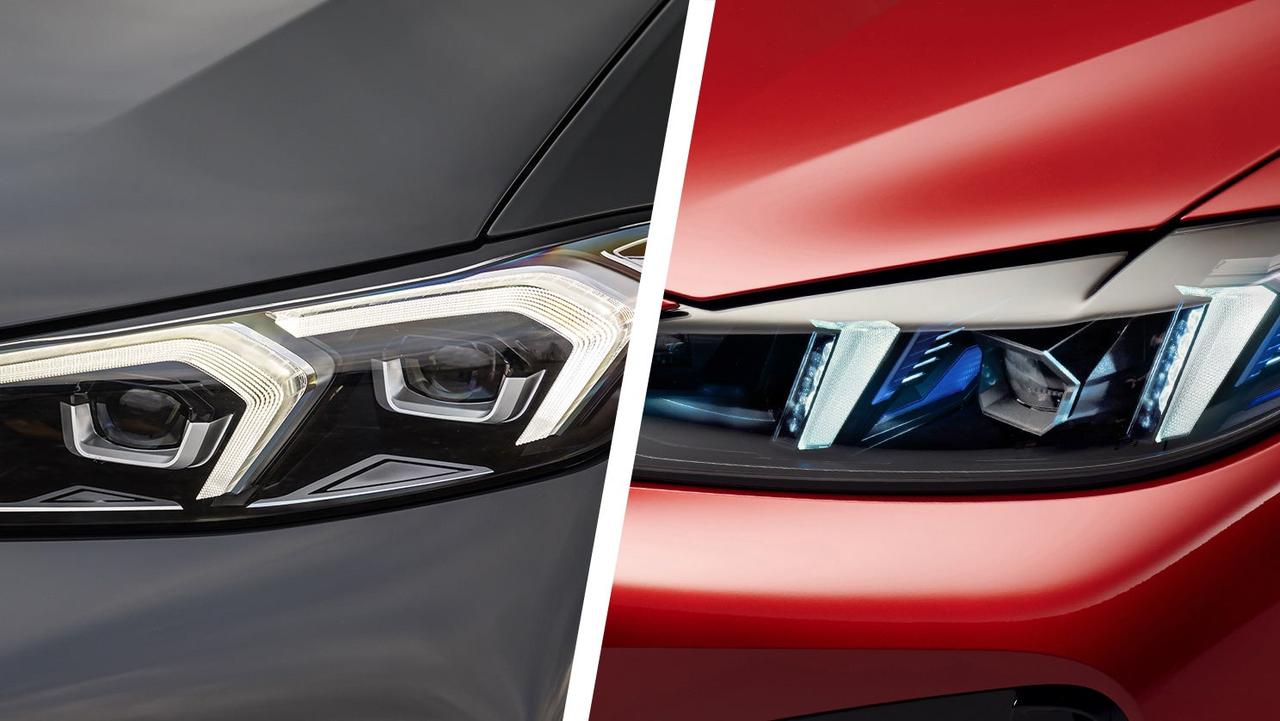
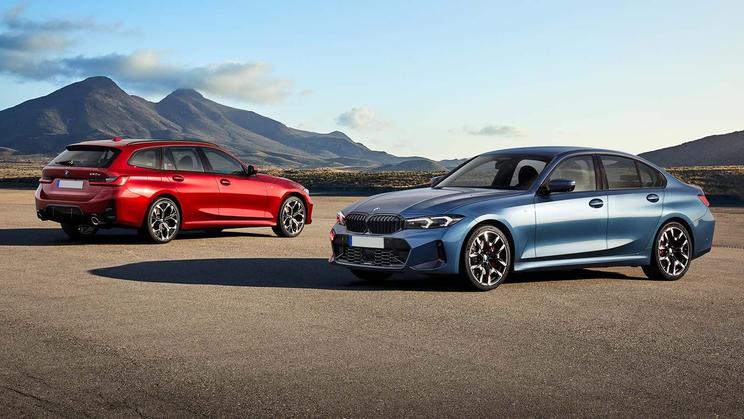
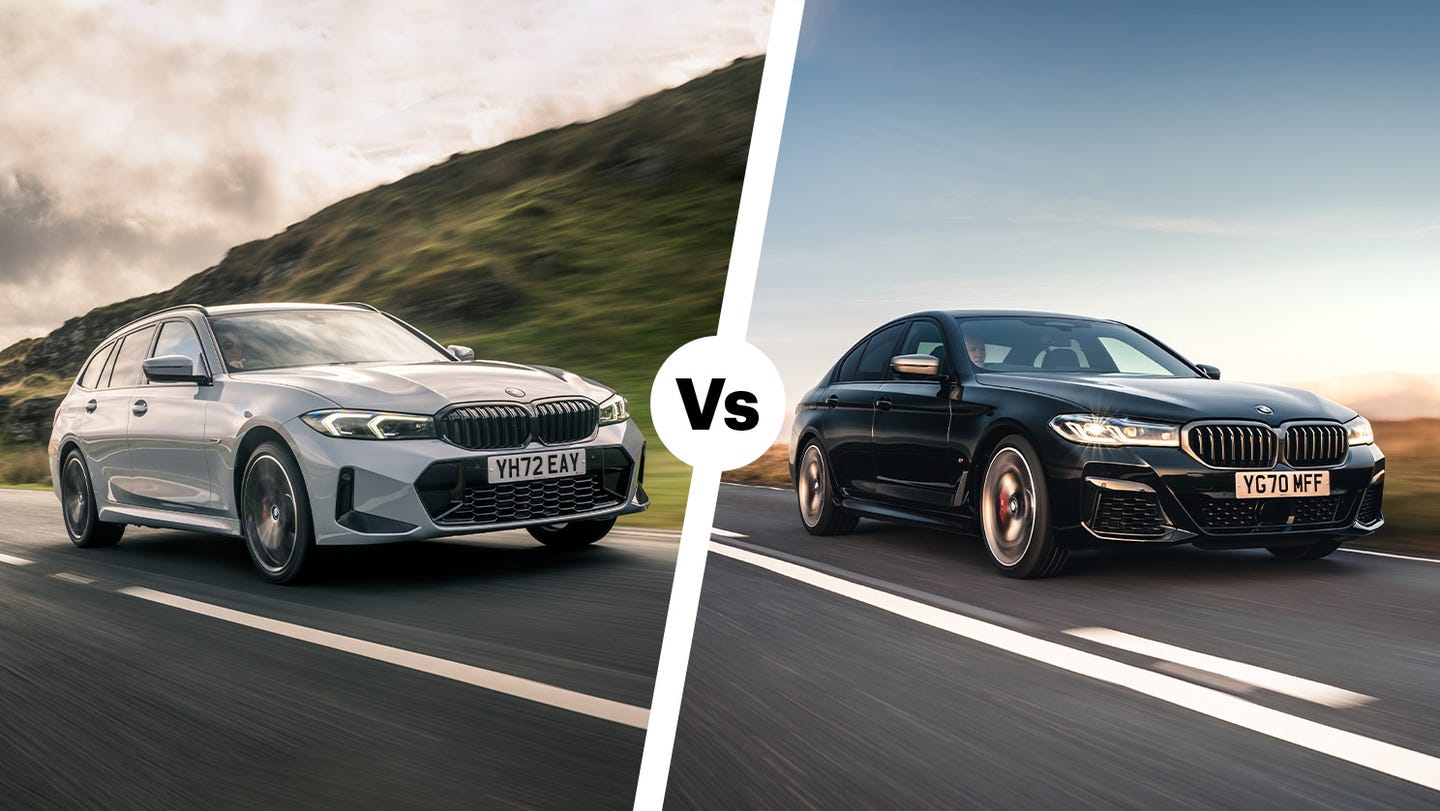
Previously, you might've struggled to tell the 3 Series from the 4 Series if you looked at them directly head-on. This was because both models had similar front-end treatments, with the 4 Series' swooping coupe roofline and lack of rear doors being obvious giveaways you'd only really see from the side.
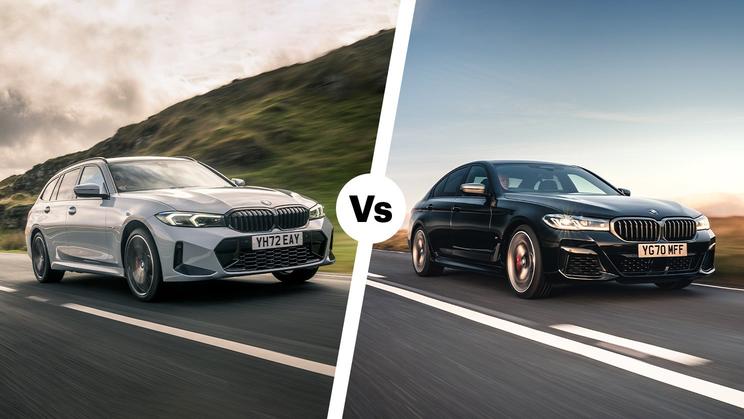
Not so with the latest models, however, because BMW has done more to separate the two cars' front styling. The 3 Series has a more conventional look, with sensibly sized 'kidney' front grilles between its beady headlights. Meanwhile, the 4 Series has taller, narrower grilles that look a little more 'snouty', and mimic the versions found on ultra-sporty M3 and M4 models.
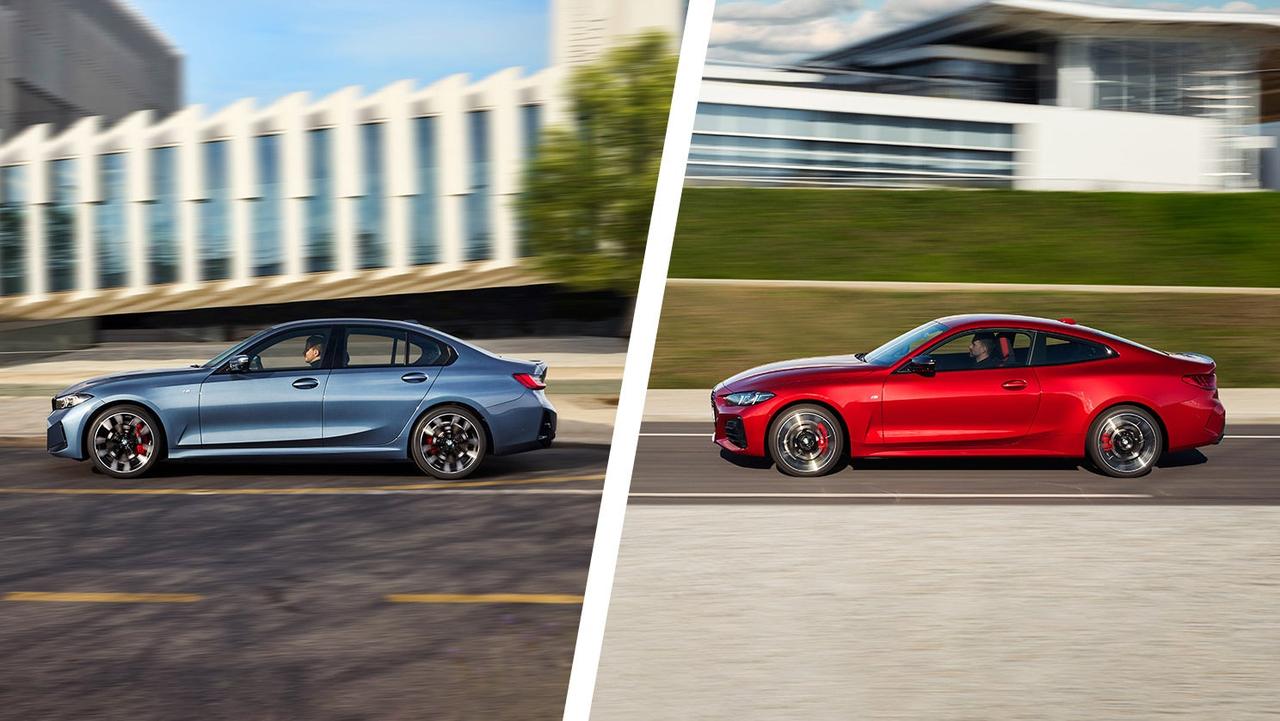
In the metal, the gap between the 3 Series' sensible saloon (or estate) silhouette and the 4 Series' coupe looks is more pronounced than previous iterations of these cars. The 4 Series looks longer and lower thanks to its more taut bodywork, and it feels like the whole car's been reshaped from the ground up rather than simply grafting a coupe roof onto the 3 Series' body.
Interior and practicality

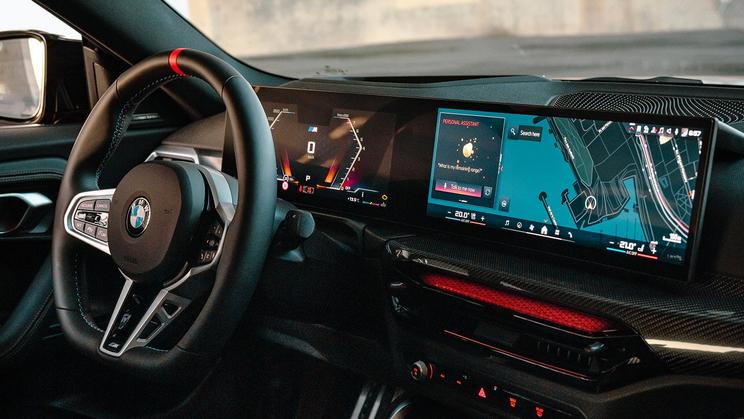
We've highlighted how BMW put in the work to separate the 3 and 4 Series externally, but it clearly didn't see the need to switch up the cabin design. Viewed from the driver's seat, there's virtually no difference between the two cars' dashboards. You get the same understated design dominated by a sweeping infotainment screen, which includes the centre display and the digital driver's dials. There's nothing really wrong with this setup – though we're not fans of the fiddly screen-based climate controls – but 4 Series buyers might be disappointed that it doesn't do much to make itself feel more special.
Sit in the two cars back-to-back, however, and you might spot that the driving position is subtly different in the 4 Series. You sit a fraction lower than you do in the 3 Series, which makes the car feel more purposeful and exaggerates the visual impact of its long bonnet stretching out in front of you – just like a coupe should. At this point you may also spot the 4 Series' longer doors, allowing access to its rear seats.
Speaking of, it'll come as no surprise that the 4 Series coupe bodywork has a noticeable impact on rear-seat space. Where the 3 Series will happily seat tall adults in the second row, the 4 Series can only just fit average-sized adults in the back and even then they'll be cramped. However, compared to other 2+2 coupes, the 4 Series is still one of the more spacious options and, if you like the style but need more space, there's always the stretched five-door 4 Series Gran Coupe. The 3 Series' boot bests the 4 Series by 40 litres (480 vs 440) but both are still among the most practical options in their class.
Size and dimensions
| BMW 3 Series | BMW 4 Series | |
| Length | 4,713mm | 4,768mm (+55mm) |
| Width (exc mirrors) | 1,827mm | 1,852mm (+25mm) |
| Height | 1,440mm | 1,383mm (+57mm) |
| Boot space | 480 litres (saloon) | 440 litres (-40 litres) (coupe) |
There are no surprises here. The coupe-shaped 4 Series is longer and wider, and a little lower than the 3 Series, giving it more visual drama. As you'd expect, that does impact interior space and costs 40 litres from the total boot capacity.
Engines and performance
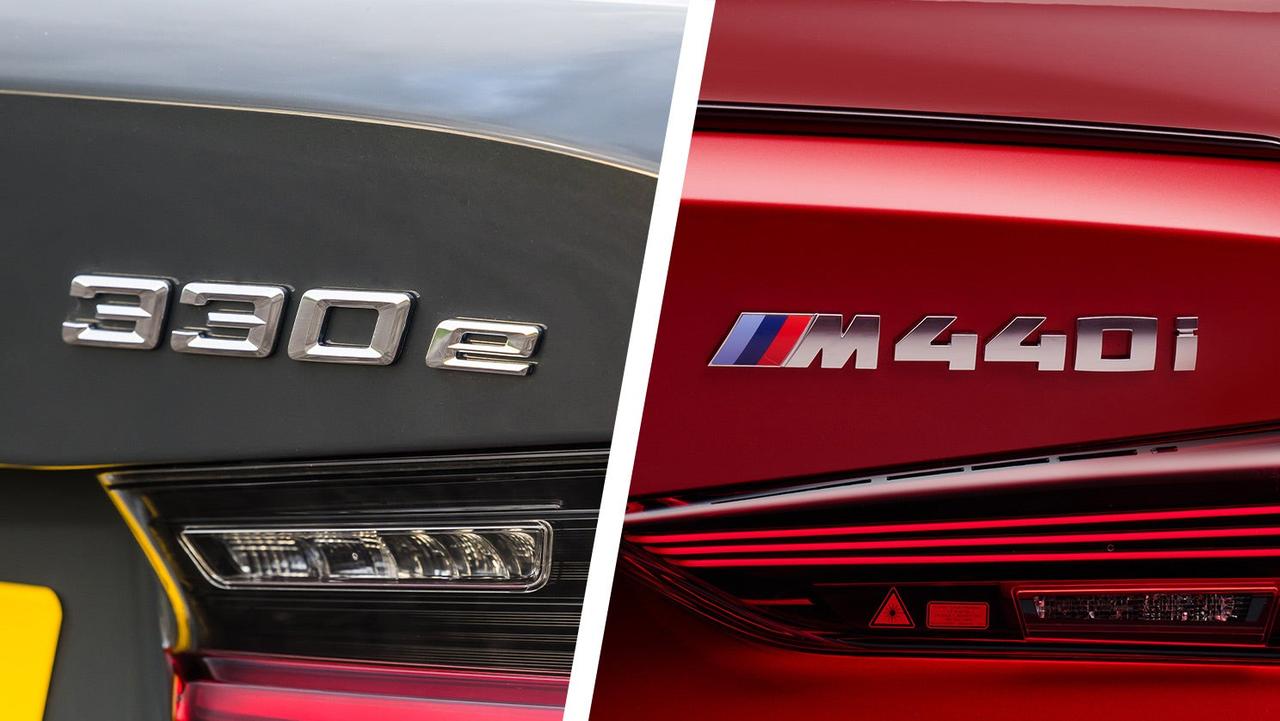
BMW has progressively slimmed down its engine lineup for both cars down to just the most popular options. As a result, both the 3 Series and 4 Series are available as standard with the '20i' 2.0-litre turbo petrol engine making 184hp. This is paired with an eight-speed automatic gearbox and completes the 0-62mph sprint in the mid-7-second range – totally acceptable performance for most drivers.
In addition, the 3 Series is offered as a 330e plug-in hybrid. Between the 2.0-litre petrol and the electric motor, there's a total of 292hp. That's a healthy figure and brings the 0-62mph time down to a hot-hatch-like 5.9 seconds. In addition, you get around 60 miles of pure-electric driving and, if you can maximise both power sources, you can average more than 300mpg.
Hunt the used market for older versions and you'll find a wider choice of engines including more powerful petrols and some diesel options for high-mileage drivers. For more enthusiastic drivers, there's the superb M340i and M440i, which get a 392hp six-cylinder turbo petrol engine and four-wheel drive for mighty acceleration. Or, if your pockets are deep enough, the full-fat M3 and M4 get more than 500hp to embarrass supercars on race tracks.
Driving
BMWs famously proclaim themselves as the 'ultimate driving machines'. For the most part, the 3 and 4 Series live up to this billing. Compared to their counterparts from Mercedes and Audi, the BMW cars feel just a little more agile and grippy, with more desire to tuck tightly into corner apexes. That said, both are a little less sporty than BMWs of old, with less direct steering and less firm suspension in pursuit of a more rounded everyday driving experience.
Since most oily mechanical parts are shared between the two cars, there's very little to separate the 3 Series and 4 Series out on the road. In fact, the most obvious change is simply the fact that you sit lower in the 4 Series, which gives it a little more sense of occasion than the more upright 3 Series.
The engine you choose for either car is likely to have a larger impact on the overall driving experience than which bodystyle you pick. '20i' petrol versions are smooth and swift, and the eight-speed auto always seems to have exactly the right gear on hand, so driving these models is easy and satisfying. However, jump up to one of the M Performance models (M340i and M440i) or the fire-breathing M3 and M4, and the experience totally transforms into a savage spectacle of speed.
Value and reliability

The 3 Series is between £1,000-£3,000 less expensive than an equivalent 4 Series. However, we've observed this price gap get smaller once these cars hit the used market and, in some cases, even reach parity. This could be because the potential market for coupe buyers is already smaller than the market for potential saloon buyers.
As a result, if you can live with the 4 Series slightly compromised practicality, then you're getting a much more visually exciting car for essentially the same money. The flipside here being that the similarly priced 3 Series does basically everything the 4 Series does, but has much more usable back seats.
BMW's reliability record in recent years has improved, with the company generally beating its fellow German premium brands in dependability surveys. Like all cars, proper servicing is the key to making them last as long as possible. Be aware that high-performance models are likely to be used more intensely than standard models, so may require more frequent servicing to keep them running properly. BMW includes an industry-standard three-year warranty.
Which is best?

Neither car here is 'the best' since they're both better at different things. The 3 Series is an excellent all-round platform – a practical, premium, high-tech option with just a little spice for sporty driving.
Meanwhile, the 4 Series makes some sacrifices to practicality in pursuit of greater style. It looks noticeably more exotic in the metal, and feels a touch more purposeful from behind the wheel.
Save thousands on used BMWs
Browse a huge choice of used BMW 3 Series and used BMW 4 Series cars for sale at Motorpoint. See more options with our list of the best German cars on sale.