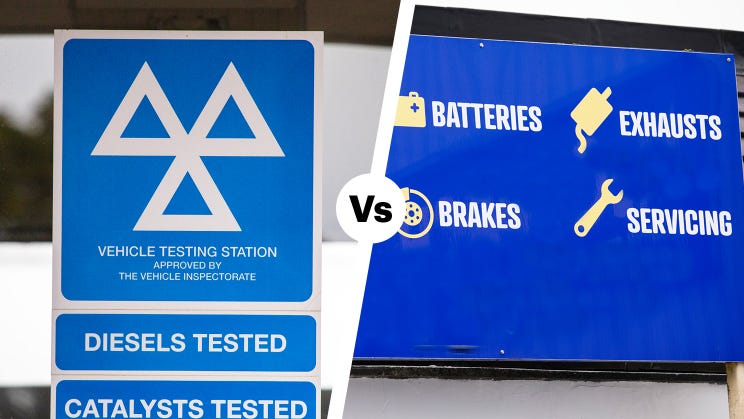



























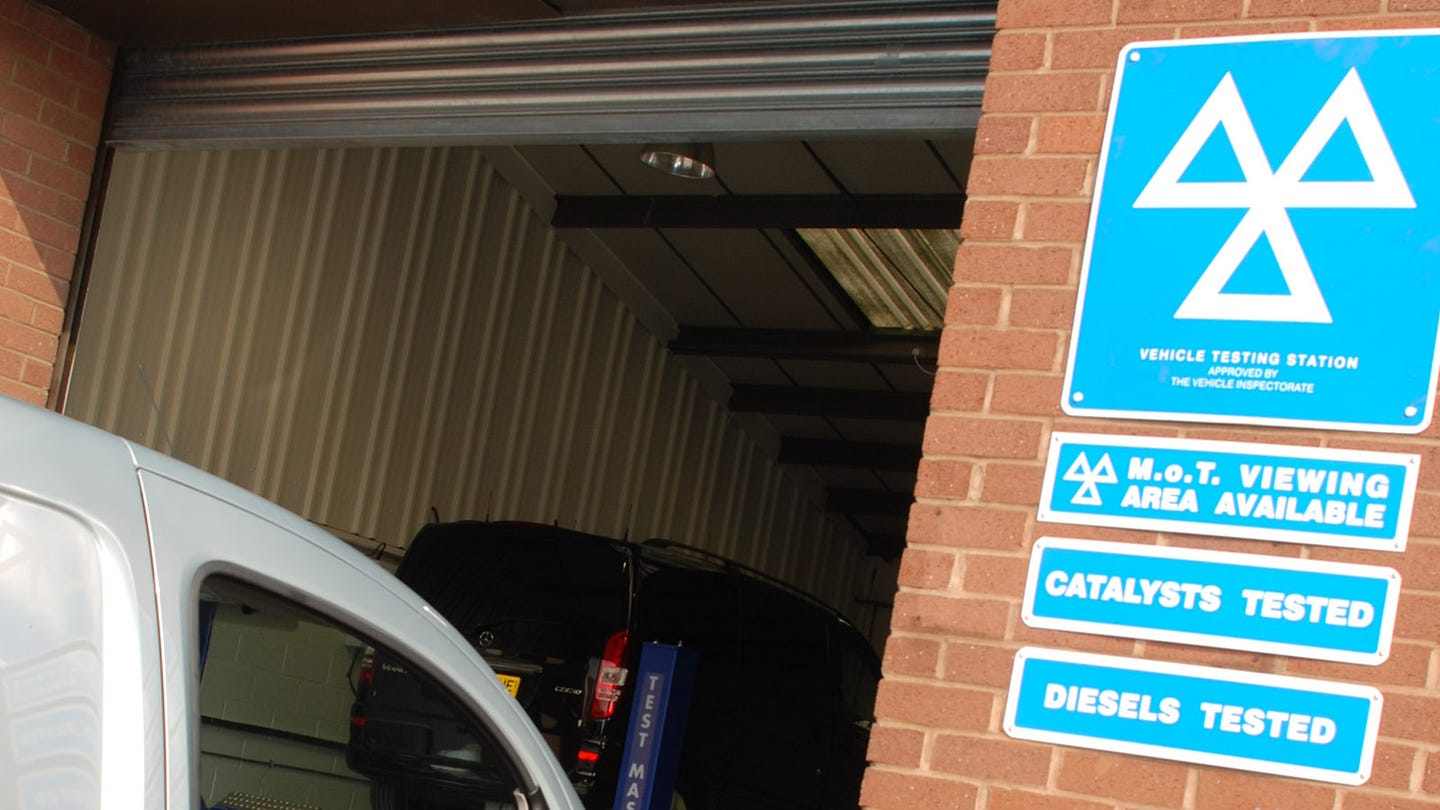

If your car is going through an MOT test, there are a few terms and phrases you'll come across.
This guide puts all the most important MOT terminology in one place, giving you the best chance of understanding your MOT test results.
For more information, read our full guide to MOT tests and our explainer on how to pass an MOT test.
Key MOT terminology
These are the most important terms to know for an MOT test:
- Pass – your car successfully passed its MOT test and can legally be driven on the road for another 12 months
- Fail – your car did not pass its MOT test. It has at least one defect serious enough to need fixing before it can legally be driven on the road
- Defect – a problem with a part on your car. If the defect is serious enough, your car will fail its MOT test
- Test date – the date your test was carried out. If your car passed, your MOT is valid starting from this date
- Expiry date – the date your MOT coverage runs out. You'll need to pass another MOT test if you want coverage after this date
What are the different defect classifications?
Defects or issues found during MOT tests are classified into four different categories:
- Dangerous defect – your car has a dangerous problem and you can't drive it until the problem is fixed and it passes another MOT test
- Major defect – your car has a major problem and you cannot pass an MOT test until the problem is fixed and the car is retested
- Minor defect – your car has a problem but it'll still pass an MOT test. You should still get the problem fixed to stop it becoming a bigger issue in the future
- Advisory – your car doesn't have a defect but some parts might be showing signs of wear. You should monitor the problem and be prepared to fix it if it gets worse
Learn more in our guide to MOT advisories.
What are the different MOT results?

Your car can have several different MOT statuses depending on whether it has an active MOT and the outcome of your particular test. These include:
- MOT pass – your car passed the MOT test and is considered safe to drive
- MOT pass with advisories – your car passed the test and has an active MOT for 12 months, but some advisory items have been found that might require your attention
- MOT pass with minor defects – your car passed the test and has an active MOT for 12 months, but at least one minor defect was recorded, which you should get fixed as soon as possible
- MOT fail – your car failed its MOT test due to a defect
- MOT fail with major defects – your car failed the MOT test for at least one major defect. If your car is still within its previous MOT period when tested, you can continue to drive it until the old MOT runs out. You'll need to have the defect fixed and the car retested before you can get a new MOT
- MOT fail with dangerous defects – your car failed the MOT test for at least one dangerous defect. You cannot legally drive the car on the road until the problem is fixed and the car passes a retest
- Refusal of an MOT certificate – a MOT test centre may refuse to test your car. Typical reasons for refusal are if the centre isn't authorised to test your vehicle type, or if the vehicle is too dangerous or dirty to test
- Expired MOT – your MOT expires 12 months after you pass the test. If you don't book your car in for another test once those 12 months pass, then your MOT will lapse and your coverage will expire
MOT forms and documentation explained
- VT20 – this is the certificate that confirms your car passed its MOT test
- VT30 – you get this document if your car fails its MOT. It confirms that the centre cannot give you a valid MOT certificate
- VT32 – this certificate confirms your car passed its MOT test. However, the tester has recorded at least one minor defect that you should get fixed as soon as possible
- MOT inspection checklist (VT29) – this is the official list of items that an MOT tester must inspect during an MOT test
- MOT history – your car's previous MOT test results are documented in its MOT history. Since 2005, this history has been digitally recorded and can be freely checked online through a government portal
- Test number – each individual MOT test carried out gets a unique identifying number for record keeping
- Mileage reading – your car's total mileage is recorded at each MOT test
Common MOT technical abbreviations
- MOT – Ministry of Transport. This is the government body in charge of MOT testing
- NS/OS – nearside and offside. This defines the two sides of the car in relation to the pavement. So, in the UK, the nearside is the car's left side and the offside is the car's right side
- NSF – nearside front. This indicates a part at the car's front-left corner
- OSF – offside front. This indicates a part at the car's front-right corner
- NSR – nearside rear. This indicates a part at the car's rear-left corner
- OSR – offside rear. This indicates a part at the car's rear-right corner
- CV boot – constant-velocity joint boot. Constant-velocity joints are the articulating, spinning linkages that transmit power from your engine to your wheels. The joint is greased and has a rubber 'boot' that holds the grease in place. This boot can perish or fail completely, leading to an advisory or a failed MOT
- ABS – anti-lock braking system. An automatic system that rapidly pulses your brakes when you press the pedal hard to stop them locking up. This helps you keep control of the car in an emergency
- DPF – diesel particulate filter. This is an exhaust filter for diesel cars that captures sooty emissions. Lots of short journeys can see this filter get clogged and lead to an MOT test failure. Learn more in our DPF guide
- EGR – exhaust-gas recirculation. This is a feature on petrol and diesel cars that lets a small amount of the exhaust back into the engine, which helps reduce emissions. If the valve responsible for EGR fails, this will lead to an MOT test failure
- ECU – electronic control unit or engine control unit. This is a common name for the electronic modules that control your car's various functions. Modern cars usually have several ECUs working together
- OBD – on-board diagnostics. This is a common connector found in all recent cars. It's used to read data from the car's on-board systems, including any error codes it might've recorded from its many sensors. Every car since 1994 has used the same OBD2 connector, usually found underneath the dashboard
Save thousands on your next car
If getting your car through its MOT test is getting harder and harder, it might be time to swap to something newer. Shop thousands of nearly new and used cars for sale at Motorpoint.