





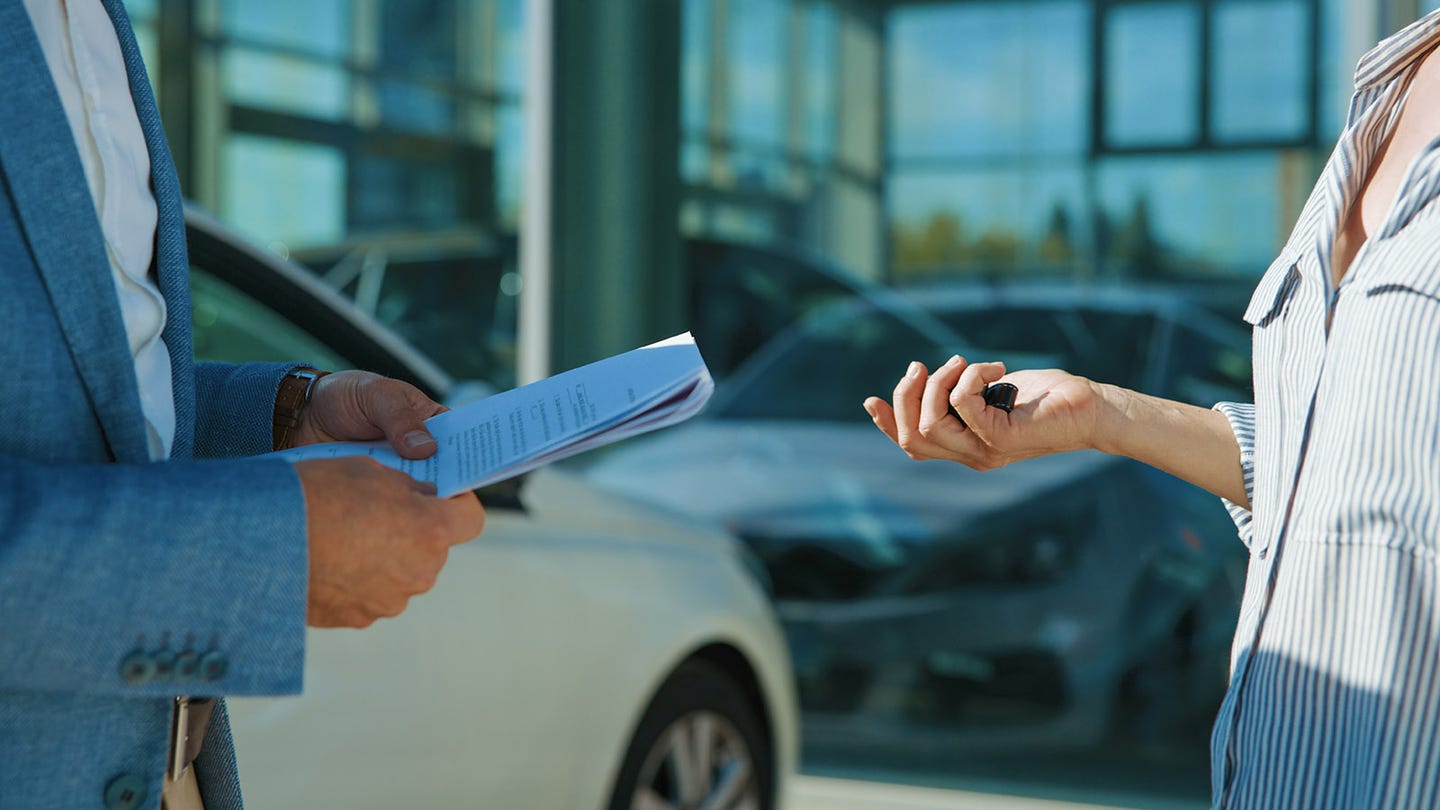
Part exchanging is when you buy a car from a retailer and sell your old car to them at the same time.
This is the easiest way to swap your current car for a new one since you don't have to faff around trying to sell your old car privately.
We'll talk you through the part-exchange process and explain everything you need to know.
How to part exchange a car

Part exchanging your car is simple:
- Choose the new car you want to replace your old car with
- Check the value of your old car – you can use tools like Motorpoint's car valuation calculator
- Let the dealer or car retailer know you'd like to part exchange your old car
- They'll give you a valuation for your old car, and knock that value off the price of your new car
- The car retailer will inspect your part-exchange vehicle to see that it fits your description
- Once the final part-exchange value is agreed, you can proceed with buying your new car
- The car retailer will take your old car to resell, while you drive away in your new car
How to part exchange a car on finance
If you bought your car on PCP finance or HP finance, you still have the option to part exchange it for a different model. However, the process is just a little more involved than part-exing a car you own outright.
Can I part exchange a vehicle that has outstanding finance?
Yes. The car retailer you're buying your new car from will settle any outstanding finance when you part exchange your financed car with them. Any positive or negative equity you've built up in your old car will be rolled into your new finance agreement.
Be aware that part exchanging a financed car before the end of your agreement may see you end up with negative equity. This is because the value of your old car when you come to sell it will be less than the amount remaining on your finance agreement. You're much less likely to encounter this problem if you arrange to part exchange your car at the end of your finance agreement.
How does part exchange work with PCP?
Part exchanging a PCP-financed car is easy. Simply settle on the new car you want to replace your old car with, then discuss the agreement with the car retailer. They'll settle your old PCP finance and bundle any equity – positive or negative – into your new finance agreement.
Can I part exchange a vehicle on HP?
Like PCP, any equity you have in your HP-financed car can be rolled into a new finance agreement. It's usually best to complete your HP agreement before part exchanging your car, as you'll be the old car's outright owner which makes the process simpler.
How much is my part exchange worth?

Car retailers usually have complex valuation tools available to them, backed by data from industry experts like CAP. This lets them query the database to get an accurate price for your specific make and model, as well as its specific spec, condition and mileage.
Most retailers will have a tool – like Motorpoint's sell my car tool – that gives you a rough idea of how much they'll pay for your car. This will ask for details like your registration number and the car's mileage, and may also give you the opportunity to describe the car's condition for a more accurate figure. The valuation will usually be guaranteed for a few days to give you time to think, but will eventually change in line with the market.
You'll only receive a final valuation for your car, however, once the retailer has had the opportunity to inspect it. They'll be checking for any cosmetic and mechanical issues that'll impact the car's price. Once they've taken any extra costs into account they'll present you with a final valuation, which you'll have the opportunity to accept or reject.
Pros and cons of part exchanging your vehicle
Pros of part exchanging:
- Easy – part exchanging is the most hassle-free way to swap your old car for a new one
- Quick – selling privately could take a long time but part exchanges take just a few hours
- More certainty – get a guaranteed price for your old car with no used-market uncertainty
Cons of part exchanging:
- Slightly less money – you might get a little more money if you sell your car privately
- Locked into one dealership – a part exchange means you're tied to an agreement with one dealer
- No wheeling and dealing – private sellers are free to negotiate prices with potential buyers
What documents do I need to part exchange a car?
The car retailer you're part exchanging your car with will have a specific list of documents they'll require from you. These usually include:
- V5C (log book)
- MOT certificate
- Service History (if available)
- Spare keys (if available)
Does my car need an MOT certificate to qualify for part exchange?
That depends on the individual car retailer you're part exchanging your car with. Some companies, like Motorpoint, will require at least three months remaining on the car's MOT to complete a part exchange. However, others might accept a car without a current MOT certificate.
Be aware that cars without an MOT are likely to be worth much less in a part exchange than a car with an active MOT certificate. It might be worth getting your car MOT tested and carrying out any repairs necessary before part exchanging it, as you may get back more in the car's value than you spent putting it right.
Can I part exchange without a V5C/log book for my car?
No. You will not be able to part exchange your vehicle without a V5C or log book. This document proves you are the car's legal registered keeper, giving you the exclusive right to sell or part exchange it.
If you've lost or can’t find your car's V5C document, it’s really easy to replace. Simply visit the DVLA's website and follow the instructions to get a replacement one sent out.
How does part exchange work at Motorpoint?
At Motorpoint, you can sell your old car directly to us or use it as a part exchange buying any car from us. Our online tools let you value your car and sell your car simply and easily.
This video explains how part-exchanges work at Motorpoint: