








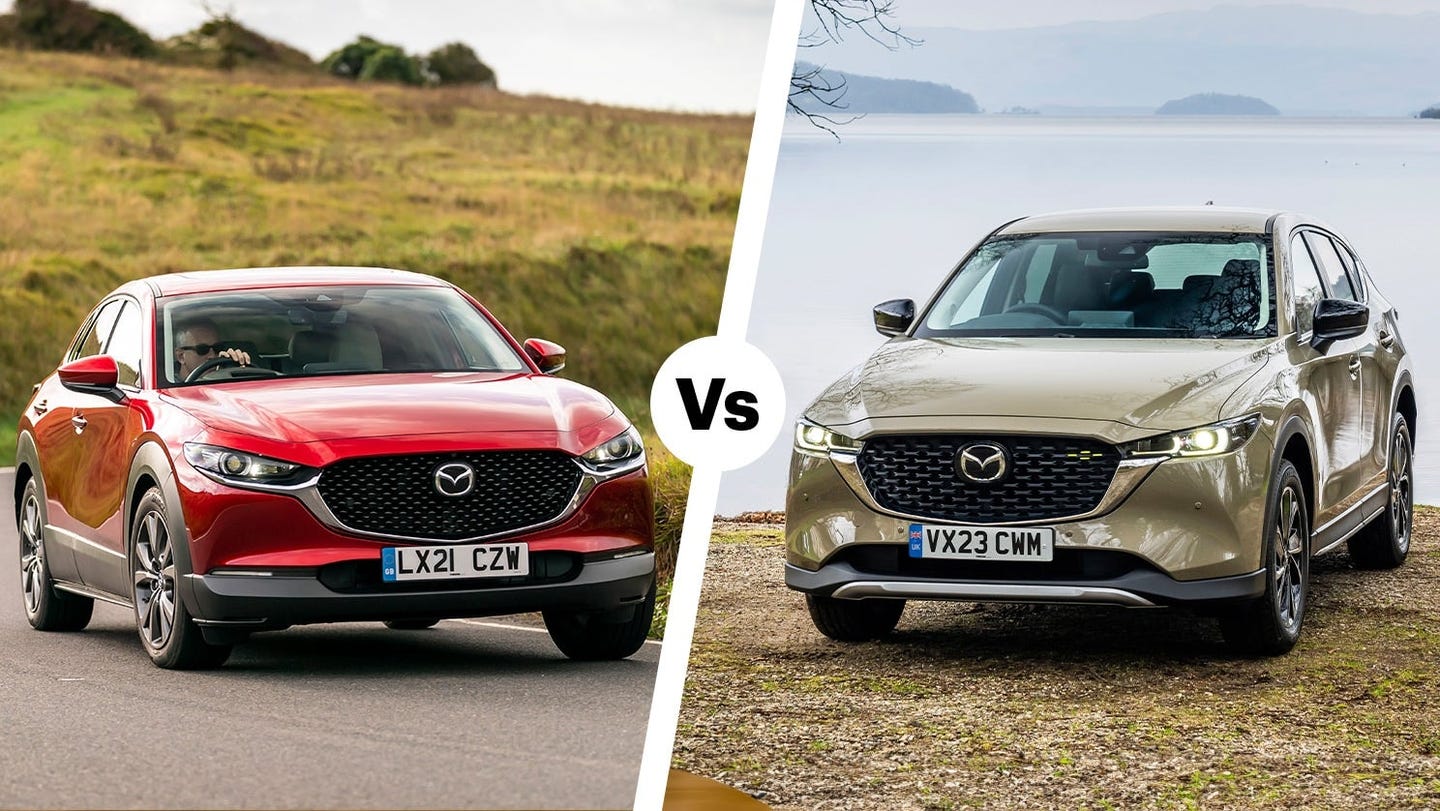

The Mazda CX-30 and CX-5 are ideal if you want something with eye-catching looks and enough space for the family.
Mazda’s SUV range offer the premium quality of a posh German car without the costs, and mark you out as someone with a great taste in cars. If you’re set on the Mazda flying 'M' logo, here’s how to pick between the CX-30 and CX-5.
Mazda CX-30 vs CX-5 compared
| Mazda CX-30 | Mazda CX-5 |
Pros:
| Pros:
|
Cons:
| Cons:
|
Styling
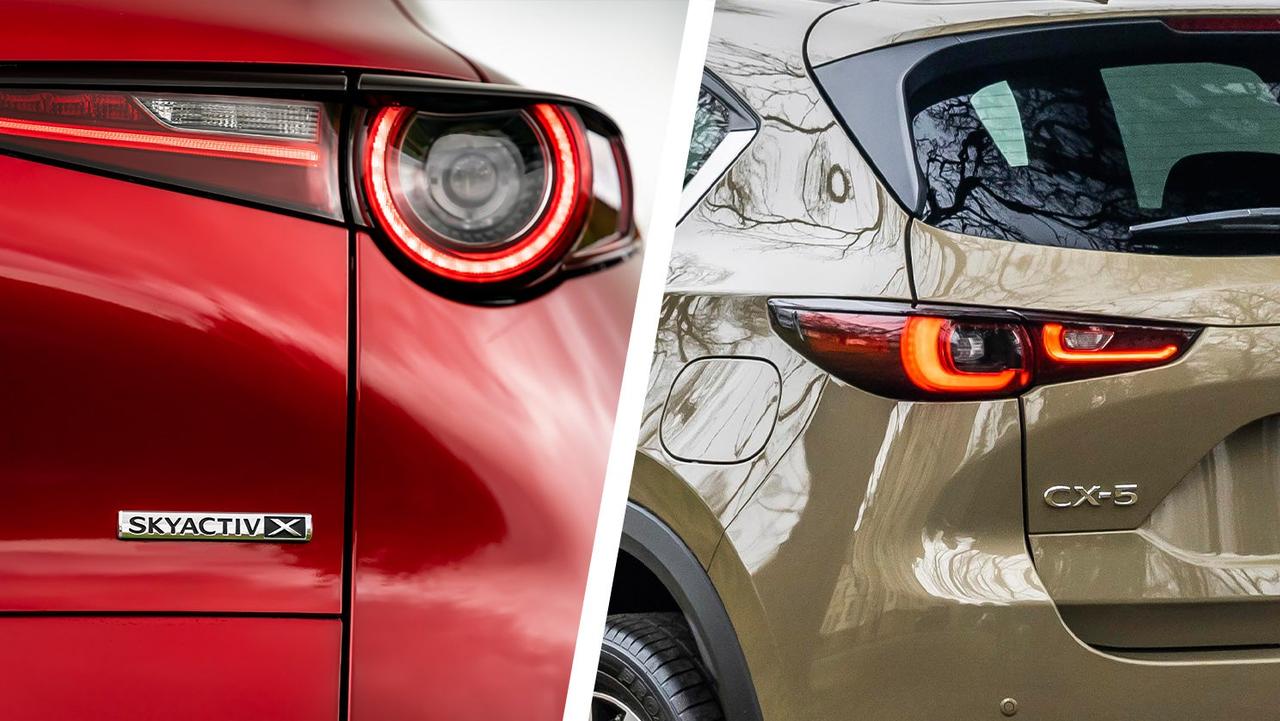
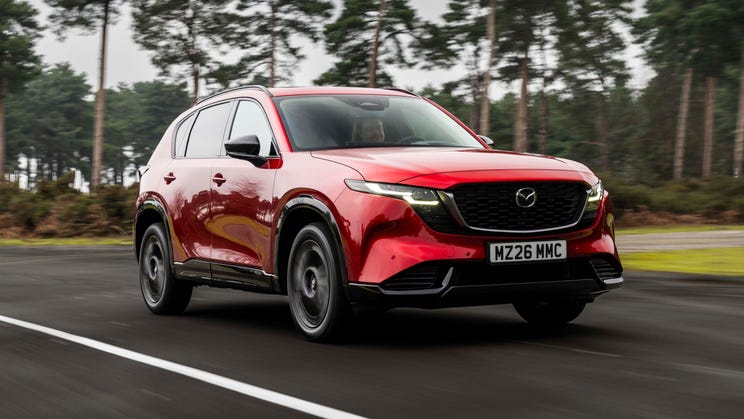
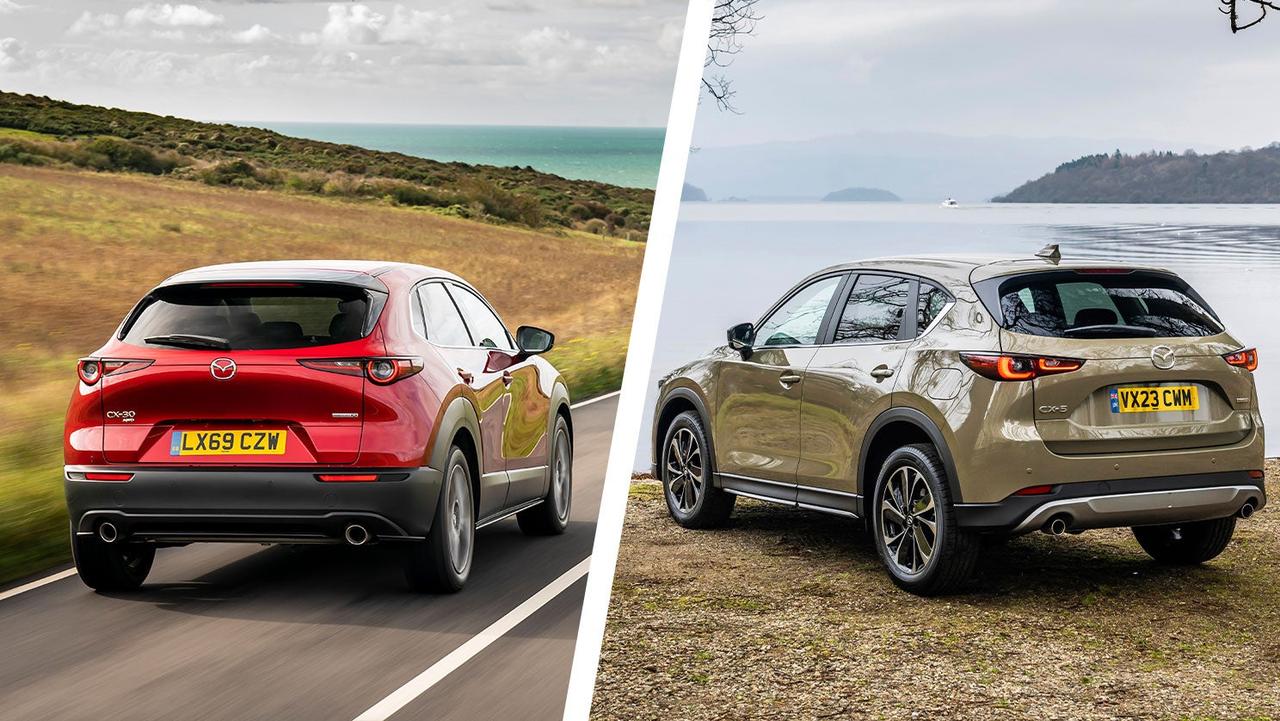
Chances are, you’ve alighted on Mazda because you like its styling. The ‘kodo’ design language is focused on fluidity in motion, with the surfacing looking a bit like glistening water in sunlight. Both the CX-30 and CX-5 stand out with slim, beady headlights and a wide grille.
The CX-30 looks a bit sleeker because it’s lower than the CX-5. Neither car gets chunky roof rails as standard, which reduces the visual weight of each car versus other SUVs.
In our eyes, lower-spec CX-30s and CX-5s are a little underwheeled, because the alloy wheels are two inches smaller than high-spec models. On the flip side, the smaller wheels slightly improve ride comfort.
Interior and technology
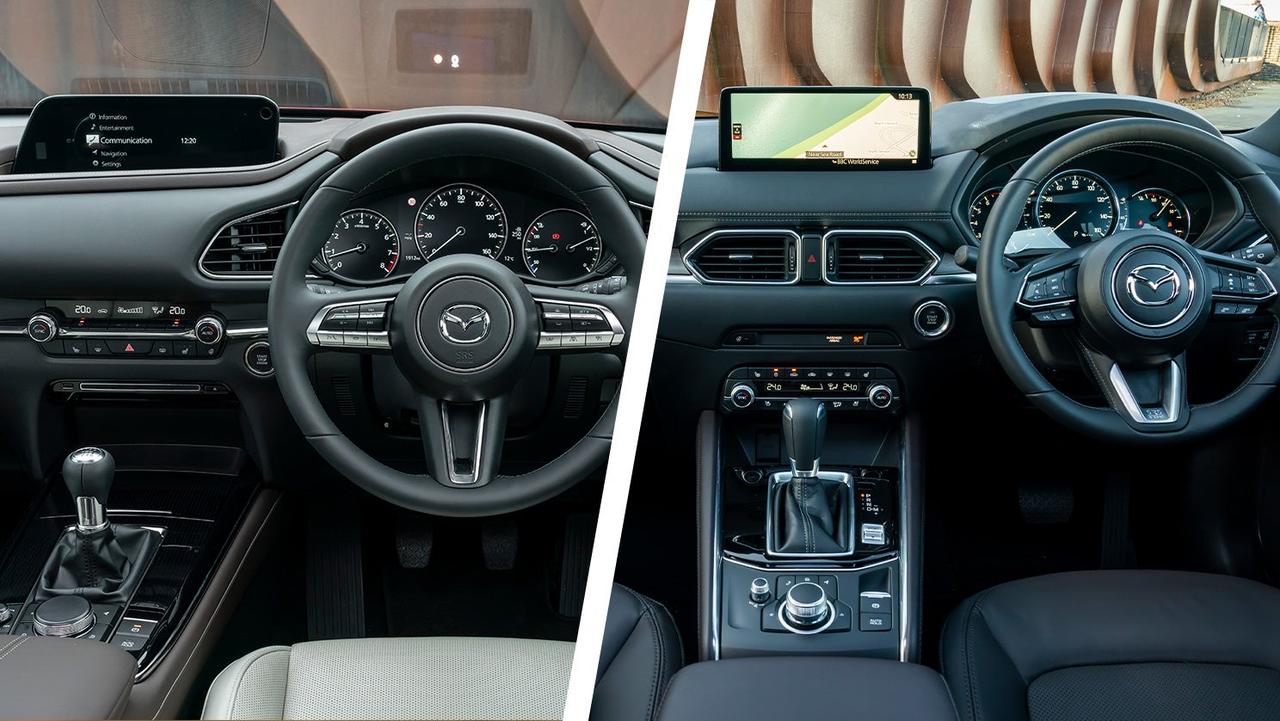
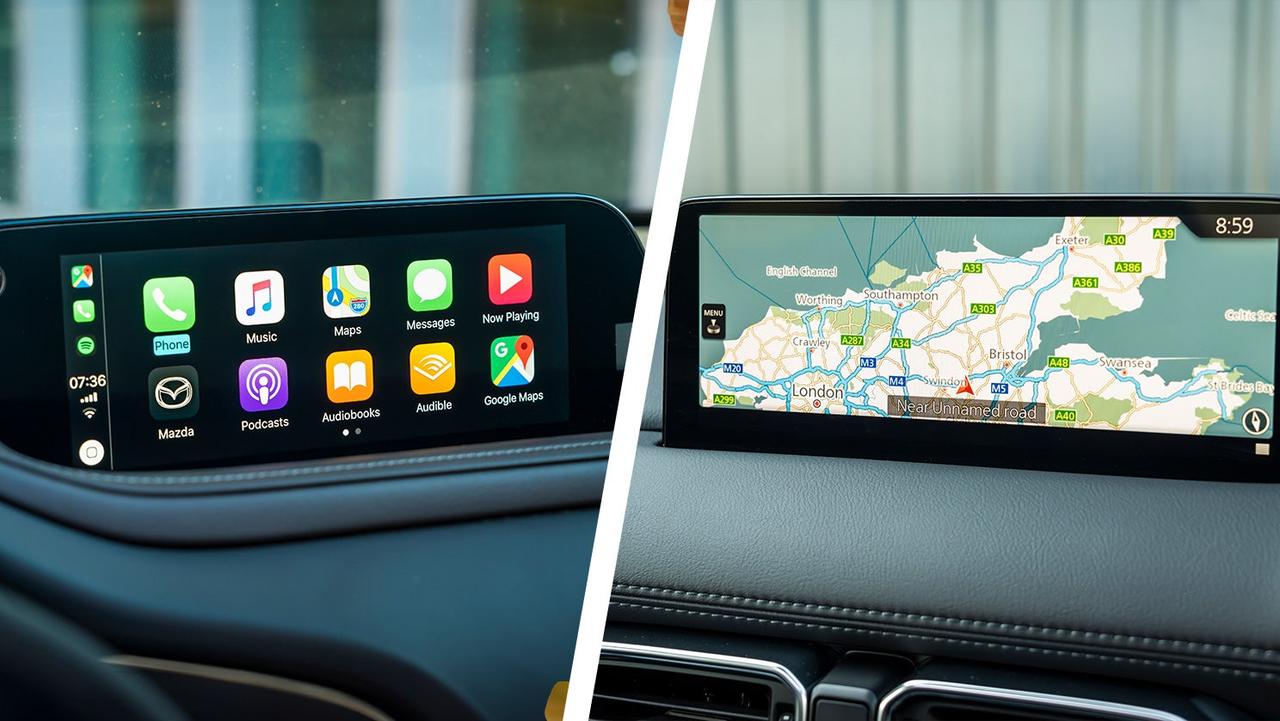
Mazda interiors are fantastic. They’re well built with nice materials, and the avoidance of a massive screen makes them feel timeless. The controls feel solid and intuitive, and the whole experience is refreshingly analogue compared to the screen-heavy nature of recent BMW and Mercedes models.
The CX-5 has a slightly bigger infotainment screen than the CX-30, so you may find it a little easier to see the information displayed in the CX-5 – especially as the CX-30’s screen looks like it’s almost hidden by the dashboard.
Dimensions and practicality
| Mazda CX-30 | Mazda CX-5 | |
| Length | 4,395mm | 4,575mm |
| Height | 1,540mm | 1,685mm |
| Width (exc mirrors) | 1,795mm | 1,845mm |
| Boot space (seats up) | 430 litres | 522 litres |
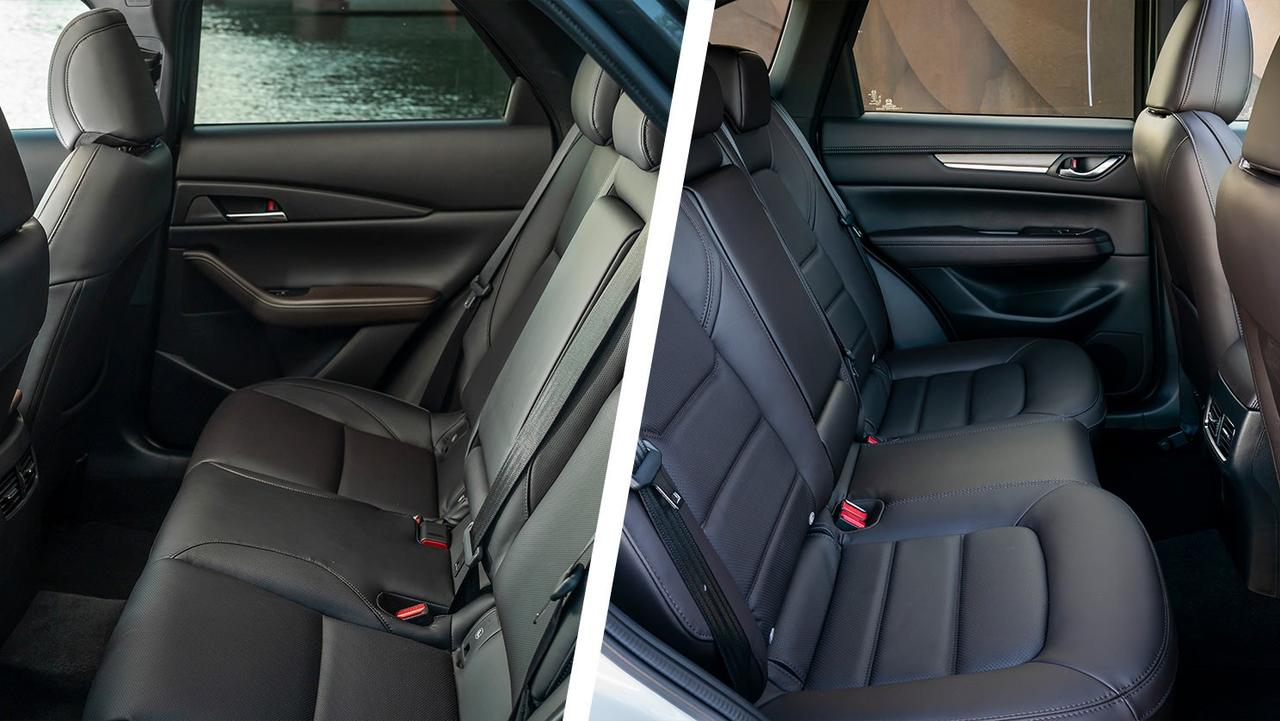
The CX-5 puts its extra size to good use, offering both more rear-seat space and more boot capacity than the CX-30.
If you’re a tall driver, the CX-30 doesn’t offer much legroom for rear-seat occupants, so the CX-5 will be better if this applies to you. The CX-5 also has a higher driving position than the CX-30, and its taller shape makes it easier to get in and out.
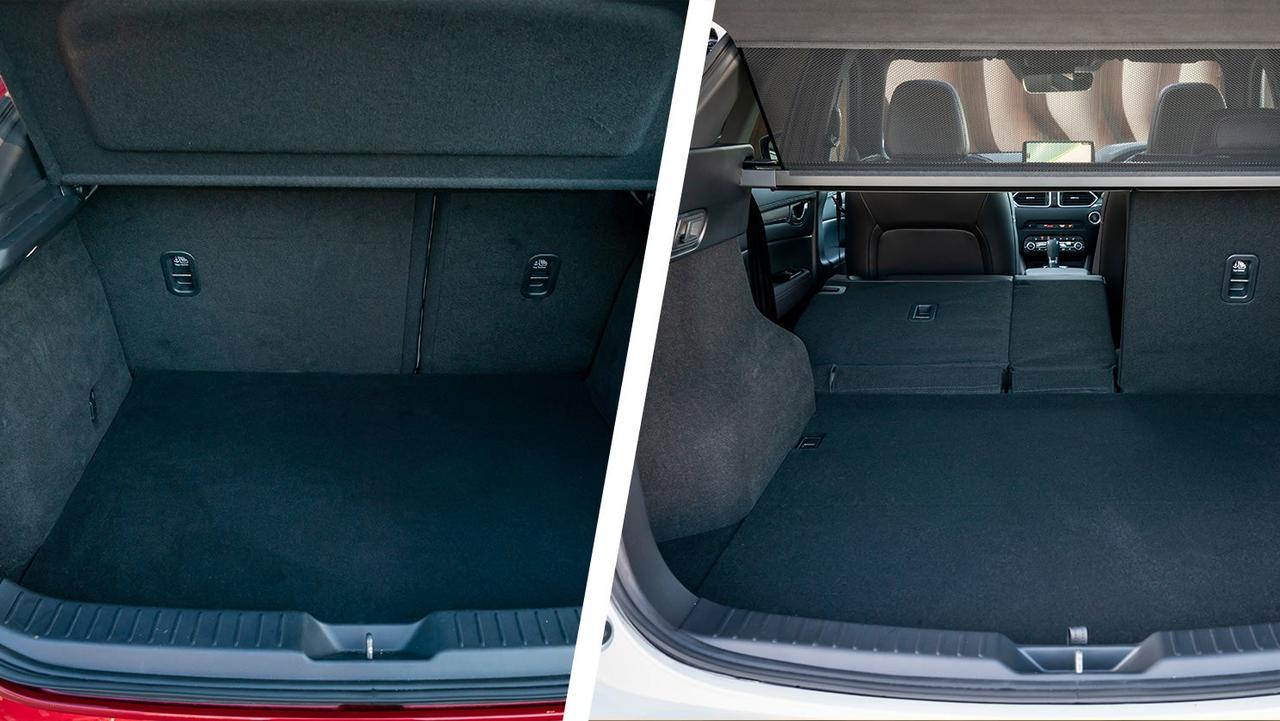
While the CX-30’s boot is good for a small-ish SUV, it’ll probably fall a bit short as the main family car. The CX-5 is much better at carrying large items like pushchairs, and there’s more room above the parcel shelf than in the CX-30, too. Additionally, the CX-5 gets features like levers to put the seats down from the boot, which you don’t get in the CX-30.
Engines
Mazda offers some very traditional-sounding engines, albeit backed up with seriously clever engineering. There’s still a diesel engine available in the outgoing CX-5 – a 2.2-litre unit that’s been used and evolved for more than a decade. It’s decently economical on long journeys, and it’s a good engine if you’re planning on towing, but this engine doesn’t like short journeys – like most modern diesels, repeated short journeys will clog up the DPF.
So, for most CX-5 buyers, we’d recommend the 2.0-litre petrol engine, even though it’s a bit underpowered in this context and not the most economical engine around. What it is is absolutely reliable, so you can look forward to many thousands of miles of hassle-free driving.
The CX-30 is purely petrol powered. The cheaper choice is a 2.0-litre engine with 122hp which, again, feels like it could do with more poke. In newer cars, this has been replaced by a 2.5-litre engine with 140hp.
If budget allows, check out the upgrade engine, which Mazda calls e-Skyactiv X. Mazda’s boffins have made it more powerful, with 186hp, but also more economical than the lower-powered engine. You can see close to 50mpg from this unusual supercharged engine.
And we know that everyone wants an automatic these days, but the manual gearbox in both cars is really, really lovely to use. If you’re drawn to Mazda because its cars are still quite good to drive, the manual gearbox completes the experience.
Value
The CX-30 is the cheaper of the two, often by quite some margin. That means you can get a newer or higher-spec CX-30 for the same money as an older or less-well-equipped CX-5.
For the prices, both cars have lots of standard equipment. The CX-30, for example, comes with adaptive cruise control, a reversing camera, wireless phone connectivity and LED headlights, and you don’t have to ascend far up the range to get heated seats, wireless phone charging and keyless entry.
Which is best?
If you need the extra space or the higher towing capacity, the CX-5 is the better choice. However, if you don’t often take passengers along for the ride, the CX-30 is likely to be spacious enough.
The CX-30 is the cheaper of the two and it’s both faster and more economical than the CX-5 – especially if you pick the more powerful engine.
Mazda CX-30 video review
Mazda CX-5 video review
Made up your mind? Shop used Mazda CX-30 cars and used Mazda CX-5 cars for sale at Motorpoint. If you need more information on these cars, read our Mazda CX-30 review and Mazda CX-5 review.
.jpg&w=744&q=75)