







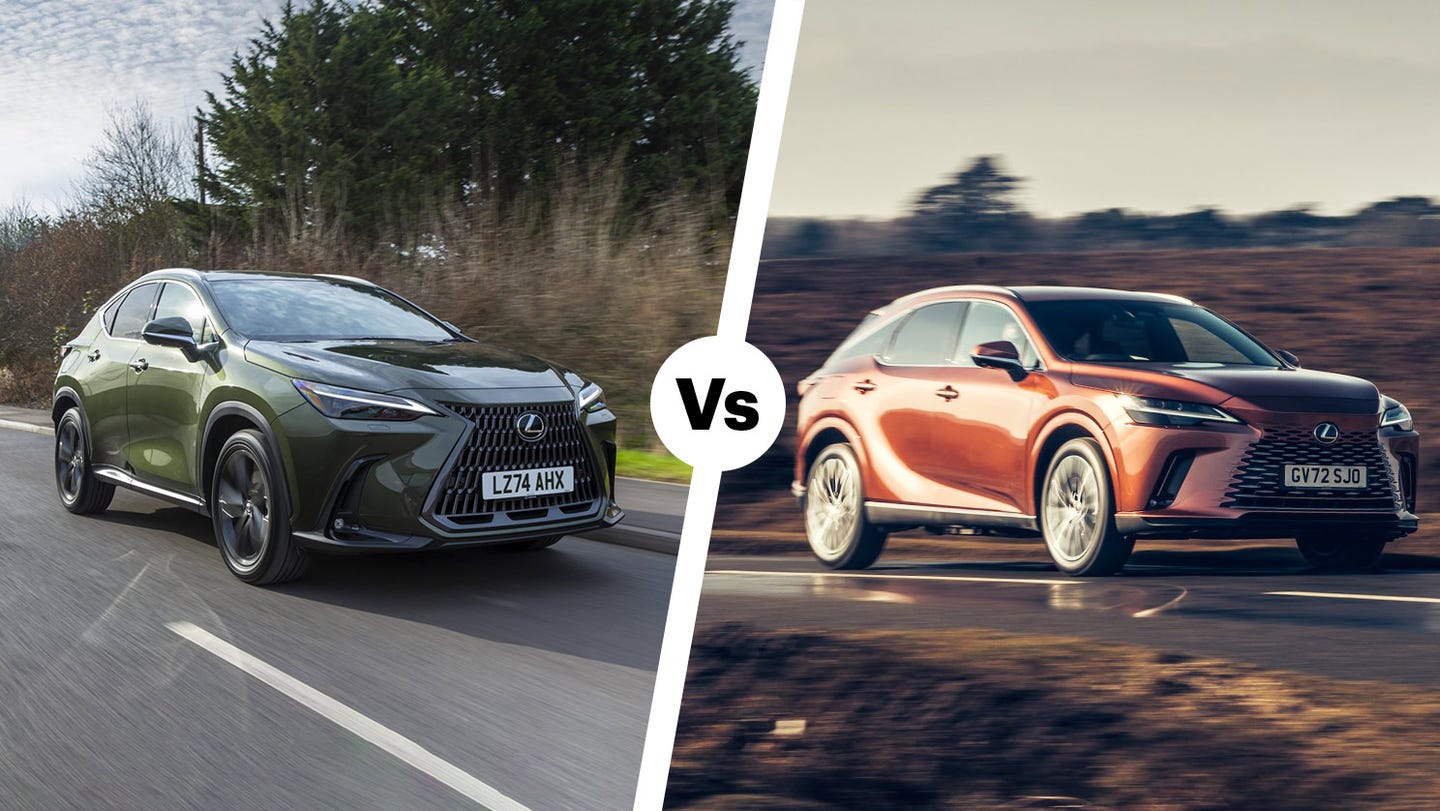

Lexus' lineup is full of reliable, efficient models.
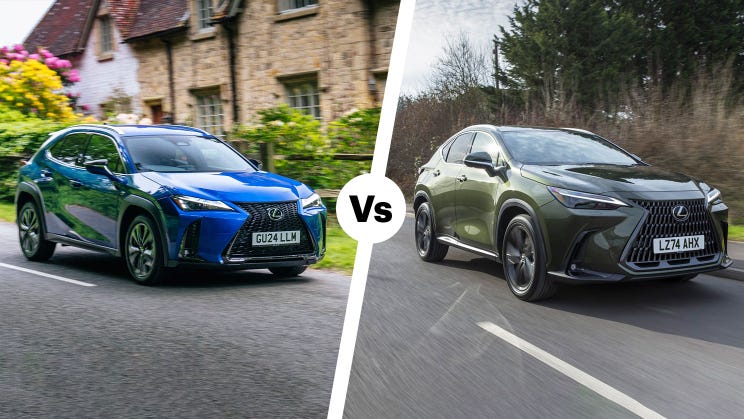
If it's a practical family SUV you're after, Lexus has two spacious choices – the NX and the RX – both five-seat, two-row family SUVs. The smaller NX is pitched against cars like the BMW X3 and Audi Q5, while the RX faces off against luxury models like the BMW X5 and Audi Q7.
We'll pit the NX and RX head-to-head so you can choose the one that suits you best. When you're done, check out huge savings on nearly new and used Lexus cars at Motorpoint.
Lexus NX vs RX compared
| Lexus NX | Lexus RX |
Pros:
| Pros:
|
Cons:
| Cons:
|
Styling and design
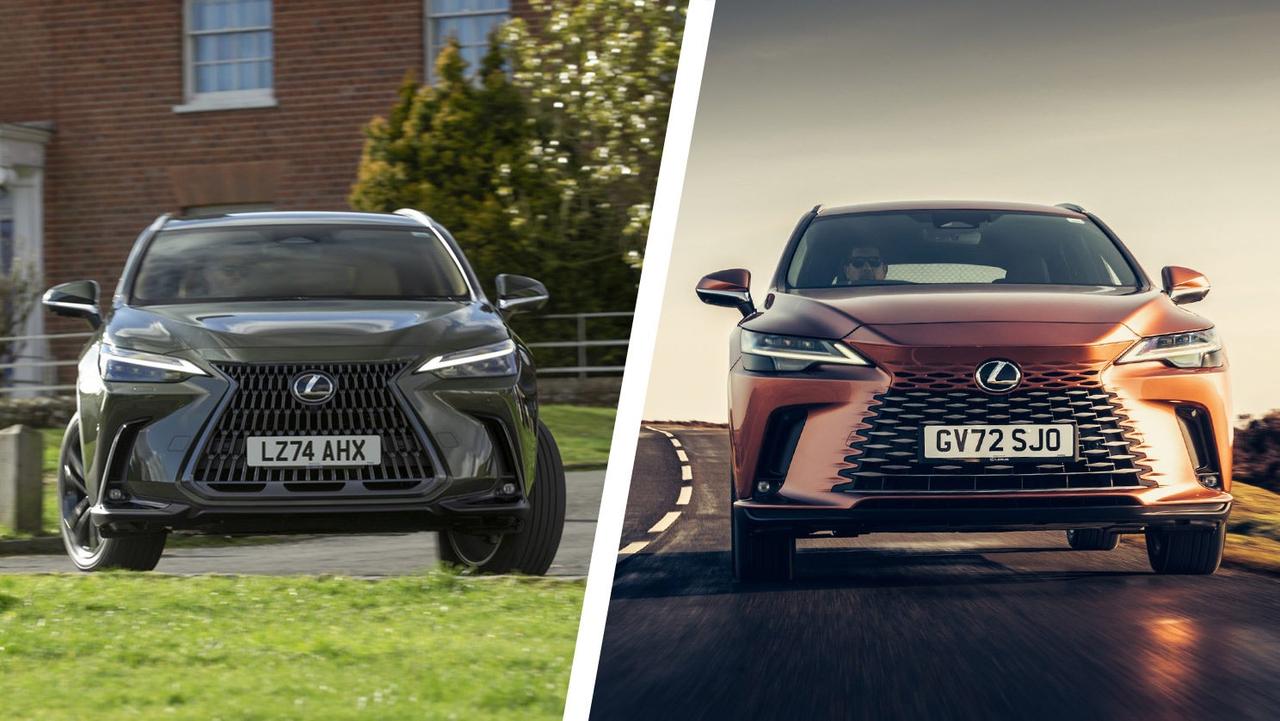
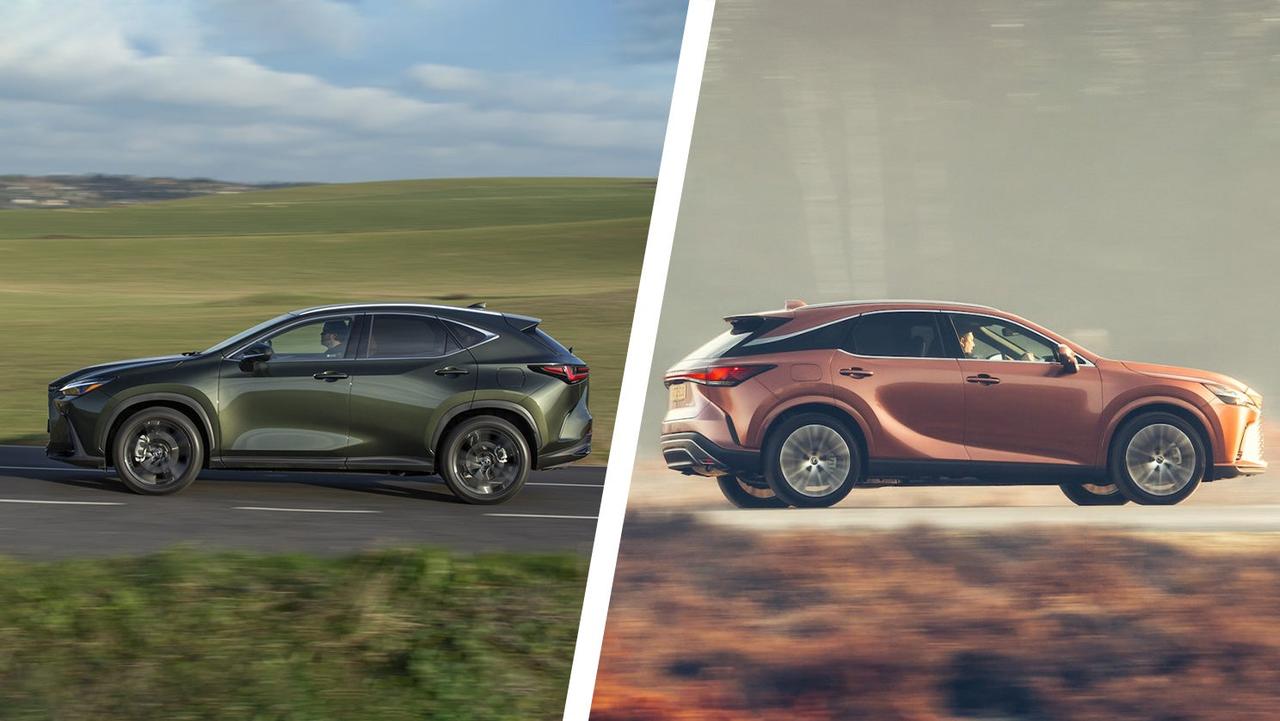
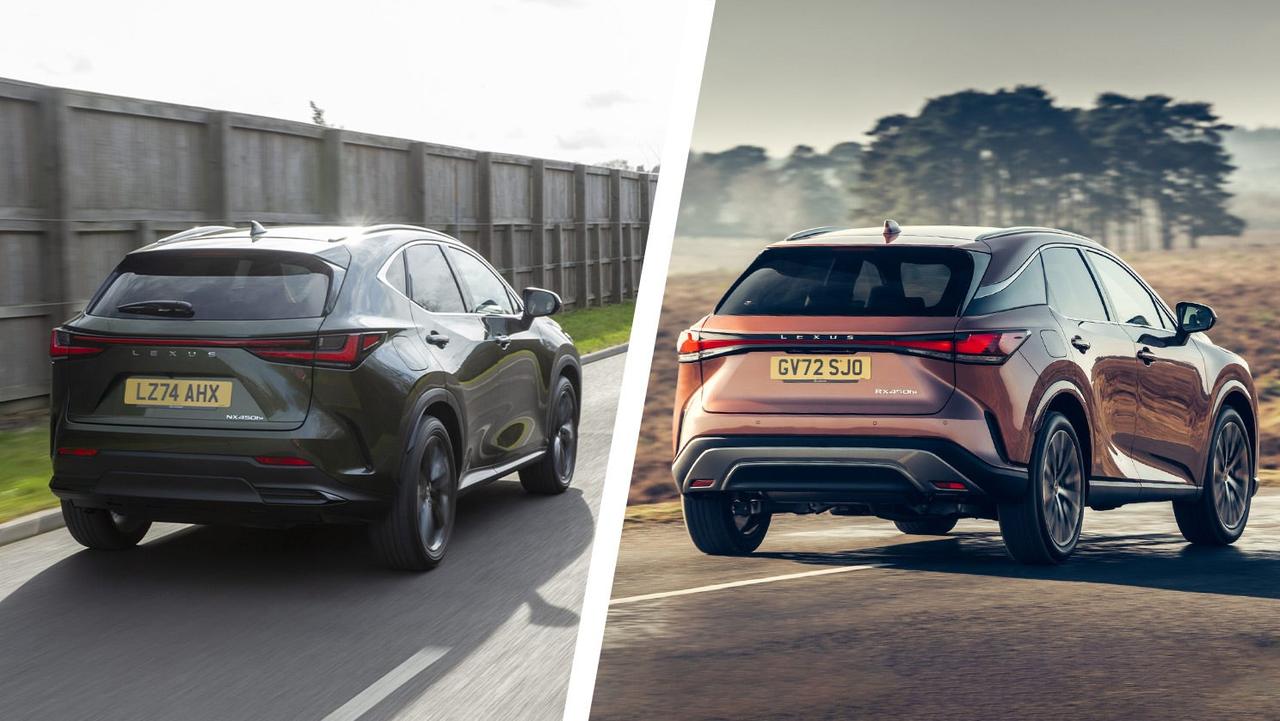
There's a fairly obvious family resemblance between the NX and RX. At the front, there's a prominent line at the bonnet's leading edge, with a big front trapezoidal grille cascading down beneath it. On either side, there are angry, pointed headlights and gentle sculpting down the car's flanks. The brake lights are similarly pointy and both cars feature an oh-so-fashionable rear light bar connecting the light units together.
The NX is the more understated car. Its slightly smaller dimensions give it a less imposing presence, and the graceful curve to its roofline puts us in mind of an oversized hatchback rather than a chunky off-roader. This is backed up by the fact Lexus has resisted the temptation to festoon the NX's bodywork with plastic cladding and roof rails, unlike some family SUVs that like to cosplay as proper 4x4s.
Since the RX is noticeably larger and taller, it naturally makes a more dramatic entrance wherever it goes. A hallmark on recent RX models is the blacked-out panel behind the side windows that gives the impression of a 'floating' roofline, as well as highlighting the car's extra length. The most recent model has a rather 'snouty' bonnet that protrudes over the front grille that we're not entirely sold on.
Interior and practicality
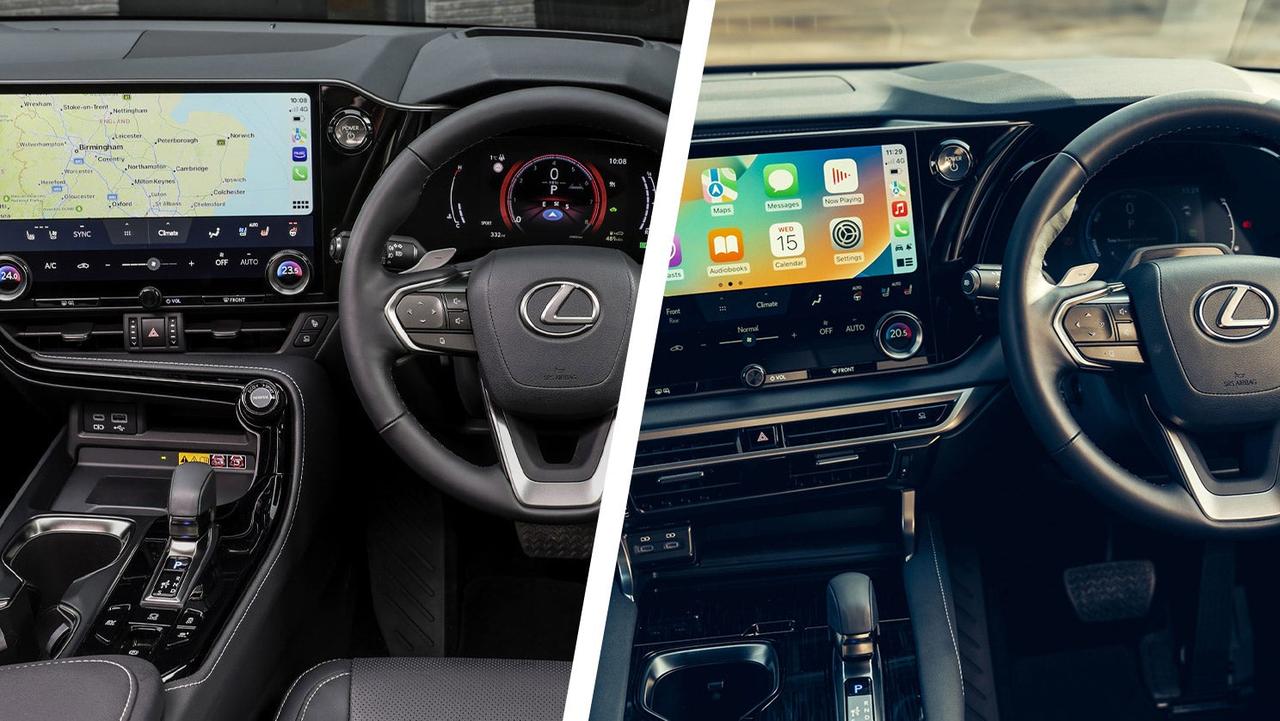
Again, these cars share several details in their interiors. Both have broadly the same shape steering wheel that sits ahead of digital driver's dials. We've seen this binnacle layout in other Lexus models and it's not the best, with fussy-yet-dated graphics that make it hard to pick out the info you want at a glance. Both cars also feature gloss-black panels that've sprouted from either side of the binnacle, with the left panel incorporating a large touchscreen infotainment system.
That infotainment setup is much better than the digital dials it sits alongside. Lexus has cleaned up its infotainment software, with much more judicious use of colours, icons and on-screen controls. As a result, finding the function you want and making adjustments is easy, even if you're on the move. Neat details include the physical climate control knobs that are bonded to the screen, with a digital temperature readout nestled within them. We also appreciate the physical volume and windscreen defogger controls beneath the screen.
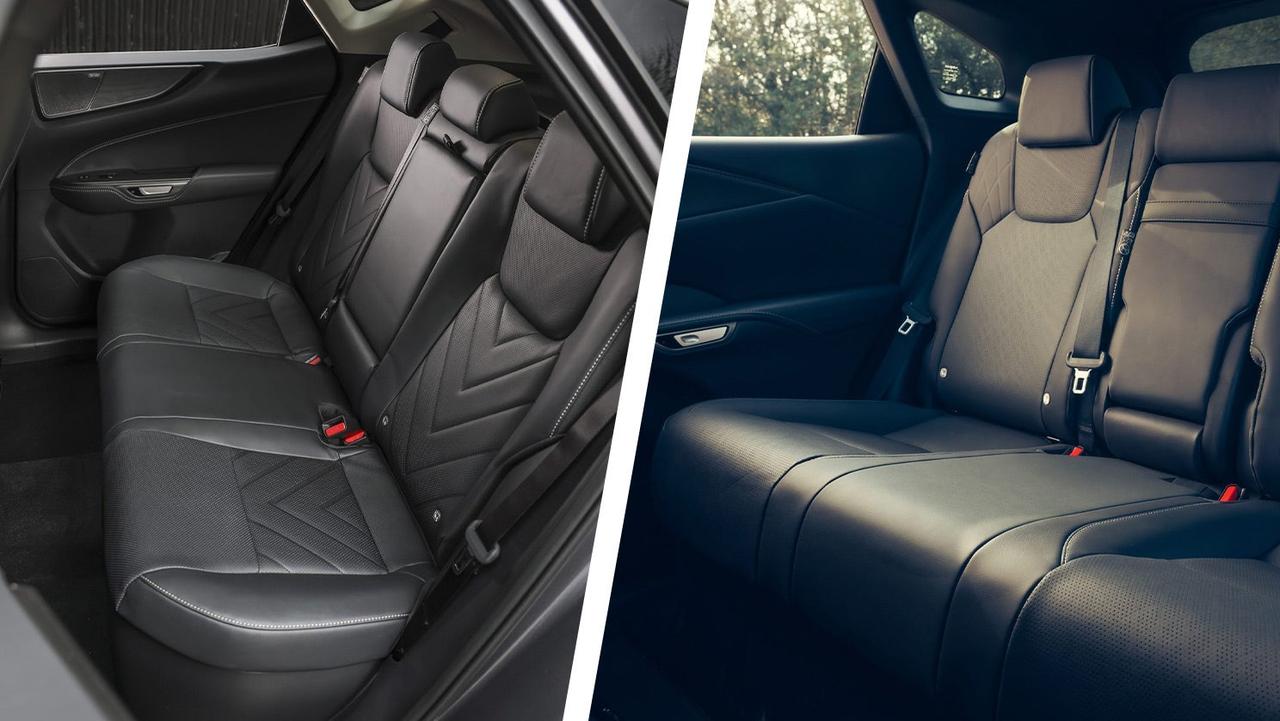
The RX elevates the experience beyond the NX, however. It has more intricate surfacing and styling details, plus a selection of plush upholstery and trim options that really ramp up the luxury factor. Most importantly, however, is the extra rear-seat space the RX affords passengers, giving them room to stretch out and luxuriate. You won't struggle to get adults or child seats in the back of the NX, but room is merely acceptable rather than ample.
You can see the differences in these cars' priorities in their cargo areas. Despite being smaller, the NX actually has a larger boot measuring 520 litres, which should be plenty for most buyers. The bulkier RX comes up a little smaller at 463 litres. That's still plenty for most people but shows that the bigger car is much more focused on rear-seat space than all-round capacity.
Size and dimensions
| Lexus NX | Lexus RX | |
| Length | 4,660mm | 4,890mm (+230mm) |
| Width (excl. mirrors) | 1,865mm | 1,920mm (+55mm) |
| Height | 1,670mm | 1,695mm (+25mm) |
| Boot space | 520 litres | 463 litres (-57 litres) |
The RX is bigger than the NX in every measurable dimension other than boot space. Considering the NX is already a reasonably large car by UK standards, the RX feels very bulky by comparison. Thankfully, both cars come with a full suite of parking aids to make it easier to squeeze into tight spaces.
Engines and performance
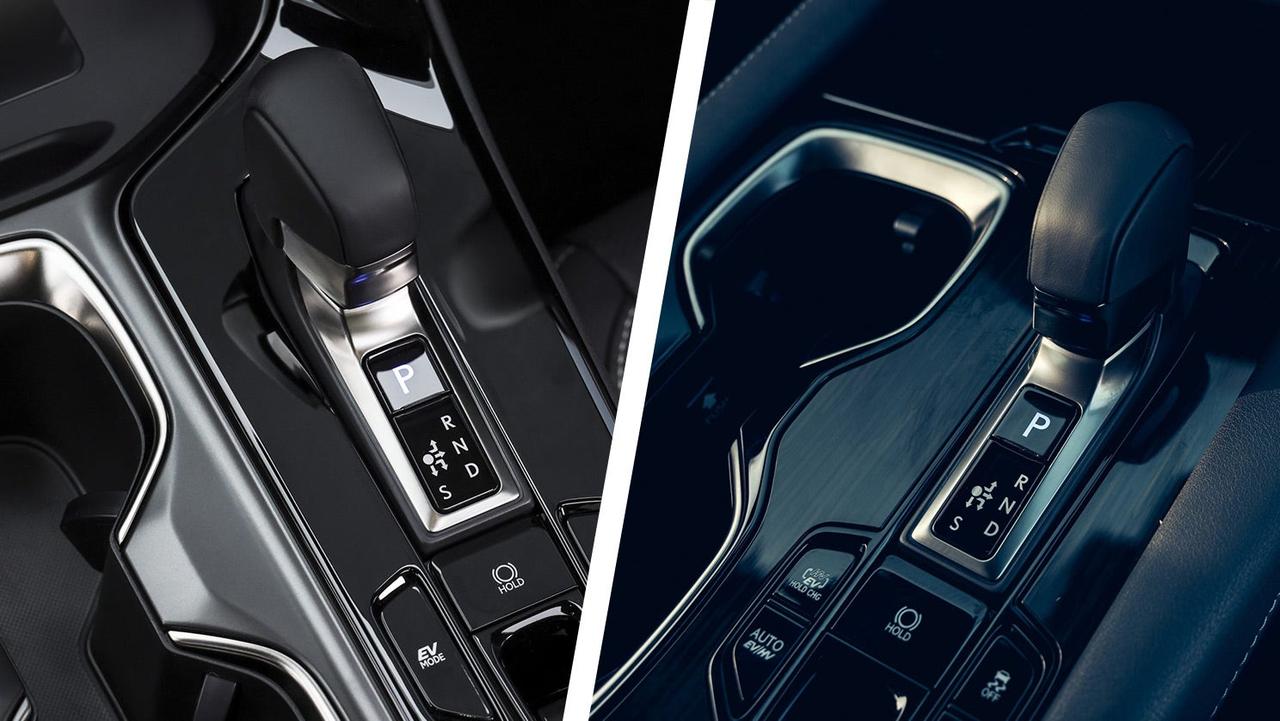
Since these two cars hail from parent company Toyota, all the engine choices are hybrid to some extent. The NX has a choice of one self-charging hybrid and one plug-in hybrid, while the RX has two self-charging hybrid options plus a single PHEV version.
Entry-level engines are roughly the same for both cars. Badged 350h, this setup pairs a 2.5-litre petrol engine with a hybrid setup, plus an extra rear-axle motor giving the car all-wheel drive. In the NX, it makes 197hp while the bigger RX gets 206hp. That might not sound like an abundance of power for these bulky SUVs but it's more than enough to get them going effortlessly mainly thanks to the low-down shove of the hybrid system. We expect the NX will return a little over 40mpg while the RX will be a little under in the real world.
Next up are the 450h+ models – the '+' denoting that these are plug-in hybrids. This features the same 2.5-litre petrol engine as before, but with a bigger hybrid battery and more powerful electric motors for a total of 292hp. The substantial power boost means the engine does even less of the work when driving around, but average economy is only in the 80mpg range even if you keep the battery topped up. Rival PHEV SUVs score better on-paper mpg figures.
Exclusive to the RX is the 500h option. This is a self-charging hybrid like the 350h engine, but the 2.5-litre petrol engine now features a turbocharger for much more muscle. Total system power now stands at 371hp, which is enough to make light work of the RX's hefty kerb weight, although prices are steep for this range-topping option.
Driving
Lexus as a brand doesn't have the sporting reputation of companies like BMW, and we think many luxury SUV buyers might actually prefer this approach. Ride quality in both cars is great, with lots of isolation from noises around you as well as any grumbles from under the bonnet. The controls are light and accurate too, so you're rarely guessing how much steering or pedal input you need.
As the smaller car, the NX should feel a little more athletic. However, in practice it never really achieves this brief. The sensation through the controls is too remote and there's far too much body roll to ever let the car feel truly sporty. If you want something this size that handles like a smaller car, check out the BMW X3 or the pricey Porsche Macan.
Like the NX, the RX is best when driven sedately as any kind of hooliganism will send the body wobbling over its comfy suspension setup. There's a little more grace to the RX as it travels down the road, however, with even more isolation from bumps and noise, and a reassuring heft from its larger body. It's also quite quick if you can stretch to the 500h version, which whisks you up to high speeds with barely any strain from the engine.
Value and reliability
There's a clear winner for value here. The NX with the 350h engine and entry-level Urban trim costs around £47,000 or nearly £50,000 for the Premium trim. You can't get Urban trim on the RX, so Premium models start from £64,000 – £14,000 more than the same trim on an NX and £17,000 more than an entry-level NX.
That's a substantial price difference and will probably be the deciding factor for most drivers. You can somewhat soften the blow of the RX's extra cost by shopping nearly new or used examples. Here, you'll spot that the gap between the two cars starts to diminish, bringing the larger RX a little closer to the NX's range.
Reliability for both of these cars should be stellar. Lexus and parent company Toyota have some of the best reputations in the industry for durability, and regularly top reliability surveys. Plus, both of these cars use proven mechanicals that power millions of cars already on the road. For extra peace of mind, all versions come with Lexus' 10-year service-activated warranty, which automatically transfers to each subsequent owner as long as the terms are upheld.
Which is best?
Both of these cars deliver the 'Lexus' experience but at quite different price points. The NX is more affordable but still feels like a premium product from behind the wheel. And, considering it offers plenty of room for the family, few buyers will find they need to upgrade to the RX.
That said, the RX does still feel like an upgrade over the NX. It gives passengers space to properly stretch out and goes down the road with a little extra grace. If you can stretch to the RX, you'll probably appreciate the little touches that help it feel so luxurious, but few drivers will feel shortchanged if they end up with an NX instead.
Big savings on luxurious Lexus cars
Browse nearly new and used Lexus cars for sale at Motorpoint. For more tempting choices, read our list of the best hybrid SUVs on sale.