










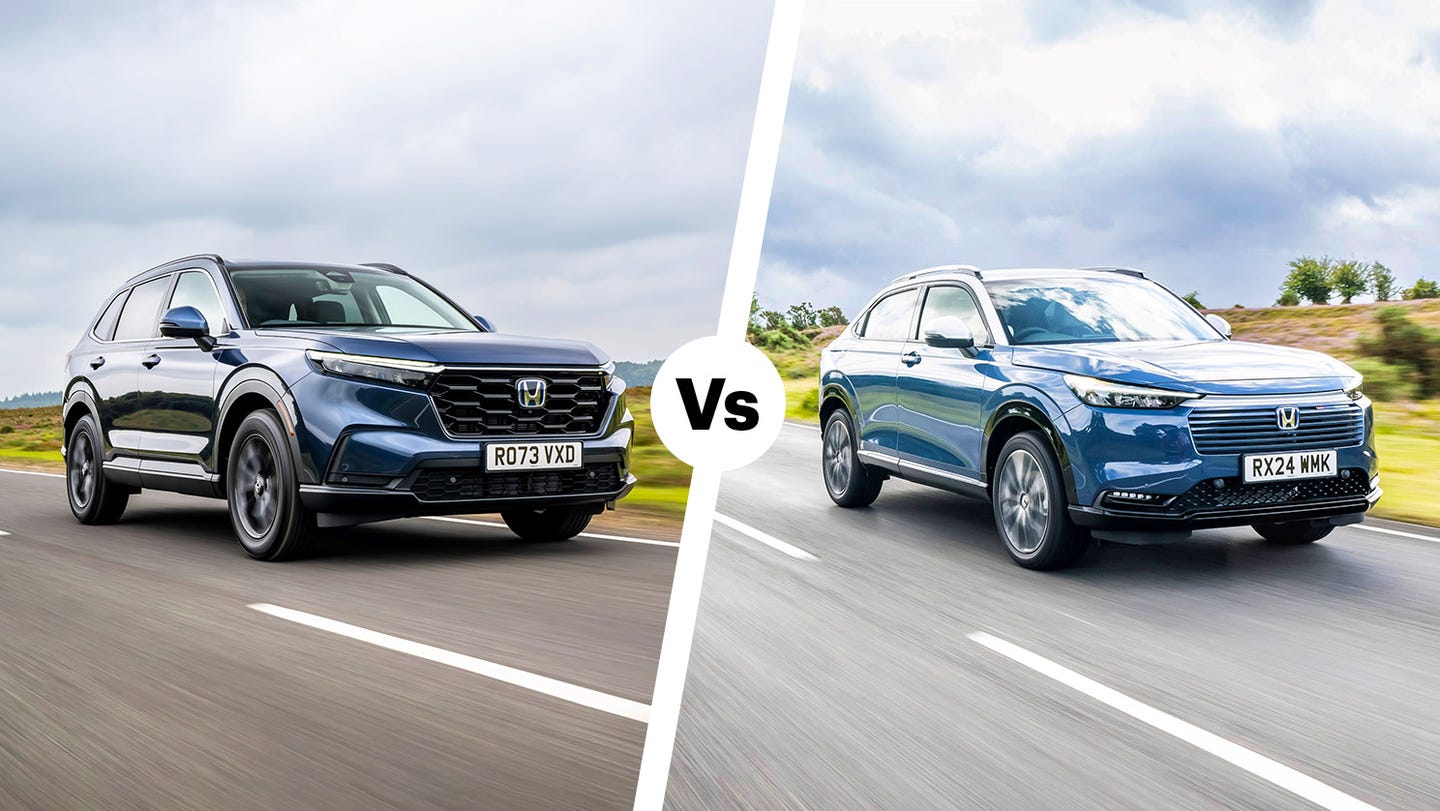

Just one letter separates the Honda CR-V and HR-V but these SUVs are quite different.
The CR-V is a large family hauler with tonnes of passenger and cargo space, while the HR-V is a compact crossover that feels more at home on tight city streets.
So, is the bigger car worth the substantial price premium? We'll compare them here to find out. Don't forget to check out how much you could save on used Honda CR-V cars and used Honda HR-V cars.
Honda CR-V vs HR-V compared
| Honda CR-V | Honda HR-V |
Pros:
| Pros:
|
Cons:
| Cons:
|
Styling and design
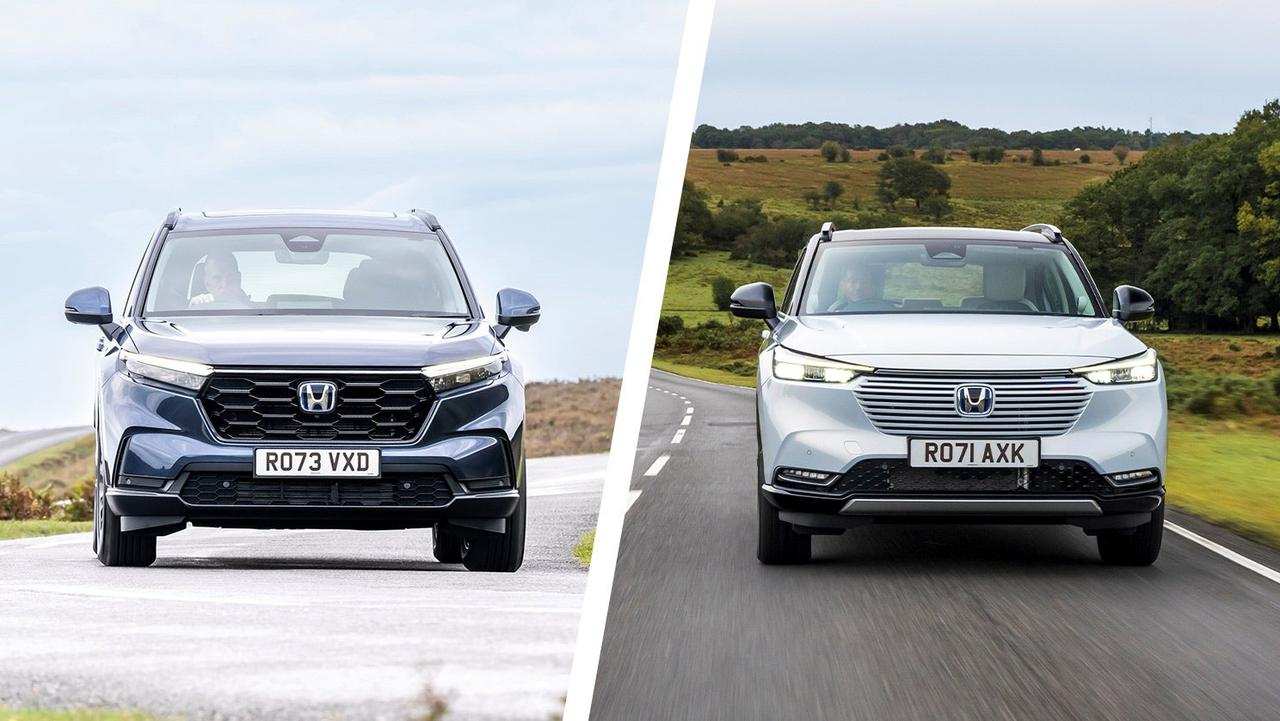
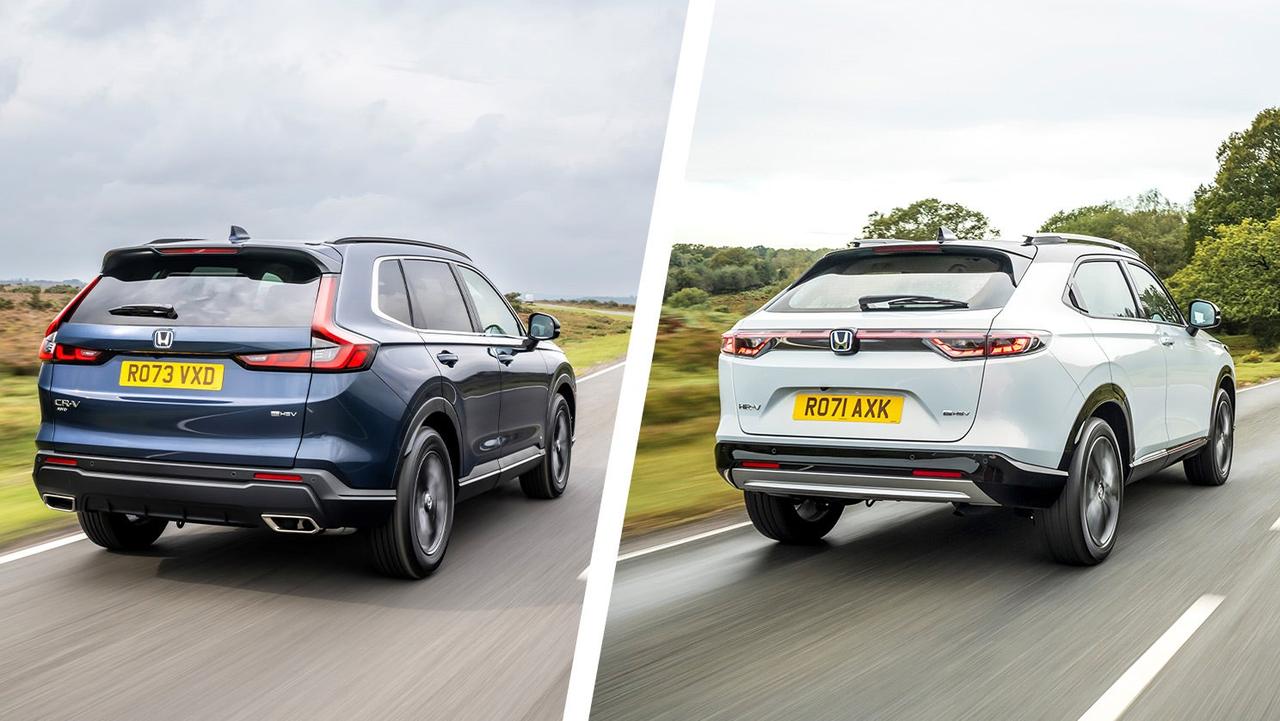
Hondas had been getting alarmingly angular before the latest CR-V and HR-V launched. These SUVs feature much cleaner, more focused styling with clear distinctions between features like the headlights and front grilles. You'll spot a single, unbroken character line that runs the entire length of either car beneath the side windows, which gives both models a more graceful, elongated profile.
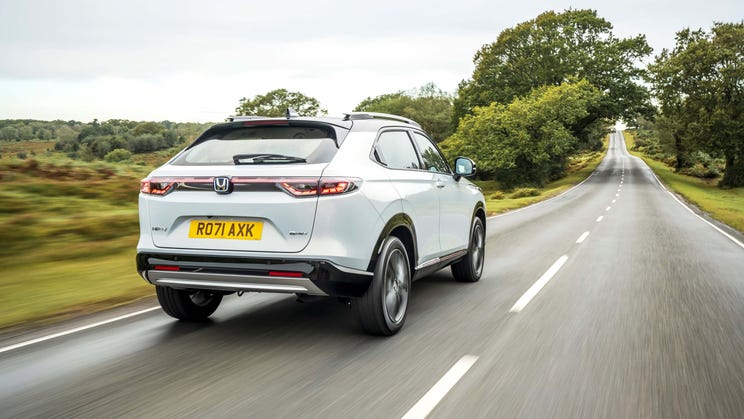
As for differences, the main one is the CR-V's extra size in all dimensions, which translates to a more imposing presence as it goes down the road. You might also notice that the CR-V has an extra rear quarterlight behind the rear side window, and a more squared-off joint between the roof and the bootlid. Conversely, the HR-V has a dramatically sloped rear window and brake lights connected by a rear light bar, versus the CR-V's more conventional units.
Interior and practicality
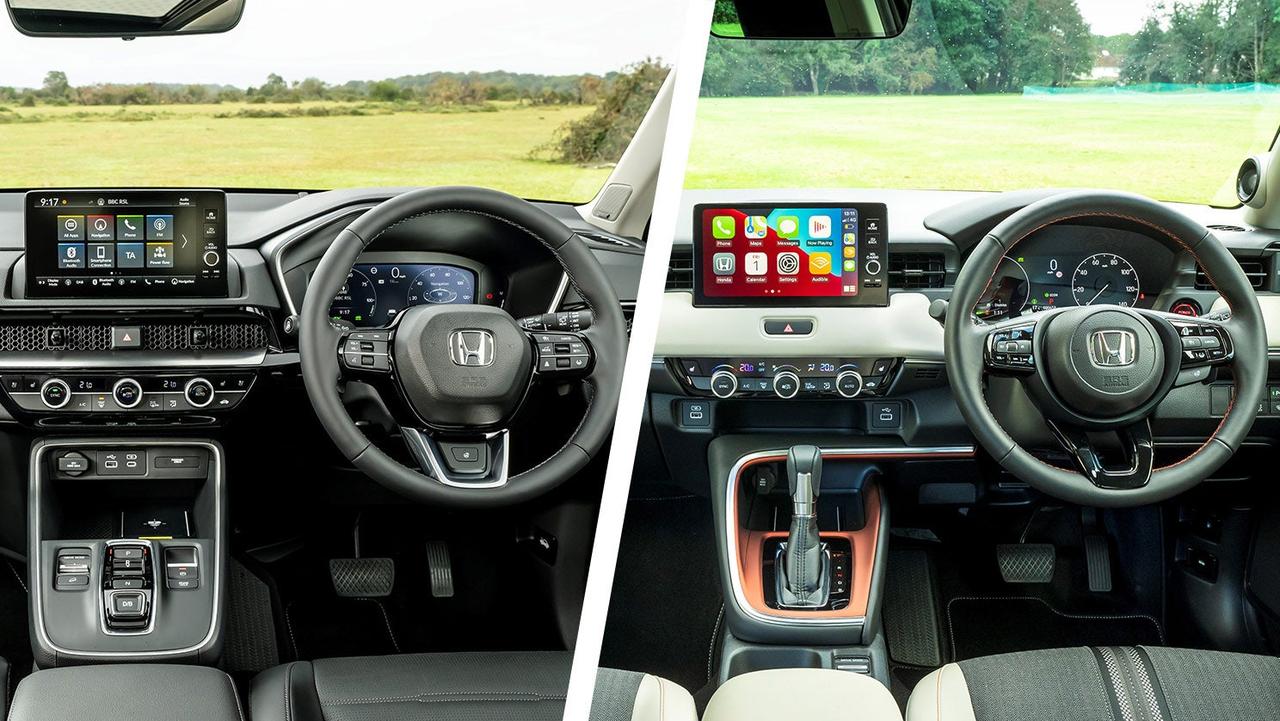
The dashboard layout for both cars is remarkably similar. There's a simple, horizontal arrangement with an infotainment screen perched in the middle, climate control dials beneath that, and a traditional instrument binnacle hiding digital driver's dials. You'll find easy-to-use physical controls for all the key functions, including stereo volume, track selection, air conditioning and drive modes.
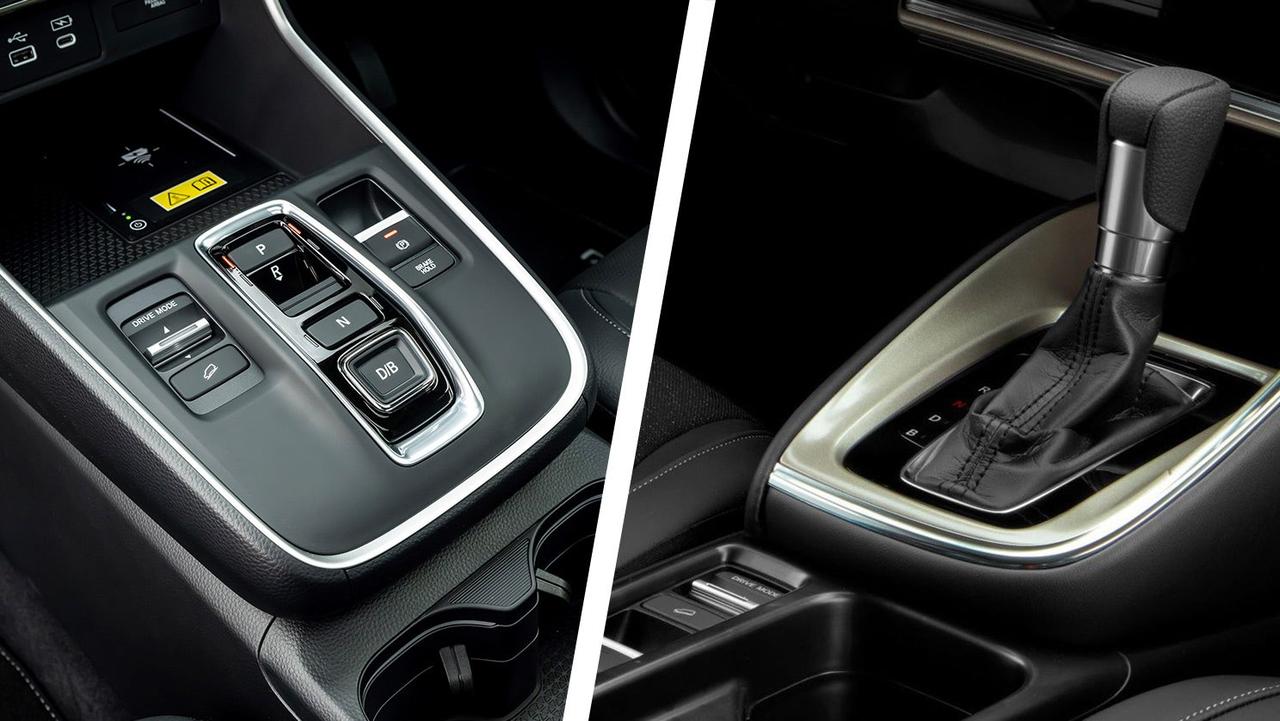
Differences are fairly minimal, with the CR-V incorporating a faux grille into its dashboard that hides the air vents, while the HR-V features a strip of soft-touch material instead. You'll find a traditional gear selector in the HR-V, which we prefer to the push-button selector in the CR-V, though we acknowledge the latter takes up less space.
Both cars use the same infotainment setup and, while it's far from the best or most modern system, it's fairly user friendly. There are persistent shortcut buttons along the bottom of the screen to jump quickly between common functions, plus physical keys for 'home', 'back' and audio selection. You'll spot the screen has an oddly matte finish, which should make it a little easier to read in bright light compared to glossier rivals.
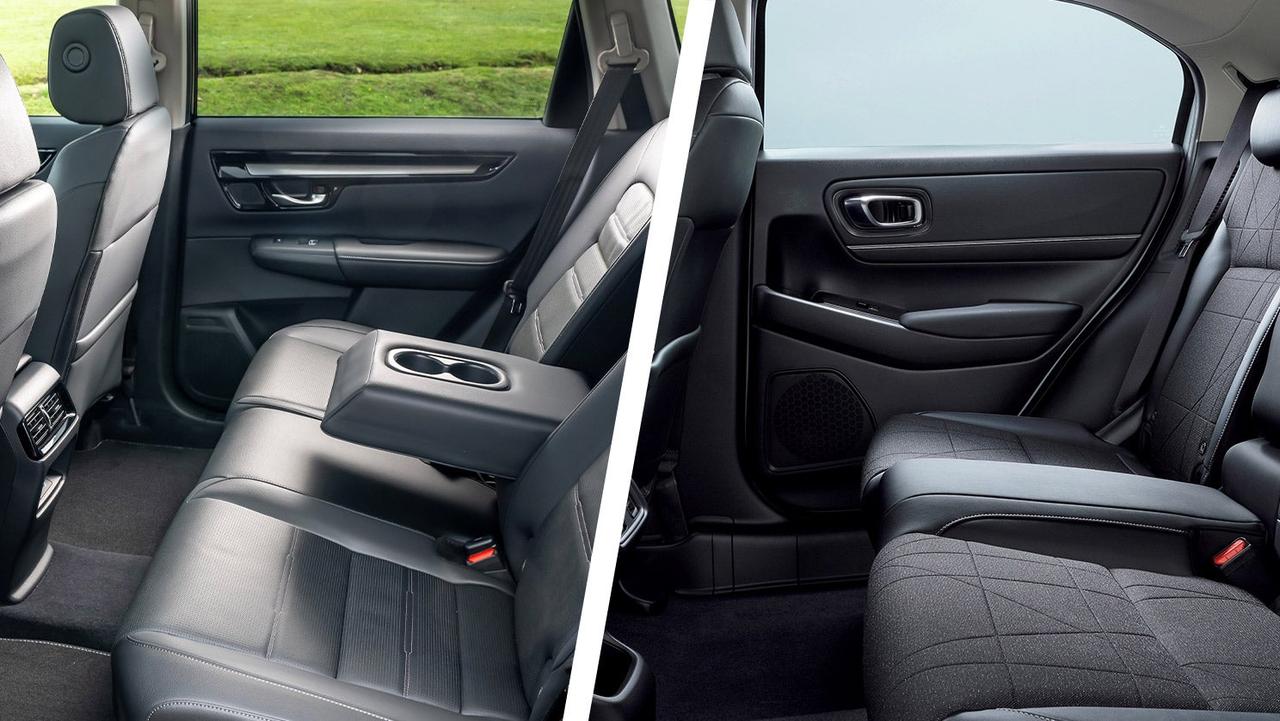
Of course, being a much larger car, the CR-V has the practicality comparison sewn up. There's just two rows like the HR-V, but you can fit tall adults in both with space for them to stretch out. In comparison, while the HR-V is decently practical for its class, you'll still struggle to fit one tall person behind another without some kind of compromise. Even more obvious is the gulf between the CR-V's 617-litre boot (587 on self-charging hybrid models) and the mediocre 319 litres mustered by the HR-V.
Size and dimensions
| Honda CR-V | Honda HR-V | |
| Length | 4,706mm | 4,355mm (-351mm) |
| Width (excl. mirrors) | 1,866mm | 1,790mm (-76mm) |
| Height | 1,674mm | 1,582mm (-92mm) |
| Boot space | 617 litres | 319 litres (-298 litres) |
The CR-V is noticeably larger than the HR-V in every dimension. It's more than a foot longer than the HR-V, while also being roughly 8cm wider and 9cm taller. You'll notice this inside as there's much more space for passengers to stretch out in the CR-V.
Engines and performance
All CR-V and HR-V models are hybridised to some degree in the UK. When the CR-V arrived in 2024, buyers had a choice of self-charging-hybrid or plug-in-hybrid engines. However, Honda has since discontinued the self-charging option, leaving only the PHEV on sale. Meanwhile, the HR-V has only ever been offered with a single self-charging-hybrid engine – though it's also offered as a purely electric car in the form of the Honda e:Ny1.
Whether you choose the added convenience of the plug-in-hybrid setup, or pick the simpler self-charging hybrid, the CR-V is easy and satisfying to drive. There's loads of off-the-line response from the electric motor and, once the 2.0-litre petrol kicks in, the combined 184hp means strong acceleration all the way up to motorway speeds.
The HR-V has a similar self-charging-hybrid setup but, as it's the smaller car, it's only outfitted with a 1.5-litre engine and a total of 131hp. You'd expect the lower performance to be offset by the HR-V being lighter but, in practice, this setup feels lazier than the larger 2.0-litre CR-V. As a result, you end up leaning harder on the HR-V's accelerator more often, which causes the petrol engine to grumble in protest as it hauls the car up to speed.
Driving
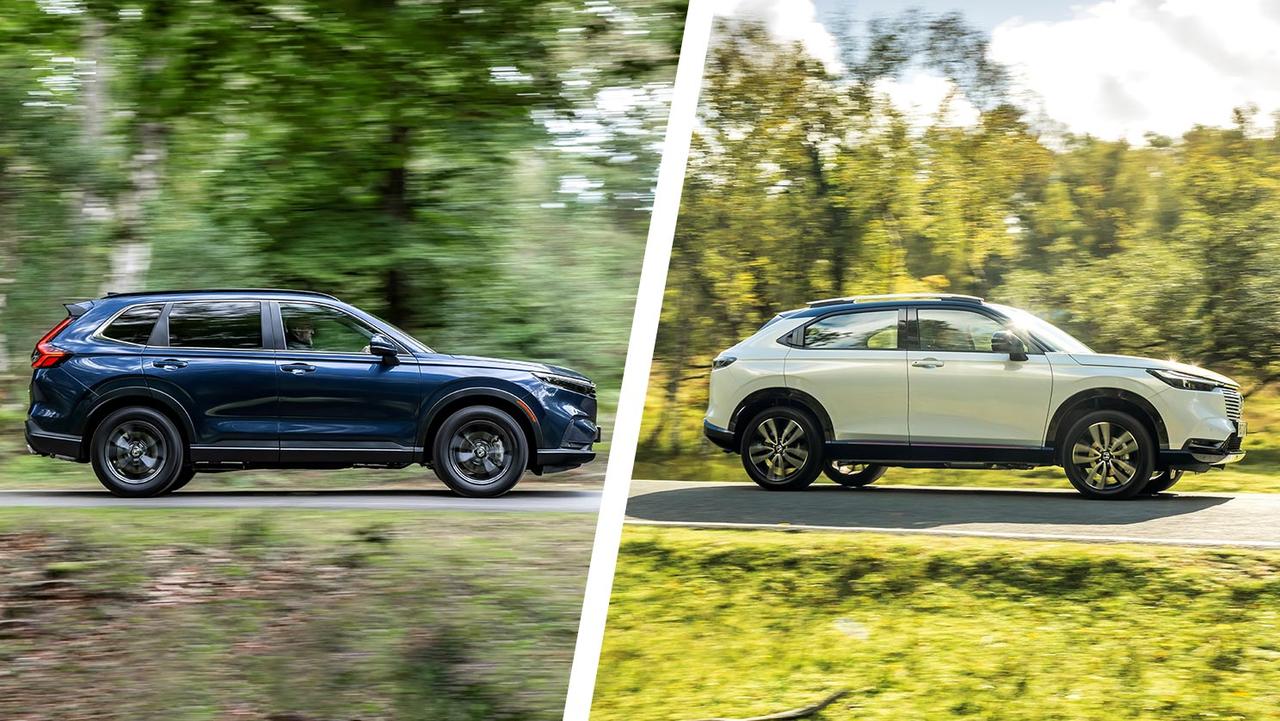
Get the CR-V out on the open road and immediately it feels like a big car. The heavy body bounces over road imperfections, and those movements are exaggerated by the fact you're sat quite high up in the CR-V. Body control is solid, however, and the bulky Honda never feels like it's going to wobble off its line. Comfort is reasonably good too, with most small vibrations tuned out before they make it to the cabin.
Swap into the HR-V and you'll find a similar setup to the CR-V – a well-balanced car with predictable handling and decent ride quality. This is where the HR-V's smaller size starts to pay dividends, however, because it feels a little more agile in corners and leans less if you dive for a tight apex. There's also less body motion over bumps, which makes the HR-V feel a touch more settled more of the time.
You'd only notice these differences in a side-by-side comparison, however. Both of these cars are generally easy and fuss-free to drive. They're not hugely exciting or sporty, but their faithful controls mean you're rarely guessing how much pedal or steering to use.
Value and reliability
As brand-new cars, there's quite a gap between the CR-V and HR-V. The former is priced from just under £50,000, while the latter is just a touch over £32,000. However, this isn't an apples-to-apples comparison as Honda's dropped the self-charging hybrid from the CR-V's lineup, leaving only the pricier plug-in-hybrid option.
A quick glance at the classifieds reveals two-year-old self-charging CR-Vs are hovering just above £30,000. You can knock about £5,000 or more off that price if you're okay with a previous-generation CR-V from 2023, which has similar practicality and the same excellent 2.0-litre hybrid engine.
Around £25,000 buys a nearly new HR-V by comparison. However, there are several examples creeping onto the used market now that are comfortably under £20,000 if you can compromise a little on age or mileage.
Honda's reliability record is very strong and we anticipate drivers will have very few problems with either the CR-V or the HR-V. Unlike companies with extra-long warranties like Toyota, Kia and MG, however, Honda continues to offer the industry-standard three-year factory coverage.
Which is best?
These are two dramatically different sized cars at two very different price points. In fact, so different are these two models that Honda has actually split them with the mid-sized ZR-V – which could be the 'Goldilocks' car you're looking for.
On face value, we prefer the CR-V. It's more practical and the 2.0-litre hybrid engine is nicer to use for daily driving. However, we can't ignore the massive chasm between these two cars' prices and the HR-V offers a lot of the same qualities at a much lower cost.
Say hello to a used Honda
Shop nearly new and used Honda cars for sale at Motorpoint. This includes used Honda CR-V cars and used Honda HR-V cars.