




Every car over three years old (and under 40) needs an MOT test.
That includes electric cars – there are still bits that can go wrong on EVs that stop them being roadworthy.
However, there are fewer points of failure on an electric car versus a petrol or diesel, and fewer moving parts in the powertrain. We wouldn't say an MOT test becomes relaxing, but having an EV MOT is certainly less stressful than taking a fuel-powered car for its annual test.
What gets tested in an EV MOT?
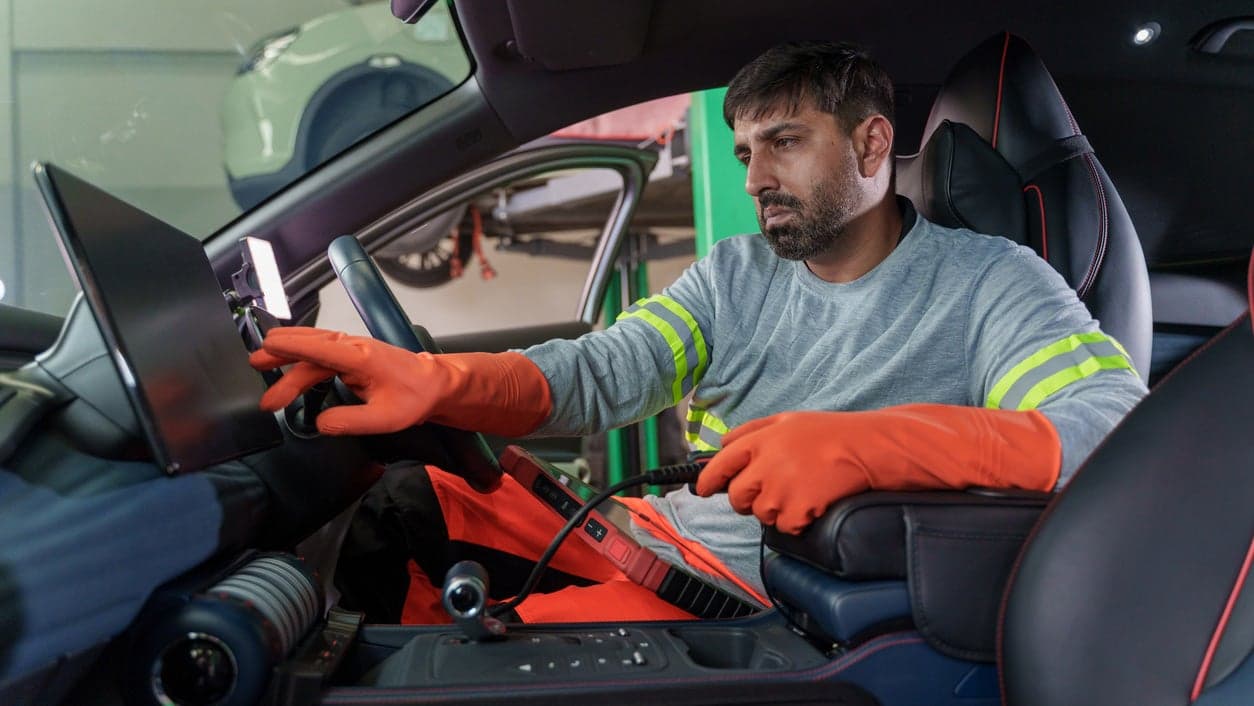
Many of the same things are tested in an MOT for an electric car as for a combustion car. These include:
- Tyres – checked for tread depth, condition and correct size
- Windscreen – checked for cracks or chips within certain areas, wiper blade operation, washer jets operation, exterior mirror condition
- Lights – all exterior lights are checked to see if they work; headlamp level is checked
- Brakes – condition of pads and discs/ drums and check fluid level
- Horn – checked for operation
- Steering and suspension – checked for any damage or excess play in components
- Seatbelts and seats – checked to make sure they'll restrain you in the event of a collision
- Bodywork – checked for corrosion, perforation, major damage or defects, and number plates checked to make sure they’re readable
- Warning lights and 12V battery – the battery must be functional and power the car’s anciliaries, while any warning lights regarding the power system or battery will fail the car
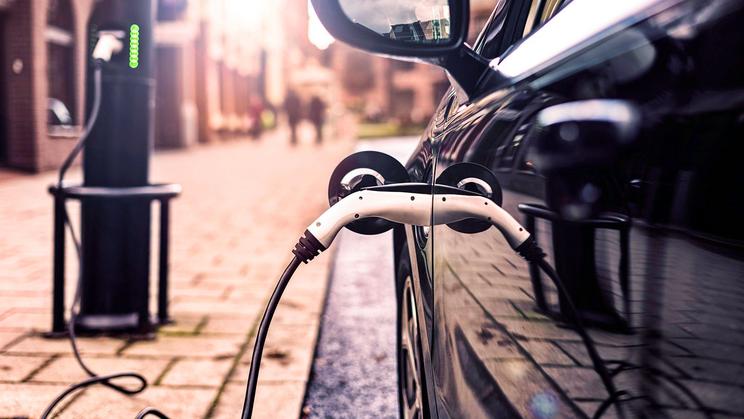
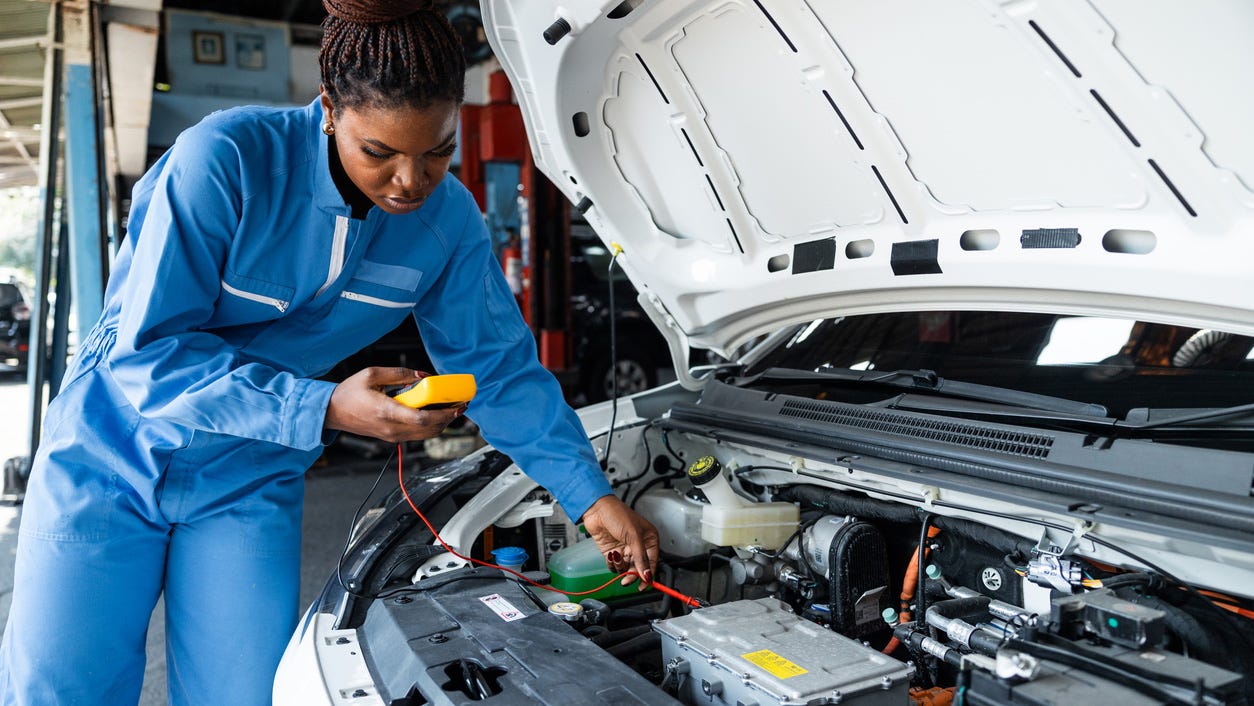
As you might expect, the MOT tester will also perform some checks on the high-voltage electric powertrain. These include a visual check of the battery casing and wires for damage, corrosion or leaks, plus a check of the charging port.
What doesn’t get tested?
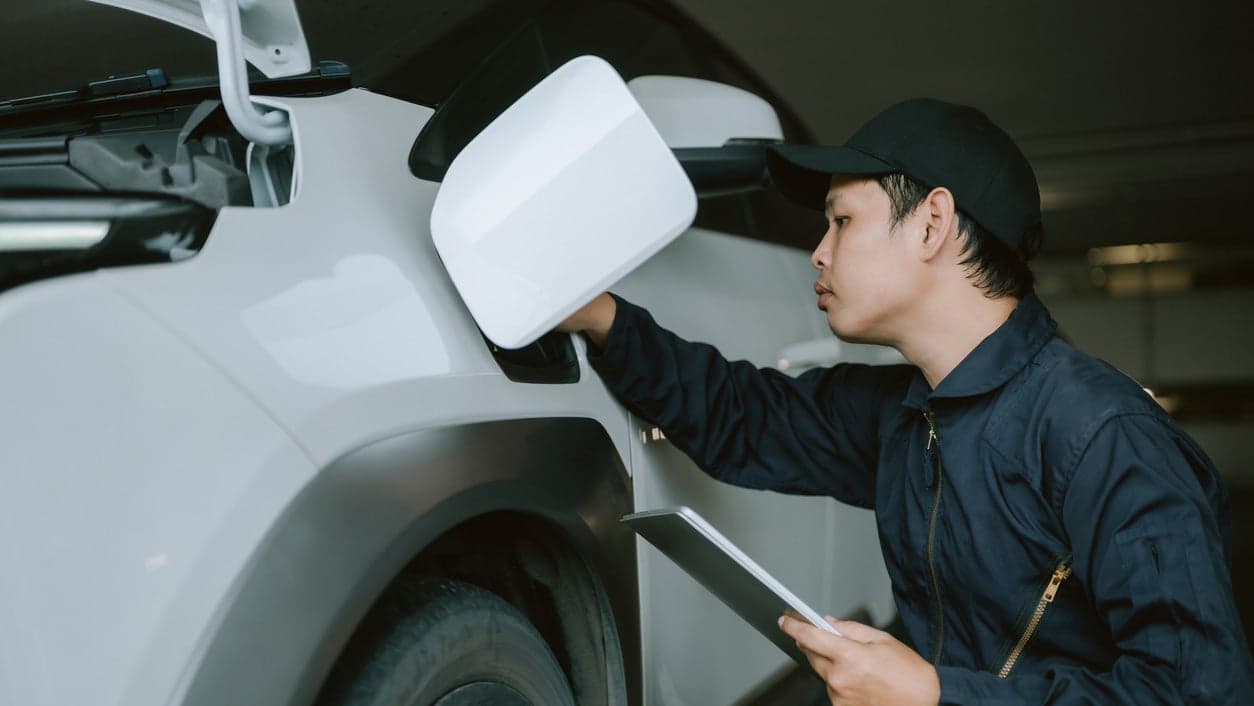
With no engine or exhaust system, electric car MOTs don’t include an emissions check or a noise level check.
An MOT for an electric car could potentially be slightly quicker than for a petrol car because there’s no emissions test.
Common EV MOT failures
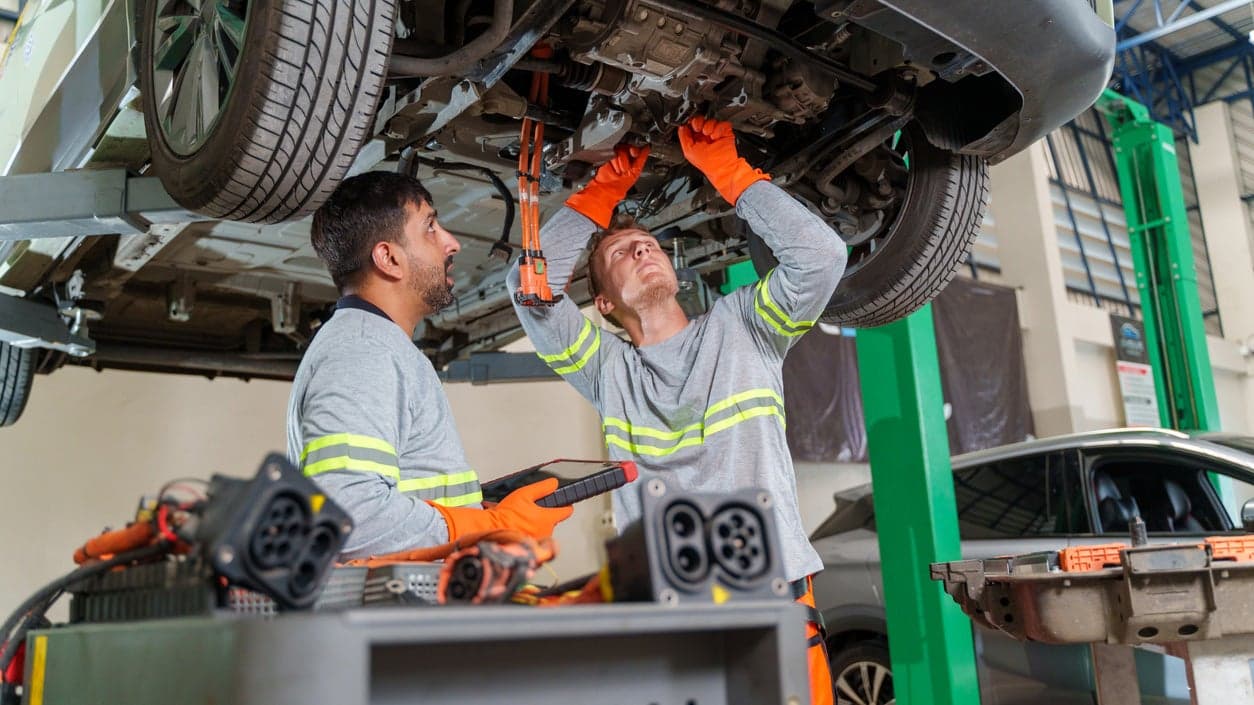
While there are fewer moving parts in an electric car, EVs don’t get an automatic MOT test pass. Common reasons for electric cars failing MOT tests include:
- Tyres – like all heavy cars, EVs wear through tyres a little faster than average, so EVs can fail on condition or tread depth
- Brakes – while they typically last longer in an EV than in a combustion car, brakes can still get damaged or worn down
- Suspension – EVs can be quite heavy, which can put strain on suspension components
- Inoperative lights
- Warning lights – shown on dashboard
Whether your car is electric or not, make sure to read our guide on how to prepare your car for an MOT to maximise the chance of a pass.
Can any MOT garage test electric cars?
A garage has to be certified by the DVSA in order to carry out MOT tests, and any garage with this certification can carry out an MOT test for an electric car. However, not all MOT stations will be able to carry out any repairs needed – you’ll need to find a garage that is approved to work on high-voltage batteries in this case.