





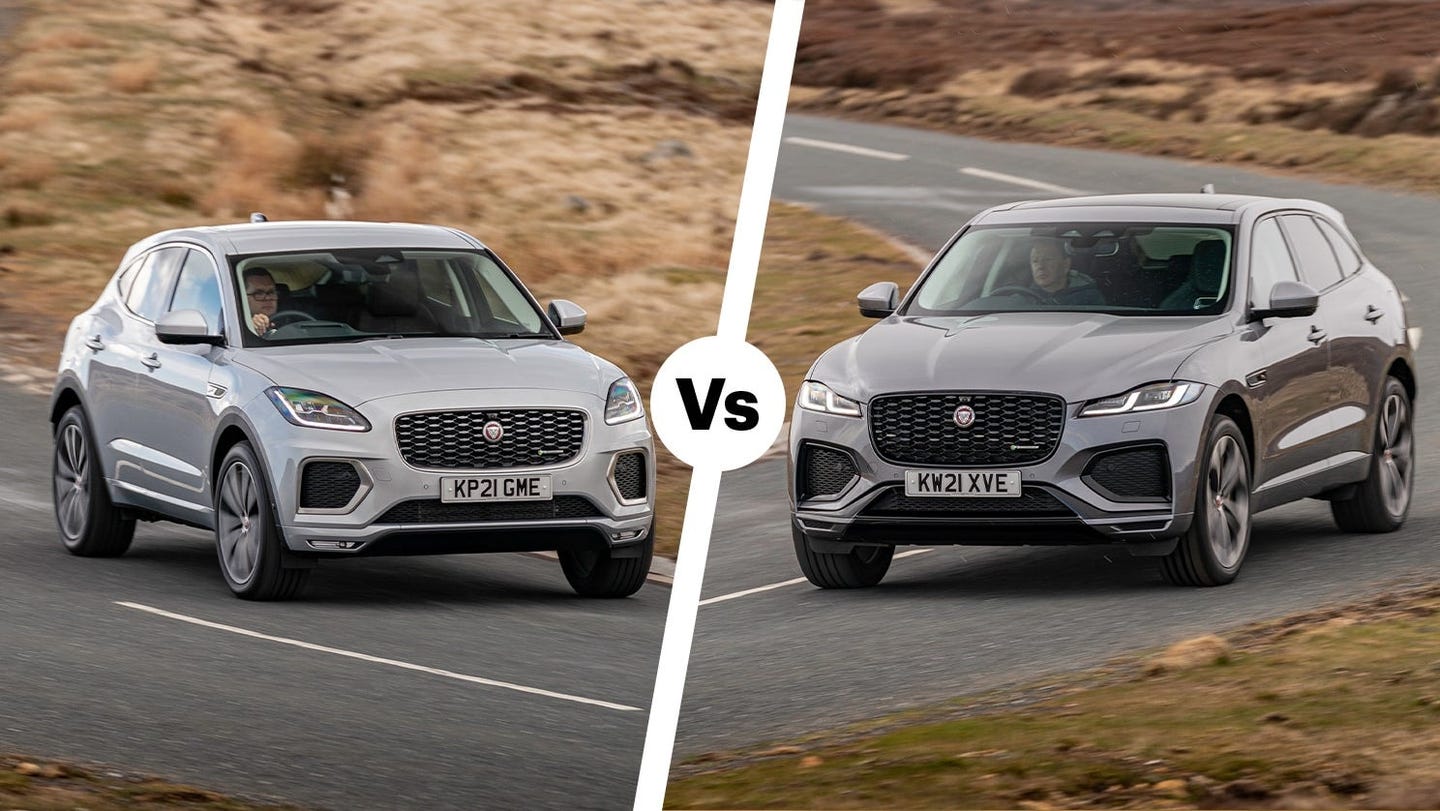

The Jaguar E-Pace is usually cheaper than the F-Pace, but should you stretch to the bigger F-Pace?
If you want an SUV that’s stylish, spacious and sporty, Jaguar might be one of the first brands you think of. While the E-Pace and F-Pace are no longer on sale, they’re widely available on the used market with a range of engines and trim levels. If you can’t decide which is best, we’re here to compare them side-by-side.
Jaguar E-Pace vs F-Pace compared
| Jaguar E-Pace | Jaguar F-Pace |
Pros:
| Pros:
|
Cons:
| Cons:
|
Styling
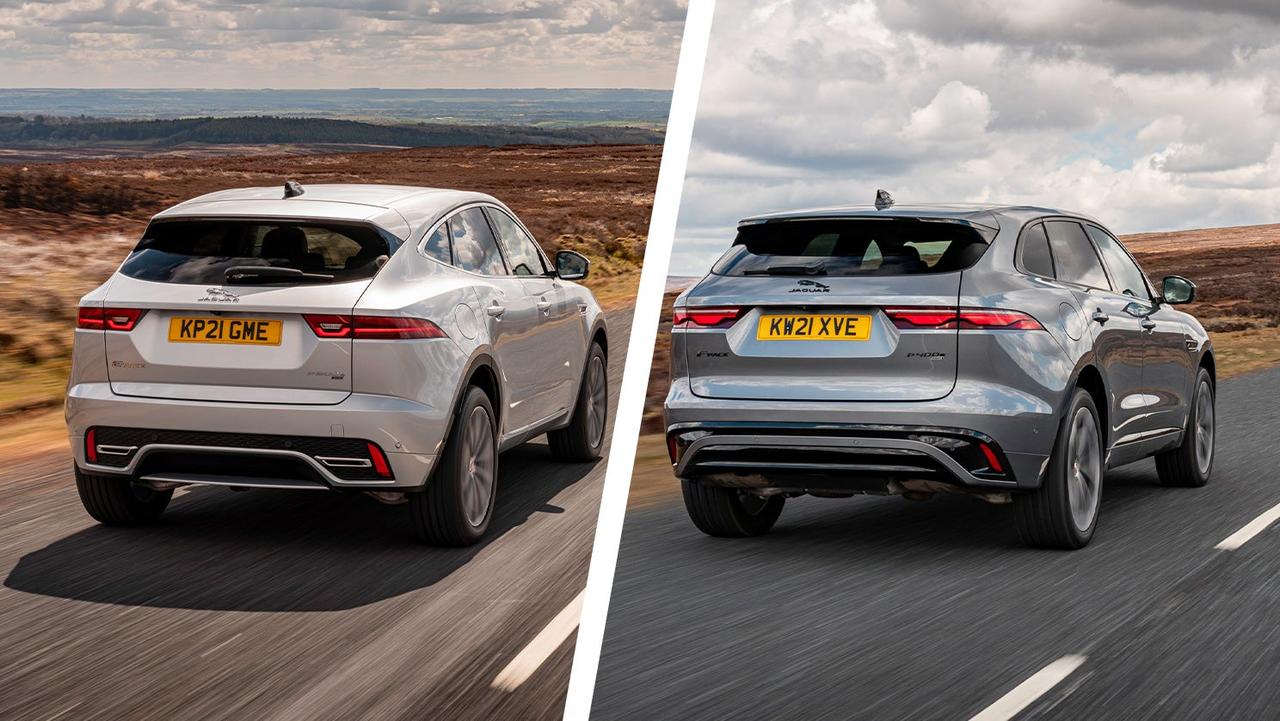
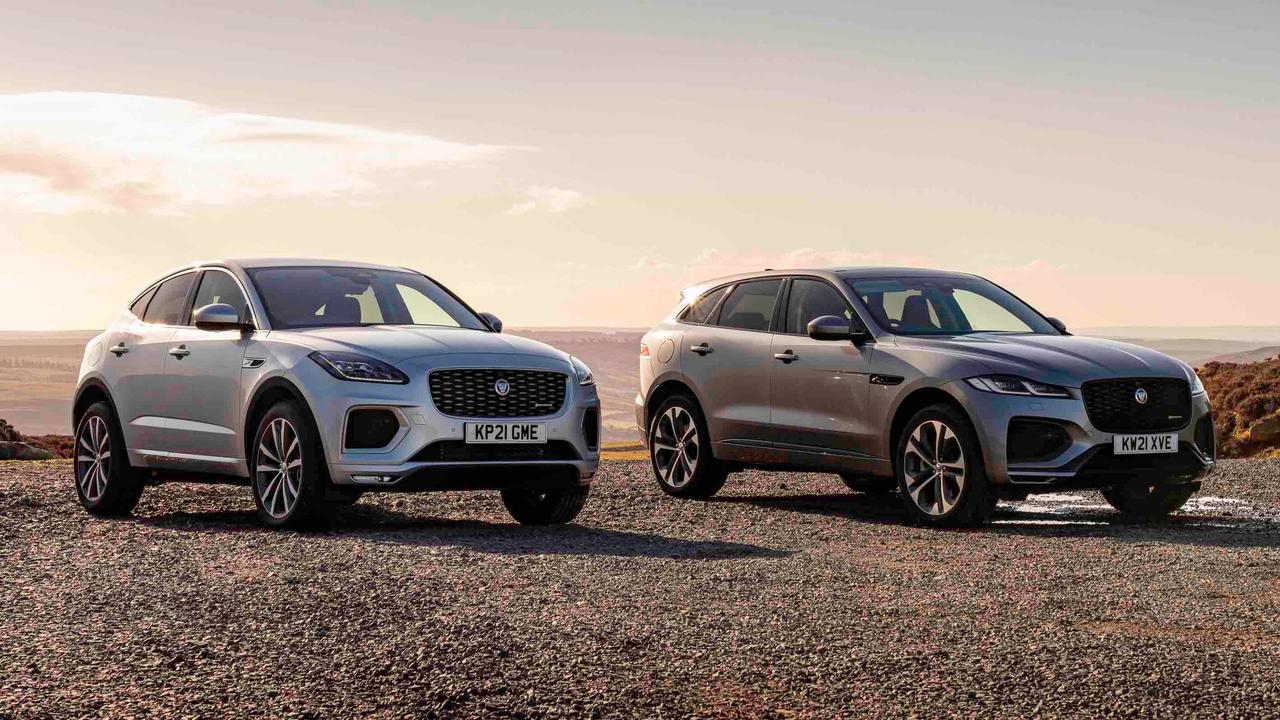
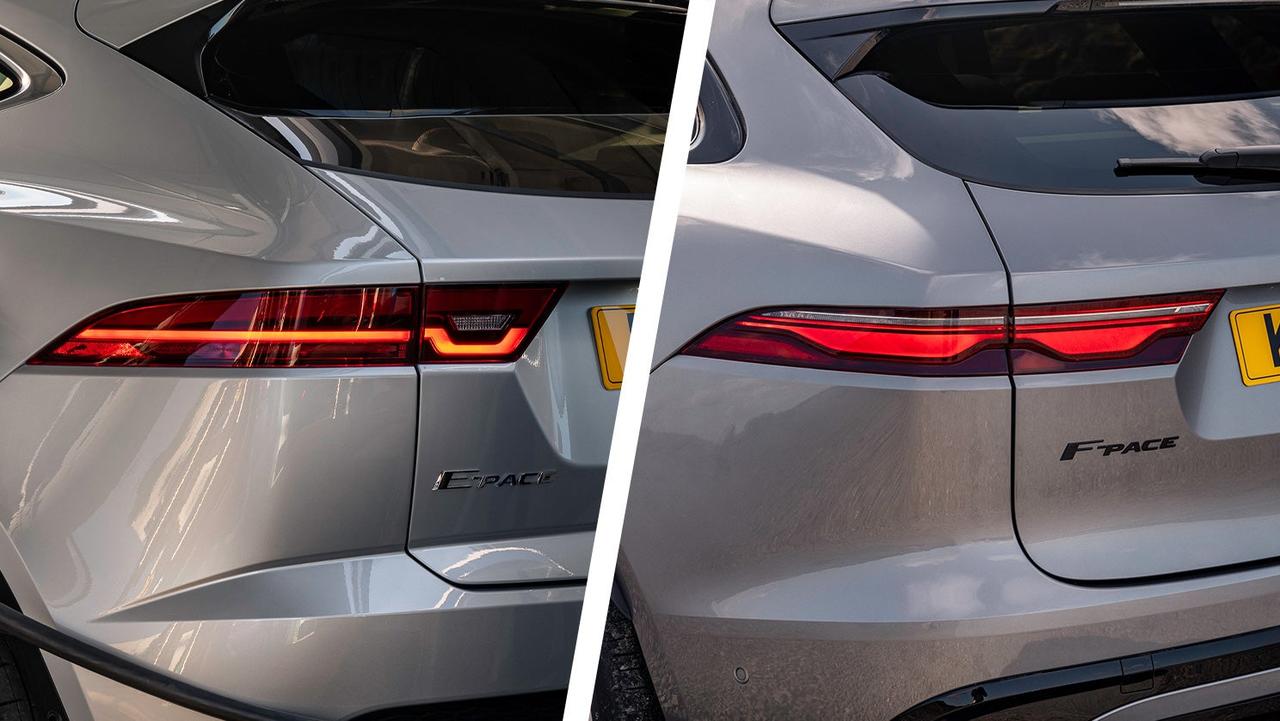
Both the E-Pace and F-Pace successfully combine Jaguar’s elegant styling with a taller SUV bodystyle, and both look premium and expensive.
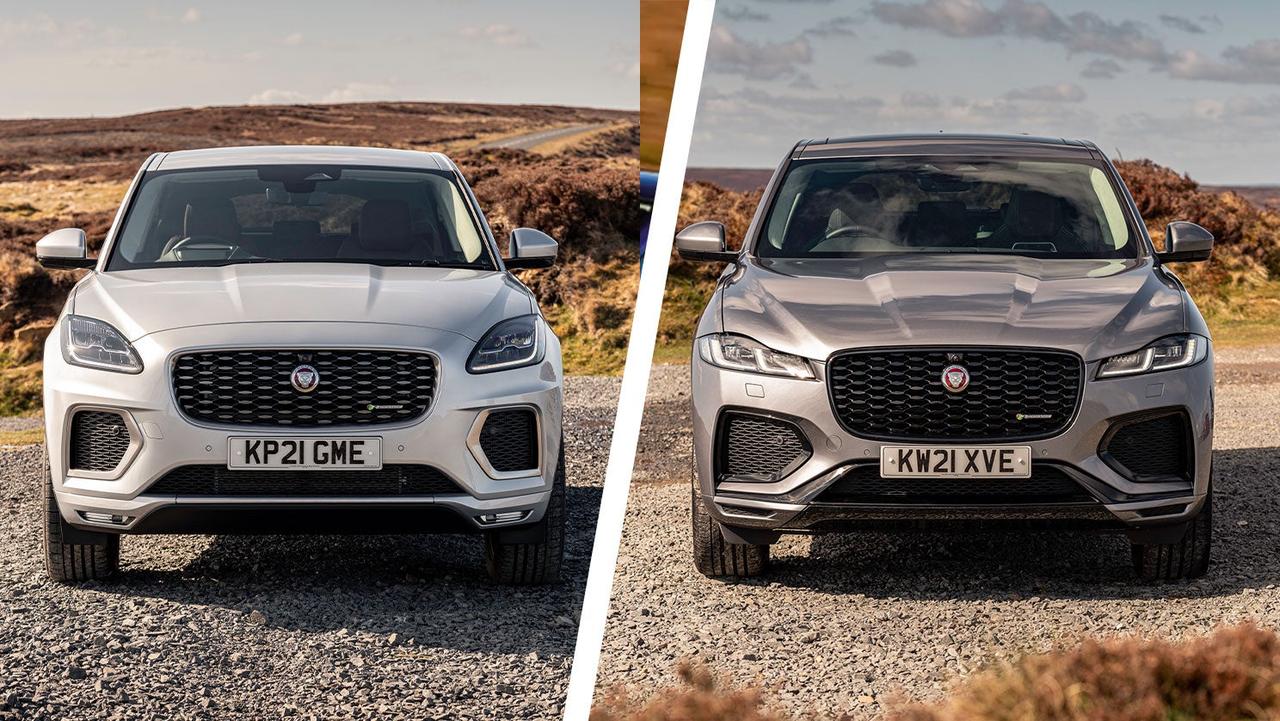
While the F-Pace has a more conventional shape, the smaller E-Pace has a coupe vibe going on, with slanted-back headlights and a curving roofline. There are a couple of hints of the F-Type sports car in the E-Pace’s design if you look carefully, while its positioning as the junior Jaguar SUV is highlighted by the 'jaguar cub' motif in the windscreen.
Interior and technology
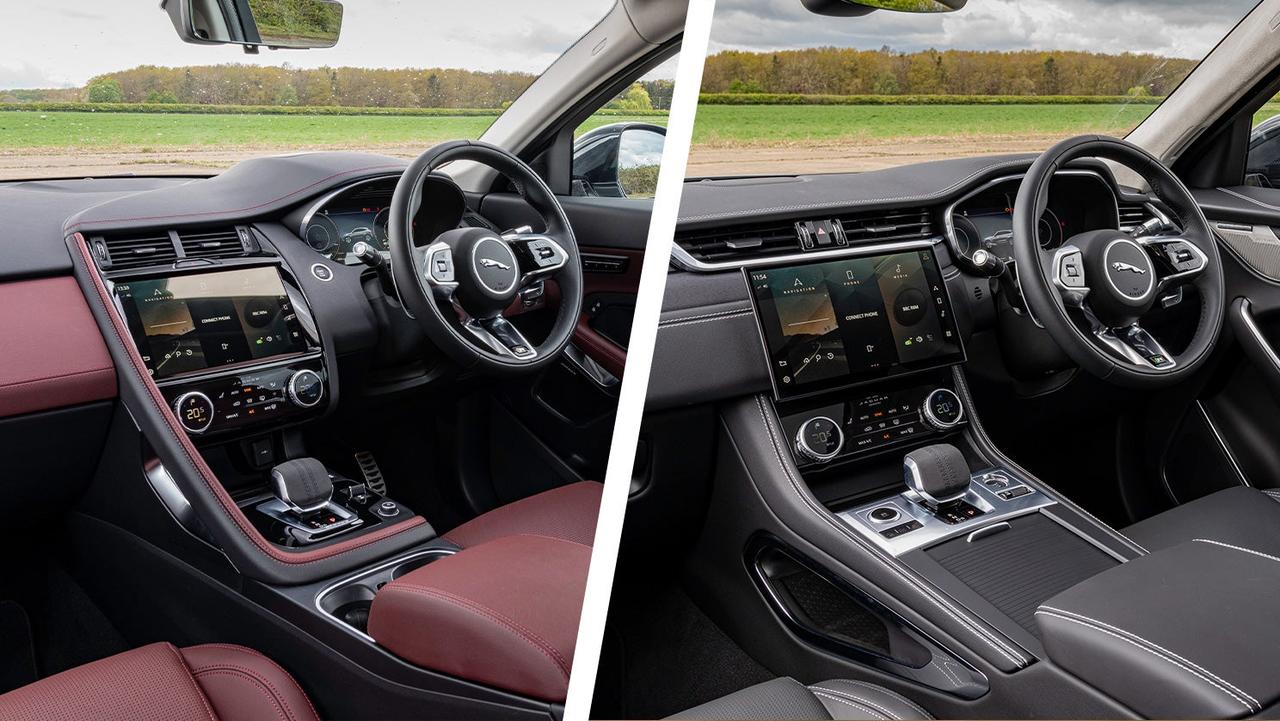
The F-Type feel continues inside the E-Pace (confusing, yes, sorry). A surprising amount of the cabin architecture is shared, including the noticeable grab handle. The screen is canted back like in the F-Type, too, but that makes it harder to use – and it becomes invisible in bright sunlight. Additionally, the slanted dashboard robs space from the cabin.
A lot of the buttons and controls are present in both the E-Pace and F-Pace, but the F-Pace manages to feel more luxurious inside. With a more upright dashboard and infotainment screen, it’s easier to use as well.
Dimensions and practicality
| Jaguar E-Pace | Jaguar F-Pace | |
| Length | 4,395mm | 4,747mm |
| Wheelbase | 2,681mm | 2,874mm |
| Height | 1,648mm | 1,664mm |
| Width (exc/inc wing mirrors) | 1,900/2,088mm | 1,936/2,175mm |
| Boot space (seats up/down) | 394/1,386 litres | 385-513/1,662-1,804 litres |
It’s quite surprising that the E-Pace is only a few millimetres longer than a Ford Focus – it feels like a bigger car than that. However, the E-Pace’s compact size means it’ll be a bit easier to park than the F-Pace.
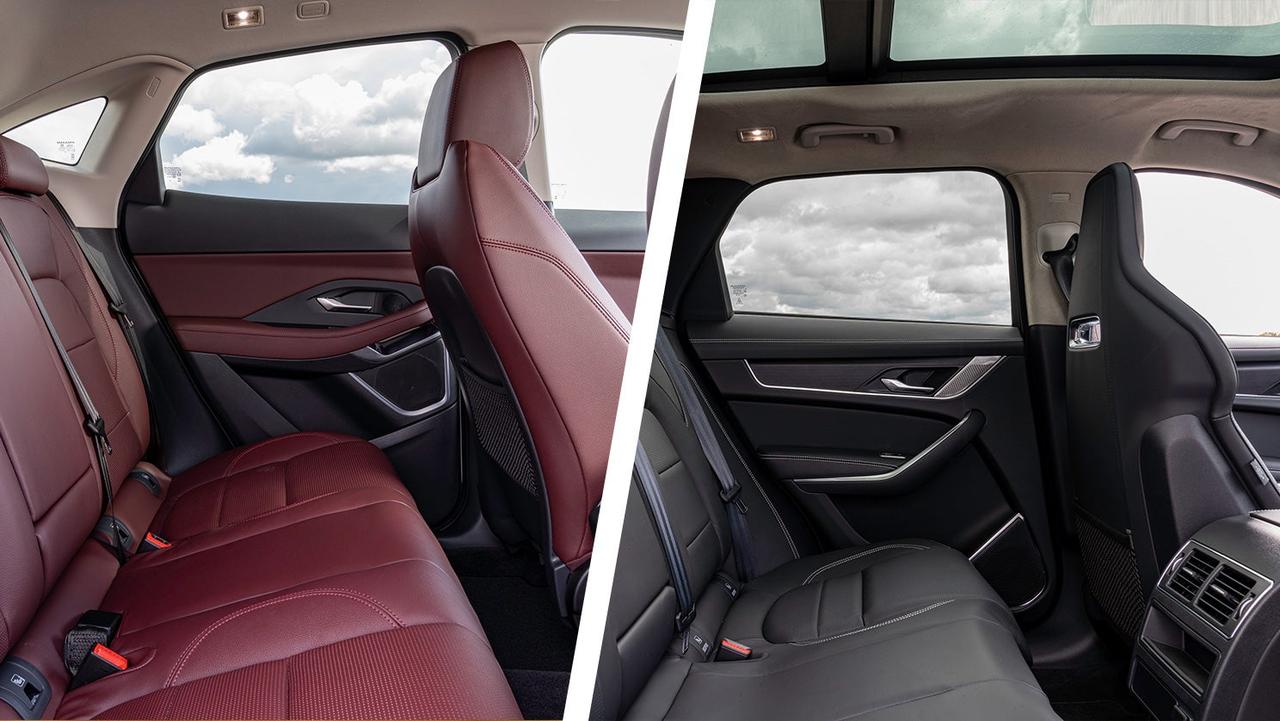
The compact size is bad news for interior room, which is exacerbated by the sloping roofline. This means rear headroom is compromised, and there’s barely any luggage space above the parcel shelf. Rear legroom's pretty tight as well.
The F-Pace gives you space to stretch out, with plenty of legroom and headroom in both rows. Further back, there’s a big boot for family luggage, golf clubs or pets. Being picky, the F-Pace’s boot floor is quite high, so you might find it difficult to lug heavy items into the boot – or an elderly pooch might need a helping hand.
Engines and performance
You’d assume that the smaller E-Pace would be the lighter of the two. But where the F-Pace sits on a modern, lightweight aluminium platform, the E-Pace is shackled with an older, heavier platform that’s even got some Ford DNA in it from the 2000s.
The E-Pace’s heft blunts performance, ruins the handling and cripples the fuel economy. You might find that the same engine in the F-Pace is more responsive and more fuel-efficient than in the E-Pace.
Most E-Paces and F-Paces come with a 2.0-litre ‘Ingenium’ diesel engine, which’ll be the most economical choice for motorway munchers. Like all modern diesels, it needs semi-frequent longer journeys to give the diesel particulate filter (DPF) a chance to clean itself. Lower-mileage drivers or diesel sceptics might prefer the P250 petrol engine, which has plenty of punch for getting up to speed.
They’re rarer, but both the E-Pace and F-Pace could be had with a plug-in hybrid engine. In the E-Pace, you get a 1.5-litre engine and a total power output of up to 300hp, while the F-Pace packs a 2.0-litre engine and up to 400hp. Both offer around 30-35 miles of quoted electric range, but the F-Pace’s engine feels more suited to the car when the battery’s empty than the smaller engine in the E-Pace.
Value
The F-Pace is more expensive than the E-Pace on the used market but, as that makeup ad says, you’re worth it. In most cases, we’d recommend going for the F-Pace over the E-Pace, even if that means you’re getting an older or higher-mileage car.
Neither of these cars are particularly cheap to run, so make sure you factor in insurance and day-to-day running costs. Cars under six years old will be subject to the luxury car tax, adding over £400 to your annual costs. It would be prudent to take out an extended warranty when buying a used Jaguar.
Which is best?
As you’ll have probably gathered, the F-Pace is a much better car than the E-Pace. It’s more refined, it feels more luxurious, it’s much more practical and it’s even better to drive. The F-Pace makes you feel good, whereas the E-Pace is likely to frustrate.
Read our used Jaguar F-Pace review, or shop used Jaguar E-Pace cars and used Jaguar F-Pace cars for sale at Motorpoint.
.jpg&w=744&q=75)