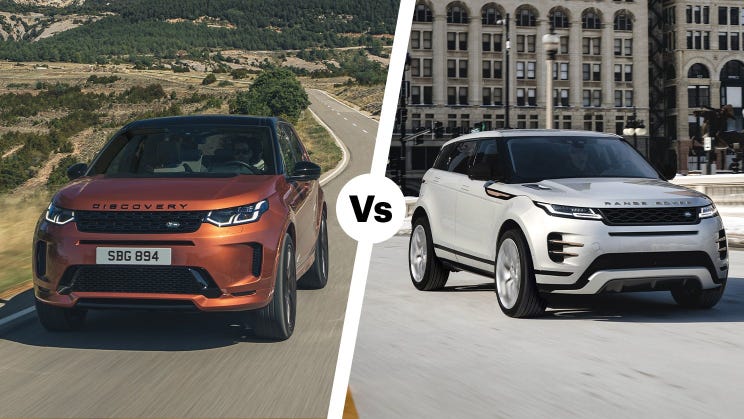











The Land Rover lineup is exclusively stocked with luxurious and capable off-road vehicles.
That can make choosing the right model tricky, especially since there's a lot of shared ground between different ranges. Just like the Land Rover Defender and Land Rover Discovery – both are tall, imposing 4x4s with a slightly more utilitarian focus than pricier Range Rover models.
We'll compare the Defender and Discovery here to help you choose the one that's best for you. Don't forget to see how much you could save on nearly new and used Land Rover cars for sale at Motorpoint.
Land Rover Defender vs Discovery compared
| Land Rover Defender | Land Rover Discovery |
Pros:
| Pros:
|
Cons:
| Cons:
|
Styling and design
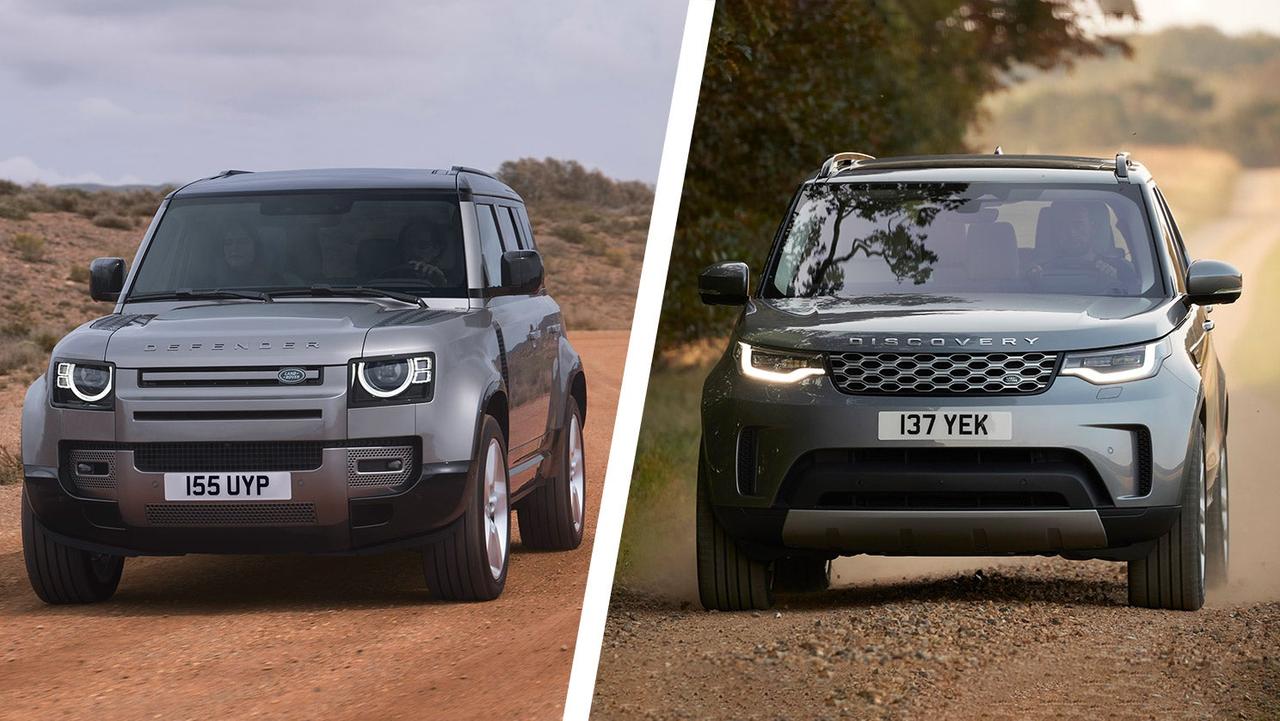
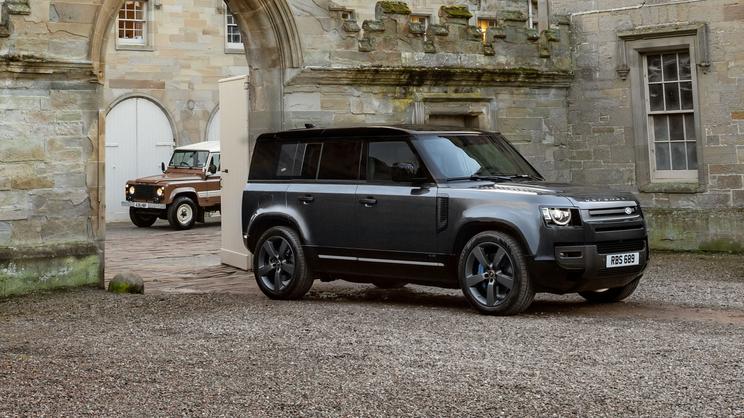
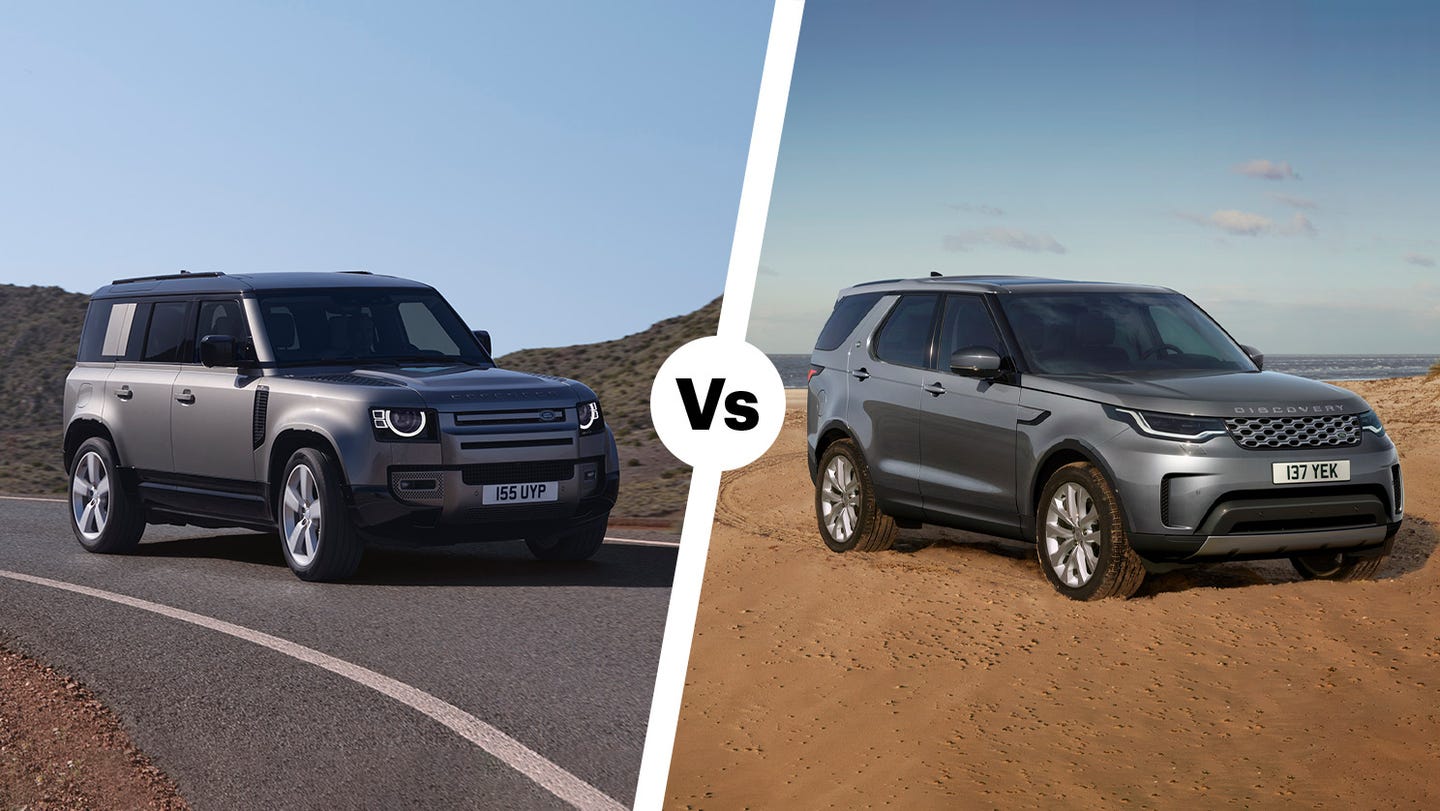
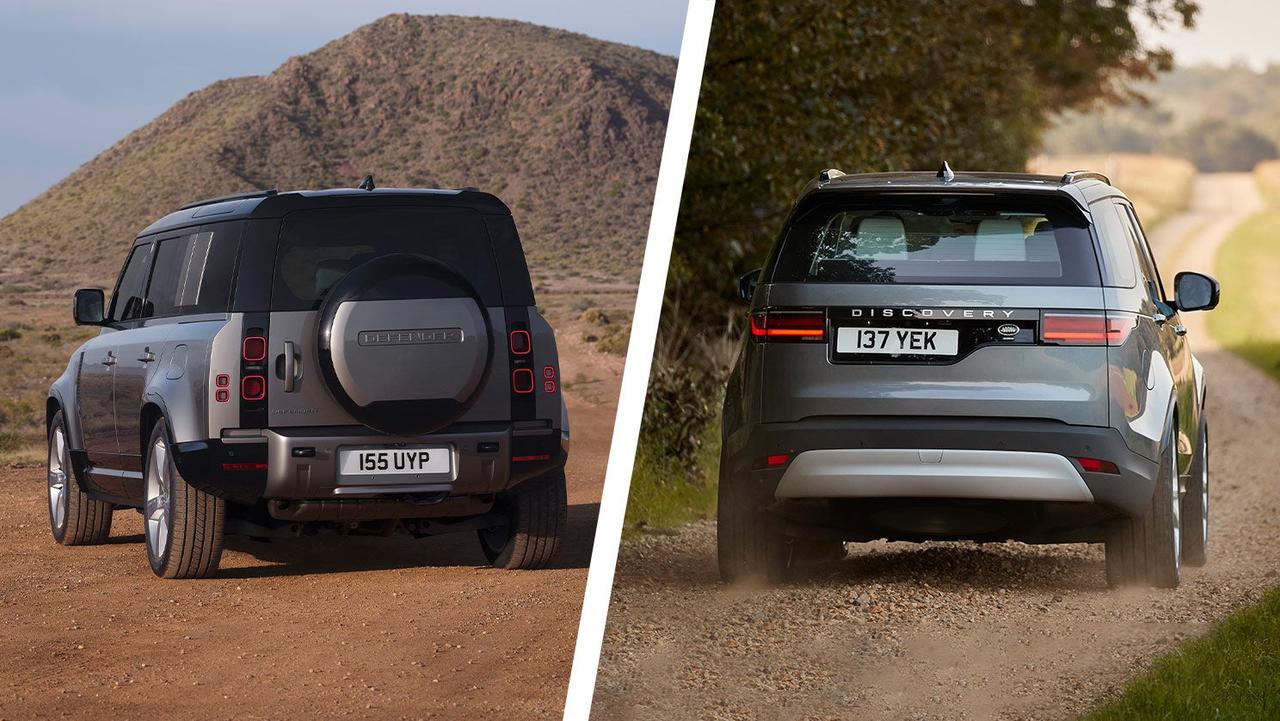
Expensive, posh SUVs have to look the part because so much rests on their desirable image. Just five minutes on any UK motorway will confirm that the Defender has won lots of admirers. It has the upright, imposing presence you want from a Land Rover, complete with fun nods to its predecessor like the round headlights embedded in square panels, or the 'floating' roof that's available in a contrast colour. Three bodystyles are offered – a three-door 90 with two seating rows, a five-door 110 with up to seven seats, and a long-wheelbase 130 with up to eight seats.
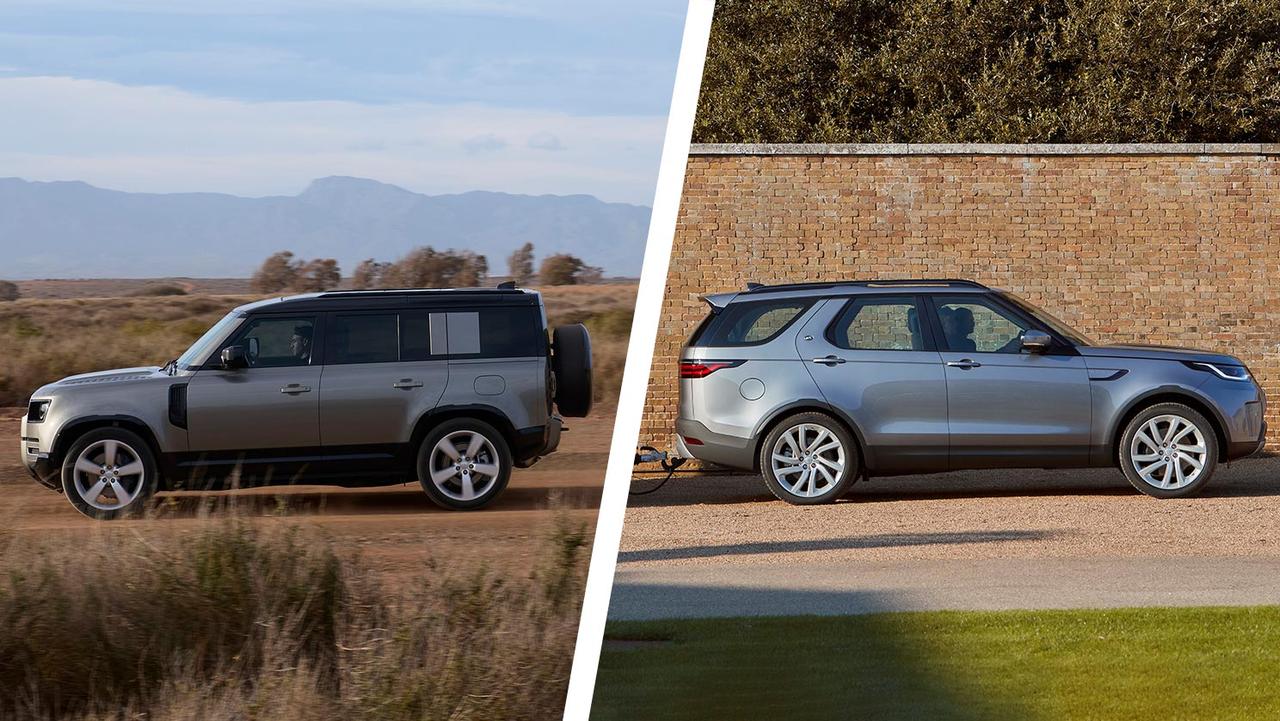
The Discovery, on the other hand, is towards the end of its model life so there's just one body shape and just one engine choice. That means you get a bulky five-door, seven-seater SUV, with a length measuring partway between the Defender 110 and 130. Its looks are more understated than the Defender with a profile that echoes Discovery models of the past, with a slim front grille flanked by beady headlights with sharp daytime running signatures.
Interior and practicality
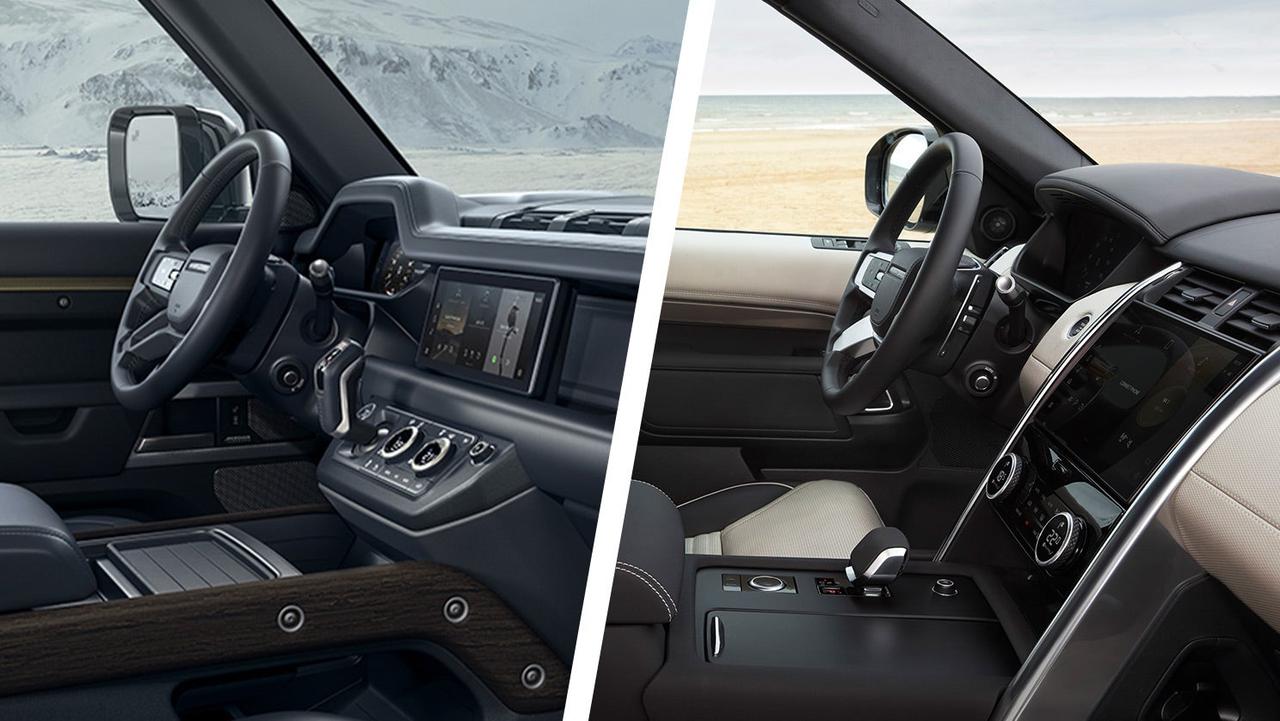
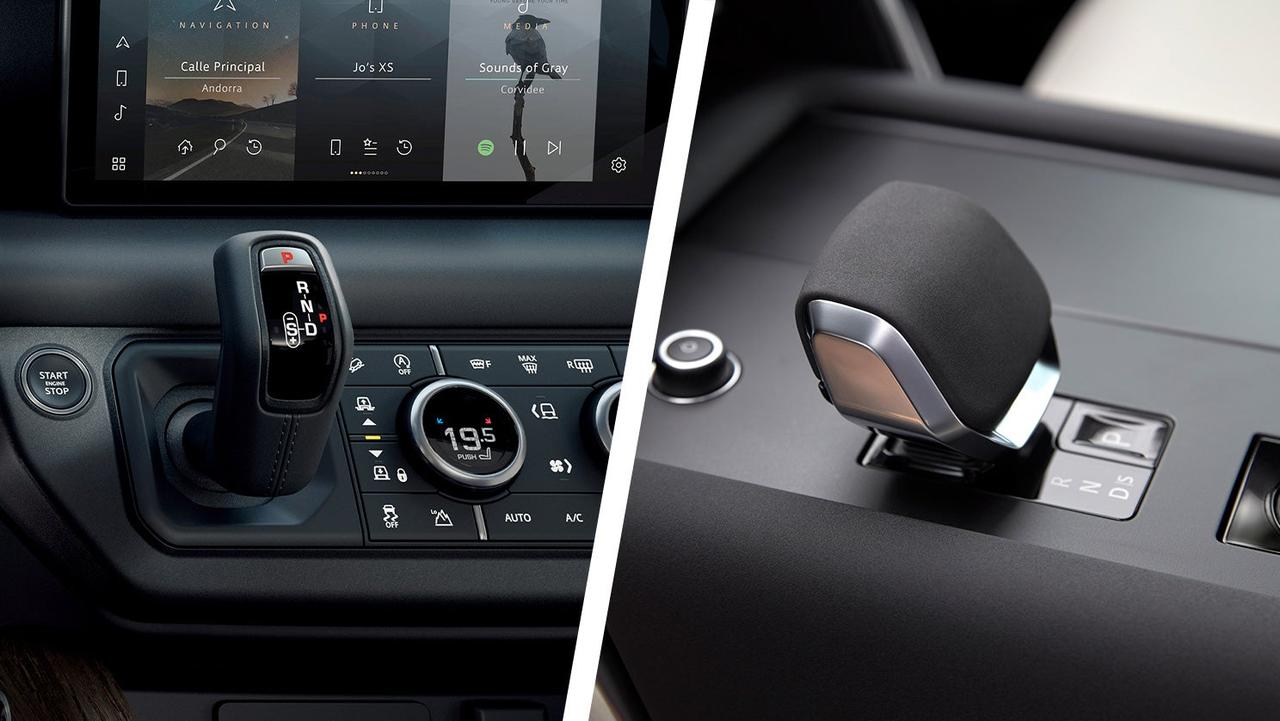
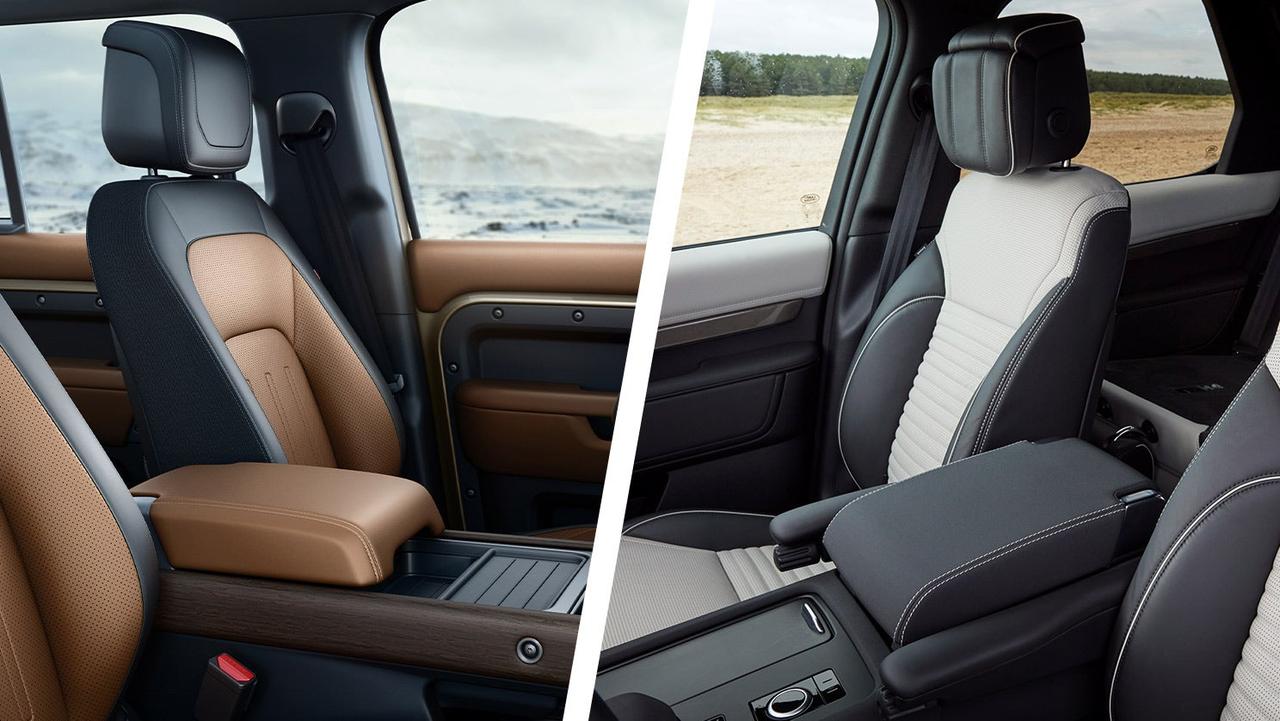
Starting in the Defender, the dashboard is dominated by two horizontal bars that form a rectangle. This incorporates the steering wheel and driver's dials on the one side, while giving the front passenger both a grab handle and a convenient shelf to store odds and ends. A small panel in the middle of the dash houses your climate controls, drive modes and gear selector while, above that, there's a tablet-style infotainment screen with a small cubby concealed behind it. Handily, the Defender has an open space between the front seats into which you can easily chuck a handbag or rucksack.
The Discovery has a slightly more traditional dashboard. There's some simple-yet-elegant leather-bound panelling plus a regular centre console that rises up to meet the dashboard, framed by metal pillars. In this rising portion, you'll find the glossy black controls for the climate settings along with the infotainment touchscreen. Since the Discovery has less of the Defender's deliberate ruggedness, it ends up feeling like a slightly more premium car – you could kid yourself you're driving a Range Rover, rather than a model derived from a work vehicle.
Drivers comparing these two cars are most likely to be weighing a Defender 110 – the most popular body style – against the Discovery. The good news is that both are enormously practical, retaining roughly a hatchback's worth of cargo space even with all seven seats in place. Fold the rearmost row to unlock enough space for a big dog, or fold the second row too for van-like levels of space. The slightly longer Discovery beats the Defender 110 for maximum carrying capacity, but you can always stretch to a Defender 130 for ultimate bragging rights.
Size and dimensions
| Land Rover Defender 110 | Land Rover Discovery | |
| Length | 4,758mm | 4,956mm (+198mm) |
| Width (exc mirrors) | 1,996mm | 1,990mm (-6mm) |
| Height | 1,967mm | 1,888mm (-79mm) |
| Boot space | 389 litres (seven-seat mode) | 258 litres (-131 litres) (seven-seat mode) |
The Defender 110 is the most comparable model to the Discovery. Placed side-by-side, the Defender is wider and taller, but a little shorter in length. Its seats are fitted slightly closer together, which means you get a marginally larger boot than the Discovery with all seats in place.
Engines and performance
These are both big, heavy cars so they need burly engines to get them up to speed. The Defender gets a selection of engines, with the most popular being six-cylinder diesel engines with either 250 or 350hp. Then there's a plug-in-hybrid four-cylinder petrol with 400hp and around 30 miles of electric-only range. However, if your pockets are deep enough, there's a supercharged V8 available for high-end versions, or the Defender Octa, which shares its turbocharged V8 with the BMW M5.
Meanwhile, the Discovery comes with the 350hp diesel engine, and that's your lot! Though, to be fair, if Land Rover had to pick just one engine choice, we're glad it's this one as it's powerful enough to make light work of the car's substantial bulk. Another benefit is that the Discovery is around two grand cheaper than the Defender when equipped with the same engine.
Assuming you pick the crowd-pleasing 350hp diesel engine, you still shouldn't expect a great deal of performance when you floor it. That much power would feel significant in a lighter car, but both the Defender and Discovery weigh comfortably more than two tonnes, so it's merely enough to get them going without feeling like you're straining them. Plus, with all that power and mass in motion, fuel economy is pretty underwhelming.
Driving
The Defender and Discovery are more similar on the road than we expected. Both feel weighty and top-heavy, with lots of body roll if you throw them into a corner too vigorously. On the plus side, the ride quality is genuinely impressive in both cars, though we think the Discovery might narrowly have the edge for outright comfort. Their controls are also intuitive so you're rarely guessing how much steering or pedal input is needed.
We had expected the Defender to be noticeably more agricultural having driven its predecessor. However, the car has none of the jostle or bounciness of the old Defender, and is orders of magnitude more refined. In fact, we were almost taken aback with how little drama there is to the Defender's driving experience, making it easy to live with on paved roads.
Of course, these cars come from a brand famed for its off-road capability. As you'd expect, both have all-wheel drive and plenty of ground clearance, along with Land Rover's suite of off-road tech. If you're planning more serious off-roading, the Defender might be a marginally better choice as it's available with both centre and rear locking differentials, compared with the Discovery's single rear locker.
Value and reliability
Technically, an entry-level Defender 90 with the 250hp diesel engine is the cheapest option here. However, once you spec the Defender into a like-for-like 110 with the 350hp engine to match the Discovery, it ends up a couple grand more expensive. As a result, if you want the practicality and capability of a Land Rover and aren't fussed about the Defender's desirable image, the Discovery arguably represents better value for money.
Evidently, however, many drivers have fallen for the Defender's chunky, go-anywhere image and will accept a few minor drawbacks as a sacrifice. Plus, it's barely any harder to use as a day-to-day car than the Discovery, whereas the old Defender required more serious commitment.
Historically, Land Rover's reliability record has been a bit patchy. That said, both the Defender and Discovery have been on sale quite a while now, so many of the early bugs will have been ironed out. For more peace of mind, you can buy an extended warranty either from your car retailer or from Land Rover directly.
Which is best?
Even if you genuinely need a car with proper off-road ability, the Discovery will probably have all the capability you need. Plus, it's a little cheaper than an equivalent Defender, and gets slightly posher cabin with a touch more space.
Clearly, however, there's a desirability aspect to the Defender that few cars – not just the Discovery – struggle to replicate. And, unlike old Defenders, this is now a car that you can easily use everyday with modern features and comfort.
Save thousands on 4x4s
Browse a big choice of used 4x4 cars for sale at Motorpoint, including a wide choice of used Land Rover cars. For some alternative choices, check out the best nearly new 4x4s on sale.