









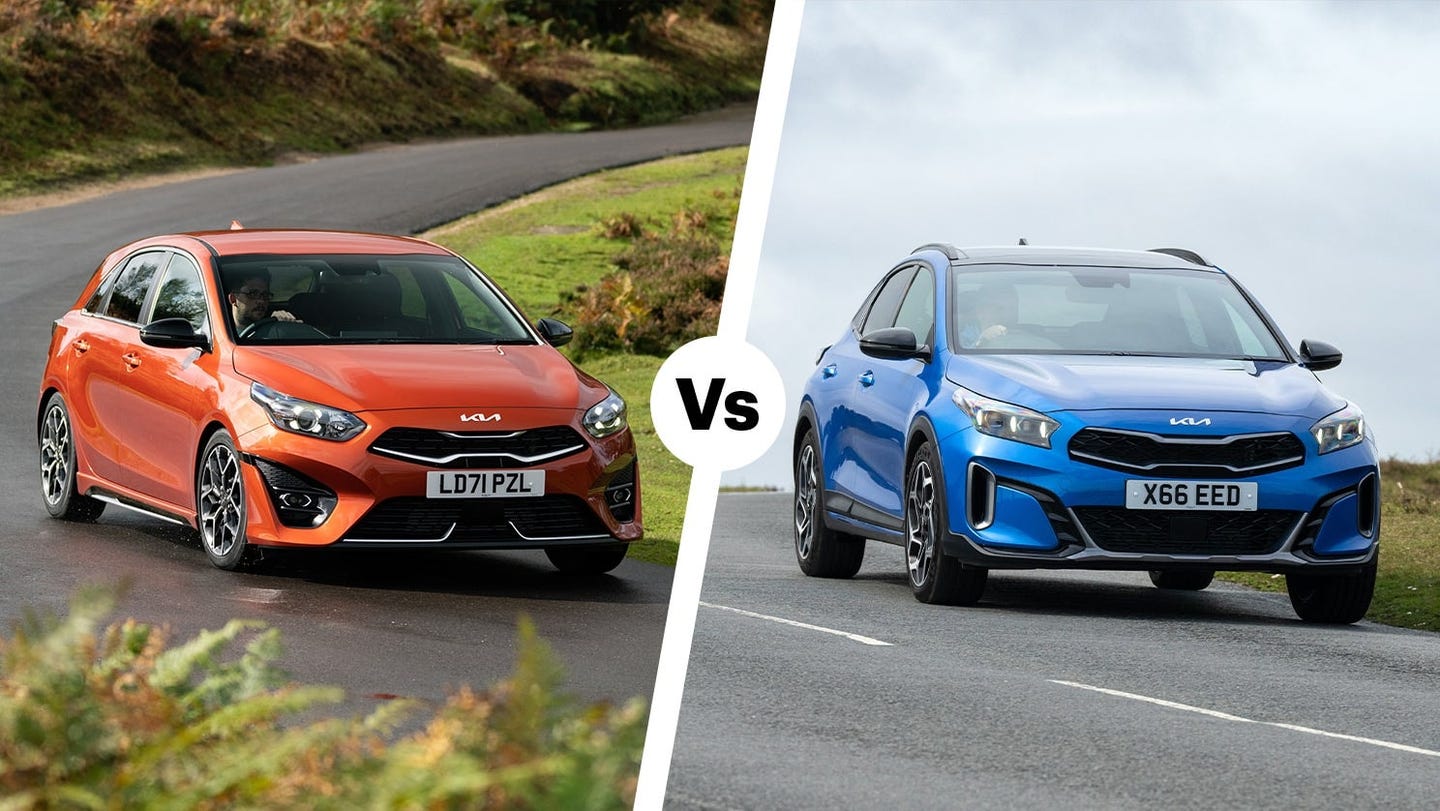

These two cars are like two slightly different varieties of apples.
There are more similarities than differences – although Kia completely changed the styling for the XCeed to the point where only a couple of panels are shared. Because these cars are so similar beneath the metalwork, it can be quite hard to decide between the Ceed and XCeed. We’ll try and help you to pick the best one for you.
Kia Ceed vs XCeed compared
| Kia Ceed | Kia XCeed |
Pros:
| Pros:
|
Cons:
| Cons:
|
Styling
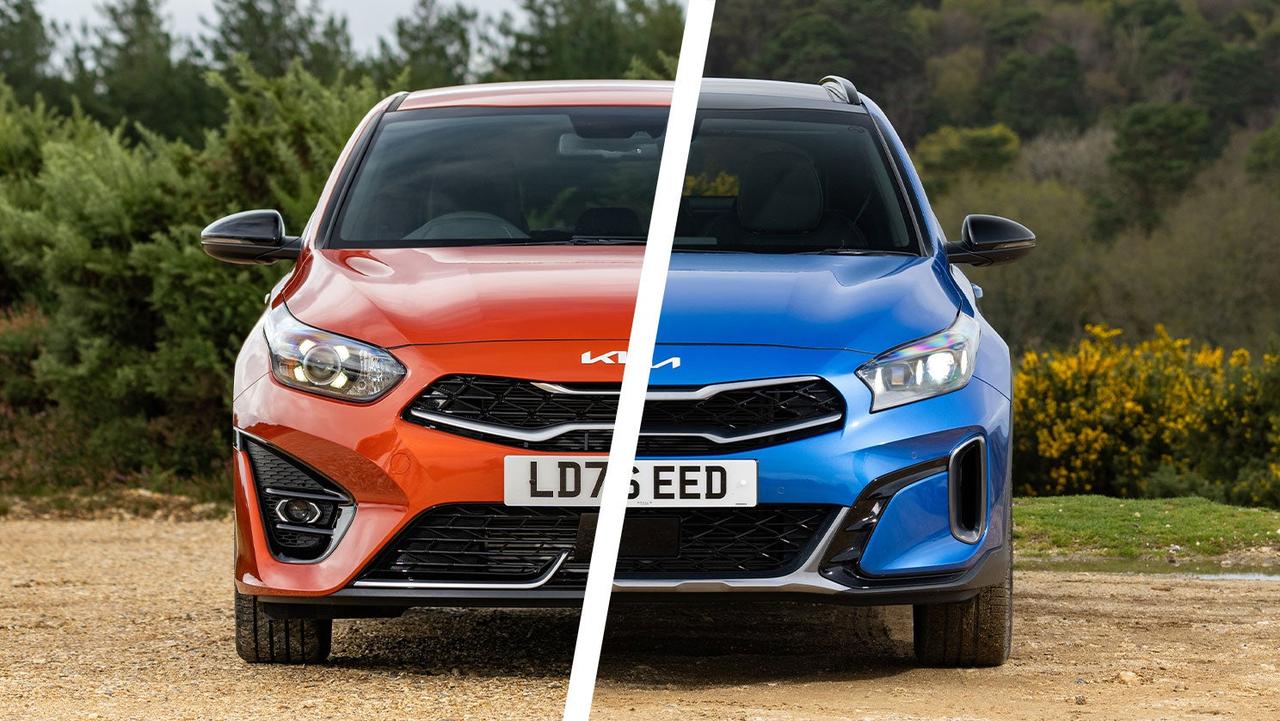
This is the main point of difference between the Ceed and XCeed. In creating a crossover-ised Ceed, Kia went to town on the car’s styling – even the headlights are completely different. The XCeed hits the trendy SUV design with black wheel arch cladding and roof rails.
Subjectively, the Ceed looks quite different between entry-level and high-spec models, while you have to look a bit harder to notice changes between different versions of the XCeed.
Interior and technology
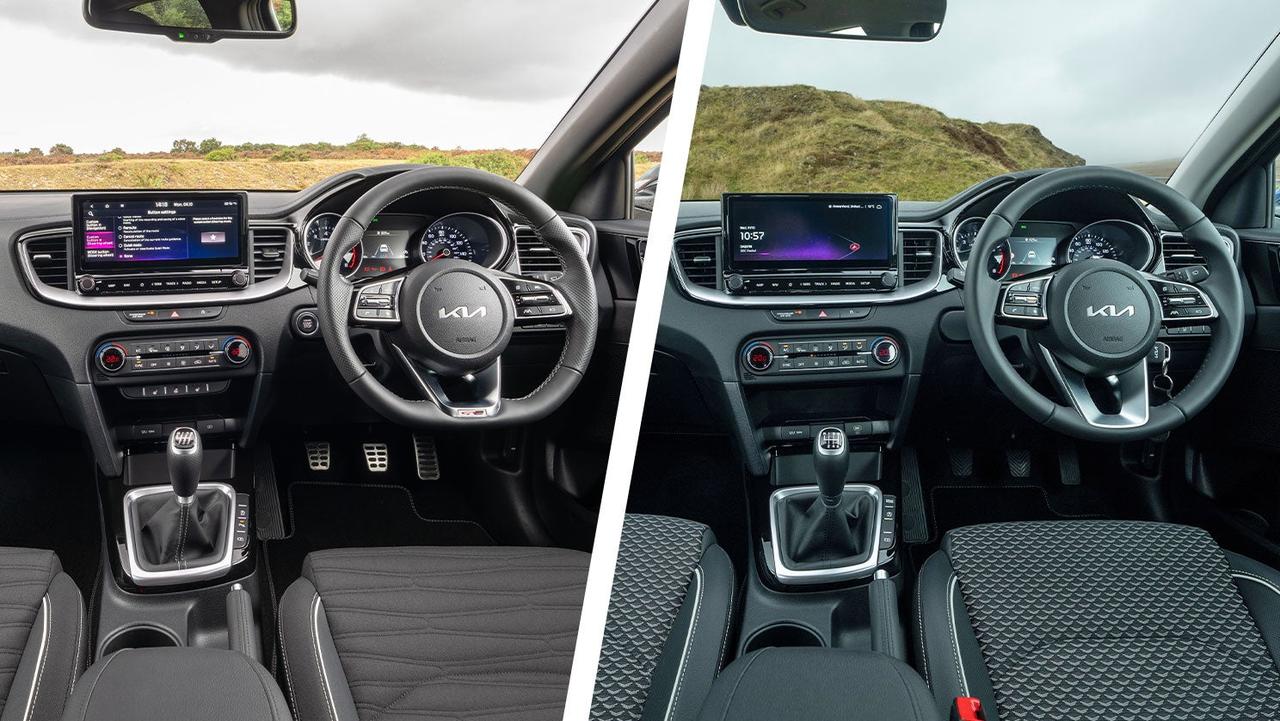
You sit slightly higher up in the XCeed, so it is likely to be slightly easier to get in and out if you have limited mobility.
In terms of the dashboard layout, the two cars are near enough identical. Both get a fairly large touchscreen sitting on top of the centre console, with lots of physical buttons for the air conditioning and many of the car’s primary functions. This means that both the Ceed and XCeed are very easy to get on with.
Dimensions and practicality
| Kia Ceed | Kia XCeed | |
| Length | 4,310mm | 4,395mm |
| Height | 1,447mm | 1,483mm |
| Width (inc mirrors) | 2,055mm | 2,055mm |
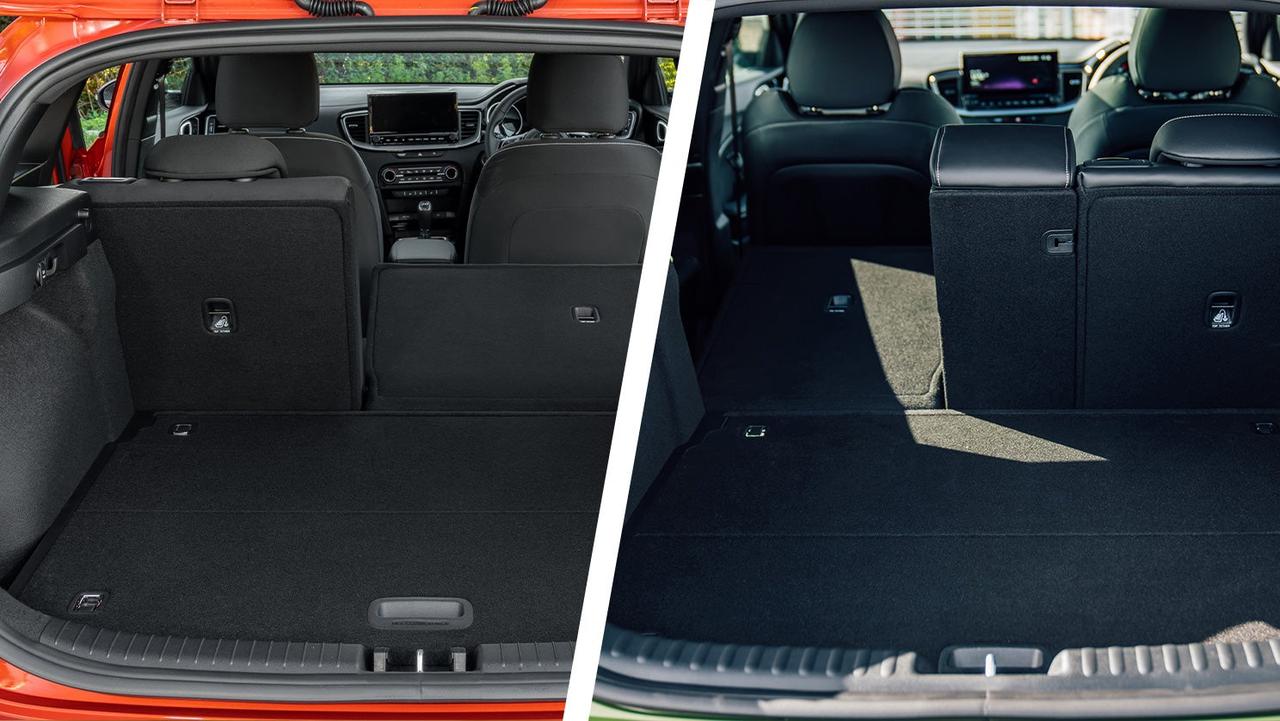
| Boot space (seats up/down) | 395/1,291 litres | 291-426/1,243-1,378 litres |
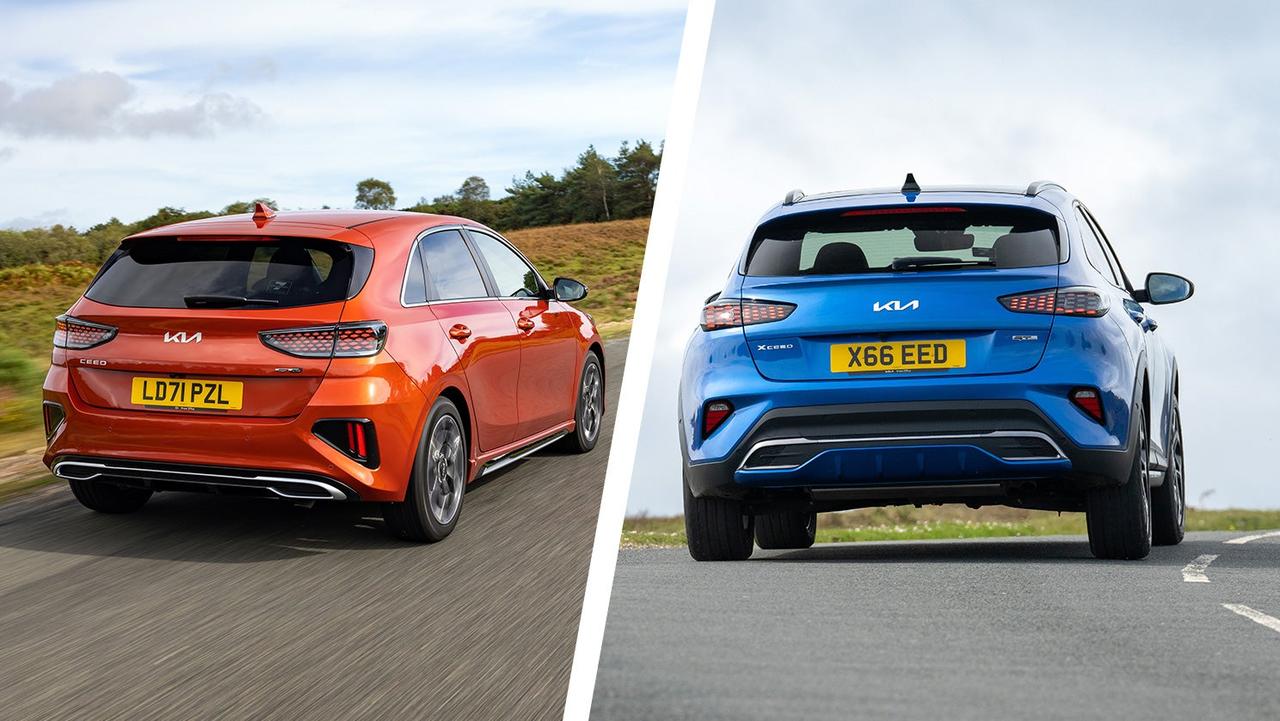
The Kia XCeed is very slightly taller, but it also has higher ground clearance and a set of roof rails. If you got the tape measure out and measured just the bodywork of each car, we’d expect the XCeed to be marginally shorter than the Ceed. Instead, the XCeed is a little longer than the Ceed.
However, the wheelbase is the same for both cars, so there’s really no difference in terms of rear-seat legroom. The more upright Ceed offers very slightly more headroom than the XCeed with its curved shape.
Comparing standard versions of the Ceed and XCeed, you’re not going to notice the 31-litre difference in boot space. At the bookends of each range, there’s a greater difference. The plug-in hybrid XCeed has a disappointing 291-litre hole, while the Ceed comes as a longer estate model that brings 625 litres to the party.
Engines
Most Ceed and XCeed models come with a 1.5-litre petrol engine with 158hp, and we’d probably steer you towards this one – it manages almost 50mpg in the Ceed yet offers brisk performance. On paper, this engine is slightly less efficient in the XCeed, getting closer to 45mpg.
In earlier years of the Ceed and XCeed, you could pick a less powerful 1.0-litre petrol engine. This is cheaper to buy, but that’s at least partly because the 1.0 was limited to lower-spec trim levels and the 1.5 came into play on higher-spec versions.
Both have offered a frugal 1.6-litre diesel that’s a decent choice for regular motorway work, but you’ll find far more diesel Ceeds on the used market than diesel XCeeds. At the other end of the range, there was the Ceed GT with a warmed-up 201hp 1.6-litre petrol engine.
You could also get a plug-in hybrid engine in the XCeed and the Ceed estate, but it’s only worth considering if you can make the most of its quoted 30-mile electric range. And it’ll only charge at 3.3kW, so it’s not even worth plugging it into a 7kW home wallbox. We think the usability and practicality drawbacks associated with this engine won’t endear it to most buyers.
Value
There’s really not much in it between a Ceed and an XCeed with the same engine, trim level and number plate age. So if you like the XCeed’s slightly SUV-ish styling, you don’t have to pay extra over the normal Ceed hatchback.
As we’ve alluded to, the flipside of that is that the Ceed is going to be marginally cheaper to fill up and to insure.
Which is best?
If you like the XCeed’s crossover looks, you can get all of the Ceed’s many benefits without any real drawbacks.
But the Ceed is about the numbers – it appeals to the head more than the heart – so it makes sense to go for the one with slightly more interior room and fractionally lower running costs.
Shop used Kia Ceed cars and used Kia XCeed cars for sale, or read our Kia XCeed review.